Famous Paintings With Secret Symbolism
Art historians love a good mystery, and painters throughout history have been experts at hiding messages in plain sight. From Renaissance masters embedding religious codes to modern artists sneaking in political commentary, the world’s most famous paintings often contain layers of meaning that most gallery visitors walk right past.
These hidden symbols weren’t just artistic flourishes—they were deliberate choices that revealed everything from the artist’s personal beliefs to dangerous political statements that couldn’t be spoken aloud. Understanding these symbols transforms how we see these masterpieces.
What looks like a simple portrait or landscape suddenly becomes a complex puzzle where every object, color, and gesture carries weight. Here is a list of famous paintings whose secret symbolism changes everything once you know what to look for.
The Arnolfini Portrait

Jan van Eyck’s 1434 masterpiece looks like a straightforward wedding portrait, but nearly every object in the room carries symbolic weight. The single candle burning in the chandelier during daylight represents the all-seeing eye of God, while the little dog at the couple’s feet symbolizes fidelity and loyalty.
The oranges on the windowsill weren’t just expensive fruits—they represented wealth and the innocence lost in the Garden of Eden. Most fascinating is the convex mirror on the back wall, which reflects two figures entering the room, one of whom might be van Eyck himself, turning the painting into a witness document for the marriage ceremony.
The Garden of Earthly Delights

Hieronymus Bosch created this triplet panel around 1500, and it’s basically a three-act play about humanity’s fall from grace. The left panel shows Adam and Eve in Paradise, the center explodes with humans indulging every earthly pleasure imaginable, and the right panel depicts hell in terrifying detail.
Hidden throughout are bizarre hybrid creatures and musical instruments that double as torture devices. Some art historians believe the strawberries appearing repeatedly throughout represent the fleeting nature of pleasure and earthly temptation—they taste sweet but rot quickly, just like giving in to your worst impulses.
The Last Supper

Leonardo da Vinci’s famous fresco from the 1490s contains symbolism that’s sparked debates for centuries. The apostles are arranged in groups of three, and their hand gestures tell a story—some reach toward Jesus, others pull away, and Judas clutches a small bag, presumably containing his payment for betrayal.
Da Vinci painted no halos, which was radical for the time, making the scene feel more human and real. The perspective lines all converge on Jesus’s head, making him the literal focal point, while the windows behind him create a halo effect from the natural light.
Some researchers claim the musical notes hidden in the bread and hands on the table form a requiem when read from right to left.
The Ambassadors
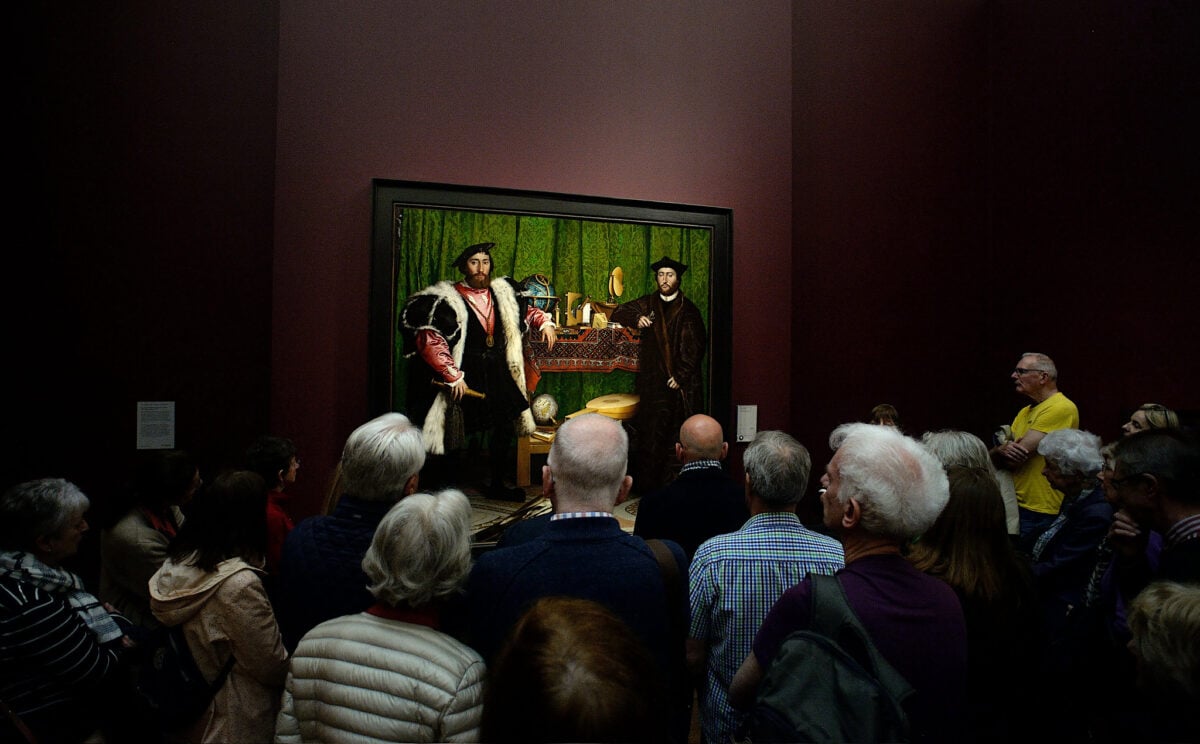
Hans Holbein painted this double portrait in 1533, and it’s stuffed with objects that scream ‘we’re important and educated.’ The two wealthy men are surrounded by scientific instruments, musical tools, and books—basically a resume in paint form.
But the real showstopper is the distorted skull stretched across the bottom of the painting. You can only see it properly when viewing the painting from a severe angle, a technique called anamorphosis.
It’s a memento mori, a reminder that death comes for everyone, even rich ambassadors with fancy globes and lutes. The broken string on the lute reinforces this theme—discord and mortality lurking beneath the surface of wealth and knowledge.
Las Meninas
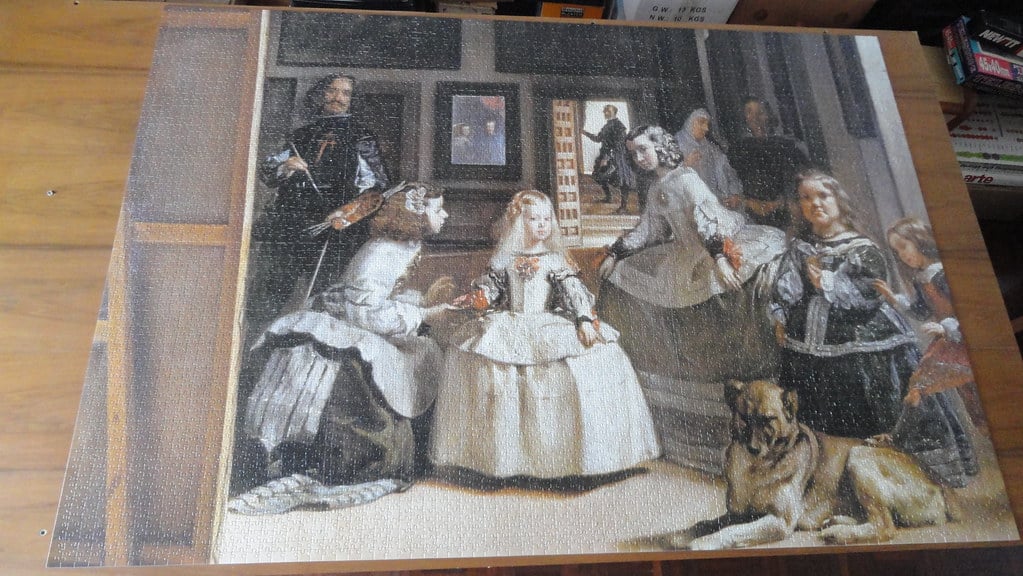
Diego Velázquez painted this scene in 1656, and it’s essentially a painting about painting. The young princess Margarita stands center stage surrounded by her entourage, but Velázquez included himself in the composition, working on a massive canvas.
The genius move is the mirror on the back wall reflecting King Philip IV and Queen Mariana, suggesting they’re standing where we, the viewers, are standing. It creates this mind-bending question about who’s actually the subject here—the princess, the royal couple, or the act of painting itself.
he red cross on Velázquez’s chest is also symbolic—it’s the Order of Santiago, added later to emphasize his status as a knight, not just a court painter.
The Birth of Venus
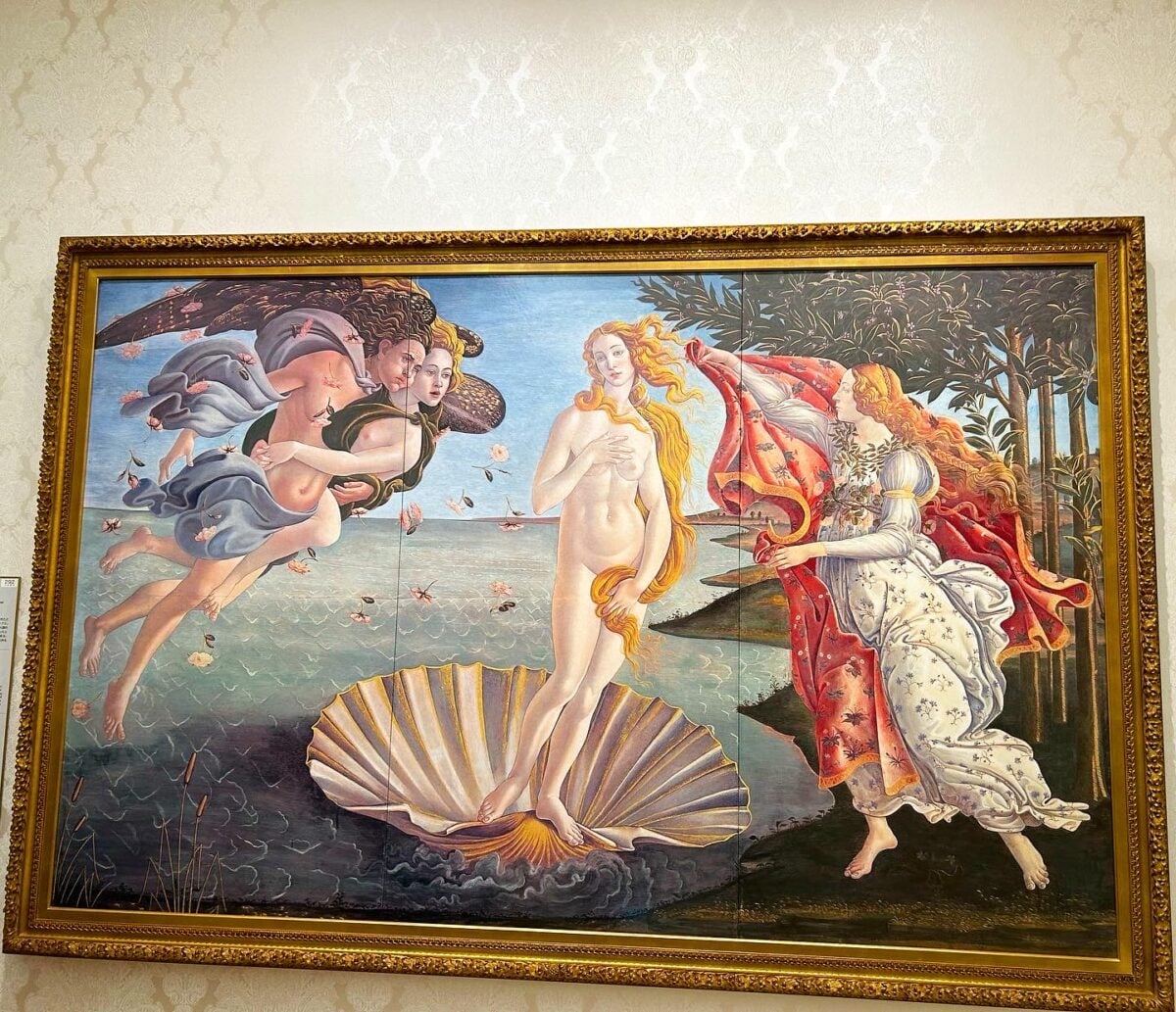
Sandro Botticelli’s 1480s masterpiece shows Venus emerging from the sea on a shell, but every element carries mythological weight. The wind god Zephyr blows her to shore with his companion, representing the spiritual force moving her toward land.
The figure waiting to clothe Venus represents the Hora of spring, symbolizing the renewal and rebirth Venus brings. The painting itself was radical for its time—showing an unclothed classical goddess in an era dominated by Christian art was a bold statement about humanist values returning to Renaissance Florence.
The roses falling around Venus were her sacred flower, connected to both love and the idea of rebirth from the foam of the sea.
Primavera

Another Botticelli from around 1482, this painting is basically an allegorical lineup of spring personified. Mercury stands on the left dispersing clouds, the Three Graces dance in transparent gowns, Venus presides over the center, and Flora scatters flowers.
The orange trees above symbolize the Medici family, who commissioned the work—oranges appear on their family crest. The painting might represent the transformation of earthly love into spiritual love, with each figure representing a stage in that journey.
Some scholars think it’s about the arrival of spring itself, while others see it as a complex meditation on Neo-Platonic philosophy that was popular in Medici circles. Either way, Botticelli packed about 500 plant species into this scene, each carrying its own symbolic meaning.
The School of Athens

Raphael’s 1511 fresco for the Vatican features history’s greatest philosophers gathered in one idealized space. The central figures are Plato pointing upward to the realm of ideas and Aristotle gesturing toward the earth and empirical reality—their hand positions alone summarize their entire philosophical differences.
Raphael painted his contemporaries as these ancient thinkers, with Leonardo da Vinci serving as the model for Plato and Michelangelo appearing as the brooding Heraclitus sitting on the steps. It’s essentially Renaissance fan fiction where dead philosophers hang out and debate, but it symbolises the Catholic Church’s attempt to reconcile Christian theology with classical learning.
Raphael even stuck himself in the corner, making eye contact with the viewer as if to say ‘yeah, I did this.’
Bacchus and Ariadne

Titian’s 1523 painting captures the moment the god Bacchus leaps from his chariot after spotting the abandoned Ariadne on the beach. The blue and orange color scheme creates dramatic tension, but the real symbolism is in the constellation of stars above Ariadne’s head.
Bacchus promises to turn her into a constellation as a wedding gift, and Titian painted the actual stars in their proper astronomical positions. The leopards pulling his chariot symbolize the wild, untamed nature of wine and ecstasy that Bacchus represents.
The snake wrapped around the male figure’s body and the infant faun represent the duality of Bacchus’s nature—both dangerous and innocent, civilized and wild.
The Milkmaid
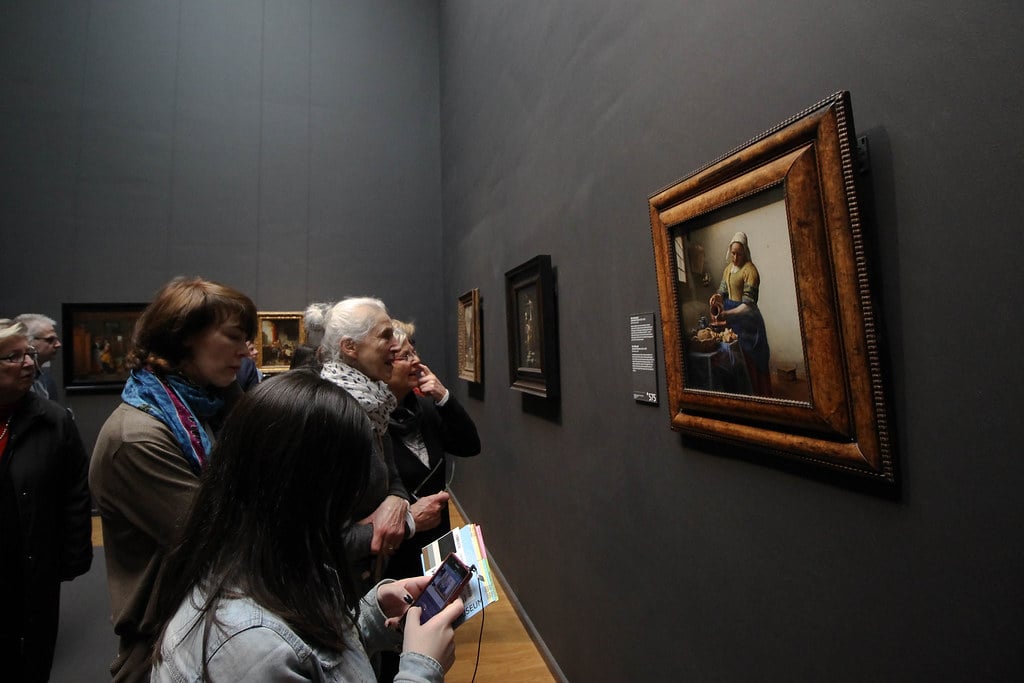
Johannes Vermeer’s 1658 painting seems like a simple domestic scene, but Dutch art was never simple. The stream of milk becomes a meditation on purity and sustenance, while the foot warmer on the floor symbolizes domestic comfort but also has associations with romantic warmth.
The bread has openings that mirror the openings in the wall—some scholars see this as symbolizing the passage of time and decay even in moments of domestic peace. The tiles on the lower wall frequently appeared in Dutch paintings to represent cleanliness and moral virtue.
Vermeer turned an everyday task into something almost sacred, elevating the working woman to a figure of dignity and quiet strength.
Nighthawks

Edward Hopper’s 1942 painting of a late-night diner has become an icon of urban loneliness. The four people never make eye contact, isolated even though they’re in the same small space.
The diner has no visible door, trapping both the customers and the viewer outside looking in—Hopper wanted that feeling of being shut out. The bright fluorescent light creates harsh shadows and makes the scene feel overexposed and vulnerable.
Painted during World War II, it captures the anxiety and disconnection of that era, but the symbolism extends to modern alienation in cities where you can be surrounded by people and still feel completely alone. The curved glass reflects nothing, emphasizing the emptiness of the late-night urban landscape.
American Gothic
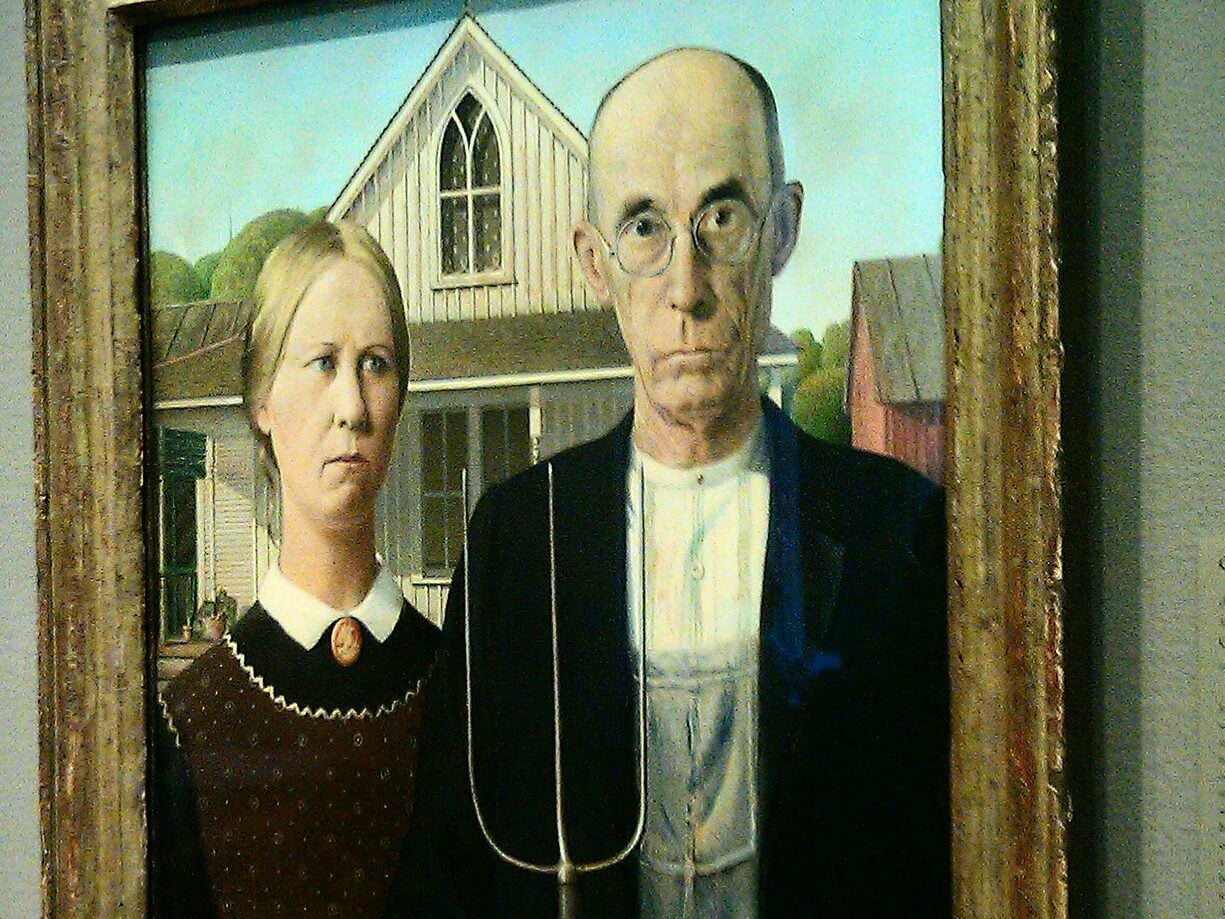
Grant Wood’s 1930 portrait is probably America’s most parodied painting, but the symbolism goes deeper than the stern-faced couple. The pitchfork the man holds has three prongs that echo the three Gothic-style windows behind them, suggesting he’s as much a part of this architectural rigidity as the house itself.
Wood used his sister and his dentist as models, not an actual farmer and wife, and their clothing is actually from an earlier era. The painting was partly satirical—Wood was commenting on the narrow-mindedness and severity of rural Midwestern character while simultaneously honoring the resilience of these communities during the Depression.
The plants on the porch and the woman’s colonial-style dress suggest attempts at domesticity and civilization in a harsh landscape.
The Persistence of Memory
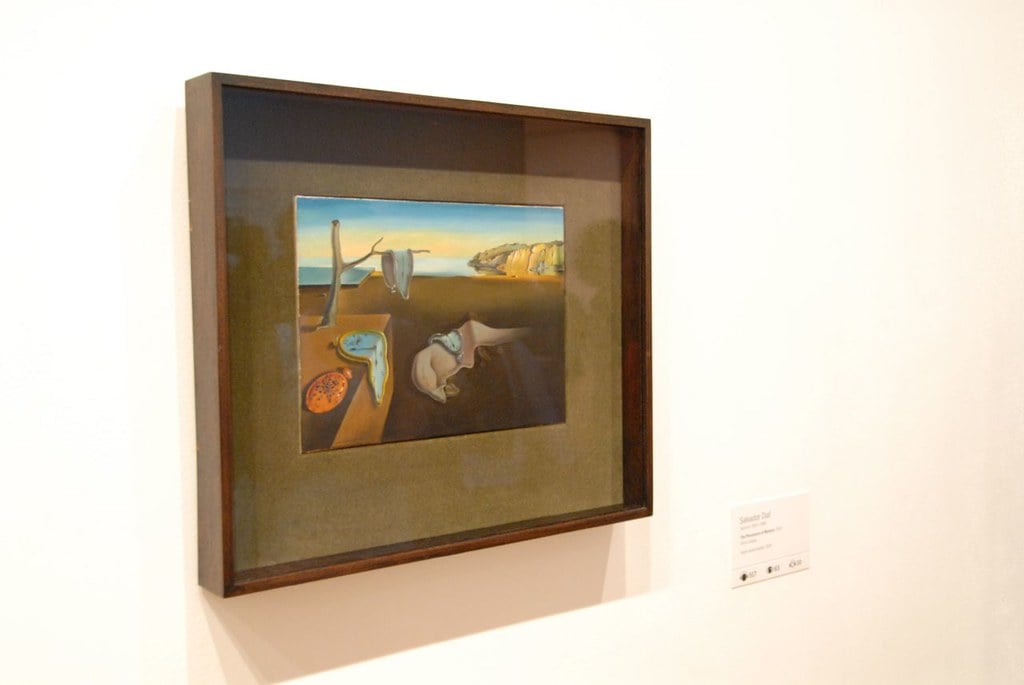
Salvador Dalí’s 1931 painting with the melting clocks seems surreal and random, but it’s loaded with symbolic meaning. The soft watches represent the irrelevance of time during sleep and dreams—time becomes flexible and meaningless in our unconscious state.
The hard, closed pocket watch covered in ants represents death and decay, with ants being Dalí’s recurring symbol for decomposition. The strange fleshy figure in the center is actually a self-portrait of sorts—it’s Dalí’s profile distorted and deflated, suggesting the collapse of identity in the dream world.
The cliffs in the background are from Catalonia, his home, grounding this weird dreamscape in actual geography. The painting asks whether time even exists in the way we think it does, or if it’s just another construct that melts away when we’re not paying attention.
Guernica

Picasso’s 1937 response to the bombing of the Basque town during the Spanish Civil War is massive and deliberately chaotic. The bull represents Spain itself—proud, stubborn, capable of both nobility and brutality.
The horse in the center writhes in agony, symbolizing the innocent civilian population caught in war’s machinery. The light bulb shaped like an eye suggests both the revelation of truth and the harsh, exposing light of modern warfare.
The dismembered soldier at the bottom still clutches a broken sword, representing the failure of traditional warfare against modern bombing. Picasso used no color, just black, white, and gray, to emphasize the horror and to make it feel like a newspaper photograph—he wanted it documented as fact, not prettified as art.
The Starry Night
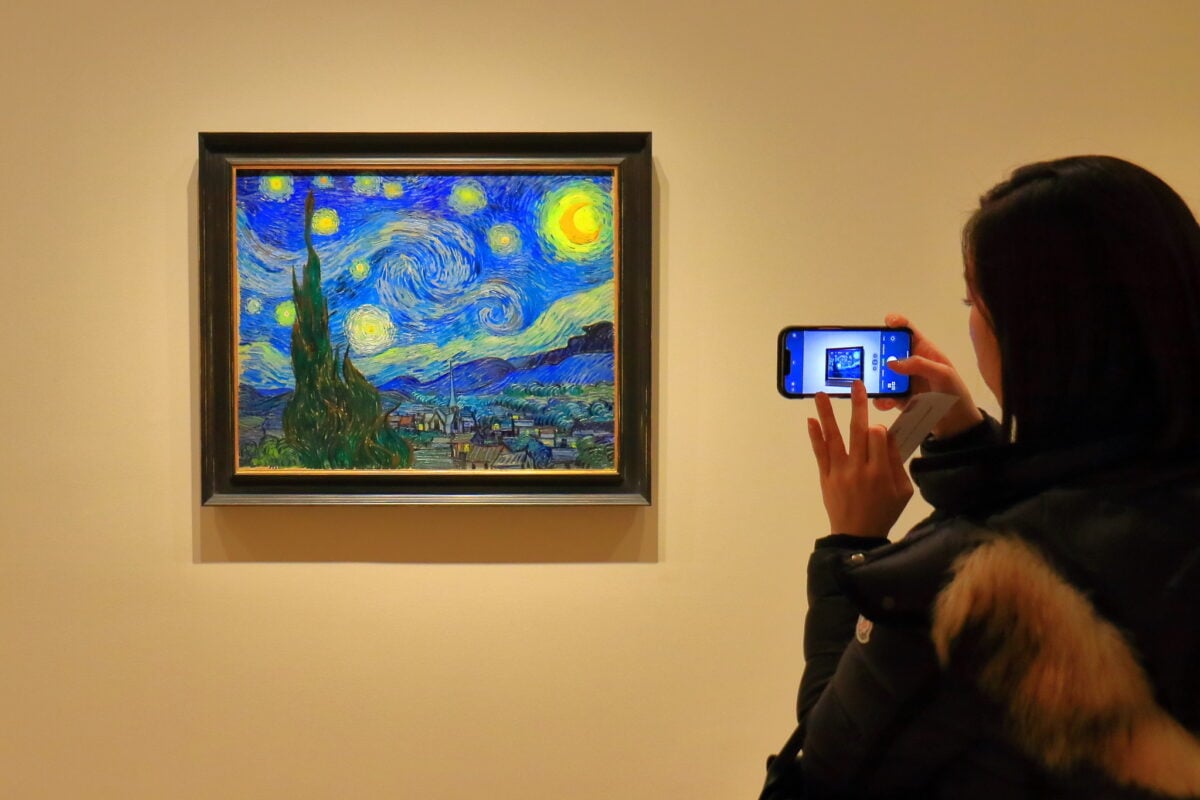
Van Gogh’s 1889 painting from the asylum at Saint-Rémy contains symbolism that art historians still debate. The massive cypress tree in the foreground connects earth to sky, and in European culture, cypresses were associated with death and mourning, often planted in cemeteries.
The village below with its church steeple represents the comfort of human civilization, but the steeple doesn’t reach anywhere close to the cosmic forces swirling above it. The painting was done from memory and imagination—that village doesn’t exist quite like that—making it more about Van Gogh’s internal state than external reality.
Some scholars see the eleven stars as a reference to the biblical Joseph’s dream, while others see it as Van Gogh grappling with infinity and his place in the universe while confined to an asylum.
The Great Wave off Kanagawa
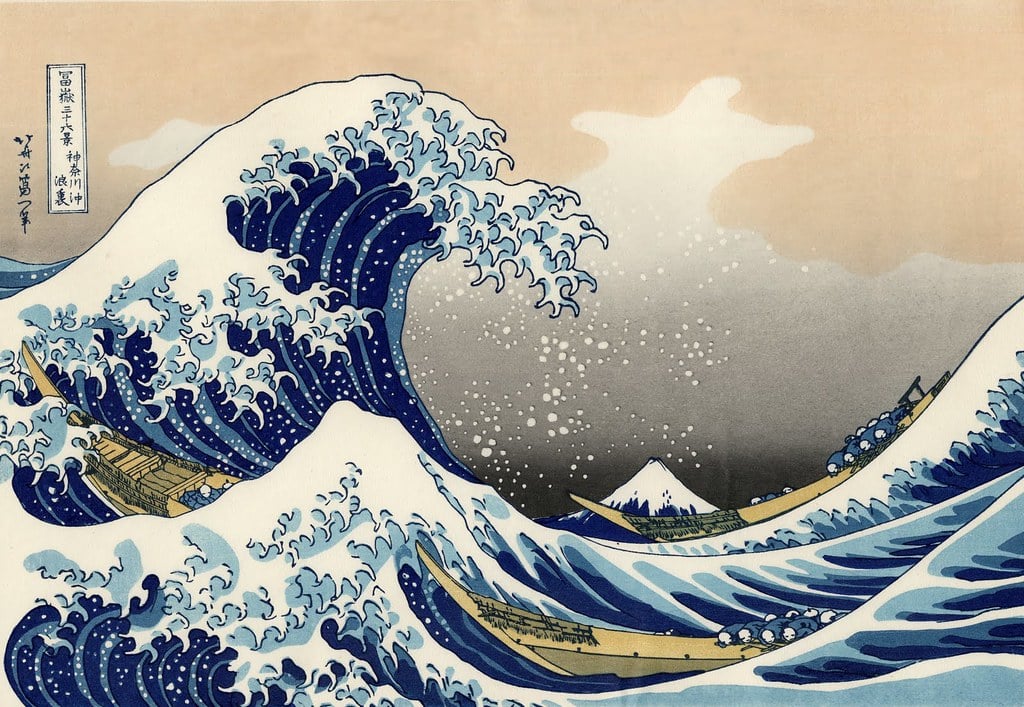
Katsushika Hokusai’s 1831 woodblock print shows a massive wave threatening boats, but Mount Fuji sits tiny but unmovable in the background. The wave’s claw-like foam fingers grab at the sky, but they’re fundamentally temporary—water that will crash and dissipate in seconds.
Mount Fuji, sacred in Japanese culture, represents the eternal and unchanging, dwarfing human struggles but also offering spiritual stability. The three boats full of people are remarkably calm considering the wave about to crash on them, suggesting acceptance of nature’s power and fate.
The composition forces your eye to dart between the wave’s drama and the mountain’s stillness, creating tension between temporary chaos and permanent peace. Hokusai made this when he was in his seventies, part of his meditation on nature’s overwhelming power and humanity’s small but persistent place within it.
Reading Symbols Across Centuries

These hidden meanings weren’t puzzles designed to confuse viewers—they were a common language that educated audiences understood immediately. A dog meant loyalty, a skull meant mortality, wilting flowers meant time passing.
Artists worked within these systems while sneaking in personal touches and sometimes dangerous ideas that couldn’t be stated openly. Today’s viewers need translation guides and art history classes to decode what Renaissance Italians or 19th-century New Yorkers recognized instantly.
The fact that we’re still discovering new interpretations of these works centuries later proves that great art always holds more than meets the eye, rewarding anyone willing to look closer and think deeper.
More from Go2Tutors!

- The Romanov Crown Jewels and Their Tragic Fate
- 13 Historical Mysteries That Science Still Can’t Solve
- Famous Hoaxes That Fooled the World for Years
- 15 Child Stars with Tragic Adult Lives
- 16 Famous Jewelry Pieces in History
Like Go2Tutors’s content? Follow us on MSN.