Photos Of Nearly Identical Flags Of Countries
Walk into any international summit, scroll through any world map, and you’ll notice something odd — some countries are flying what looks suspiciously like someone else’s flag. It’s not plagiarism, and it’s rarely a coincidence.
Shared history, colonial inheritance, pan-regional movements, and sometimes plain chance have left the world with pairs and clusters of national flags so alike that even geography teachers get them mixed up. Here’s a closer look at the most confusing flag twins and triplets on the planet.

Chad And Romania: The Blue Is The Issue
This is probably the most famous flag mix-up in the world, and for good reason. Both flags are vertical tricolors of blue, yellow, and red — in exactly that order from left to right.
Put them side by side and the difference is almost undetectable to the untrained eye. Romania’s flag dates back to the mid-1800s, adopted during its independence movement.
Chad’s came into use when the country gained independence from France in 1960. Chad was apparently unaware — or unbothered — that it was essentially copying Romania’s design.
Romania did raise the issue at the United Nations, but nothing came of it. The two countries have lived with this awkward flag twin ever since.
The only real difference is the shade of blue. Romania’s blue is slightly darker. That’s it.
If you’re looking at a small flag pin on someone’s lapel, good luck figuring out which country they’re representing.
Indonesia And Monaco: Red On Top, White On Bottom
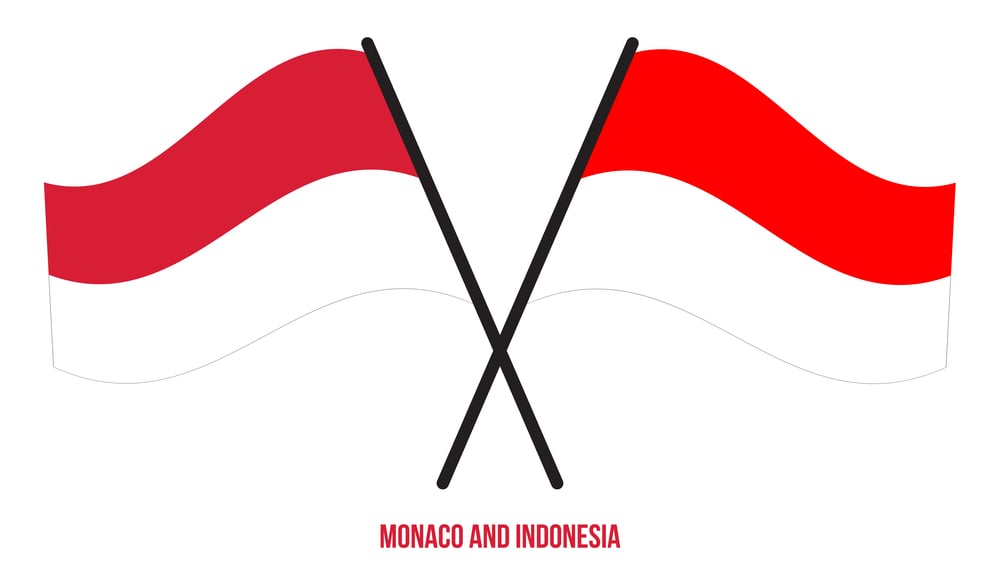
These two flags are as simple as flags get — just two horizontal stripes, red over white. Indonesia has been around in various forms since the 13th century, rooted in the Majapahit Empire.
Monaco goes back centuries too, tied to the colors of the House of Grimaldi. The practical difference is the ratio.
Indonesia’s flag is wider relative to its height (2:3) than Monaco’s (4:5), but unless you’re measuring with a ruler, that distinction is lost. At any international event where both flags are displayed, staff have to be careful about which pole gets which flag.
Indonesia actually brought the similarity to international attention in the 1950s. Since both countries have deep historical ties to their respective designs, neither was willing to budge.
They’ve been accidental twins ever since.
Ireland And Côte D’Ivoire: Same Stripes, Opposite Direction
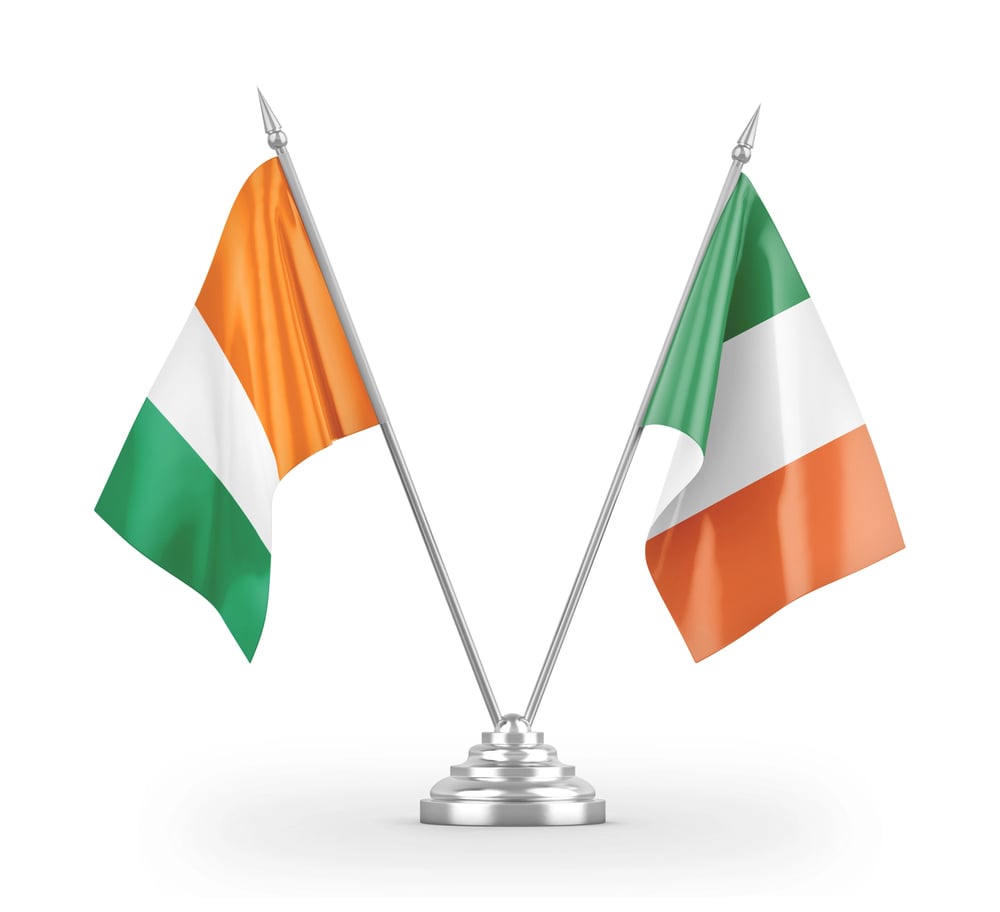
Ireland’s flag is green, white, and orange — running left to right. Côte d’Ivoire’s flag is orange, white, and green — running left to right.
Flip one around and you’ve got the other. Ireland adopted its tricolor in 1848, inspired partly by the French flag and partly by the hope that green (Catholic) and orange (Protestant) could be united by white.
Côte d’Ivoire, meanwhile, based its flag on France’s tricolor when it gained independence in 1960, choosing colors tied to its own national symbolism.
At international sporting events, especially the Olympics, this mix-up happens more than you’d expect. More than once, Ireland and Côte d’Ivoire athletes have marched under the wrong flag or had their flags swapped in ceremony programs.
The countries have acknowledged the confusion but see no reason to change.
Australia And New Zealand: Southern Cross Siblings
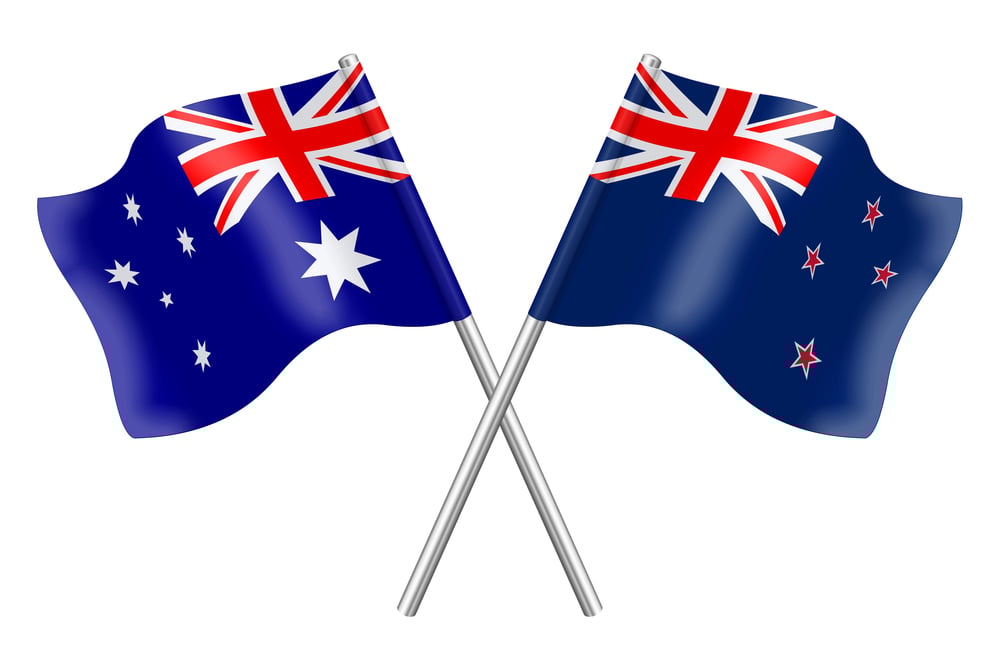
Both Australia and New Zealand feature the Union Jack in the top-left corner and the Southern Cross constellation on a blue background. At a quick glance, they look like the same flag.
Many people — including residents of both countries — have confused them. The differences exist, though.
Australia has six stars (five forming the Southern Cross plus one larger Commonwealth Star below the Jack). New Zealand has only four stars in its Southern Cross, and they’re red with white borders rather than pure white.
New Zealand’s flag also has a slightly darker shade of blue. New Zealand held a referendum in 2015 to change its flag partly because of this confusion.
The country ultimately voted to keep it. The debate revealed how much national identity gets tangled up in flag design — even when the flag looks almost identical to a neighbor’s.
Colombia, Venezuela, And Ecuador: Yellow, Blue, Red

These three South American nations share almost the same flag. All three use horizontal stripes of yellow, blue, and red — the colors of the 1806 Venezuelan independence movement led by Francisco de Miranda.
When Simón Bolívar unified much of South America into Gran Colombia, the shared flag made sense. When that federation broke apart, each country kept the colors.
Colombia and Ecuador have identical stripe proportions. Venezuela uses the same three colors but added stars and a coat of arms to distinguish itself.
Ecuador went further and added its national coat of arms over the stripes. Without the emblems, the Colombian and Ecuadorian flags are almost identical.
With them, they’re still easy to mix up unless you’re specifically looking for the difference.
The Netherlands And Luxembourg: Almost The Same, Almost Forever

The Dutch flag is red, white, and blue — three horizontal stripes. Luxembourg’s flag is red, white, and light blue — three horizontal stripes.
The layout is exactly the same. The Netherlands has been flying this design since the 16th century, one of the oldest tricolor flags in the world.
Luxembourg adopted its colors in the 19th century, also tied to its own heraldic history. The only visual difference is the shade of blue.
Luxembourg’s blue is noticeably lighter and more sky-like. The Netherlands’ blue is deeper and darker.
In photographs, under certain lighting conditions, or on a low-resolution screen, telling them apart becomes genuinely difficult.
Slovenia, Russia, And Slovakia: Tricolors In A Row

Russia’s flag is white, blue, and red horizontally. Slovakia’s flag is white, blue, and red horizontally.
Slovenia’s flag is white, blue, and red horizontally. Three countries, nearly one flag.
All three trace their colors to Pan-Slavic symbolism, which deliberately used white, blue, and red to represent Slavic unity. The idea goes back to the 19th century and spread across Eastern Europe.
Slovakia and Slovenia cause particular confusion. Their names are similar, and their flags are nearly identical.
Slovakia adds a coat of arms (a white double cross on a blue shield) to distinguish itself. Slovenia adds a coat of arms too, with a mountain and stars.
Without those shields, the flags are practically indistinguishable.
Mali, Senegal, And Guinea: Green, Yellow, Red
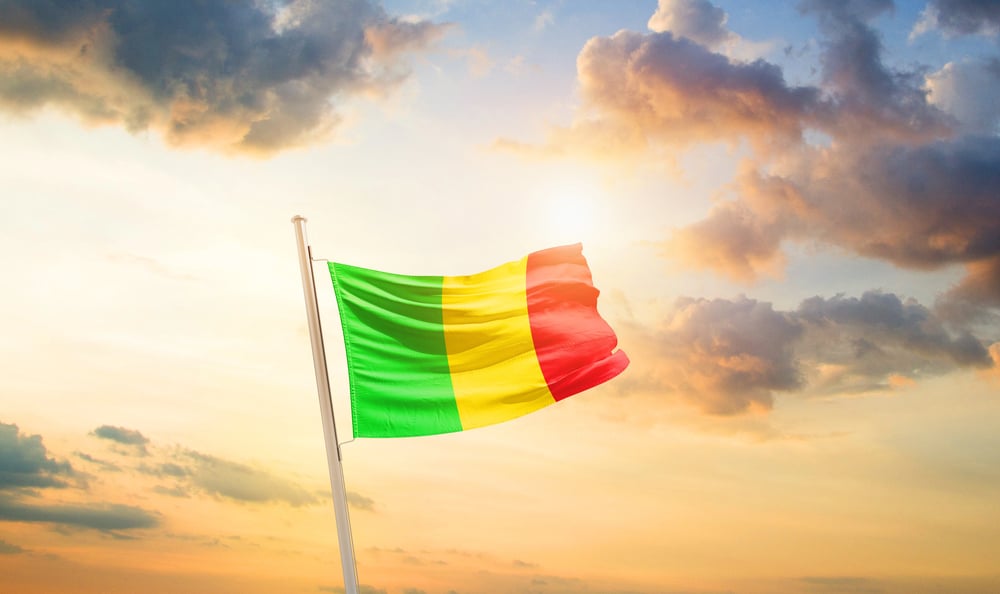
These three West African nations all use variations of the Pan-African tricolor — green, yellow (or gold), and red. The arrangement varies slightly, but the color palette is nearly identical across the region.
Mali’s flag is green, yellow, and red vertical stripes. Guinea’s is red, yellow, and green.
Senegal’s is green, yellow, and red — with a small green star in the center stripe. Remove Senegal’s star, reverse Guinea’s order, and you’re looking at very similar flags.
This reflects the strong Pan-African ideology that swept through West Africa during independence movements in the 1950s and 60s. Countries chose these colors deliberately as a statement of African unity, knowing full well their flags would overlap.
The similarity was, in many ways, the point.
The Nordic Cross Family: Denmark Started It

Denmark’s flag — a red background with a white cross offset toward the left — is one of the oldest national flags still in use, dating back to the 13th century. Every other Nordic country has a version of this design.
Norway’s flag has the same cross pattern but adds a blue cross outlined in white over the red background. Iceland’s flag reverses it — blue background with a red cross outlined in white.
Sweden goes with a yellow cross on blue. Finland uses a blue cross on white. Line them all up and the family resemblance is impossible to miss.
The Nordic cross, with its asymmetric placement toward the hoist, became a regional symbol. Any of these flags, flying alone in the distance, can be mistaken for any of the others without context.
Haiti And Liechtenstein: A Surprise At The Olympics

Haiti’s flag has blue and red horizontal stripes. Liechtenstein’s flag also has blue and red horizontal stripes.
Both were flying at the 1936 Berlin Olympics before anyone realized the problem. Officials noticed during the Games that two countries had essentially identical flags.
Liechtenstein promptly added a gold crown to its upper left to solve the problem. Haiti kept its existing design, which features a coat of arms in the center — but plain versions of both flags, stripped of emblems, still look almost identical.
The story became one of the more charming footnotes in Olympic history. Two countries met at a sporting event and discovered for the first time that they were flying the same flag.
Poland And Monaco: Mirror Images

Poland’s flag is white on top and red on bottom. Monaco’s is red on top and white on bottom.
They use the same two colors in the same two-stripe format — just flipped vertically. Poland’s white-and-red comes from its coat of arms, going back to the medieval white eagle on a red field.
Monaco’s flag reflects the colors of the Grimaldi dynasty, in use since the 13th century. Turn either flag upside down and you’ve got the other.
This makes them technically distinct, but in practice, an inverted Polish flag looks exactly like Monaco’s. Whether that rises to the level of confusion depends entirely on which way the wind is blowing.
Cameroon And Senegal: Almost The Same West African Vertical

Both Cameroon and Senegal feature vertical tricolors using green, yellow, and red — the Pan-African colors. Senegal’s flag has a green star in the center.
Cameroon has a yellow star in the center. The overall layout and color scheme are nearly identical. Without the stars, the flags are the same.
With them, the difference comes down to star color — green versus yellow — which isn’t always obvious at a distance or in photos with poor color reproduction.
Both countries gained independence in 1960 and both chose these colors to align with the broader Pan-African movement. The similarity was no accident, but neither country felt the need to differentiate further.
Bolivia And Ghana: Red, Yellow, Green
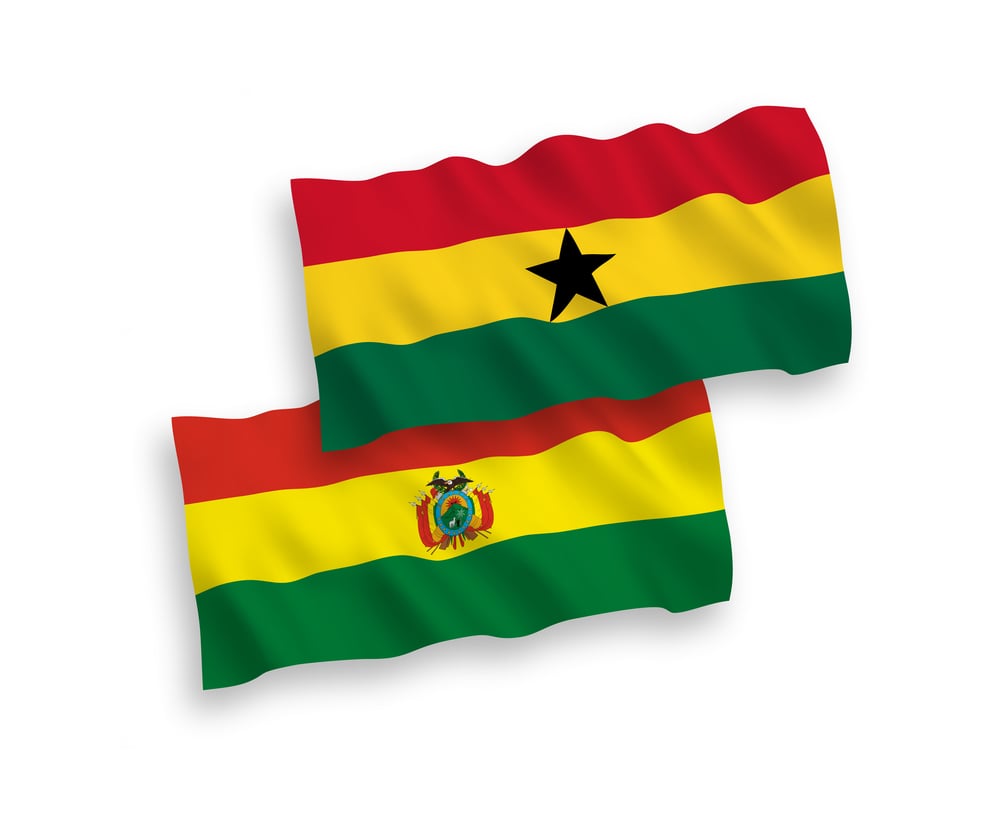
Bolivia uses horizontal stripes of red, yellow, and green. Ghana uses horizontal stripes of red, gold, and green — with a black star in the center.
Strip away the star and you’re left with two flags using the same three colors in the same order. Bolivia’s colors represent the blood of its fallen soldiers, the mineral wealth of the land, and the country’s agriculture.
Ghana’s are inspired partly by Pan-African symbolism, partly by its own history. The black star, borrowed from Marcus Garvey’s Black Star Line, gives Ghana’s flag its most distinctive element.
Yet in casual settings — a photo with low resolution, a flag flying far away — the two look remarkably similar. Neither country has expressed concern about the overlap, and in very different regions of the world, the practical confusion rarely comes up.
When Colors Carry More Weight Than Designs

What all these flag pairs reveal is something deeper than coincidence. Colors carry meaning — and across cultures, certain combinations keep showing up because they represent the same things: blood, peace, land, sky, struggle, unity.
Red, white, and blue surfaces in dozens of flags across the Americas, Europe, and beyond. Green, yellow, and red became the palette of African independence. The Nordic cross spread from Denmark to an entire region.
Flags aren’t designed in a vacuum. They borrow, they reference, they inherit.
And sometimes, two countries on opposite sides of the planet end up flying almost the same thing, not because they copied each other, but because they were reaching for the same symbols in the same human toolkit.
The next time you see a flag and feel certain you know which country it belongs to — it’s worth taking a second look.
More from Go2Tutors!

- The Romanov Crown Jewels and Their Tragic Fate
- 13 Historical Mysteries That Science Still Can’t Solve
- Famous Hoaxes That Fooled the World for Years
- 15 Child Stars with Tragic Adult Lives
- 16 Famous Jewelry Pieces in History
Like Go2Tutors’s content? Follow us on MSN.



