Coldest Places Humans Actually Live
There’s cold, and then there’s cold. The kind where your breath freezes mid-air and falls to the ground as tiny ice crystals.
The kind where cars must run 24 hours a day or their engines will never start again. The kind where schools stay open until temperatures drop below -55°C.
Most of us complain when winter dips below freezing. But across the planet, hundreds of thousands of people call some of the most brutally cold places on Earth their permanent homes.
They raise families, go to work, cook dinner, and live full lives in conditions that would send the average person running for a heated blanket. Here’s where you’ll find them.
Oymyakon, Russia
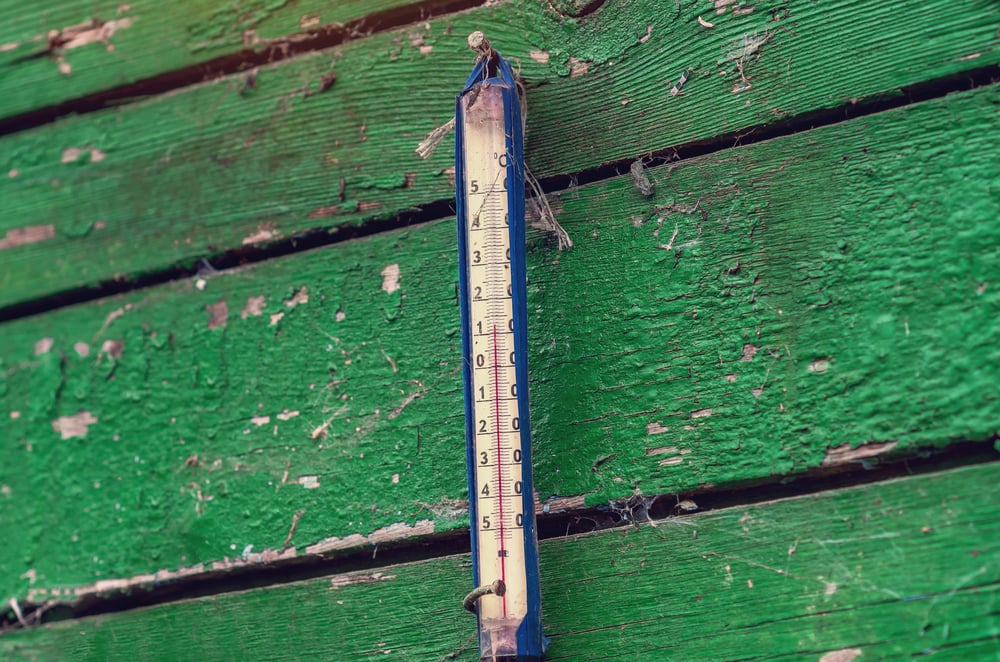
This remote village in Siberia’s Sakha Republic holds the record for the coldest permanently inhabited place on Earth. In 1933, temperatures plunged to -67.7°C (-89.9°F).
An earlier unofficial reading in 1924 put the mercury at -71.2°C (-96.2°F)—so cold that some nights on Mars are actually warmer. Around 500 people live here year-round.
The village sits between two valleys that trap frigid air, creating a natural deep freeze that lasts most of the year. From late October to mid-March, temperatures never climb above freezing.
January averages hover around -50°C. Local schools close only when temperatures fall below -55°C.
Everything else carries on as usual. The name “Oymyakon” comes from the Even word meaning either “unfrozen patch of water” or “frozen lake”—both relate to a thermal spring nearby that once drew reindeer herders.
That spring still flows, providing water that somehow resists the surrounding ice. Daily life here requires constant adaptation.
Residents layer themselves in reindeer fur from head to toe. Fish freeze solid within minutes of being pulled from ice pits.
Pens don’t work—the ink freezes. And if you wear glasses outside, the metal frames will stick to your face.
Yet the same place that hits -67°C in winter can reach 34°C in July, giving Oymyakon one of the largest temperature swings on Earth: over 100°C between extremes.
Verkhoyansk, Russia
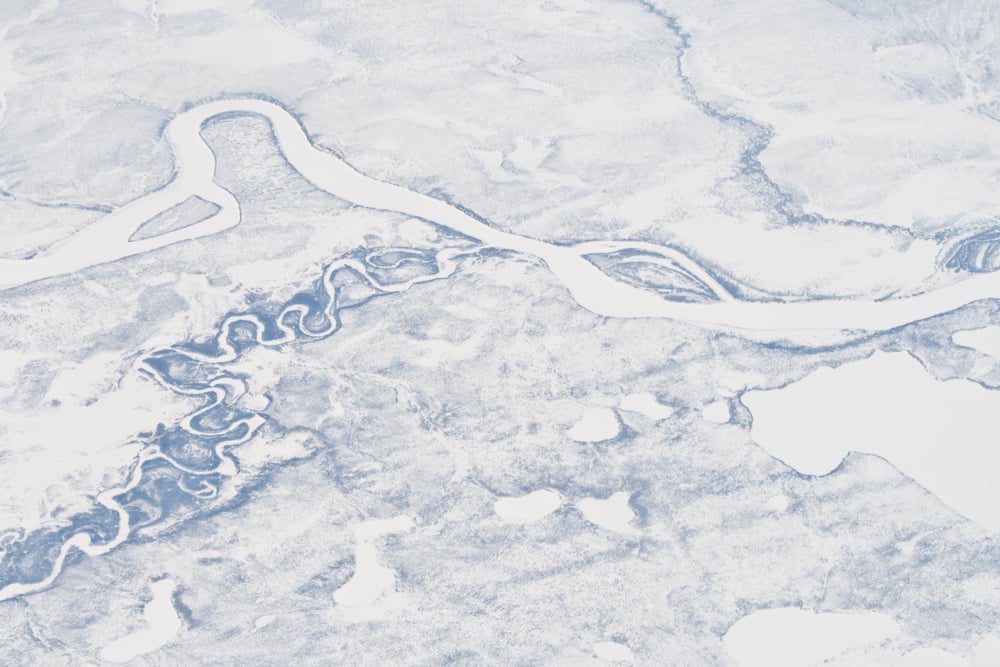
Just 629 kilometers away from Oymyakon lies its bitter rival for the title of coldest town. Verkhoyansk has recorded temperatures of -67.8°C (-90.0°F), technically colder by a fraction of a degree.
The debate over which settlement truly deserves the crown has gone on for decades. Both towns have erected monuments proclaiming themselves the “Pole of Cold.”
About 1,300 people live in Verkhoyansk, a town founded as a Cossack outpost in 1638. For much of its history, it served as a place of political exile—the kind of destination the Russian Empire sent people it wanted to forget about.
The region’s isolation was its punishment. But the cold cuts both ways.
In June 2020, Verkhoyansk recorded 38°C (100.4°F), the highest temperature ever documented above the Arctic Circle. That same town that freezes people’s eyelashes shut in January had residents swimming in nearby rivers during a Siberian heatwave.
The temperature range of 105.8°C between record high and record low is unmatched anywhere on Earth. Residents survive on hunting, fishing, and horse breeding.
High-fat diets of reindeer meat and horse liver provide necessary calories to fight the cold. Vodka—locally called “Russian tea”—helps too.
Yakutsk, Russia

Unlike the villages of Oymyakon and Verkhoyansk, Yakutsk is an actual city. Over 355,000 people live here, making it the largest city built on continuous permafrost.
Winter temperatures average -42°C in January, with record lows hitting -64.4°C. The city runs on mining.
Coal, gold, and diamonds drive the regional economy, with multiple mining companies headquartered here. The salaries attract workers from across Russia who discover that life in the deep freeze develops its own rhythms.
In winter, a phenomenon called “habitation fog” settles over Yakutsk. The air gets so cold that hot breath, car exhaust, and heat from buildings can’t rise.
Instead, it hangs at street level, creating an eerie mist that blankets the city. Locals say they can tell the temperature by how thick the fog gets.
Open-air markets continue operating through winter. Vendors stack frozen fish like cordwood, standing upright in the snow.
Fresh meat stays fresh for months without refrigeration—just leave it outside. The city’s infrastructure has evolved accordingly: pipes run above ground to prevent them from freezing in the permafrost, and buildings stand on stilts to keep their warmth from melting the frozen soil beneath them.
Norilsk, Russia

Imagine building an entire industrial city above the Arctic Circle, in a place where winter lasts nine months and polar night swallows the sun for weeks. Then imagine 176,000 people choosing to live there.
Norilsk exists for one reason: nickel. The city sits atop one of the richest mineral deposits on Earth, producing 35% of the world’s palladium, 25% of its platinum, and 20% of its nickel.
The entire city was originally constructed by Gulag prisoners in the 1930s, their bones still buried beneath the permafrost. Winter brings temperatures as low as -56°C, combined with over 130 days of snowstorms per year.
The city receives more than two million metric tons of snow annually. Buildings cluster together with narrow passages between them, designed to shield residents from winds that can knock people off their feet.
For two months during polar night, from late November to late January, the sun never rises. Residents rely on UV lamps in their apartments to simulate natural light.
Depression, insomnia, and anxiety spike during this period. The body struggles without its normal cues.
The isolation is total. No roads connect Norilsk to the rest of Russia.
Residents fly in and out, or take ships during the brief summer when the river port opens. Locals refer to the rest of Russia simply as “the mainland,” as if Norilsk were an island rather than a city in the middle of Siberia.
Utqiagvik, Alaska

The northernmost city in the United States sits 320 miles above the Arctic Circle, surrounded on three sides by the Arctic Ocean. Formerly known as Barrow, the town of nearly 5,000 people experiences below-freezing temperatures for 245 days per year.
From mid-November through late January, the sun doesn’t rise at all. This 65-day polar night leaves residents in perpetual twilight, lit only by moonlight, stars, and the occasional aurora borealis dancing overhead.
Then summer arrives, and the sun refuses to set for over 80 continuous days. The Iñupiat people have lived here for thousands of years, hunting whales and seals long before European explorers arrived.
Today, traditional subsistence hunting continues alongside modern amenities. The combination makes Utqiagvik unique: residents shop at grocery stores (where a jar of peanut butter costs $10 because everything arrives by plane) while still participating in seasonal whale hunts that have sustained their community for generations.
Record lows have reached -56°F (-49°C). February, the coldest month, averages around -24°C.
The permafrost extends 1,300 feet deep in some places. Houses stand on pilings driven into the frozen ground.
Roads remain unpaved—asphalt would crack in the cold, and the permafrost shifts too much anyway.
Yellowknife, Canada

Canada’s coldest city sits on the northern shore of Great Slave Lake, about 400 kilometers south of the Arctic Circle. Around 20,000 people call it home.
Environment Canada has ranked it as having the coldest winters and longest snow cover of any city in the country. January averages -26°C, with temperatures regularly plunging to -40°C and occasionally dropping below -50°C.
The record stands at -51.2°C, set in 1947. Wind chill can push the perceived temperature even lower—the highest wind chill ever recorded here reached -64°C.
But Yellowknife also holds another distinction: the sunniest spring and summer in Canada. From June through August, the city receives over 1,000 hours of sunshine.
Temperatures can climb into the high 20s or low 30s Celsius. The same streets buried under snow in January host midnight golf tournaments in June.
The Northern Lights put on their best show here. Yellowknife sits directly beneath the auroral oval, the ring around the magnetic North Pole where aurora activity concentrates.
Tour companies offer aurora viewing trips, and visitors from around the world brave the cold to watch the sky dance with color.
Longyearbyen, Svalbard

This Norwegian settlement at 78 degrees north is the world’s northernmost town with a permanent population exceeding 1,000. About 2,500 people from 50 different countries live here, sharing their home with approximately 3,000 polar bears roaming the surrounding wilderness.
The archipelago of Svalbard sits halfway between mainland Norway and the North Pole. Polar night lasts from late October to mid-February.
Polar day—when the sun never sets—runs from April through August. The constant light or constant dark affects sleep patterns, mood, and daily routines in ways residents never quite get used to.
Carrying a rifle outside town is mandatory, not optional. Polar bears present genuine danger.
Signs at the edge of town warn travelers that they’re leaving the safety zone. A campsite employee was killed by a bear in 2020, and encounters happen regularly.
The cold is less extreme than Siberian towns—winter temperatures typically range from -15°C to -30°C—but the wind makes every degree worse. Buildings are painted in bright colors to counteract the psychological weight of endless winter darkness.
Restaurants, cafes, and cultural events keep community bonds strong when going outside means battling horizontal snow. Longyearbyen has no roads leading anywhere.
You fly in, or you take a ship during the brief ice-free season. The isolation breeds a particular kind of character among long-term residents, who describe being “bitten by the polar bug”—an inexplicable pull that keeps them coming back.
Harbin, China
Not all cold cities are tiny Arctic outposts. Harbin, capital of China’s Heilongjiang province, has a metropolitan population of nearly 10 million.
January temperatures average around -18°C and can drop to -35°C or colder. The city has turned its brutal winters into celebration.
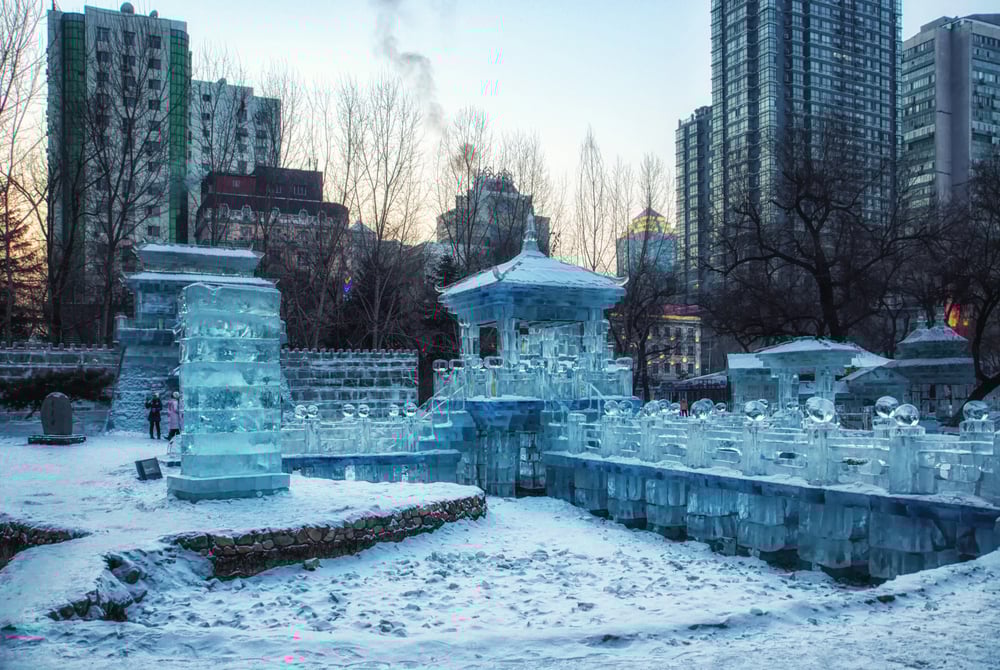
Every January, the Harbin Ice Festival transforms the city into a frozen wonderland. Workers carve enormous buildings, sculptures, and entire palaces from blocks of ice pulled from the nearby Songhua River.
LED lights freeze into the structures, creating glowing castles that tower 15 stories high. Russian influence shaped the city during the late 19th and early 20th centuries, visible in the architecture of the central district.
Orthodox churches, European-style buildings, and Russian restaurants give Harbin a distinctly different feel from other Chinese cities. The cold attracts tourists rather than driving them away.
Visitors wade into the Songhua River for winter swimming, stand in subzero temperatures to photograph ice sculptures, and eat popsicles outdoors in January—because why not?
Murmansk, Russia

The largest city above the Arctic Circle, Murmansk is home to around 300,000 people. The city sits on the Kola Peninsula, about 2,000 kilometers north of Moscow.
Winter temperatures average around -10°C to -15°C—cold, but warmer than inland Siberian cities at similar latitudes. The Gulf Stream makes the difference.
Warm Atlantic currents keep the port ice-free year-round, making Murmansk strategically important since its founding in 1916. The city served as a vital supply point during both World Wars and remains Russia’s largest military port today.
Polar night lasts about 40 days, from early December to mid-January. The lack of sunlight affects residents just as it does in other Arctic communities.
Vitamin D supplements and UV lamps are common. Yet summer brings the opposite extreme: 62 days of midnight sun when the light never fades.
The city feels like an urban center despite its location. Trolleybuses run regular routes.
Restaurants serve fresh seafood from the nearby Barents Sea. Museums document the region’s history.
Life continues much as it would anywhere else—just with more darkness, more snow, and the knowledge that you’re living farther north than 99.9% of humanity.
Antarctica Research Stations

The coldest place humans actually live isn’t technically a town at all. About 1,000 people spend winter at research stations scattered across Antarctica, with that number swelling to 5,000 during the summer research season.
The Amundsen-Scott South Pole Station sits directly at the geographic South Pole. Average winter temperatures hover around -60°C, with records dropping below -80°C.
The sun doesn’t rise for six months. Supplies arrive only during the brief summer window; for the rest of the year, residents are completely cut off from the outside world.
Russia’s Vostok Station recorded the coldest temperature ever directly measured on Earth: -89.2°C in July 1983. Satellite data suggests nearby areas have gotten even colder—possibly reaching -98°C.
Life at these stations involves intensive research in glaciology, astronomy, climate science, and extreme physiology. Scientists study how the human body adapts to cold, isolation, and disrupted circadian rhythms—research with implications for everything from Antarctic survival to future space exploration.
The people who overwinter here describe it as a privilege few will ever experience: months of complete isolation in the most extreme environment humans have ever chosen to inhabit.
What the Cold Teaches

The people living in these frozen places share something beyond geography. They’ve learned to work with the cold rather than against it.
They’ve developed rituals, traditions, and technologies that transform hostile environments into homes. They find beauty in aurora skies, community in shared hardship, and meaning in landscapes that most people would flee.
The cold strips away pretense. It demands honesty about what matters: warmth, food, shelter, and the people around you.
Residents of these places describe feeling more connected to their neighbors, more appreciative of simple comforts, more attuned to the rhythms of nature. As climate change warms even these extreme regions, long-time residents notice the differences.
Permafrost that held firm for millennia now thaws and shifts. Ice that once lasted year-round melts earlier each season.
The coldest places on Earth are warming faster than anywhere else—a reminder that even the most enduring cold has limits, and that the people who’ve learned to live within those limits may soon face a different kind of challenge.
More from Go2Tutors!

- The Romanov Crown Jewels and Their Tragic Fate
- 13 Historical Mysteries That Science Still Can’t Solve
- Famous Hoaxes That Fooled the World for Years
- 15 Child Stars with Tragic Adult Lives
- 16 Famous Jewelry Pieces in History
Like Go2Tutors’s content? Follow us on MSN.