Colors That Do Not Exist
Your eyes can detect millions of colors. But some colors remain completely invisible to you, no matter how hard you look.
These aren’t colors hidden in distant galaxies or locked away in some secret laboratory. They exist in the gap between what your brain can process and what light itself makes possible.
The weird part? Scientists have actually made people see some of these impossible colors. And the experience breaks the normal rules of vision.
The Brain’s Color Limits

Your visual system creates color through an elegant but limited process. Light hits your retina, activating three types of cone cells.
Each type responds to different wavelengths—roughly corresponding to red, green, and blue. Your brain takes those three signals and mixes them into every color you’ve ever seen.
This system works brilliantly for most situations. But it has boundaries that can’t be crossed through normal vision.
Some color combinations simply don’t compute.
Reddish-Green and the Opponent Process

Red and green sit on opposite ends of one of your brain’s color channels. When you look at something red, certain neurons fire.
When you see green, those same neurons respond in the opposite way—they actually reduce their activity.
This creates a problem. Your brain can’t send both signals at once through the same channel.
It’s like trying to press the gas pedal and brake pedal simultaneously. The system just can’t do it.
You’ve never seen a color that’s genuinely both red and green at the same time. Not brown—that’s different.
Not yellow, which sits between them on the color wheel. A true reddish-green would require your brain to process contradictory information through a single pathway.
Yellowish-Blue Faces the Same Wall

The same limitation applies to yellow and blue. They share an opponent channel, locked in the same zero-sum relationship as red and green.
You can see greenish-blue or reddish-blue. But yellowish-blue? That color doesn’t exist in your normal experience.
When you look at a mixture of yellow and blue light, you see green. Your brain averages the signals rather than showing you both at once.
The concept of a color that’s simultaneously yellow and blue makes as much sense to your visual cortex as a sound that’s both loud and silent.
How Scientists Broke the Rules

In 1983, researchers at Stanford found a way to force these impossible colors into existence. They used a technique called stabilized retinal imaging.
Here’s how it worked: They projected a red image into one eye and a green image into the other.
But they kept the images perfectly aligned so your brain received conflicting information about the same space. After some initial confusion, test subjects reported seeing colors they’d never seen before.
Not a mix or an average—something genuinely new.
Some described the reddish-green as more vivid than any normal color. Others struggled to put words to the experience because language didn’t have terms for what they were seeing.
The Hyperbolic Colors Nobody Talks About
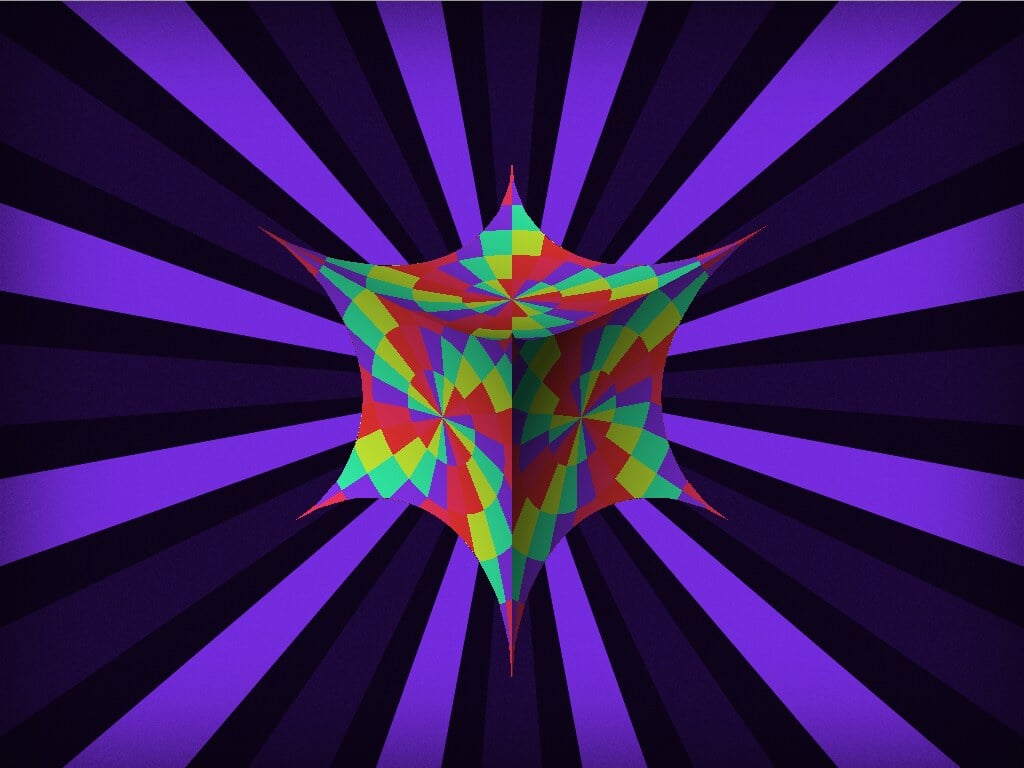
Mathematical color spaces can describe colors that don’t exist in physical reality. These hyperbolic colors have coordinates that fall outside the range of any possible light wavelength.
You can’t see them because no light source can produce them. Not because your eyes are broken, but because they require wavelengths shorter than ultraviolet or longer than infrared.
Or they need negative amounts of certain wavelengths, which makes no physical sense.
Computer graphics deal with this all the time. When you apply certain filters or adjustments to an image, the math can generate color values that can’t be displayed on any screen or printed on any paper.
The software just clips them to the nearest real color.
Colors Beyond Your Receptor Range

Your three types of cones cover a specific range of wavelengths. But other animals have different setups.
Mantis shrimp have sixteen types of color receptors. Birds have four.
These creatures see colors you can’t even imagine. What does a mantis shrimp’s world look like? You have no way to know.
Their visual experience includes colors that have no equivalent in human perception. You can describe them in terms of wavelengths and receptor responses, but that doesn’t tell you what they look like.
The same goes for ultraviolet. Bees see it.
You don’t. You can convert UV images into visible colors for photography, but that’s translation, not true perception.
The Problem With Color Names

Language struggles with impossible colors because words rely on shared experience. When someone says “red,” you both understand because you’ve both seen red things.
But how do you name something nobody has seen? The Stanford researchers who made people see reddish-green didn’t develop a standard term for it. Test subjects used phrases like “simultaneously red and green” or just gave up and called it “that weird color.”
Some said it seemed more real than normal colors, as if regular colors were pale imitations.
This creates an interesting philosophical problem. If a color exists that humans can’t normally see, and you can only make a handful of people see it under laboratory conditions, does it really exist? Or is it just a glitch in perception?
Stygian Colors and Darkness

Stygian colors are darker than black. That sounds impossible, and in normal viewing conditions, it is.
Black represents the absence of light. How do you get darker than absence?
But your visual system doesn’t actually measure absolute light levels. It measures contrast and relative brightness.
Under specific conditions—usually involving glowing objects in otherwise complete darkness—you can experience colors that seem darker than the black background.
Imagine a glowing blue object in a pitch-black room. The area immediately around it appears darker than the general blackness because your brain enhances the contrast.
That border region takes on a stygian quality—somehow darker than dark.
Self-Luminous Colors Break Expectations
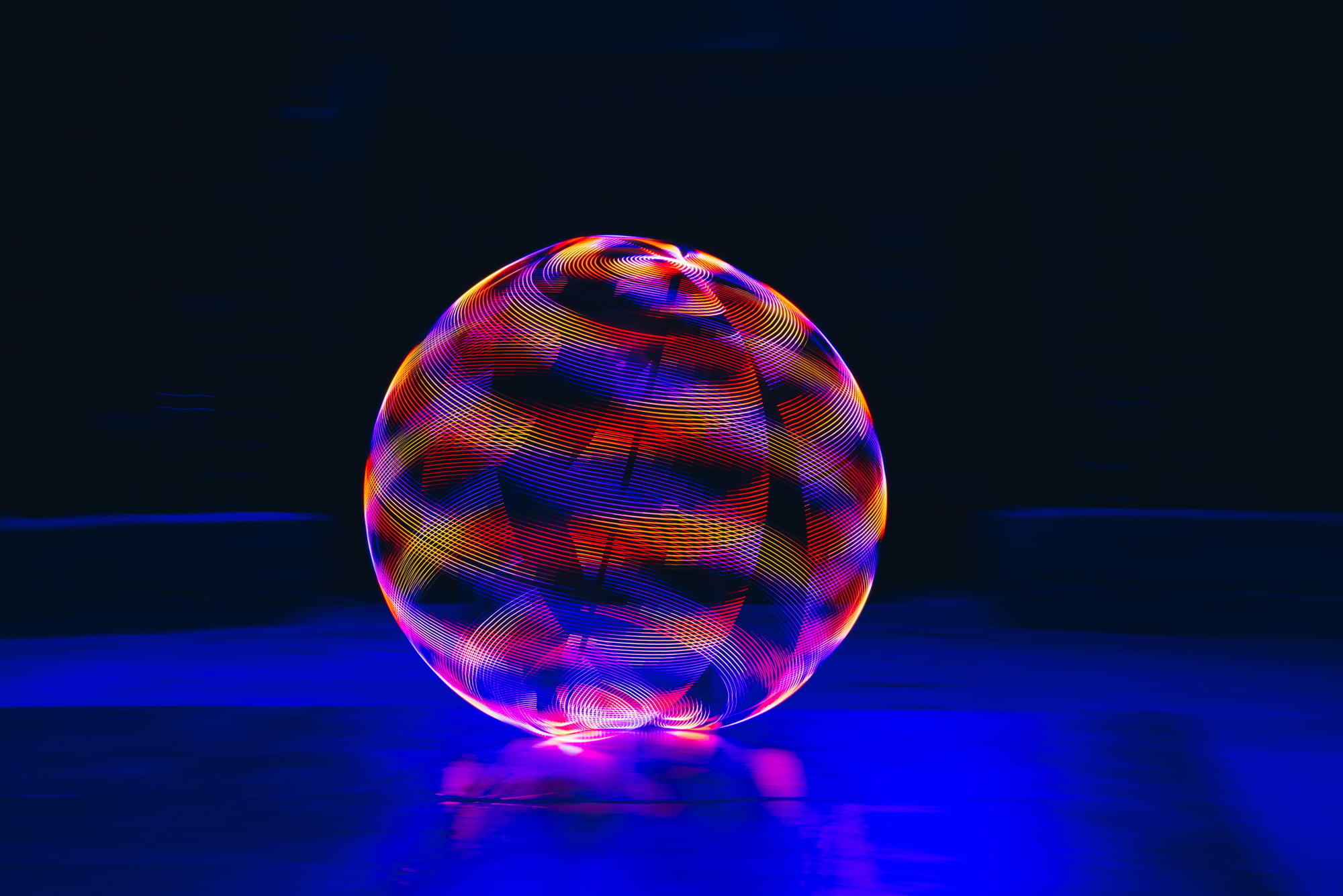
Most colors you see come from reflected light. But some colors appear to generate their own light.
These self-luminous colors don’t follow the normal rules of shading and brightness.
You’ve probably seen this effect with certain fluorescent or neon colors. They seem to glow from within, even though they’re just reflecting light like everything else.
Your brain interprets the intense saturation as self-illumination.
This creates a perceptual category that doesn’t quite make sense. The color appears brighter than it should be based on the available light.
It’s not an impossible color in the technical sense, but it occupies an impossible brightness range that violates your expectations about how surfaces should look.
Colors That Need More Than Three Dimensions

Your color space has three dimensions: hue, saturation, and brightness. But mathematical color spaces can have more dimensions.
These extra dimensions describe color properties that have no equivalent in human vision.
Think about it this way: if you lived in a two-dimensional world, you couldn’t visualize a cube. You could understand it mathematically, but you couldn’t picture it.
The same applies to higher-dimensional colors. They exist mathematically, but your three-receptor system can’t construct an image from them.
Some scientists use these higher-dimensional color spaces for technical applications. They’re useful for certain types of image processing and color correction.
But they describe colors nobody will ever see.
The Magenta Mystery
Magenta isn’t a spectral color. It doesn’t correspond to any single wavelength of light.
Your brain invents it when you see red and blue light together without green in between.
Look at a rainbow. You’ll see red, orange, yellow, green, blue, and violet.
No magenta. Yet you see magenta all the time in daily life.
It exists as a perceptual artifact—your brain’s solution to a stimulus pattern that doesn’t naturally occur in the spectrum.
In that sense, magenta is an impossible color. Not because you can’t see it, but because it has no physical basis in the continuous spectrum of light.
Your brain creates it to fill a gap in the color space, connecting the red end of the spectrum back to the violet end in your perception.
Why Your Camera Sees Differently

Cameras use three color channels, just like your eyes. But they respond to different wavelengths and use different processing algorithms.
This means cameras can capture colors you can’t see, and they sometimes fail to capture colors you can see.
Infrared photography reveals a world of colors beyond your range. When converted to visible wavelengths, vegetation appears bright pink or white.
The sky takes on strange hues. These aren’t the “real” colors of infrared—they’re translations into your visual range—but they represent real light that exists outside your perception.
The opposite also happens. Certain reds appear nearly identical to cameras but look clearly different to you.
Your visual system has evolved to make distinctions that matter for survival and social interaction. Cameras just measure wavelengths.
The Chimerical Color Effect
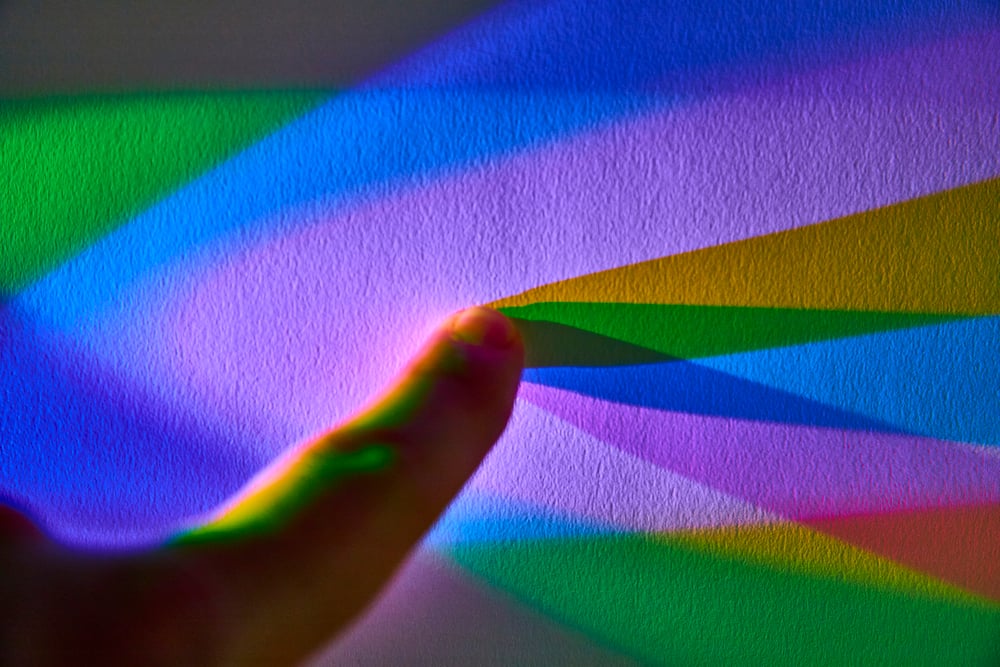
Chimerical colors appear when you fatigue one set of cones and then expose your eyes to a different color. The fatigued cones respond weakly, creating an imbalance in your color channels that generates colors more saturated than anything you can see under normal circumstances.
Stare at a bright red image for thirty seconds, then look at a white surface. You’ll see cyan, but not ordinary cyan.
The cyan appears impossibly vivid because your red cones are temporarily exhausted. The signal reaches a level of saturation your visual system never encounters with actual light.
This reveals something important about color perception. What you see depends on the current state of your visual system.
The same light can produce different colors depending on what you looked at moments earlier.
When Color Becomes Something Else
When things get too intense, hues fade away. Super-bright glows lose any tint at all – turning pure white no matter what kind of light they are.
On the flip side, when it’s super dark, your eyes switch to night mode; rods take over from cones, so everything looks like a mix of black, white, or somewhere in between.
Here’s a spot in between where shades get tricky. One lamp might look one way or another because of how you’re looking, what your eyes are used to, also the stuff around it.
Your mind guesses what should be there by using clues from nearby things.
This hints at color not being part of light directly – instead, it’s something your mind builds to handle varying wave lengths.
If the system is stretched past usual limits, that mental model falls apart, so perceiving color stops altogether.
Where Perception Meets Reality
Some shades you can’t see reveal how real stuff differs from what we feel. Light comes in waves and brightness levels.
These things are solid facts, something you can test. Yet the feeling of red or blue? That’s made up inside your head.
When you spot impossible colors using lab tricks or math ideas, it’s like hitting a wall in how your mind sees things.
That limit isn’t broken – it works as intended. It helps your brain convert light waves into real-world clues, thanks to built-in filters shaping what you notice.
Yet they hint at parts of life you’ll never touch yourself. Some creatures notice them.
Gadgets pick them up. Still, to you, they stay beyond a silent barrier – shades present anywhere but where you’re looking.
More from Go2Tutors!

- The Romanov Crown Jewels and Their Tragic Fate
- 13 Historical Mysteries That Science Still Can’t Solve
- Famous Hoaxes That Fooled the World for Years
- 15 Child Stars with Tragic Adult Lives
- 16 Famous Jewelry Pieces in History
Like Go2Tutors’s content? Follow us on MSN.



