Concepts People Recognize But Can’t Explain
You know that feeling when someone asks you to explain something perfectly ordinary, and you suddenly realize you have no idea how it actually works? Your brain recognizes it instantly, uses it constantly, but putting it into words becomes impossible.
These gaps in understanding happen to everyone. You experience these things daily, benefit from them, sometimes even rely on them.
But ask yourself to explain the mechanics behind them, and you’re stuck fumbling for words that never quite land.
That Fresh Rain Smell

The scent hits you the moment rain touches dry ground. You recognize it immediately—earthy, clean, almost nostalgic.
But what creates that smell? Most people know rain itself doesn’t have a scent.
Water is odorless. The smell comes from oils plants release during dry periods, which get trapped in soil and rocks.
When rain hits, it releases these oils into the air along with a compound called geosmin, which bacteria in soil produce. Your nose can detect geosmin at extremely low concentrations, which is why the scent feels so strong and distinct.
When Everything Feels Familiar

Déjà vu stops you mid-sentence. You’re certain you’ve lived this exact moment before—same room, same conversation, same feeling. But you know you haven’t.
Your brain processes new experiences by comparing them to stored memories. Sometimes wires cross, and your brain tags a current experience as a memory before fully processing it as something new.
The timing glitch makes the present feel like the past. Neurologists still debate the exact mechanisms, but the leading theory involves misfiring between the parts of your brain that handle memory recognition and those that process new information.
The Yawn Chain Reaction

Someone yawns across the room, and within seconds, you’re yawning too. You didn’t plan it. You couldn’t stop it if you tried.
Scientists call this contagious yawning, and it shows up in humans, dogs, and some primates. The most accepted explanation ties it to empathy and social bonding.
When you see someone yawn, mirror neurons in your brain fire as if you’re yawning yourself. People with stronger empathy responses tend to catch yawns more easily. Psychopaths, interestingly, show less contagious yawning than average.
Two Wheels That Shouldn’t Work

You learned to ride a bike as a kid, and now you do it without thinking. But stop and try to explain how a bicycle stays upright, and most people can’t do it.
The common explanation about gyroscopic force turns out to be wrong—or at least incomplete. Engineers have built bikes that eliminate gyroscopic effects, and they still balance fine.
The real answer involves a complex interaction between steering geometry, the front wheel’s trail, and how a rider makes tiny unconscious corrections. Even physics professors argue about the complete explanation.
Water’s Hidden Flavor

Water tastes like nothing, right? Except you can absolutely tell the difference between tap water, bottled water, and filtered water. You can taste when water has been sitting too long or when it’s perfectly fresh and cold.
Pure water has no taste, but you never drink pure water. Minerals, dissolved gases, temperature, and even the pH level all affect what you taste.
Your tongue also has receptors that respond to water itself, detecting its presence independent of any dissolved substances. Your body needs to identify water quickly, so your taste system evolved to recognize it even without flavor compounds.
Music That Moves You

A song plays, and suddenly chills run down your spine or your eyes water. The music hits something deep, and your body reacts before your mind can process why.
This response involves dopamine release in your brain—the same chemical tied to rewards and pleasure. But why certain chord progressions or melodies trigger this reaction remains mysterious.
It happens most often when music does something unexpected yet satisfying, or when it connects to strong memories. Your brain releases the chemicals when it predicts the next note correctly or when the music violates expectations in a pleasant way.
The Anatomy of Humor

You know a good joke when you hear one. You can feel a punchline building. But defining what makes something funny proves nearly impossible.
Humor theories abound—incongruity theory, superiority theory, relief theory—but none explain every type of joke or why the same joke works for some people and falls flat for others. Context matters.
Timing matters. Your mood, your relationship with the person telling the joke, your cultural background—all these factors influence whether something strikes you as hilarious or just confusing.
Comedy remains one of the most recognized yet least explainable human experiences.
Magnets Without the Magic

You’ve played with magnets since childhood. You know they attract and repel.
You understand the basic concept of poles. But ask yourself what a magnetic field actually is, and you’re lost.
Magnetism emerges from moving electric charges and the spin of electrons. But that just pushes the question back—what makes charges create fields?
At the quantum level, magnetism involves virtual photons exchanged between particles. Even physicists admit that at the deepest level, magnetic force is just a fundamental property of the universe that exists because it exists.
Some things you can describe mathematically but not truly explain in everyday terms.
Time That Won’t Stay Still

Five minutes in a waiting room feels like an hour. An hour with friends disappears in what seems like five minutes.
You know time passes at a constant rate, yet your experience of it constantly shifts. Your brain processes time based on how much information it takes in and how much attention you’re paying.
New, engaging experiences pack more information into memory, which makes them feel longer in retrospect but shorter in the moment. Boredom does the opposite—minimal information makes time drag while you’re experiencing it but leaves little trace in memory. Age changes this too. As you get older, each year represents a smaller fraction of your total life experience, which makes time feel like it’s accelerating.
Dreams That Make No Sense

You dream every night, often multiple times. You remember some dreams vividly while others vanish instantly upon waking.
But what dreams actually do remains unclear. Memory consolidation, emotional processing, random neural firing, problem-solving rehearsals—researchers propose all these functions and more.
Dreams incorporate recent experiences, old memories, fears, desires, and completely random elements your brain stitches together into narratives that usually make sense while you’re in them. The lack of logical consistency in dreams comes from reduced activity in your prefrontal cortex, the part that normally handles critical thinking.
The exact purpose of dreaming, though? Nobody knows for certain.
The Mystery of Awareness

Right now, you’re conscious. You’re aware you’re reading these words.
You can think about thinking. You experience being you.
But what consciousness actually stumps philosophers and scientists alike. Your brain processes information, creates models of the world, makes decisions.
But why does that processing come with subjective experience? Why does being you feel like something?
The “hard problem of consciousness” asks why physical processes in your brain create the feeling of being aware rather than just running like a sophisticated computer program. You know you’re conscious.
You can’t doubt that while you’re experiencing it. But explaining how or why consciousness emerges from neural activity remains one of the deepest unsolved questions in science.
Darkness From Moisture

A wet shirt looks darker than a dry one. Wet concrete looks darker than dry concrete.
Wet hair looks darker than dry hair. The pattern is consistent and obvious, yet most people can’t explain it.
Water changes how light interacts with surfaces. When a material is dry, light bounces off at various angles, scattering in all directions.
This scattered light looks brighter to your eyes. When water fills the spaces in a material, it creates a smoother surface that reflects light more uniformly.
More light goes in deeper and gets absorbed rather than bouncing back to your eyes. Less reflected light equals a darker appearance, even though the material itself hasn’t changed color.
Describing Color to No One

Try explaining what blue looks like without referencing other blue things. Try explaining color at all to someone who’s never seen.
You can describe wavelengths and light frequencies, but that doesn’t capture the experience of seeing blue. Color exists only in your perception.
Light has wavelengths, and your eyes have receptors that respond to different ranges of those wavelengths. Your brain interprets those signals as colors.
But the subjective experience of “blueness” doesn’t exist in the light itself—it’s entirely created by your consciousness. This is why philosophers use color as a classic example of subjective experience that can’t be fully communicated or explained.
The Force You Can’t Define
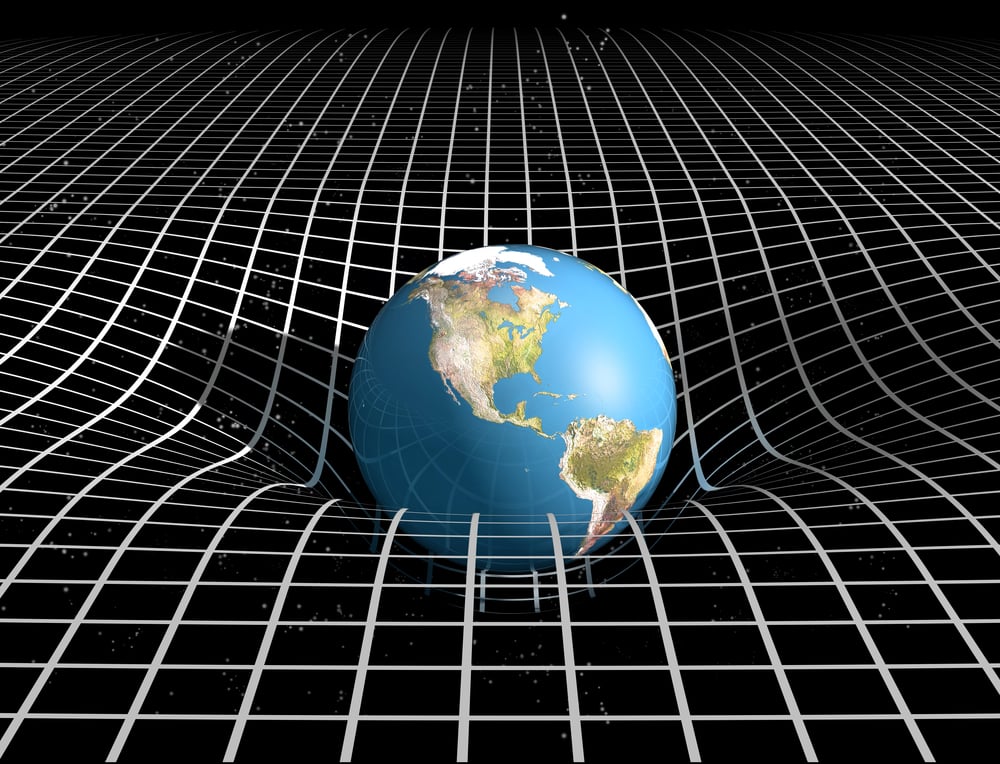
Gravity keeps you on the ground. You understand it holds planets in orbit and makes things fall.
But what is gravity fundamentally? That’s where things get weird. Newton described how gravity behaves but admitted he couldn’t explain what it was.
Einstein improved the model by describing gravity as the curvature of spacetime caused by mass and energy. But that just rephrases the mystery—what is spacetime, and why does mass curve it?
At the quantum level, physicists predict gravity should involve particles called gravitons, but nobody has detected them yet. You can measure gravity, predict it, and use it to launch satellites, but the deepest explanation of what gravity actually is remains unknown.
When Nothing Works

Your doctor gives you a sugar tablet and tells you it’s medicine. You take it, and your headache improves.
The placebo effect seems like it shouldn’t work—your rational mind knows the tablet contains no active ingredients. Yet your symptoms genuinely improve.
The placebo effect involves real biological changes. Believing you’ve taken medicine triggers your brain to release endorphins and other chemicals that reduce pain, decrease inflammation, and sometimes even boost immune function.
Your expectations literally change your body’s chemistry and functioning. But the mechanism behind this mind-body connection remains mysterious.
How does belief translate into measurable physical changes? Why does the placebo effect work better for some conditions than others?
Even when you know you’re taking a placebo, it can still work. Your mind’s ability to heal your body based on nothing but expectation is one of the most recognized yet unexplained phenomena in medicine.
What You Know Without Knowing

Every day, these ideas are right there, part of how things feel. Because you lean on them, live through them, spot them without thinking.
That space – between knowing something is real and saying why – isn’t a flaw. It’s just what it means to be like everyone else.
What seems hard to describe might stem from tangled truths beneath. Certain experiences slip through words, leaving meaning half-lost.
Unsolved puzzles often wait on answers science has not reached. Most times, you get by without needing reasons for every little thing.
After living through something comes clarity, not before it. What feels familiar yet hard to put into words tends to weigh heavier than what fits neatly in a definition but stays distant.
Things you know deep down, even if unnamed, stick closer than textbook answers that never touch real life.
More from Go2Tutors!

- The Romanov Crown Jewels and Their Tragic Fate
- 13 Historical Mysteries That Science Still Can’t Solve
- Famous Hoaxes That Fooled the World for Years
- 15 Child Stars with Tragic Adult Lives
- 16 Famous Jewelry Pieces in History
Like Go2Tutors’s content? Follow us on MSN.



