Countries You Think Aren’t Safe – But Actually Are
There’s a peculiar phenomenon that happens when you mention certain travel destinations.
Eyes widened.
Voices drop.
Someone inevitably asks if you’ve made out your will.
But here’s the thing about travel stereotypes: they’re often decades out of date, built on Hollywood scripts, or based on headlines that never quite captured the full story.
Some of the world’s most unfairly maligned destinations have quietly transformed into remarkably safe places to visit, while their reputations lag stubbornly behind reality.
The gap between perception and truth can be staggering.
Countries that spent years clawing their way out of difficult pasts now boast crime rates lower than major European capitals, yet travelers still hesitate to book flights.
Others sit in volatile regions but remain islands of stability that most tourists never bother to discover.
Let’s set the record straight on some places that deserve a second look.
Colombia

If your mental image of Colombia involves drug cartels and kidnappings, you’re working with information from the early 2000s.
Kidnapping incidents have plummeted by 90 percent thanks to peace negotiations between the Colombian government and guerrilla groups Wego Travel Blog.
Major tourist destinations like Cartagena and Popayan now fall into areas considered safe to visit Wego Travel Blog, and the country’s tourism infrastructure has matured alongside its improving security situation.
Sure, petty theft exists in big cities like Bogotá and Medellín, but that’s true of Barcelona and Rome too.
Colombia has invested heavily in tourist safety, establishing dedicated police units in popular areas.
Travelers consistently report feeling welcomed rather than targeted, and the reality on the ground tells a different story than Netflix would have you believe.
Morocco

North Africa carries baggage in Western minds, most of it undeserved.
Morocco recently reached the second lowest risk level of ‘Moderate’ on global safety assessments Riskline, putting it on par with many European destinations that never raise an eyebrow.
The country’s economy depends heavily on tourism, and the government takes security seriously, especially in visitor-heavy locations like Marrakech, Fes, and Chefchaouen Travel Safe – AbroadClaire’s Footsteps.
The most common issues travelers face involve pushy vendors in souks and the occasional taxi overcharge.
Many solo female travelers report feeling safer walking around Moroccan cities than they do in London or other major UK cities Claire’s Footsteps.
One persistent myth worth addressing: the 2023 earthquake affected specific regions including the Atlas Mountains and parts of Marrakech, not the entire country, and most impacted tourist areas reopened within two weeks.
Rwanda

The 1994 genocide left scars so deep that many people still can’t imagine Rwanda as anything other than a tragedy.
But the country has spent three decades building something remarkable from unthinkable horror. A 2022 survey ranked Rwanda as the sixth safest country in the world and the safest in Africa for solo travelers.
Read that again: sixth in the world.
The 2018 Gallup Global Law and Order report placed Rwanda 40th globally and second in Africa, with 83 percent of residents expressing confidence in local police and feeling safe walking alone at night.
Kigali consistently ranks among Africa’s safest cities, and the country boasts a crime index of just 26.9, significantly lower than many other African nations Follow Alice.
These aren’t the metrics of a country living in its past.
Jordan

Sitting in the Middle East automatically places Jordan under suspicion for many Western travelers.
Never mind that the country has remained remarkably stable while conflicts raged around it.
Travelers consistently report feeling safe throughout Jordan, including at major tourist sites and in cities like Amman and Wadi Musa Tripadvisor.
The country’s tourism sector is sophisticated and well-established, having managed visitor safety through decades of regional instability.
Recent visitors note that many solo female travelers encountered no issues, and pushy vendors were less common compared to other countries in the region Tripadvisor.
The Jordanian government recognizes that tourism represents a crucial economic pillar and has invested accordingly in maintaining security at popular sites.
The conservative Muslim culture that worries some travelers actually contributes to low crime rates, and Jordanians are famously hospitable.
Albania
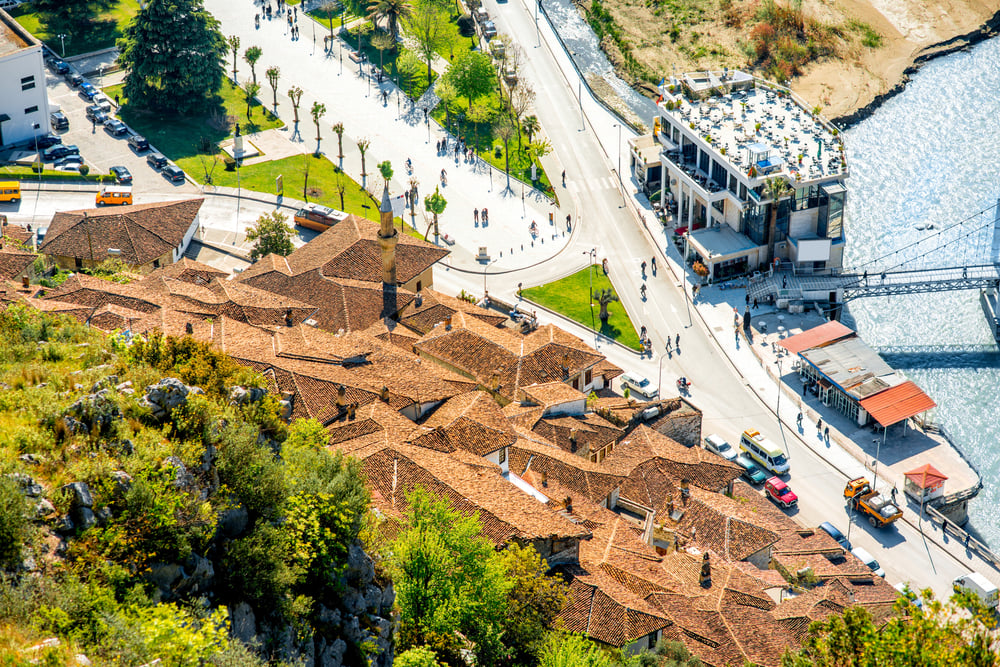
Hollywood has a lot to answer for when it comes to Albania’s reputation.
The 2008 film ‘Taken’ featured Albanian traffickers as villains, and the stereotype stuck like gum on a shoe.
The country has developed an unfair reputation for danger, but pickpocketing and petty theft are notably uncommon, and many solo female travelers find Albania no more dangerous than elsewhere in Europe Lonely Planet.
Albania has a lower crime rate than Canada Lonely Planet, which should settle the safety debate immediately.
Travelers report that Albanians are so honest that phones left on tables often remain untouched, cars are left unlocked, and produce is sold through roadside honesty boxes Albania Tech.
Albanian hospitality is legendary, with locals known for inviting complete strangers for coffee.
Today’s Albania is focused on eventually joining the European Union, and the Albanian Riviera has become a legitimate Mediterranean alternative to pricier Greek and Italian destinations.
Vietnam

The war ended in 1975, but Americans in particular still struggle to separate modern Vietnam from grainy news footage.
The U.S. State Department gives Vietnam its highest safety rating of Level 1, meaning travelers should exercise normal precautions Berkshire Hathaway Travel Protection, the same advice given for visiting France or Japan.
Vietnam ranks 41st out of 163 countries in the 2024 Global Peace Index and has a zero percent terrorism risk according to the 2024 Global Terrorism Index Atlys.
The most common crime against tourists involves petty theft, particularly phone snatching by motorcycle riders in crowded areas.
That’s hardly unique to Vietnam.
Travelers consistently note that Vietnamese locals are generally honest and fair in their pricing and services, with relatively few scams compared to some other Southeast Asian destinations.
The country’s tourism infrastructure has matured significantly, with dedicated tourist police forces in major cities specifically to assist foreign visitors.
What This Means for You
Safety is never absolute anywhere.
Paris has pickpockets.
London has knife crime.
New York has its share of problems.
The question isn’t whether a country is perfectly safe, it’s whether the risks are manageable and the rewards worth it.
These six countries offer incredible experiences, rich cultures, and landscapes that belong on bucket lists, all while maintaining safety records that should put nervous travelers at ease.
The common thread running through all these destinations involves outdated information meeting modern reality.
Colombia isn’t Pablo Escobar’s playground anymore.
Rwanda isn’t defined by genocide. Albania isn’t a mafia hideout.
Vietnam isn’t at war.
Morocco isn’t dangerous because it’s Muslim.
Jordan isn’t unsafe because of its geography.
Research current conditions, take normal precautions, respect local customs, and you’ll likely find these places far safer than their reputations suggest.
More from Go2Tutors!

- The Romanov Crown Jewels and Their Tragic Fate
- 13 Historical Mysteries That Science Still Can’t Solve
- Famous Hoaxes That Fooled the World for Years
- 15 Child Stars with Tragic Adult Lives
- 16 Famous Jewelry Pieces in History
Like Go2Tutors’s content? Follow us on MSN.



