Courtroom Moments That Stunned the Gallery and Changed Legal Precedent
Courtrooms are theaters with rules. The witness box, the bench, the gallery — they have fixed positions, but the drama inside them is never entirely predictable.
Over the centuries, legal proceedings have produced moments so unexpected, so perfectly timed, or so devastatingly clear that the people watching them understood immediately that something larger than a single verdict had just happened. Some of these moments shifted how societies defined guilt, innocence, and the rights of the accused.
Others broke something that had seemed unbreakable. A few of them changed the world.
The Zenger Acquittal — A Jury Decides That Truth Is a Defense
In 1735, New York printer John Peter Zenger was charged with seditious libel for publishing articles that criticized the colony’s royal governor, William Cosby. Under the English common law of the time, truth was no defense to libel — it was, if anything, aggravating, because true criticism was more dangerous than false.
The governor’s hand-picked judges instructed the jury accordingly: decide only whether Zenger had published the articles, not whether they were justified. Attorney Andrew Hamilton, brought in from Philadelphia specifically for the case, ignored the instruction entirely and argued to the jury that truth should be a complete defense.
When the foreman returned a “not guilty” verdict, cheers filled the courtroom and spread into the street. The case established no formal legal precedent, but it fundamentally altered what colonial printers felt they could safely write, and Governor Morris later credited it as a building block of the constitutional press protections enshrined half a century later.
The Darrow Closing Argument — Twelve Hours That Saved Two Lives
On August 22, 1924, Clarence Darrow began a twelve-hour closing argument in a courtroom packed beyond legal capacity to save Nathan Leopold and Richard Loeb from the death penalty. The two wealthy Chicago teenagers had confessed to the murder of a 14-year-old boy — a crime committed, they said, to see if they could do it without getting caught.
The crowd outside jostled for updates. Darrow had made the strategic decision to have his clients plead guilty, placing their fate in a single judge’s hands rather than a jury’s.
By the end of his argument, Judge John Caverly was reportedly in tears. He sentenced both defendants to life in prison plus 99 years — citing their youth as the chief reason.
The argument remains the most celebrated attack on capital punishment ever delivered in an American courtroom. Influencing how subsequent generations of defenders framed youthful culpability.
“Have You No Sense of Decency?” — The Moment McCarthy’s Power Collapsed
By June 1954, Senator Joseph McCarthy had spent four years publicly destroying careers and reputations with accusations of Communist affiliation, and 20 million Americans were watching the Army-McCarthy hearings live on television for the first time. On June 9, McCarthy broke an agreement with Army counsel Joseph Welch and publicly attacked a young associate in Welch’s law firm over past membership in an organization with alleged Communist ties.
Welch fixed McCarthy with a steady gaze and said: “Until this moment, Senator, I think I never really gauged your cruelty or your recklessness. You have done enough. Have you no sense of decency, sir, at long last?” The audience in the chamber erupted.
McCarthy was unable to regain control of the room or of the narrative. Six months later, the Senate voted to censure him.
He died in 1957, three years later, largely stripped of influence.
The Nuremberg Verdicts — Establishing Individual Accountability for State Crimes
The Nuremberg Trials, held in Germany from 1945 to 1946, were the first proceedings in which individuals were prosecuted not for crimes against their own governments but for crimes against humanity as a whole. When the verdicts were handed down — twelve of the 24 defendants sentenced to death, others to lengthy prison terms, three acquitted — the gallery understood it had witnessed the creation of something new in international law: the principle that heads of state and military commanders could not shelter behind the authority of their governments when ordering atrocities.
The trials were imperfect and were criticized at the time as victors’ justice. They remain contested by legal scholars on procedural grounds.
But their precedent — that individuals bear personal responsibility for mass crimes regardless of orders received — became the foundation of every international criminal tribunal that followed.
Brown v. Board of Education — Thurgood Marshall and the End of Separate But Equal
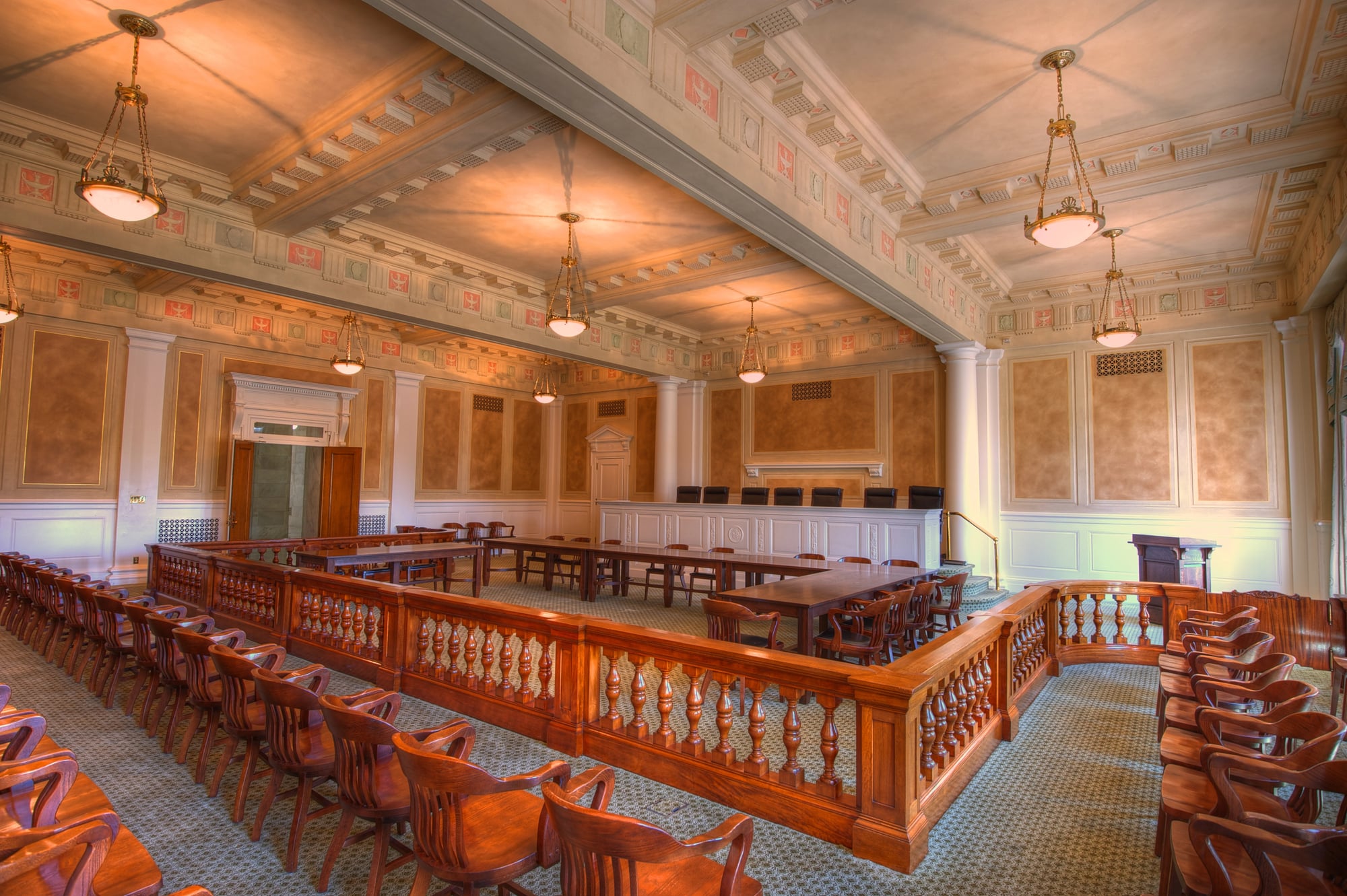
The Supreme Court hearing in Brown v. Board of Education in 1954 built toward its unanimous ruling through an argument by NAACP attorney Thurgood Marshall that, in the words of one observer, was delivered with the precision of a surgeon. Marshall made the case — drawing on sociological and psychological evidence about the damage inflicted on Black children by forced segregation — that the 1896 “separate but equal” doctrine of Plessy v. Ferguson was not a legal technicality but an active mechanism of harm.
When Chief Justice Earl Warren read the opinion, which stated that separate educational facilities were “inherently unequal,” there was silence in the chamber before the realization of what had happened settled over the room. It remains the most consequential Supreme Court ruling of the 20th century in domestic constitutional law.
The Scopes Trial — Darrow Interrogates William Jennings Bryan on the Witness Stand
At the 1925 Scopes Monkey Trial in Dayton, Tennessee, defense attorney Clarence Darrow pulled off an extraordinary procedural maneuver: he called the prosecution’s own champion, three-time presidential candidate William Jennings Bryan, as an expert witness on the Bible. Bryan accepted, reportedly believing his superior knowledge of scripture would carry the day.
What followed was a public evisceration. Darrow pressed Bryan on whether he believed the earth was created in six literal days, whether he thought a fish had actually swallowed Jonah, whether he accepted that the Bible’s dates implied the earth was only a few thousand years old.
Bryan’s fumbling answers delighted the crowd, which had spilled onto the courthouse lawn. Scopes was convicted and fined $100 — but the cultural damage to fundamentalist credibility was severe and lasting.
The O.J. Simpson Glove Demonstration — When Physical Evidence Failed Live on Television
On June 15, 1995, with a television audience of tens of millions watching, Los Angeles prosecutor Christopher Darden invited O.J. Simpson to put on the leather gloves found at the crime scene. Defense attorney Johnnie Cochran had reportedly attempted to discourage the prosecution from this demonstration, anticipating what would happen.
Simpson struggled visibly to pull the gloves over his hands, which had swelled significantly after months of arthritis medication, and they appeared to not fit. Cochran later encapsulated the moment in one of the most repeated phrases in American legal history.
The demonstration did not by itself produce the acquittal, but it was the turning point of a trial already defined by racial tension, disputed DNA evidence, and allegations of police corruption. It remains the single moment most people recall when they think of what happened.
Miranda v. Arizona — A Supreme Court Ruling Born from a Confession Nobody Warned Against
In 1963, Ernesto Miranda was arrested in Phoenix, Arizona, and after two hours of interrogation by police who did not inform him of his rights, confessed to a series of crimes. At trial, that confession was admitted into evidence.
The Supreme Court’s 1966 ruling in Miranda v. Arizona held that the Fifth Amendment’s protection against self-incrimination required that suspects be informed of their rights before interrogation — the right to remain silent, the right to an attorney, the warning that anything said could be used against them. The ruling was deeply controversial at the time, with critics arguing it would handcuff law enforcement.
It instead generated a legal formulation — the Miranda warning — that has been read aloud to American suspects so many times it became part of the cultural vocabulary. Reproduced verbatim in every crime drama for six decades.
The Nuremberg Defense Rejected — Eichmann in Jerusalem

Adolf Eichmann, the SS officer who oversaw the logistics of the Nazi genocide, was captured by Israeli agents in Argentina in 1960, tried in Jerusalem in 1961, and executed in 1962 — the only execution carried out by the Israeli state. His defense rested largely on the claim that he had been following orders and had no authority to do otherwise.
The court rejected it entirely. The Eichmann trial — conducted openly, with extensive documentation, and covered by global media — produced what the philosopher Hannah Arendt described as evidence of “the banality of evil”: the quiet, bureaucratic normalcy with which ordinary administrative functionaries could participate in mass murder.
The phrase, and the concept, changed how scholars and legal theorists thought about complicity, personal agency, and the moral limits of institutional obedience.
The Chicago Seven — A Judge Who Became the Story
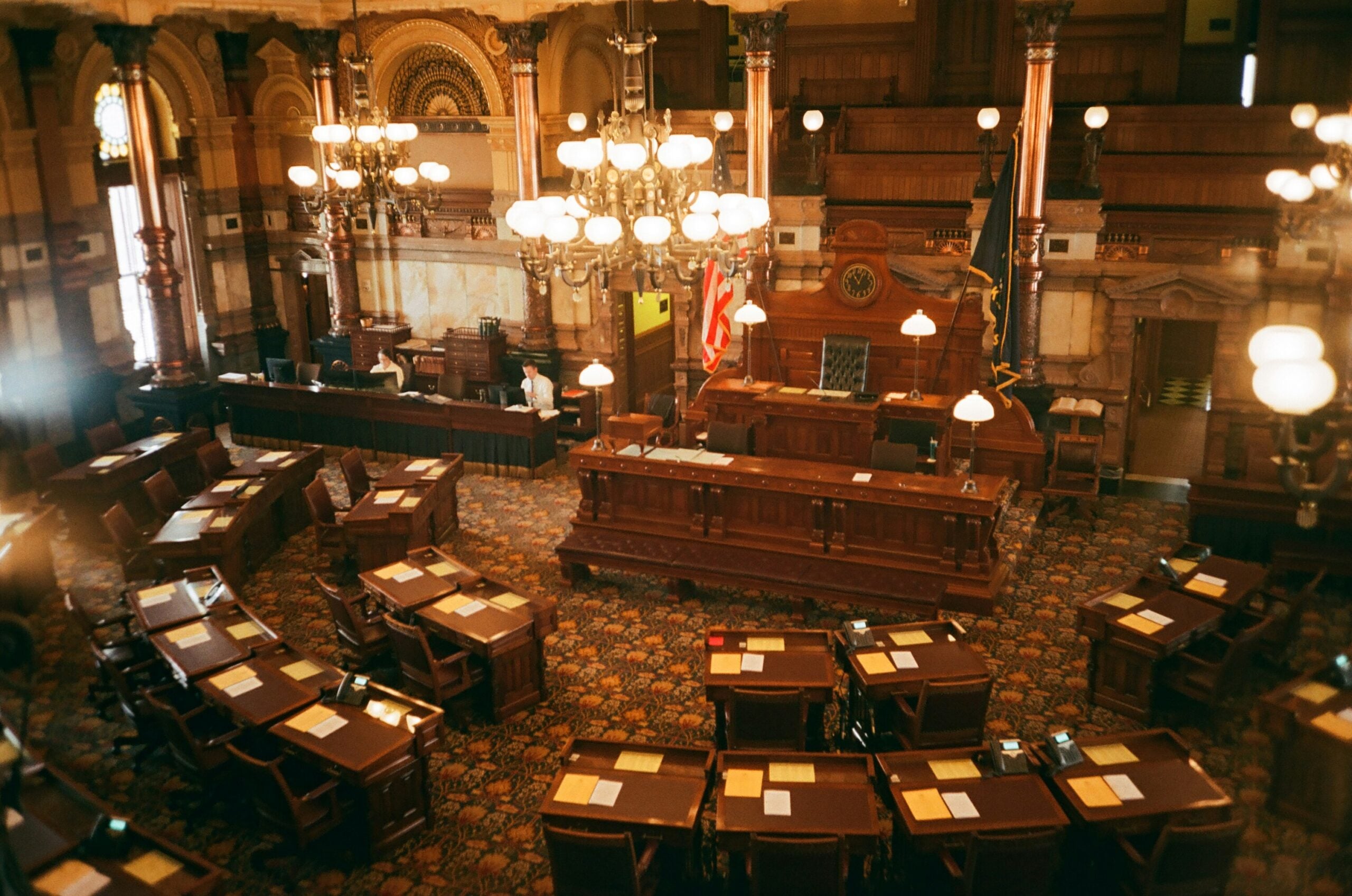
At the 1969-70 trial of the Chicago Seven — activists charged with crossing state lines to incite a riot at the 1968 Democratic National Convention — produced some of the most theatrical courtroom disruptions in American legal history, much of them provoked by Judge Julius Hoffman’s handling of the proceedings. Abbie Hoffman and co-defendant Rubin appeared in court in judicial robes.
Bobby Seale, the eighth defendant, was famously bound and gagged in his chair by the judge’s order after persistently demanding the right to represent himself. The binding and gagging of a Black defendant in a federal courtroom horrified observers and was later cited as a significant factor in Seale’s severance from the case.
Judge Hoffman’s conduct during the trial was subsequently reviewed by the Seventh Circuit Court of Appeals, which found 52 instances where he had been prejudiced against the defense.
The Dred Scott Decision — A Ruling That Made Civil War Inevitable
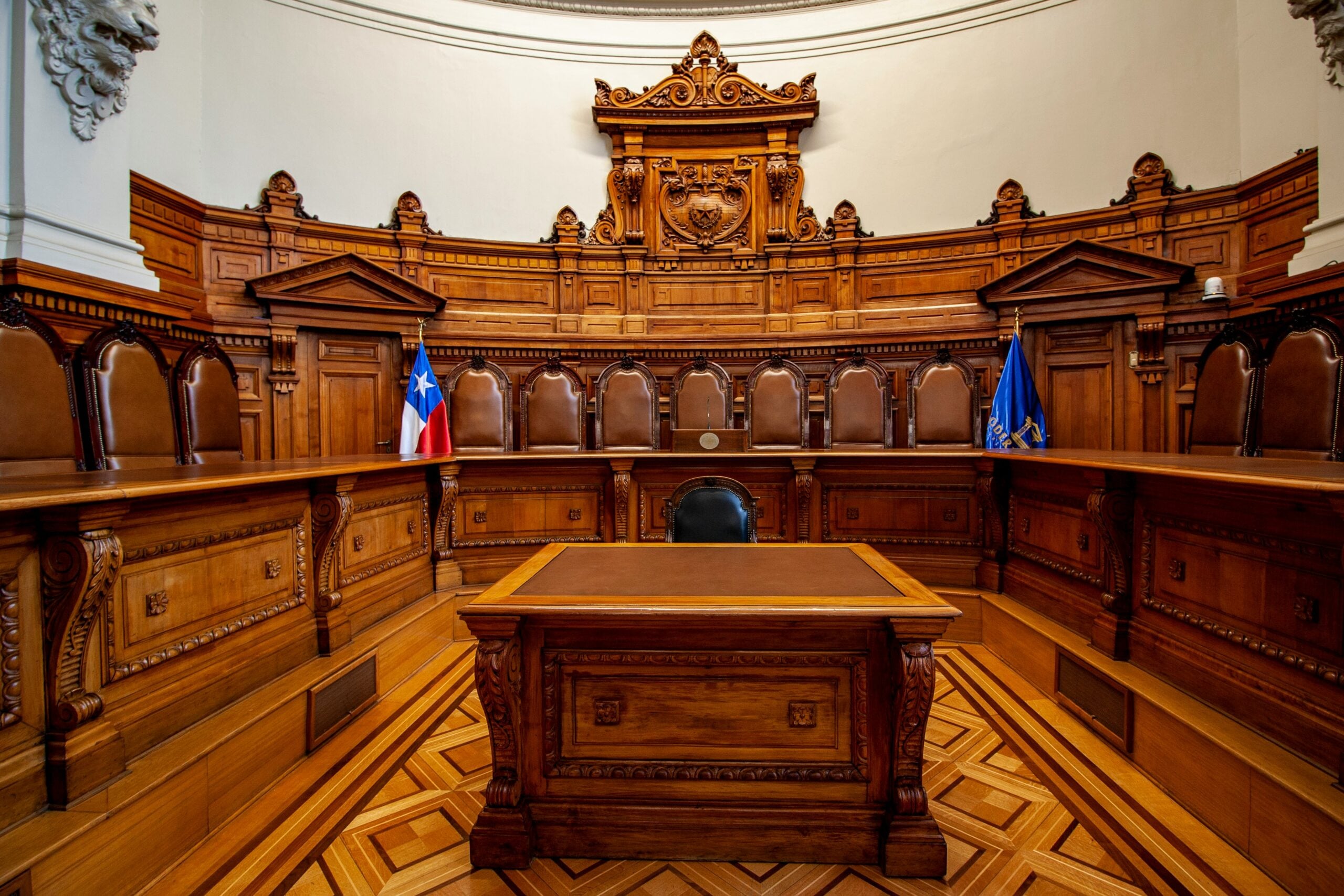
In 1857, the Supreme Court ruled in Dred Scott v. Sandford that African Americans were not and could not be citizens of the United States, and that Congress had no authority to prohibit enslavement in federal territories. Chief Justice Roger Taney’s opinion held that people of African descent had no rights that white Americans were bound to respect.
The reaction in the gallery when the ruling was announced and in the country when it was published was division so extreme that many historians consider it the single legal decision that made the Civil War unavoidable. Abraham Lincoln called it part of a conspiracy to extend slavery nationwide.
The ruling was directly overturned by the Fourteenth Amendment to the Constitution in 1868.
The Trial of Galileo — Science Silenced, Temporarily
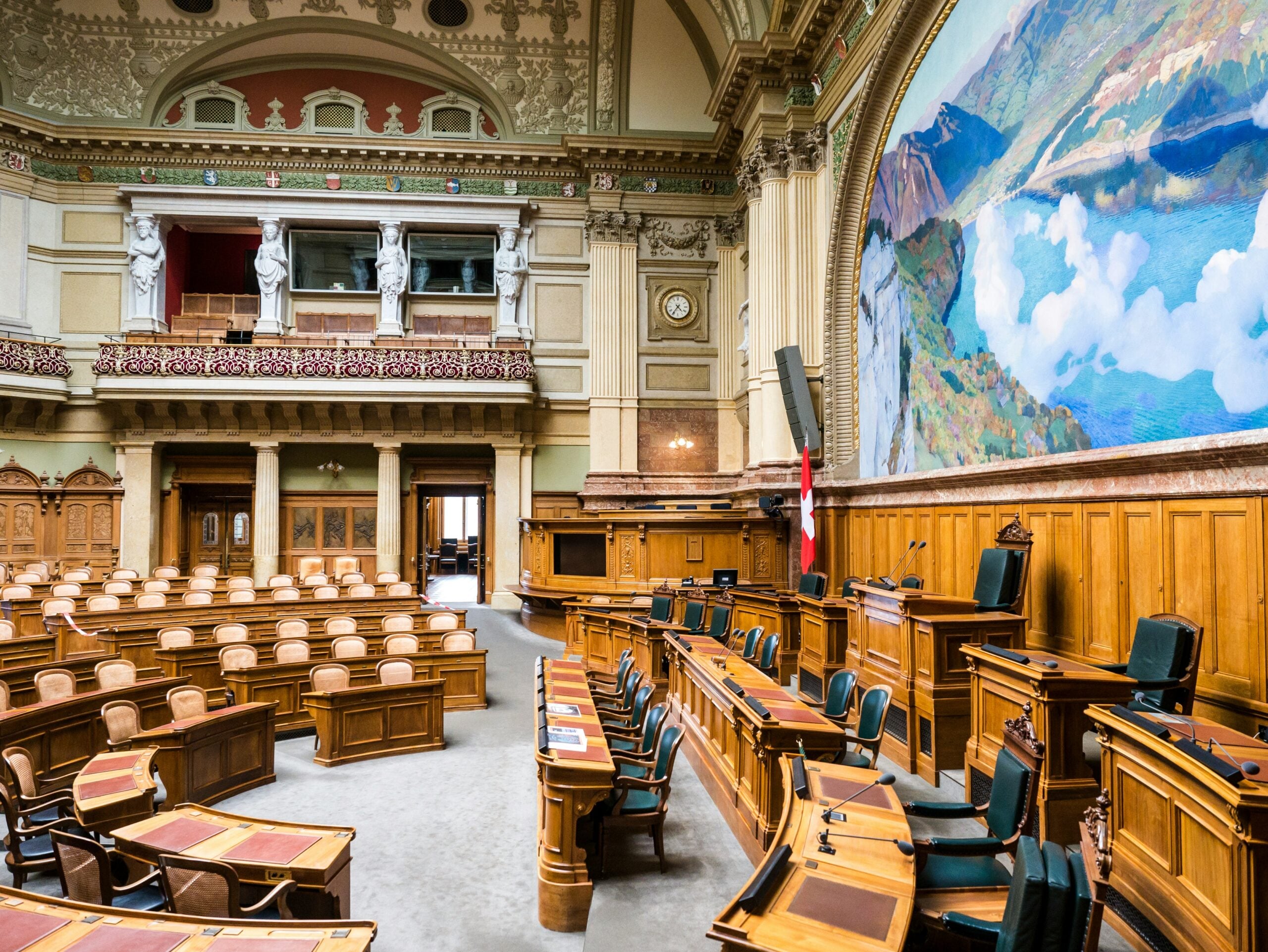
In 1633, Galileo Galilei was tried by the Roman Inquisition for advocating the Copernican model of the solar system — the theory that the earth orbits the sun, rather than vice versa. He was 69 years old and in poor health.
Under the threat of torture, he recanted. The court sentenced him to house arrest for the remainder of his life, which lasted nine more years.
The legend that he muttered “and yet it moves” after his recantation is almost certainly apocryphal, but the story has persisted because it captures something true about the situation. No formal legal proceeding can compel the universe to rearrange itself to satisfy a verdict.
The Catholic Church formally acknowledged that the Church had erred in condemning Galileo’s views in 1992 — 359 years after the trial.
The Boston Massacre Trial — John Adams Defends the Soldiers Nobody Would Represent

In 1770, John Adams agreed to defend the British soldiers charged with murder after they fired into a Boston crowd, killing five people — an act that inflamed colonial sentiment and became known as the Boston Massacre. Adams was a committed patriot who believed deeply in the colonists’ cause, but he also believed that every accused person deserved legal representation and a fair hearing.
His defense produced an acquittal for most of the soldiers and a reduced charge for two others. Adams later called it “one of the best pieces of service I ever rendered my country” — arguing that establishing the principle that unpopular defendants deserve competent defense was foundational to the kind of legal system the colonies intended to build.
The moment is considered one of the earliest demonstrations of the right to counsel in American legal culture.
Roe v. Wade — A Ruling That Restructured American Politics for Half a Century
In January 1973, the Supreme Court’s ruling in Roe v. Wade established a constitutional right to abortion based on an implied right to privacy under the Fourteenth Amendment. The ruling was polarizing from the moment it was announced, and it reorganized American political life around a single legal question for the following 49 years.
The Roe framework was overturned by the Supreme Court’s 2022 ruling in Dobbs v. Jackson Women’s Health Organization, which returned abortion regulation to individual states. Few Supreme Court decisions in American history have had a longer or more direct impact on electoral politics, legislative agendas, and the composition of the court itself than the original Roe decision — a ruling that its own supporters acknowledged was built on an unstable constitutional foundation, as Justice Ruth Bader Ginsburg had argued publicly on multiple occasions.
The Trial of Socrates — Democracy Condemning Its Own Philosopher
In 399 BCE, the city of Athens tried the philosopher Socrates on charges of impiety and corrupting the youth. He was 70 years old and had been a prominent and intriguing public figure for decades.
The trial was conducted before a jury of 500 Athenian citizens, and the vote to convict was 280 to 220 — closer than it might have been had Socrates chosen to offer a more conciliatory defense. He refused to stop philosophizing as a condition of acquittal, and he refused to propose exile as an alternative sentence, instead suggesting that Athens owed him a reward.
He was sentenced to death by drinking hemlock. Plato’s account of the proceedings — written as the Apology — became one of the foundational texts of Western philosophy, turning a legal conviction into an enduring argument about the relationship between free inquiry and civic power.
The Sacco and Vanzetti Case — A Verdict That Still Divides Historians
Nicola Sacco and Bartolomeo Vanzetti, Italian immigrants and self-described anarchists, were convicted of murder and robbery in Massachusetts in 1921 and executed in 1927, despite widespread belief among supporters — and later, many legal historians — that the trial had been tainted by anti-immigrant prejudice and political bias. The case became an international cause célèbre, with protests and rallies in cities across Europe and Latin America.
Massachusetts Governor Michael Dukakis issued a formal proclamation in 1977, the fiftieth anniversary of the executions, stating that the men had been unfairly tried and that no stigma should attach to their names. Whether they were guilty remains, to this day, a contested historical question.
When a Courtroom Changes Something Real
The common thread across these proceedings is not that justice was always served — it clearly was not, in several of them. What these moments share is a quality of visibility: something that had operated quietly, or been assumed without examination, was forced into the open, where it became undeniable.
Welch’s question exposed McCarthy to an audience that had tolerated him for four years. Darrow’s argument placed a judge’s humanity in direct confrontation with the mechanical logic of a death sentence.
Hamilton’s jury instruction asked twelve ordinary people to decide that truth mattered more than precedent. The gallery gasped, or cheered, or sat in stunned silence — and in doing so became part of what happened.
Courts are institutions, and institutions move slowly. But the specific moment when something cracks — when the argument that has held for decades suddenly sounds hollow, when a crowd of lawyers and spectators understands simultaneously that the world has shifted — is rarely a formal ruling or a legal document.
It is a question asked with just the right amount of quiet fury, a glove that does not fit, a soft-spoken unanimous opinion that strikes down a doctrine every serious person in the room already knew was wrong. The law catches up to those moments eventually.
The gallery was there first.
More from Go2Tutors!

- The Romanov Crown Jewels and Their Tragic Fate
- 13 Historical Mysteries That Science Still Can’t Solve
- Famous Hoaxes That Fooled the World for Years
- 15 Child Stars with Tragic Adult Lives
- 16 Famous Jewelry Pieces in History
Like Go2Tutors’s content? Follow us on MSN.



