Creepy Stories And Legends About Route 66
Route 66 stretches 2,448 miles from Chicago to Santa Monica, but somewhere along that legendary highway, the ordinary world starts to fray at the edges. Maybe it’s the vastness of the landscape, the long stretches where civilization feels like a distant memory, or the weight of all those decades of travelers passing through.
Whatever the reason, America’s Mother Road has collected more ghost stories, unexplained encounters, and spine-chilling legends than almost any other stretch of asphalt in the country.
These aren’t just campfire tales passed down by bored truckers. The stories come from everyone — families on vacation, lone travelers, even skeptics who swore they didn’t believe in such things until they found themselves face-to-face with something that couldn’t be explained.
The highway has witnessed everything from tragic accidents to mysterious disappearances, and according to those who’ve experienced it firsthand, some of that darkness never really left.
The Phantom Hitchhiker Of Devil’s Elbow

The Devil’s Elbow earned its name honestly. This treacherous curve near Lebanon, Missouri, claimed more lives than anyone cared to count back when Route 66 was the main artery west.
The road twisted sharply around the Big Piney River, and drivers unfamiliar with the turn often found themselves in the water below.
But the accidents stopped being the scariest part of Devil’s Elbow decades ago. Now it’s the woman who appears on foggy nights, thumb extended, wearing a dress that went out of style sometime in the 1940s.
She never speaks when drivers pull over, just slides into the backseat and points forward. And here’s where the story gets interesting (in the way that makes your skin crawl): she always disappears before reaching town, leaving behind nothing but a damp spot on the upholstery and the lingering scent of river water.
The really unsettling part isn’t that she vanishes — it’s that drivers who pick her up never have accidents on that dangerous curve, no matter how fast they’re going or how poor the visibility.
She seems to be protecting people from meeting the same fate she did all those years ago.
The Glowing Dog Of Oklahoma
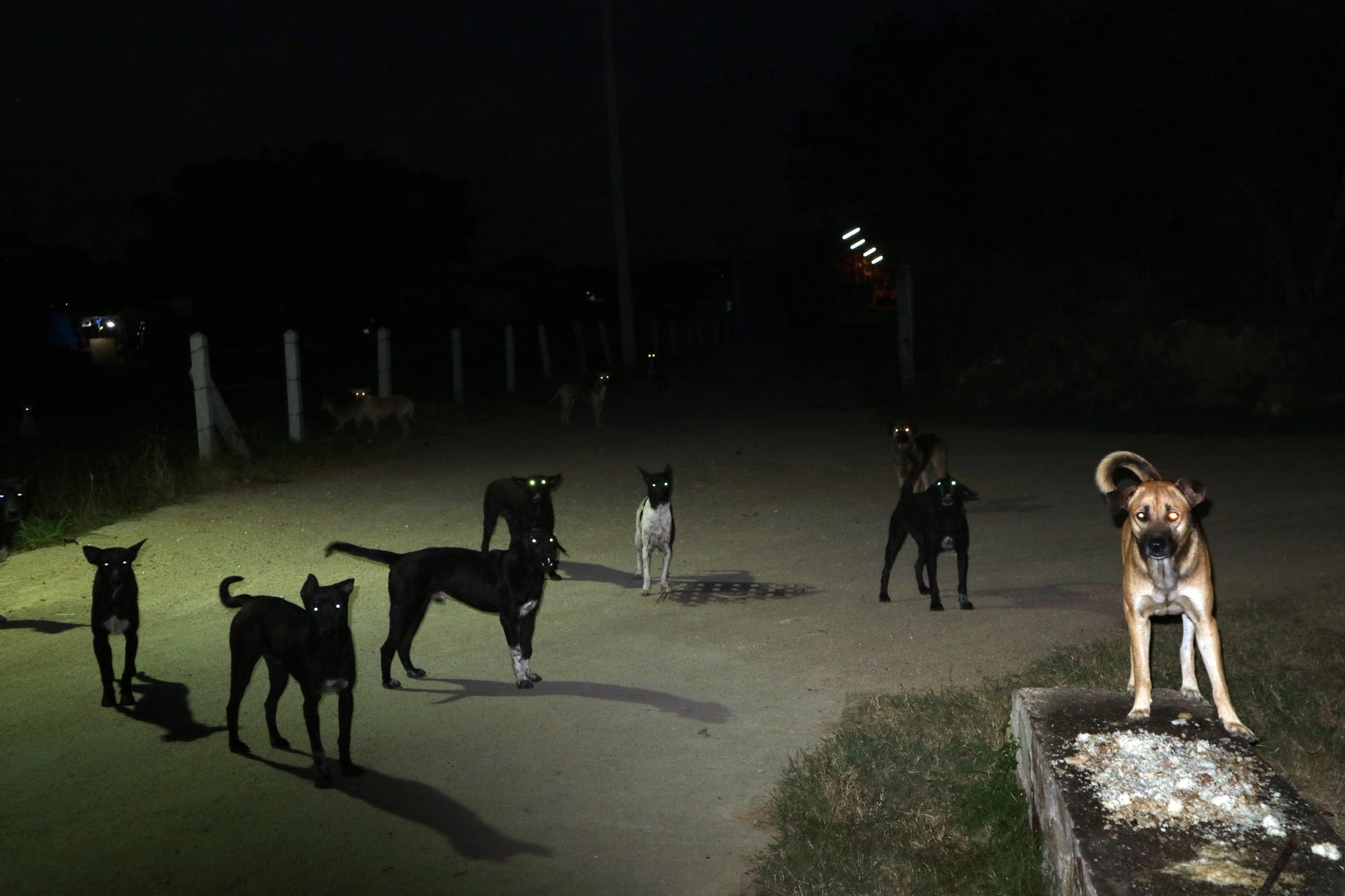
Route 66 cuts through some lonely territory in Oklahoma, but even the most isolated stretches shouldn’t make you question your sanity. Yet something near Stroud has been doing exactly that for over half a century — a massive dog that appears beside the highway, keeping pace with vehicles traveling at highway speeds.
This isn’t your neighbor’s German Shepherd that got loose (though plenty of people have convinced themselves that’s all it was, right up until they got a good look at it).
The creature stands nearly four feet tall at the shoulder, and its eyes emit a sickly green light that’s visible from hundreds of yards away. But the real kicker is how it moves — not running, exactly, but gliding just above the ground, matching whatever speed the car is traveling without any apparent effort.
Most encounters last only a few minutes before the animal simply fades away, like someone slowly turning down a dimmer switch.
The few drivers brave enough (or foolish enough) to stop and get out of their cars report an overwhelming sense of dread, as if something much larger and more dangerous than a dog was watching them from the darkness beyond the headlights.
So they get back in their cars and drive away, usually much faster than they were traveling before.
Local Native American tribes have their own names for creatures like this, and they’re not names you say out loud after dark.
Make of that what you will.
The Vanishing Hotel Near Amarillo

There’s something particularly unsettling about a place that exists when you need it most, then disappears the moment you try to find it again — and that’s exactly what happens with a certain roadside hotel that appears along Route 66 near Amarillo, Texas, though pinpointing the exact location has proved impossible (for reasons that become clear once you hear the full story).
The hotel shows up during the worst possible moments: when your car breaks down in a thunderstorm, when you’re fighting to stay awake after driving for eighteen hours straight, when the next town is fifty miles away and your gas gauge is flirting with empty.
It’s always the same — a modest two-story building with a neon sign that flickers just enough to catch your attention, and a parking lot with exactly the right amount of other cars to make it seem legitimate without being crowded.
The desk clerk is invariably friendly, the rooms are clean, and the rates are reasonable — suspiciously reasonable, considering how desperate you were when you spotted the place.
You sleep better than you have in months, wake up refreshed, and head out to continue your journey.
But when you try to recommend the place to other travelers, or when you attempt to find it again on return trips, there’s nothing there.
Not even a foundation or an old sign post. Just empty prairie stretching to the horizon, as if the building was never there at all.
And yet the receipt in your wallet (with an address that doesn’t exist when you try to look it up) suggests otherwise.
The Screaming Bridge Of Joplin
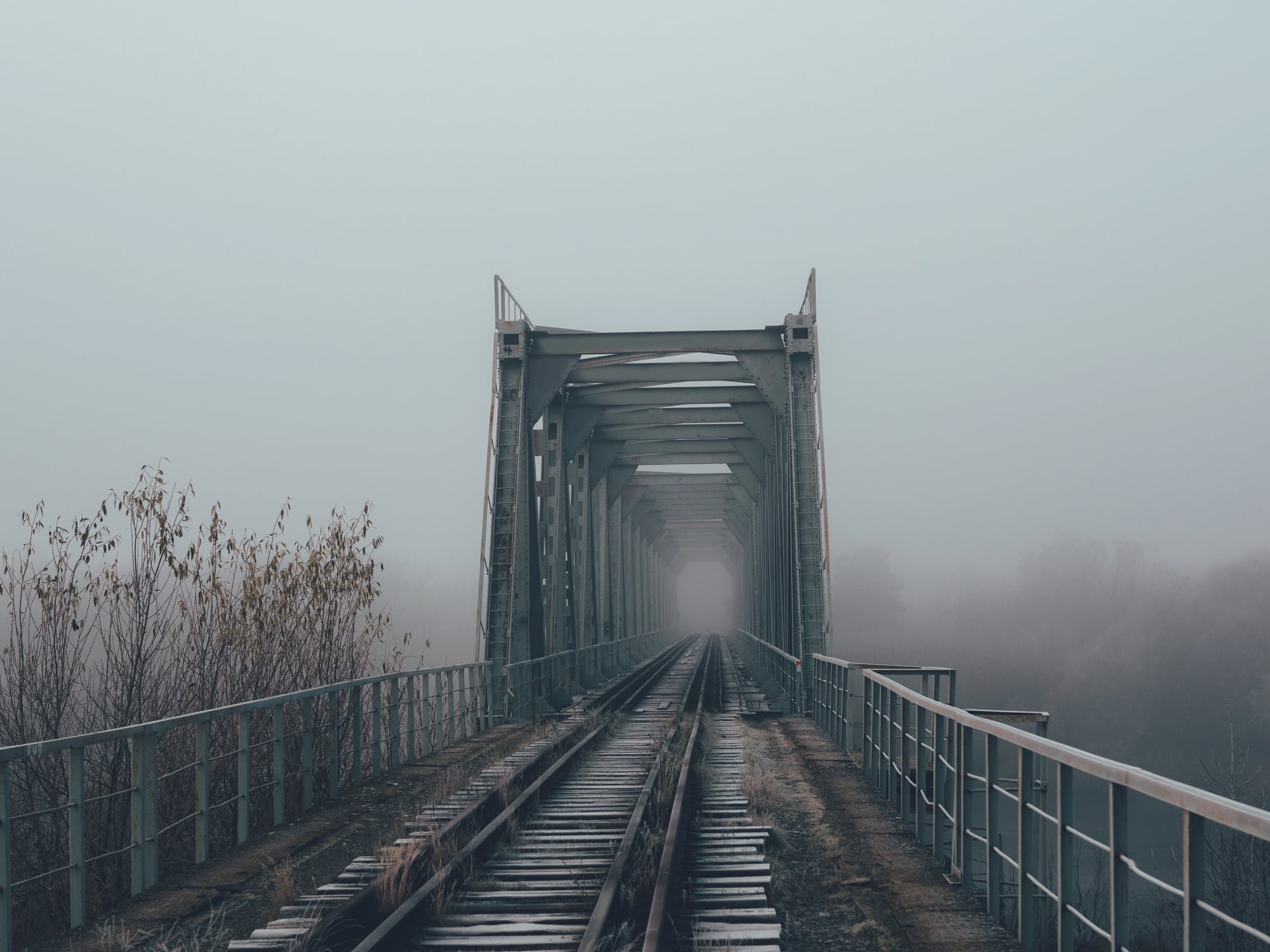
The old Route 66 bridge over Shoal Creek in Joplin, Missouri, looks innocent enough during daylight hours. Just another piece of aging infrastructure carrying traffic from one side of town to the other.
But drive across it late at night, particularly when the moon is dark and the air is still, and you might hear something that will make you question whether some sounds are better left unexplained.
It starts as a low wail, barely audible over the hum of your engine and the whisper of tires on asphalt.
Then it builds — a human scream of such pure anguish that it seems to come from the bridge itself, as if the concrete and steel have somehow absorbed decades of pain and are finally releasing it into the night air.
The sound follows your car as you cross, growing louder and more desperate, before cutting off abruptly the moment your wheels touch solid ground on the other side.
The rational explanation involves wind patterns and the way sound bounces off the water below, but the rational explanation doesn’t account for why the screaming only happens on certain nights, or why it sounds so unmistakably human, or why drivers consistently report feeling a profound sadness that lingers for miles after leaving the bridge behind.
Local records mention a series of accidents on that bridge during the 1950s, including at least one where the victims were never found despite an extensive search of the creek below.
The screaming started not long after.
The Gas Station Time Loop

Picture this: you’re driving through the high desert of New Mexico when something pulls at the corner of your vision — not quite movement, not quite light, but compelling enough to make you slow down and take a second look (which, as anyone who’s spent time in genuinely isolated places knows, is usually when things start getting weird, but by then it’s too late to simply drive past and pretend you didn’t see anything).
What you’ve spotted is a Sinclair station that looks like it’s been frozen in time since 1962, complete with full-service pumps, hand-lettered signs advertising Coca-Cola for a nickel, and an attendant in coveralls who approaches your car with the kind of genuine enthusiasm that died out decades ago.
He fills your tank, checks your oil, and cleans your windshield without being asked — the full treatment that your grandfather might remember but you’ve certainly never experienced.
The prices are what you’d expect from 1962, which seems like a bargain until you realize your modern credit cards don’t work, and the attendant looks genuinely confused when you try to hand him bills with designs he doesn’t recognize.
But he’s happy to accept whatever old cash you happen to have in your wallet — and somehow, you always have the right amount, even if you could have sworn your wallet was empty when you stopped.
The truly unsettling part comes when you try to find the station again, armed with friends or family members who insist on seeing this impossible place for themselves.
Because of course, it’s not there. The location is nothing but empty desert, without so much as an oil stain to suggest a gas station ever existed.
And yet your gas tank is still full, and that antique Sinclair map the attendant gave you is still folded neatly in your glove compartment.
The Lady In Blue Of Santa Rosa

Santa Rosa, New Mexico, sits at a crossroads where Route 66 intersects with highways heading north and south, making it a natural stopping point for travelers in need of food, fuel, or rest. But some visitors to this desert town encounter more than they bargained for, in the form of a woman who appears to be perpetually lost, perpetually searching, and perpetually just out of reach of anyone who tries to help her.
She’s always dressed in the same powder-blue dress that might have been fashionable in the 1930s, and she approaches people with the same desperate question: has anyone seen her little boy?
He’s six years old, she explains, with dark hair and a red shirt, and he was playing right here just a moment ago.
Her distress is so genuine, her fear so palpable, that people immediately begin searching — checking behind buildings, calling out to the child, enlisting others to help look.
But the search always ends the same way. Someone turns to update the woman on their progress, only to find she’s vanished as completely as the child she’s seeking.
Local residents have grown accustomed to confused visitors asking about the lady in blue, and they respond with the patient resignation of people who’ve heard the same story countless times before.
The Endless Desert Highway

Arizona’s stretch of Route 66 includes some genuinely remote territory where the next town might be fifty miles away and the landscape barely changes from one hour to the next. It’s the kind of emptiness that can play tricks on your mind under the best circumstances.
But sometimes the tricks are more elaborate than simple desert mirages, and sometimes they last far longer than any psychological explanation can reasonably account for.
The experience always starts the same way: you’re driving through familiar territory, maybe between Flagstaff and Kingman, when you realize you’ve been on the same stretch of road longer than should be possible.
The landmarks you passed twenty minutes ago are appearing again, identical down to the smallest details. The mileage signs make no sense — they seem to be counting backward, or skipping numbers entirely, or displaying distances to towns you’ve never heard of.
Your fuel gauge becomes unreliable. Your cell phone loses signal, then picks it up again, then displays the wrong time.
The radio cycles through the same handful of stations, playing songs that sound almost familiar but not quite right, as if someone created cover versions that were deliberately designed to be unsettling.
The loop can last anywhere from an hour to an entire night, and it always ends abruptly — suddenly you’re exactly where you expected to be, your gas tank reads normally, and your phone shows the correct time.
But the experience leaves people shaken in a way that goes beyond simple confusion. It feels like being trapped in someone else’s dream, or like the desert was testing whether you deserved to reach your destination.
The Phantom Semi-Truck

Every trucker who’s spent serious time on Route 66 has a story about the ghost truck, though most are reluctant to tell it to anyone who might question their judgment or their sobriety.
But the stories are remarkably consistent: a vintage Peterbilt, probably from the 1970s, that appears in your mirrors when you’re driving alone through the most isolated stretches of the highway.
The truck maintains perfect spacing behind you, matching your speed exactly but never attempting to pass.
Its headlights are too bright and too white, creating harsh shadows that move independently of how the light should behave.
The cab appears to be occupied, but the figure behind the wheel is never quite clear enough to make out details — just a vague human shape that might be wearing a hat, or might be something else entirely.
Here’s what makes experienced drivers nervous: the phantom truck seems to be protecting them from something.
Cars that try to pass recklessly find themselves boxed in until they give up and fall back. Drunk drivers discover their vehicles mysteriously losing power until they pull over and sleep it off.
Speed demons find their engines developing temporary problems that resolve themselves only after they slow down to a reasonable pace.
The ghost truck never stays long — just long enough to ensure safe passage through whatever danger zone triggered its appearance.
Then it fades away, leaving behind drivers who are equal parts grateful and unnerved by the encounter.
The Burning Motel In Tucumcari

Tucumcari, New Mexico, once hosted more than fifty motels along its stretch of Route 66, each one competing for the attention of weary travelers with increasingly elaborate neon signs and promises of comfort and hospitability.
Most of those motels are gone now, victims of interstate highways and changing travel patterns.
But one of them lingers in a way that defies both logic and local fire codes.
The Blue Swallow Motel (not to be confused with the actual, still-operating Blue Swallow) appears to be consumed by flames that produce no heat, generate no smoke, and somehow never reduce the building to ash.
The fire dances along the roofline and flickers behind the windows, but the structure remains intact, and the neon sign continues to advertise vacancy even as supernatural flames lick at its base.
Travelers who stop for a closer look report hearing sounds from inside the burning building — not screams of terror, but the ordinary noises of motel life.
Doors opening and closing, televisions playing, children running down the hallways, and the distant hum of ice machines and air conditioning units.
It’s as if the motel is simultaneously burning down and operating normally, existing in two different states of reality at once.
Local fire departments stopped responding to calls about the burning motel decades ago, after repeated visits confirmed that no actual fire was present.
But the reports continue, and the phantom flames continue to dance, visible only to certain travelers at certain times under circumstances that no one has been able to predict or control.
The Children Of Devil’s Promenade

The Devil’s Promenade isn’t technically on Route 66 — it’s a back road near Hornet, Oklahoma (at the Oklahoma-Kansas border), about twelve miles from the main highway.
But the strange lights that appear there have been luring curious travelers off the beaten path for over a century, and many of those travelers return to Route 66 with stories that stick with them for the rest of their lives.
The Hornet Spook Light, as locals call it, is documented and acknowledged even by skeptics.
It’s a glowing orb that appears along the gravel road, bouncing and weaving through the air like a child’s orb, bright enough to illuminate the surrounding trees and curious enough in its behavior to attract researchers from around the world.
But the scientific explanations — swamp gas, reflected headlights, atmospheric phenomena — don’t account for what some visitors encounter along with the light.
They’re children, or at least they appear to be children, visible only in the periphery of your vision and only when the spook light is active.
They seem to be playing some sort of game, chasing the light or being chased by it, laughing and calling out to each other in voices that sound both distant and impossibly clear.
But when you turn to look directly at them, there’s nothing there — just empty road and dark woods and the mysterious light continuing its nightly dance.
The experience leaves people with an overwhelming sense of sadness, as if they’ve witnessed something that was lost long ago and can never be recovered.
Local legends suggest the children died in a school bus accident decades ago and are somehow trapped in an eternal game of follow-the-leader with the supernatural light.
Whether that’s true or not, the encounters feel real enough to the people who experience them.
The Backwards Town
Oklahoma’s stretch of Route 66 passes through dozens of small towns that have seen better days, places where Main Street is lined with empty storefronts and the population has dwindled to a fraction of what it was during the highway’s heyday.
But one of these towns — and pinpointing which one has proved surprisingly difficult — operates according to rules that seem to reverse the normal flow of time and causality.
Everything appears normal when you first drive through. There are people on the sidewalks, cars parked along the street, and businesses that look like they’re open for customers.
But the details are wrong in subtle ways that become more obvious the longer you stay.
The cars are all older models, but they look showroom new. The people are dressed in styles from decades past, but the clothes show no signs of wear.
The prices in store windows are impossibly low, but the businesses accept modern currency without question.
Conversations with locals become increasingly surreal.
They refer to current events that happened fifty years ago as if they occurred yesterday, and they speak of historical events as if they’re still in the future.
They remember you from visits you haven’t made yet, and they ask about family members who haven’t been born.
Time seems to flow in all directions at once, creating a disorienting experience that lingers long after you’ve left town.
The backwards town can’t be found intentionally. It only appears when you’re not looking for it, usually when you’re focused on reaching some other destination and not paying close attention to the small communities you’re passing through.
By the time you realize what’s happening, you’re already caught up in the temporal confusion, and finding your way back to normal time becomes a matter of luck rather than navigation.
The Weeping Woman Of The Painted Desert

The Painted Desert stretches across northeastern Arizona, a landscape so otherworldly that it seems like the setting for science fiction rather than a real place on Earth. Route 66 skirts the southern edge of this geological wonder, offering travelers glimpses of badlands that change color with the shifting light.
But some visitors to this ancient landscape encounter more than stunning scenery — they meet a woman whose grief has somehow become part of the desert itself.
She appears near sunset, when the rocks glow red and purple and the shadows stretch impossibly long across the broken ground.
Always dressed in white, always weeping, she moves through the landscape like smoke, never quite solid enough to be real but too distinct to be dismissed as imagination.
Her tears fall upward, defying gravity, and where they touch the ground, the rocks seem to weep as well, seeping moisture that has no earthly source.
Photographers who try to capture her image find their cameras malfunctioning — not broken, exactly, but producing pictures that show.
More from Go2Tutors!

- The Romanov Crown Jewels and Their Tragic Fate
- 13 Historical Mysteries That Science Still Can’t Solve
- Famous Hoaxes That Fooled the World for Years
- 15 Child Stars with Tragic Adult Lives
- 16 Famous Jewelry Pieces in History
Like Go2Tutors’s content? Follow us on MSN.



