Creepy True Crime Stories from the 1920s
The 1920s had a reputation for jazz, speakeasies, and a certain reckless glamour. But underneath all that noise was something darker.
Newspapers were exploding in popularity, and editors knew that nothing sold papers quite like a good murder. Some of the most disturbing crimes in American history happened during this decade — cases that shocked the public, baffled investigators, and in some instances, were never fully solved.
These aren’t just old news stories. They’re the kind of stories that still feel unsettling a hundred years later.
The Osage Murders

In the early 1920s, members of the Osage Nation in Oklahoma were among the wealthiest people per capita in the United States, thanks to the oil beneath their reservation land. And then they started dying.
Family members were found with gunshot wounds. Others collapsed suddenly after showing signs of poisoning.
One woman’s home was blown apart in the middle of the night. The deaths stretched across years and affected dozens of people, and for a long time, almost nobody was held accountable.
Local law enforcement looked the other way. Investigations went nowhere. What emerged, eventually, was a conspiracy involving white settlers and businessmen who had wormed their way into Osage families through marriage and legal guardianships — all to gain control of the oil headrights.
The scale of it was staggering. This was organized, patient, methodical killing, carried out over years in plain sight.
Leopold and Loeb

In 1924, two wealthy University of Chicago students, Nathan Leopold and Richard Loeb, kidnapped and murdered 14-year-old Bobby Franks. Their reason was, in their own words, to commit the perfect crime.
They believed they were intellectually superior to ordinary people and wanted to prove it. They weren’t clever enough.
Police traced a pair of glasses found near the body back to Leopold within days. Both men confessed.
What followed was one of the most publicized trials of the century. Defense attorney Clarence Darrow gave a closing argument that lasted twelve hours, arguing against the death penalty on philosophical grounds.
Both men received life sentences instead of execution. Loeb was killed by another inmate in 1936. Leopold was eventually paroled in 1958.
The cold, detached logic the two used to justify what they did remains genuinely disturbing. They didn’t act out of rage or desperation.
They planned it carefully, and they felt nothing.
The Hall-Mills Case

On a farm in New Jersey in 1922, two bodies were found lying side by side beneath a crabapple tree. One was Reverend Edward Hall, an Episcopal minister.
The other was Eleanor Mills, a member of his choir. Both had been shot.
Their love letters were scattered around them, seemingly arranged on purpose. The case became a tabloid obsession.
There were suspects, witnesses, and a woman known as “the Pig Woman” who claimed to have witnessed the murders from a nearby field. There were rumors of a secret society, a coverup, and a corrupt local investigation.
Hall’s wife and her brothers were eventually tried in 1926, four years after the murders. They were acquitted.
Nobody was ever convicted. The case remains officially unsolved.
The Gorilla Killer

Between 1926 and 1927, a man named Earle Nelson traveled across the United States and Canada killing landladies. He knocked on doors, rented rooms, and murdered the women who answered.
He killed at least 22 people, though the actual number may be higher.
Nelson had a history of violent behavior, had escaped from mental institutions, and was described by those who encountered him as strange but not immediately threatening. He was ultimately caught in Canada and executed in 1928.
What makes his case particularly chilling is the sheer volume of it — over a year, moving city to city, leaving bodies behind him, and continuing without any apparent reason to stop.
Ruth Snyder and the Insurance Plot

In 1927, Ruth Snyder and her lover Judd Gray murdered her husband Albert with a window sash weight, chloroform-soaked rags, and piano wire. They had taken out a large life insurance policy on him beforehand.
Their plan to make it look like a burglary fell apart almost immediately. Police noticed inconsistencies, and both Ruth and Judd quickly blamed each other.
The trial was a sensation — packed courtroom, daily newspaper coverage, the whole spectacle. Ruth Snyder became the first woman executed in New York’s electric chair in 1928.
A news photographer smuggled a camera into the execution room strapped to his ankle and took a photo at the moment of her death. The New York Daily News ran it on the front page the next morning. It remains one of the most notorious photos in tabloid history.
The Bath School Disaster

Most people think of mass violence as a modern problem. The Bath School Disaster in Michigan in 1927 complicates that assumption.
Andrew Kehoe was a farmer and school board treasurer who was furious about property taxes and a personal grudge against the local superintendent. Over months, he secretly planted explosives in the Bath Consolidated School. On May 18, 1927, he detonated them.
Thirty-six children and two adults died in the explosion. Then Kehoe drove his truck, loaded with shrapnel and dynamite, to the school.
When the superintendent approached the vehicle, Kehoe detonated it, killing himself and several more people.
The final death toll was 38 children and six adults. Kehoe had also destroyed his own farm that morning, killing his wife.
It remains the deadliest act of mass murder at a school in American history.
Carl Panzram

Carl Panzram confessed to 21 murders, thousands of acts of robbery and arson, and crimes across multiple continents. He was not a sympathetic figure — he made that clear himself, often in writing.
While imprisoned, he corresponded with a prison guard named Henry Lesser and produced a lengthy autobiography detailing his crimes and his worldly view that humanity deserved everything that happened to it. Panzram was executed in 1930 but his crimes stretched across the 1920s.
What makes him different from many killers of the era is his self-awareness. He wasn’t delusional.
He understood what he was and felt no desire to be otherwise. Reading his own words about himself is a deeply uncomfortable experience.
The Wineville Chicken Coop Murders

In Wineville, California, between 1926 and 1928, a man named Gordon Northcott kidnapped, assaulted, and murdered young boys on his chicken ranch. The exact number of victims was never confirmed, but at least three were established, and some investigators believed there were more.
What brought the case to wider attention was the separate but connected story of Christine Collins, whose son Walter went missing in 1928. Police eventually presented her with a different boy, claiming he was Walter.
She insisted he wasn’t. The LAPD had her institutionalized for pressing the matter.
The two stories — Northcott’s crimes and Collins’ fight against the police who tried to silence her — became tangled in public memory. Northcott was executed in 1930.
The town of Wineville changed its name shortly after the trial, wanting no further association with what had happened there.
Albert Fish

Albert Fish was arrested in 1934, but his crimes stretched back well into the 1920s. He was a mild-mannered grandfather type who preyed on children. He killed at least three, though he claimed many more.
He sent a letter to the mother of one of his victims describing in detail what he had done — a letter so disturbing that even hardened investigators found it difficult to read. Fish was executed in 1936.
The psychiatrists who examined him described him as one of the most complex and perverse individuals they had ever encountered. He had led an outwardly unremarkable life for decades while carrying out acts that are almost impossible to reconcile with his appearance.
The Black Hand Letters

Across cities with large immigrant populations — Chicago, New York, New Orleans — the early 1920s saw a wave of extortion and violence tied to organizations using intimidation tactics that had originated in southern Italy and Sicily. Letters signed with a black handprint would arrive demanding money.
If ignored, there were bombings, kidnappings, and murders. This wasn’t organized crime in the later, structured sense.
It was often individuals or small groups operating through fear. The victims — mostly within Italian immigrant communities — frequently refused to go to police out of cultural distrust or fear of retaliation.
Entire neighborhoods lived under the shadow of these threats, and law enforcement rarely intervened effectively.
The Dorothy King Murder

Dorothy King was a young model in New York known in the tabloids as the “Broadway Butterfly.” In March 1923, she was found dead in her apartment, killed by an overdose of chloroform and a lethal amount of a sedative.
Whoever killed her had done it while she was unconscious. Her social life had connected her to some wealthy and influential men, and the investigation quickly ran into walls.
Names were mentioned and then disappeared from the record. Witnesses changed their stories. The men suspected of involvement were from wealthy families with lawyers and connections.
Nobody was ever charged. The case was effectively buried.
The Mysterious Deaths of the Triangle Shirtwaist Survivors

This case lands in an odd space – not one isolated incident, yet a series of events that caught attention without clear answers from those looking into it. Women who lived through the 1911 Triangle Shirtwaist Factory blaze went on to push for workers’ rights, then met strange fates in the years after.
Certain deaths came by misfortune. Others were said to stem from sickness.
A handful stayed mysteries with no closure ever reached. Hard to say if this means much more than random chance.
Still, considering how fiercely workers clashed with factory bosses back then – along with clear records of threats and beatings aimed at union folks – patterns like these carried weight among locals.
The Torso Murders Start
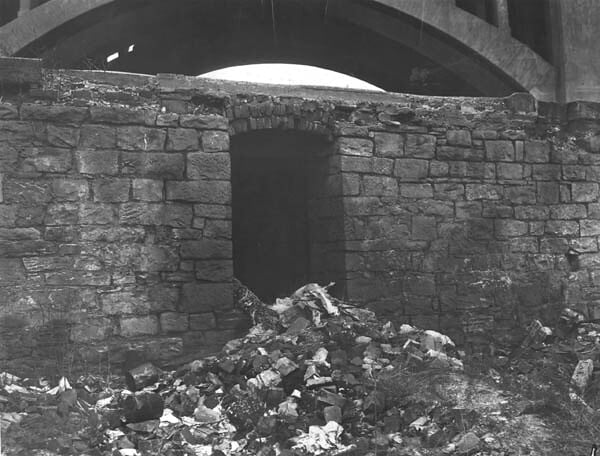
Though folks link the Cleveland Torso Murders to the 1930s, signs point to killings beginning earlier – possibly by the late 1920s. Bodies turned up in pieces near Cleveland, many without their heads, which were either gone or never found.
Chopping off limbs so precisely hints at someone who knew how bodies fit together.
Even with a huge probe and Eliot Ness stepping in – best known for taking on Al Capone – not a single person faced charges.
One man came under suspicion, got grilled by detectives, yet walked free. After 1938, the killings simply vanished.
Nobody knows if the murderer passed away, left town, or ended up locked away somewhere without noise.
The Valentines Day Massacre

That day in 1929, cold and still, seven members of the North Side Gang stood pressed to a garage wall before gunfire broke the silence. Posing as law enforcement, the attackers wore uniforms that fooled onlookers into thinking arrests were being made.
Smoke hung where shots had cracked. What looked like official business turned out to be something far darker.
Uniforms gave them access, trust crumbled fast once bullets flew. Moments later, bodies lay still under dim overhead light.
Not one officer present claimed involvement when real authorities arrived. Confusion lingered long after echoes faded through empty streets.
One guess says Capone gave the order, even if he stayed in Florida during the event and faced no charges afterward. What changed after the killings shifted how people saw gang activity – not some quiet disturbance anymore yet something loud, fearless, showing up without hiding.
Not one killer faced punishment. Afterward, two possible suspects met their own ends.
Years down the line, inside a medical facility, one man passed away after slipping into deep mental collapse – his last words, over and over, whispered: “they’re gonna kill me,” until silence came.
The Decade That Turned Its Back

Folks in the 1920s knew how to put on a show, though fairness often got left behind. Sensational headlines flared up – only to vanish without results.
Rich suspects slipped away, untouched by consequences. Those harmed, especially if they came from immigrant or overlooked backgrounds, found little belief.
Clues vanished like smoke. People who saw things suddenly changed their stories. Probes slowed down until nobody was looking anymore.
Part came from dishonesty. Part stemmed from not caring enough.
Another part grew because people quietly accepted specific brutal acts staying unsettled – so long as those incidents remained boxed within particular areas, income levels, groups labeled disposable. Most stories fade fast, but a few stick around when they brush against power or money or blow up in public view.
Others vanish without a trace, lost like smoke. That silence, soft and steady, might be the strangest part.
More from Go2Tutors!

- The Romanov Crown Jewels and Their Tragic Fate
- 13 Historical Mysteries That Science Still Can’t Solve
- Famous Hoaxes That Fooled the World for Years
- 15 Child Stars with Tragic Adult Lives
- 16 Famous Jewelry Pieces in History
Like Go2Tutors’s content? Follow us on MSN.