Cultural Roots Behind Mardi Gras
Colorful parades might signal Mardi Gras, yet quiet traditions hum underneath. Music blares through streets while older echoes linger just beyond earshot.
Festivity bursts at night, though roots dig into soil long turned by hand. Ancient rites once fed the rhythm now heard in brass bands.
Medieval customs slipped across oceans, carried by belief more than choice. Colonists reshaped it, yes – still, people adapted without asking permission.
One event appears today, but time stitched it slowly, thread by hidden thread. Long before New Orleans claimed the spotlight, roots were already growing beneath the surface.
Following those early threads makes the present clearer, even if they seem faint at first glance. A glance back shows where its traditions really began.
What shapes it now started long ago, carried forward through time. Roots from the past still show up in how things are done today.
Ancient Roman Festivals

Long before Christianity formalized a liturgical calendar, ancient Rome marked the late winter season with festivals that embraced indulgence and social reversal. Celebrations such as Saturnalia and Lupercalia temporarily loosened rigid class structures, allowing ordinary citizens to feast, wear disguises, and behave in ways that everyday life would not normally permit.
It was a ritualized release valve before the discipline of a new season. Even so, these gatherings were not chaotic free-for-alls.
They followed established customs that symbolized renewal and the coming of spring. Masks and costuming carried symbolic meaning, often representing fertility or transformation.
While Mardi Gras would later become associated with Christian tradition, the impulse to celebrate before a period of restraint traces back to these ancient patterns of seasonal contrast.
The Christian Calendar and Lent

As Christianity spread through Europe, church leaders absorbed and reshaped existing seasonal festivals into the Christian calendar. Mardi Gras, which translates from French as ‘Fat Tuesday,’ marks the final day before Ash Wednesday, the beginning of Lent.
Lent is traditionally a 40-day period of fasting, reflection, and preparation leading up to Easter. That said, the idea of feasting before fasting was practical as much as symbolic.
Households would use up rich ingredients like butter, eggs, and sugar before entering a season of restraint. Over time, that practical clearing of the pantry evolved into communal celebration.
What began as religious observance gradually expanded into something more theatrical, particularly in Catholic regions of Europe.
Medieval Carnival Traditions
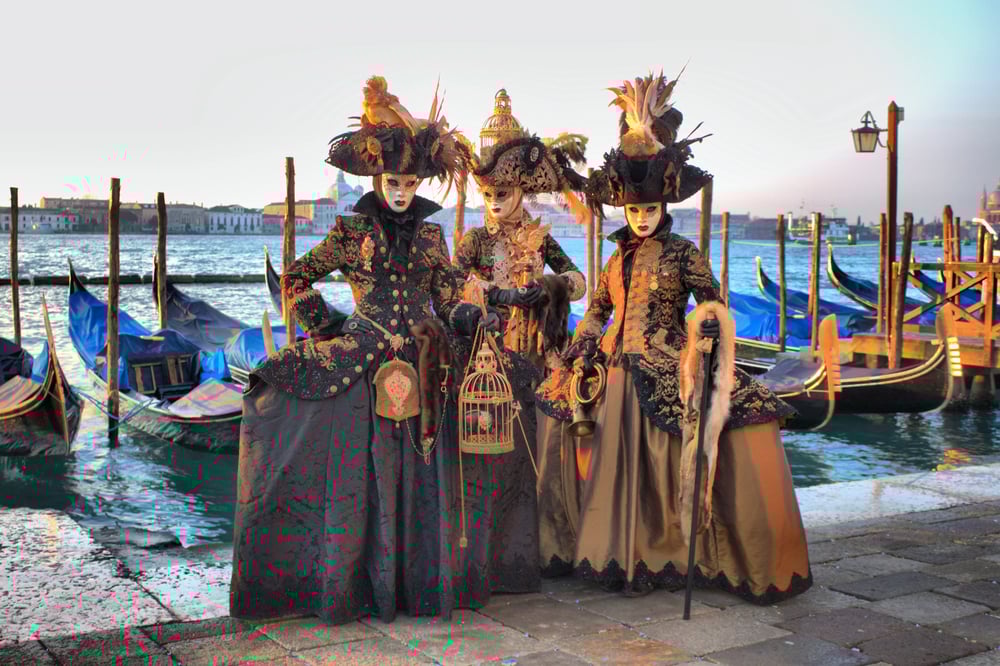
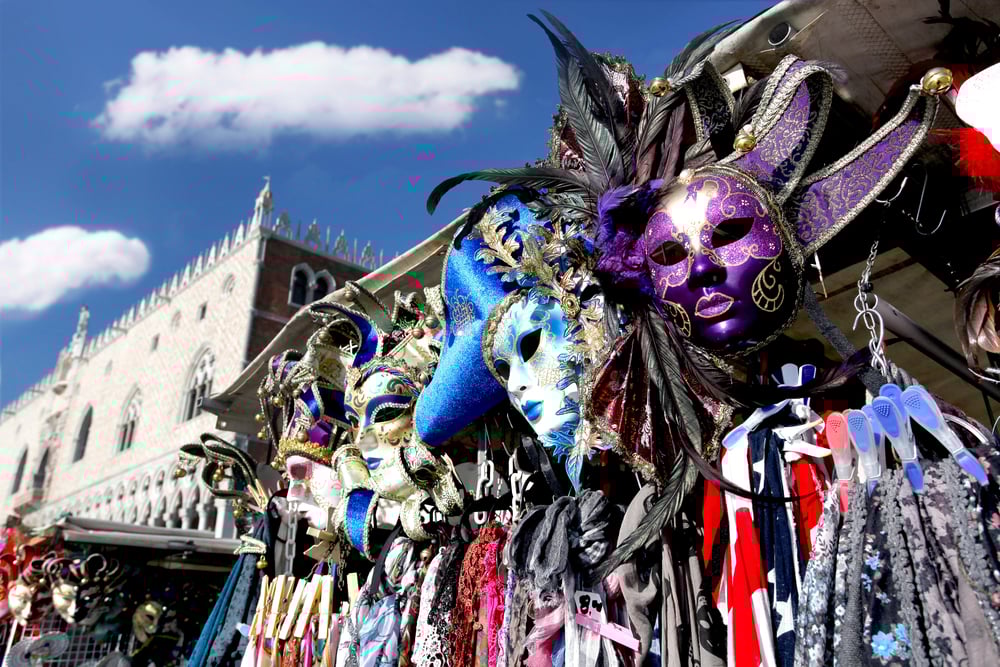
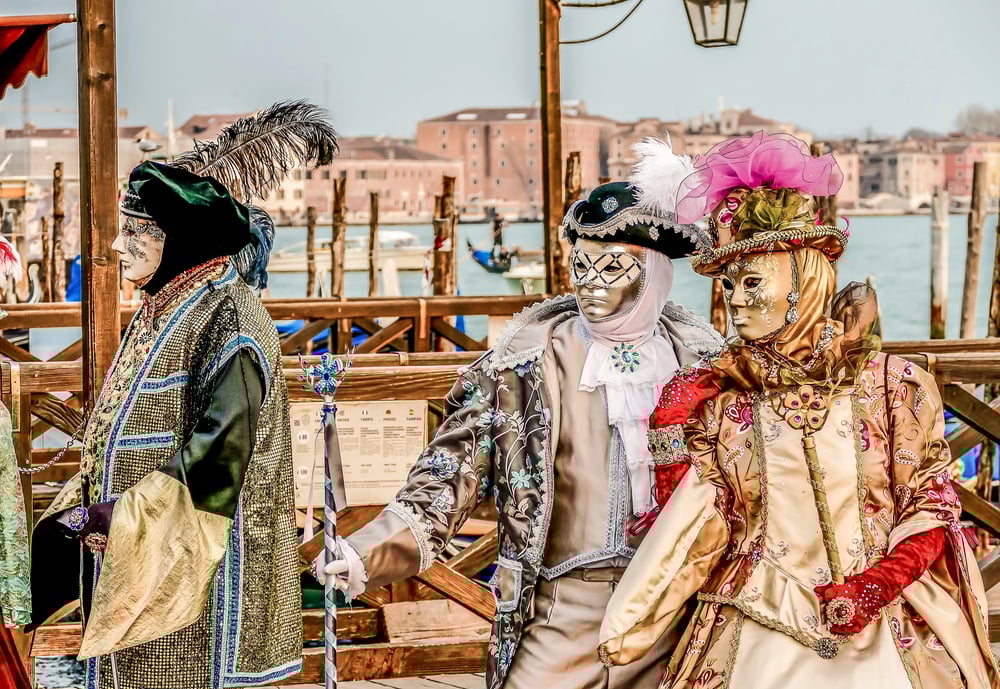
By the Middle Ages, Carnival had become a fixture across Catholic Europe. Cities in Italy and France developed elaborate masquerade traditions, with Venice becoming especially known for ornate masks and public pageantry.
These gatherings allowed people to temporarily blur social boundaries, often through costume and anonymity. Still, Carnival was never just about spectacle.
It functioned as a cultural balancing act. Strict hierarchies defined medieval life, and Carnival provided a controlled moment of inversion before the solemnity of Lent restored order.
That rhythm of release followed by restraint remains central to Mardi Gras today, even if the setting has changed.
French Colonial Influence

Mardi Gras arrived in North America through French settlers in the late 17th and early 18th centuries. French explorers established settlements along the Gulf Coast, bringing with them Catholic traditions and Carnival customs.
The earliest recorded Mardi Gras celebration in what is now the United States took place near present-day Mobile, Alabama, in 1703. When New Orleans was founded in 1718, it inherited and expanded those traditions.
French colonial culture shaped the language, cuisine, and religious practices of Louisiana, embedding Mardi Gras into the region’s identity. The very name of the holiday reflects that heritage, preserving its French roots even as the celebration evolved on American soil.
Spanish Governance and Adaptation

Louisiana did not remain under French control for long. Spain governed the territory from 1763 to 1800, introducing its own administrative systems and cultural influence.
While Spain maintained Catholic traditions, it also allowed local customs to adapt organically. Even under shifting colonial powers, Mardi Gras endured.
Spanish governance did not erase French cultural identity; instead, it layered additional nuance onto it. That blending of influences became a hallmark of Louisiana life, where traditions often overlap rather than replace one another.
African and Caribbean Contributions

Perhaps the most profound influence on Mardi Gras came from the African diaspora. Enslaved Africans brought to Louisiana carried rich musical, spiritual, and artistic traditions with them.
Despite oppressive conditions, these cultural elements endured and reshaped the region’s identity. Music became a defining feature.
Rhythmic patterns, call-and-response singing, and percussive traditions contributed to the development of New Orleans jazz and brass band culture, both now inseparable from Mardi Gras. In addition, masking and costuming traditions among Black communities evolved into the Mardi Gras Indians, whose intricate suits honor Native American tribes that offered refuge to enslaved people in earlier centuries.
Caribbean connections further enriched the celebration. Trade routes and migration between Louisiana and Caribbean islands fostered cultural exchange, reinforcing shared musical styles and festival traditions.
Mardi Gras, as a result, became a product not only of Europe but also of Africa and the wider Atlantic world.
Creole Identity and Community Traditions
Over time, Louisiana developed a distinct Creole culture that blended French, Spanish, African, Caribbean, and Indigenous influences. Mardi Gras became a central expression of that identity.
It was not simply a religious observance but a communal statement of belonging. Krewes, or private social organizations, emerged in the 19th century as organizers of parades and themed orbs.
Groups such as the Mistick Krewe of Comus formalized parade structures in the 1850s, introducing floats, royalty, and carefully planned routes. These traditions added pageantry while preserving the core idea of collective celebration before Lent.
Still, Mardi Gras has never been monolithic. Different neighborhoods developed distinct styles, from grand parades along St. Charles Avenue to community-based celebrations that reflect local history.
The festival continues to reveal the diversity within Louisiana itself.
Commercialization and Modern Expansion
In the late 19th and early 20th centuries, Mardi Gras expanded alongside tourism and media coverage. Railroads made travel easier, and New Orleans began promoting the festival as a signature event.
Bright beads, elaborate floats, and large-scale parades became visual shorthand for the holiday. That said, commercialization did not erase tradition.
It layered spectacle onto centuries-old customs. Modern Mardi Gras is both an economic engine and cultural inheritance.
The city’s tourism industry relies heavily on it, yet behind the crowds remain neighborhood gatherings, family recipes for King Cake, and local marching groups that carry forward generational pride.
Why It Still Matters

Still here, Mardi Gras thrives on holding contradictions instead of smoothing them out. Swinging between excess and restraint, it moves through streets loudly yet carries quiet personal weight behind masks.
Old rites step into today’s spotlight without losing their roots, thanks to how people keep reinventing them. Louisiana’s layered past shows up in the parades – colonial imprints, waves of newcomers, hardship mixed with invention.
Joy bursts forward even as echoes of survival hum underneath every beat. Parades now still carry whispers of ancient Rome, wild medieval Carnival nights, church traditions, beats from Africa, and the quiet strength of Creole life.
This mix is why Mardi Gras stretches beyond just one date on the calendar. What we see isn’t born from a single root – instead, it spreads from sharing, shifting forms, surviving.
Behind each masked face, beside every drumline step, the past walks without saying a word.
More from Go2Tutors!

- The Romanov Crown Jewels and Their Tragic Fate
- 13 Historical Mysteries That Science Still Can’t Solve
- Famous Hoaxes That Fooled the World for Years
- 15 Child Stars with Tragic Adult Lives
- 16 Famous Jewelry Pieces in History
Like Go2Tutors’s content? Follow us on MSN.