Curious Facts About Bats You Didn’t Know
Bats get a bad rap.
They’re tied to Halloween decorations, vampire legends, and the occasional panicked reaction when one swoops through a backyard at dusk.
But beyond the spooky stereotypes lies a world of creatures so strange, so specialized, and so vital to our ecosystems that they deserve a second look.
These flying mammals have been around for more than 50 million years, and in that time, they’ve developed some of the most remarkable adaptations in the animal kingdom.
Most people know the basics: bats are nocturnal, they hang upside down, and some species drink blood.
But the deeper you dig into bat biology and behavior, the weirder and more wonderful things get.
From their surprisingly long lifespans to their role as accidental tequila makers, bats are full of surprises.
Here’s a closer look at some of the most fascinating and lesser-known facts about these misunderstood mammals.
They’re the Only Mammals That Truly Fly

Flying squirrels might glide gracefully from tree to tree, and sugar gliders can cover impressive distances through the air, but neither of them are actually flying.
Bats are the only mammals capable of powered, sustained flight.
Their wings are essentially elongated fingers covered by a thin, elastic membrane called the patagium, which stretches between their digits and connects to their body and legs.
This membrane is incredibly flexible and self-healing, allowing bats to maneuver with precision that would make most birds jealous.
The mechanics of bat flight are equally impressive.
Unlike birds, which flap their entire wing, bats have independent control over each finger bone, giving them the ability to adjust their wing shape mid-flight.
This makes them exceptionally agile, capable of sharp turns, sudden dives, and rapid acceleration.
Some species can reach speeds of up to 100 miles per hour, while others hover like hummingbirds to feed on nectar.
Echolocation Is More Sophisticated Than Sonar
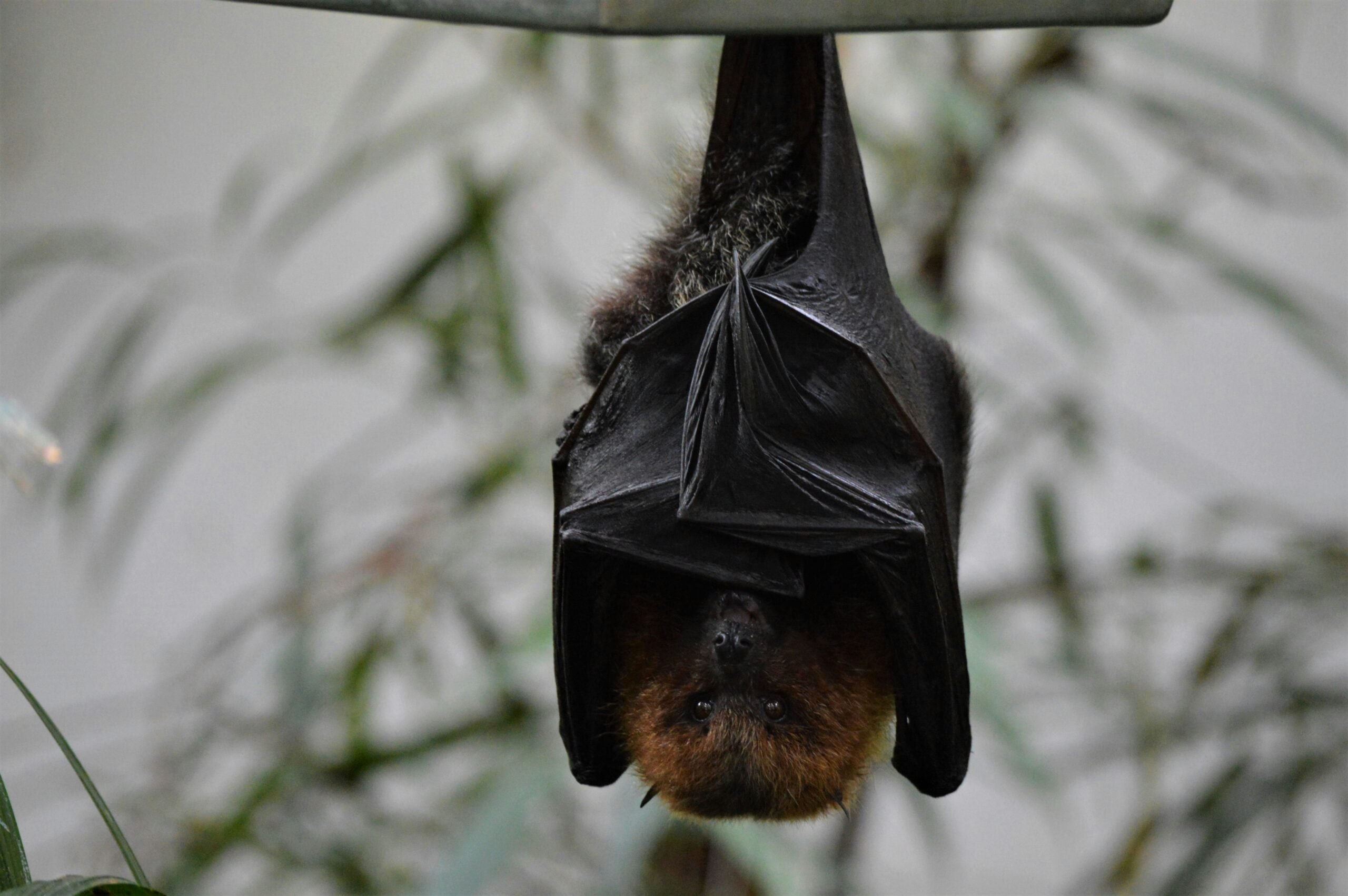
Most people know that bats use echolocation to navigate in the dark, but the sophistication of this biological sonar system is staggering.
Bats emit high-frequency calls, often beyond the range of human hearing, and listen for the echoes that bounce back from objects in their environment.
What makes this truly remarkable is the level of detail they can extract from those echoes.
Bats can determine not just the location of an object, but its size, shape, texture, and even whether it’s moving.
Some species can detect objects as thin as a human hair, and certain insect-eating bats can distinguish between edible and inedible prey based solely on the acoustic signature of their wingbeats.
The big brown bat, for instance, can track and capture a flying insect in complete darkness within a fraction of a second.
Even more impressive, bats can adjust the frequency and intensity of their calls in real time, essentially changing the ‘resolution’ of their echolocation based on what they’re trying to detect.
Vampire Bats Share Food With Their Friends

Vampire bats have a reputation problem, thanks largely to centuries of folklore and a name that doesn’t do them any favors.
But while it’s true that these small Central and South American bats feed on blood, they’re also surprisingly social and cooperative.
If a vampire bat returns to its roost without having been fed, other bats in the colony will regurgitate blood to share with the hungry individual.
This behavior isn’t random charity, though.
Bats remember who has helped them in the past and are more likely to share with those individuals in the future.
This reciprocal altruism is rare in the animal kingdom and suggests a level of social intelligence that researchers are still working to understand.
Vampire bats form long-term relationships, groom each other regularly, and have been observed adopting orphaned young.
Their feeding habits, while undeniably strange, are also surprisingly delicate.
They make a small incision with their razor-sharp teeth, and their saliva contains an anticoagulant that keeps blood flowing while they feed.
The entire process is so gentle that the host animal, usually livestock, often doesn’t even wake up.
Bats Can Live for Decades

For animals their size, bats have extraordinarily long lifespans.
While most small mammals live only a few years, many bat species can survive for 20, 30, or even 40 years in the wild.
The Brandt’s bat, a tiny species found in Europe and Asia, holds the record for longevity among bats, with one individual documented to have lived for at least 41 years.
This is especially remarkable when you consider that the bat weighed less than a third of an ounce.
Scientists are fascinated by bat longevity because it defies the usual rules of mammalian aging.
Small mammals typically have fast metabolisms and short lives, but bats seem to have cracked the code for living longer.
Researchers believe that bats’ ability to enter torpor, a state of reduced metabolic activity similar to hibernation, may play a role in extending their lifespans.
By slowing down their bodily processes during periods of inactivity, bats may reduce the cellular damage that accumulates over time.
They’re Essential Pollinators and Pest Controllers

Bats don’t just exist on the margins of ecosystems.
They’re central players, providing services that humans often take for granted.
In tropical and desert regions, bats are critical pollinators for hundreds of plant species, including agave, the plant used to make tequila.
Without bats, the tequila industry would collapse, along with the ecosystems that depend on these plants.
Nectar-feeding bats have long tongues and specialized digestive systems that allow them to extract nutrients from flowers that bloom only at night.
On the pest control front, insect-eating bats are agricultural superheroes.
A single bat can consume thousands of insects in a single night, including mosquitoes, moths, beetles, and agricultural pests.
In the United States alone, bats save farmers billions of dollars annually by reducing the need for chemical pesticides.
The Mexican free-tailed bat, one of the most common species in North America, is estimated to eat up to two-thirds of its body weight in insects each night.
Some Species Give Birth While Hanging Upside Down

Reproduction in bats is as unconventional as the rest of their biology.
Most bat species give birth to a single pup each year, and the delivery process is nothing short of acrobatic.
Female bats often give birth while hanging upside down, catching the newborn in their wings or tail membrane as it emerges.
The pup is born with its eyes closed and is completely dependent on its mother for the first few weeks of life.
What’s even more remarkable is how quickly bat pups develop.
Within a few weeks, young bats are learning to fly, and within a month or two, many are capable of hunting on their own.
Mother bats are exceptionally attentive, nursing their young for weeks or even months, and in some species, mothers can recognize their own pup’s calls among thousands of others in a crowded roost.
Bats Have Surprisingly Strong Immune Systems

Bats are known to carry a variety of viruses, some of which can be harmful to humans, but what’s less well-known is how their immune systems manage to coexist with these pathogens without getting sick.
Researchers have discovered that bats have a unique immune response that allows them to tolerate viruses that would be deadly to other mammals.
Instead of launching an all-out inflammatory attack, bat immune systems keep viral infections in check without overreacting.
This ability is likely linked to the intense metabolic demands of flight, which generates heat and cellular stress similar to what humans experience during a fever.
Over millions of years, bats have evolved immune systems that can handle this constant stress, which may also help them manage viral infections.
Understanding how bats achieve this balance could have implications for human medicine, particularly in developing treatments for inflammatory diseases and viral infections.
They’re Incredibly Diverse

With more than 1,400 species, bats make up roughly 20 percent of all mammal species on Earth.
They range in size from the bumblebee bat, which weighs less than a penny and is the world’s smallest mammal, to the giant golden-crowned flying fox, which has a wingspan of up to six feet.
Bats have adapted to nearly every habitat except the polar regions, from tropical rainforests to deserts to temperate woodlands.
Their diets are equally varied.
While most bats eat insects, some species feed on fruit, nectar, pollen, fish, frogs, and even other bats.
The greater bulldog bat, for example, uses echolocation to detect ripples on the surface of water and snatches fish with its large, hooked claws.
The diversity of bat species reflects millions of years of evolution and adaptation, making them one of the most successful groups of mammals on the planet.
Beyond the Stereotypes

Bats have spent millennia perfecting their craft, evolving into creatures that are as essential as they are enigmatic.
They pollinate our crops, control insect populations, and provide insights into immunity and aging that could reshape human medicine.
Yet despite their ecological importance, bat populations worldwide are declining due to habitat loss, disease, and human misconception.
White-nose syndrome, a fungal disease that has devastated North American bat populations, serves as a stark reminder of how fragile these creatures are.
The next time you see a bat darting through the twilight, consider what it represents.
That small, fluttering silhouette is a living testament to millions of years of evolution and a critical thread in the web of life.
Bats remind us that the natural world is full of surprises, and that the things we fear or misunderstand often turn out to be the things we need the most.
More from Go2Tutors!

- The Romanov Crown Jewels and Their Tragic Fate
- 17 Halloween Costumes Once Considered Taboo
- Famous Hoaxes That Fooled the World for Years
- 15 Child Stars with Tragic Adult Lives
- 16 Famous Jewelry Pieces in History
Like Go2Tutors’s content? Follow us on MSN.