Curious Museums Full of Bizarre Collections
Most people think museums are stuffy places full of ancient pottery and oil paintings of dead aristocrats. And sure, plenty of museums fit that description.
But there’s a whole universe of weird museums out there dedicated to things you wouldn’t believe anyone would collect, let alone put on public display. We’re talking museums devoted entirely to hair, broken relationships, parasites, bad art, and things I probably shouldn’t mention in a family-friendly article.
These places exist because humans are fundamentally strange creatures who will collect literally anything, and some of us have enough dedication (or eccentricity) to turn those collections into actual museums. Here are some of the most bizarre.
The Mütter Museum, Philadelphia

This medical museum is full of anatomical specimens, medical oddities, and antique medical equipment that’ll make you grateful you live in the 21st century. We’re talking preserved organs, skeletons, tumors in jars, and a collection of skulls that includes one with a bullet mark from the Civil War.
The most famous exhibit is probably the Hyrtl Skull Collection—139 human skulls collected in the 19th century—and the Soap Lady, a woman whose body turned into adipocere (a soap-like substance) after burial. There’s also a piece of John Wilkes Booth’s thorax and a growth removed from President Grover Cleveland’s mouth (because apparently presidents’ body parts end up in museums).
The museum was established in 1858 for medical education, but now it’s open to the public, and honestly, it’s not for the squeamish. They sell a lot of merchandise in the gift shop though, which feels somehow inappropriate but also very on-brand.
Museum of Bad Art, Massachusetts

This place genuinely celebrates art that’s terrible. Not folk art or outsider art—just objectively bad art that someone created with complete sincerity.
The collection started in 1994 when an antiques dealer found a painting in the trash and was so fascinated by how bad it was that he kept it. The museum’s motto is “Art too bad to be ignored,” and they mean it. Pieces are selected based on specific criteria—they have to be original works with serious intent that failed spectacularly.
One famous piece shows a figure that might be a grandma or might be a warrior or might be both, nobody’s entirely sure. Another depicts dogs that look vaguely demonic.
The collection is displayed in several locations including the basement of a movie theater, which somehow feels perfect.
International Banana Museum, California

Located in Mecca, California (yes, really), this museum holds the Guinness World Record for the largest collection of banana-related items. Over 25,000 banana things. Banana phones, banana art, banana furniture, banana costumes, everything banana.
The museum was started by a guy who just really loved bananas and puns (the museum’s full of banana puns, naturally). It’s housed in a building on the main road, painted bright yellow (obviously), and it’s exactly as absurd as it sounds.
Entry fee is usually around a dollar, and you get a frozen banana. Is it worth visiting? That depends entirely on your tolerance for kitsch and how you feel about bananas.
The Museum of Broken Relationships, Croatia
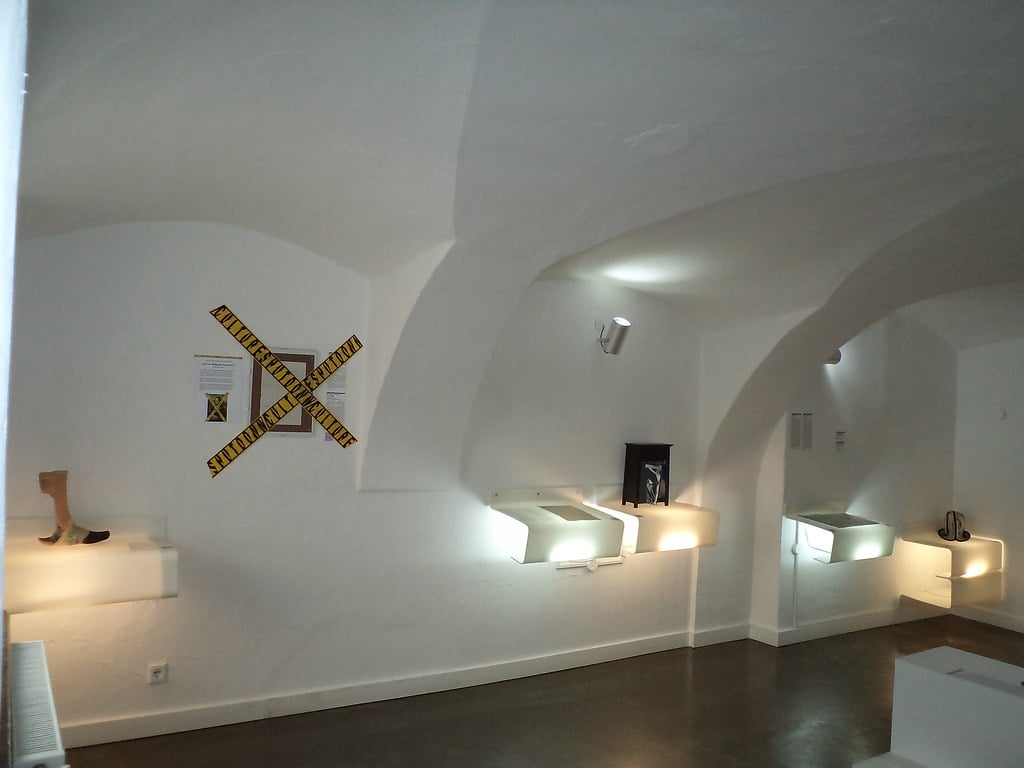
This one’s actually kind of profound despite sounding gimmicky. Located in Zagreb, it displays objects from ended relationships donated by people from around the world, each with a brief explanation.
You’ll see everything from wedding dresses to garden gnomes to a toaster. The emotional range is wild—some donations are heartbreaking (a child’s toy from a parent who lost custody), others are funny (an axe used to destroy an ex’s furniture), and many are just deeply human.
There’s something about seeing these random objects and reading the stories that makes you think about how we attach meaning to things, how we process loss, and how similar we all are in heartbreak. The museum started as a traveling exhibition in 2006 and opened its permanent location in 2010.
It’s won the European Museum of the Year Award, which is impressive for a museum about breakups.
Icelandic Phallological Museum, Reykjavik

Iceland has a museum dedicated entirely to penises. Specifically, to the penises of 93 different species found in Iceland, including whales, seals, polar bears, and yes, humans (they have a complete collection of penises from all Icelandic land and sea mammals, which is weirdly thorough).
The specimens are preserved in formaldehyde and displayed in glass cases. The founder, Sigurður Hjartarson, started the collection in 1974 when he received a bull’s penis as a joke gift.
He spent decades collecting specimens, and the museum opened in 1997. It’s surprisingly educational if you can get past the initial shock, there’s information about reproduction, anatomy, and folklore (Icelandic legends feature a lot of penis-related stories, apparently).
The gift shop sells exactly what you’d expect.
Avanos Hair Museum, Turkey

In a cave beneath a pottery shop in Avanos, Turkey, there’s a museum containing hair samples from over 16,000 women. The walls and ceiling are covered with locks of hair, each labeled with the donor’s name and address.
The story goes that the potter who owned the shop received a lock of hair from a female friend who was moving away in the 1970s, and he started collecting hair from female visitors as a tribute. It’s been called “the world’s weirdest museum,” and honestly, that’s fair.
Twice a year, the owner supposedly selects names at random and invites the winners to stay at his guest house. The whole thing feels like it could be either charming or deeply creepy depending on your perspective (I’m leaning toward creepy, but people visit it, so what do I know).
Sulabh International Museum of Toilets, India

This Delhi museum chronicles the history of toilets, sanitation, and hygiene from 2500 BCE to the modern day. It includes chamber pots, Victorian-era commodes, Japanese toilets with all their buttons, replicas of medieval toilets, and information about sanitation practices throughout history.
The museum was founded by the Sulabh Sanitation Movement, which works to improve sanitation in India. So it’s actually educational and serves a social purpose (promoting better hygiene and sanitation infrastructure).
The exhibits show how toilet technology evolved and how different cultures approached sanitation. Is it weird? Yeah.
But it’s also addressing a serious public health issue while doing it. The museum is free to visit.
The Museum of Witchcraft and Magic, Cornwall
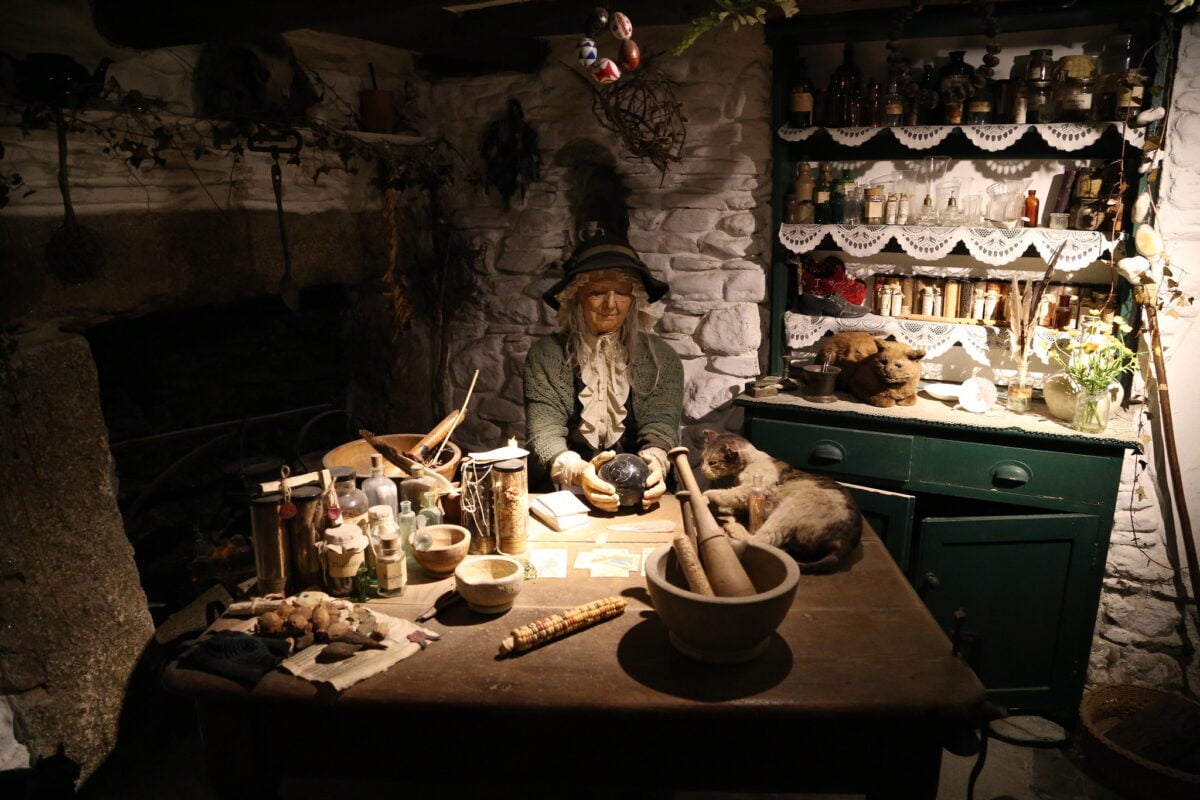
England’s Museum of Witchcraft in Boscastle holds the world’s largest collection of witchcraft-related artifacts and regalia. We’re talking curse poppets, scrying mirrors, ritual robes, wands, Books of Shadows, and items allegedly used in actual witchcraft practices.
Founded in 1951 by Cecil Williamson (who claimed to be an occultist), the collection includes both historical artifacts and modern Wiccan materials. Some exhibits are legitimately interesting from an anthropological perspective, showing how folk magic was practiced in rural England.
Others are just bizarre—there’s a whole section on cursing, complete with instructions and examples. The building itself is atmospheric, dark wood and narrow corridors, exactly what you’d want from a witchcraft museum.
Cornwall has a long history of folklore and magic, so the location makes sense.
Cancún Underwater Museum, Mexico

This isn’t technically a building—it’s an underwater sculpture park in the waters off Cancún, Isla Mujeres, and Punta Nizuc. Over 500 life-sized sculptures are submerged at depths ranging from 3 to 6 meters, and you have to scuba dive or snorkel to see them.
British sculptor Jason deCaires Taylor created most of the pieces between 2009 and 2013. The sculptures are made from pH-neutral marine concrete that encourages coral growth, so they’re becoming artificial reefs.
You’ll find human figures in various poses—people watching TV, sitting at desks, standing in groups. It’s eerie and beautiful. The sculptures have become covered in algae, coral, and sea life, which was the point. It’s environmental art serving a conservation purpose while being genuinely weird.
Definitely one of the more unique museum experiences you can have (assuming you can swim and aren’t afraid of being underwater with statue-people).
Meguro Parasitological Museum, Tokyo

Japan has a museum devoted entirely to parasites. The Meguro Parasitological Museum in Tokyo displays over 300 varieties of parasites in jars, along with photographs and information about how they infect hosts, what they do once inside, and how to avoid them (which you’ll definitely want to know after visiting).
The most famous exhibit is an 8.8-meter-long tapeworm removed from a human patient. It’s displayed in its full length, coiled in a jar, and it’s genuinely horrifying.
There are also displays showing parasites in various animals, lifecycle diagrams, and microscope stations where you can examine specimens yourself. The museum was founded in 1953 by Dr. Satoru Kamegai, a parasitologist who wanted to educate the public.
Admission is free but donations are encouraged. The gift shop sells tapeworm plushies and t-shirts, because of course it does.
Kunstkamera, St. Petersburg
Peter the Great’s “Cabinet of Curiosities” is Russia’s oldest museum, opened in 1727. Peter collected anatomical oddities, deformed fetuses, skeletons with abnormalities, and various “monsters” preserved in jars.
He was fascinated by medical anomalies and wanted to educate Russians about science (and probably also show off his weird collection). The museum still displays much of his original collection—conjoined twins, deformed skulls, babies with multiple heads, all preserved in formaldehyde.
There are also ethnographic collections showing tools, clothing, and artifacts from various cultures Peter encountered. It’s impressive and disturbing in equal measure. The building itself is baroque and beautiful, which makes the contents even more jarring.
You walk through elegant rooms filled with jars of preserved medical oddities. The museum is still active in research and holds about 2 million items total.
The Vent Haven Museum, Kentucky

This museum in Fort Mitchell, Kentucky, is dedicated entirely to ventriloquist dummies. Over 900 of them.
Figures from vaudeville performers, modern ventriloquists, historical dummies, and international variations of ventriloquist figures. The collection was started by William Shakespeare Berger (great name) in 1910 and has grown continuously.
The dummies are displayed in cases throughout the building, their glass eyes staring at you from every angle. Even if you’re not creeped out by ventriloquist dummies normally, seeing hundreds of them at once is unsettling (and if you are already creeped out by them, this is basically your nightmare).
The museum also hosts an annual ventriloquist convention because apparently there’s enough ventriloquists to have a convention. Admission is by appointment only, which adds to the slightly surreal nature of the whole experience.
Dog Collar Museum, Kent
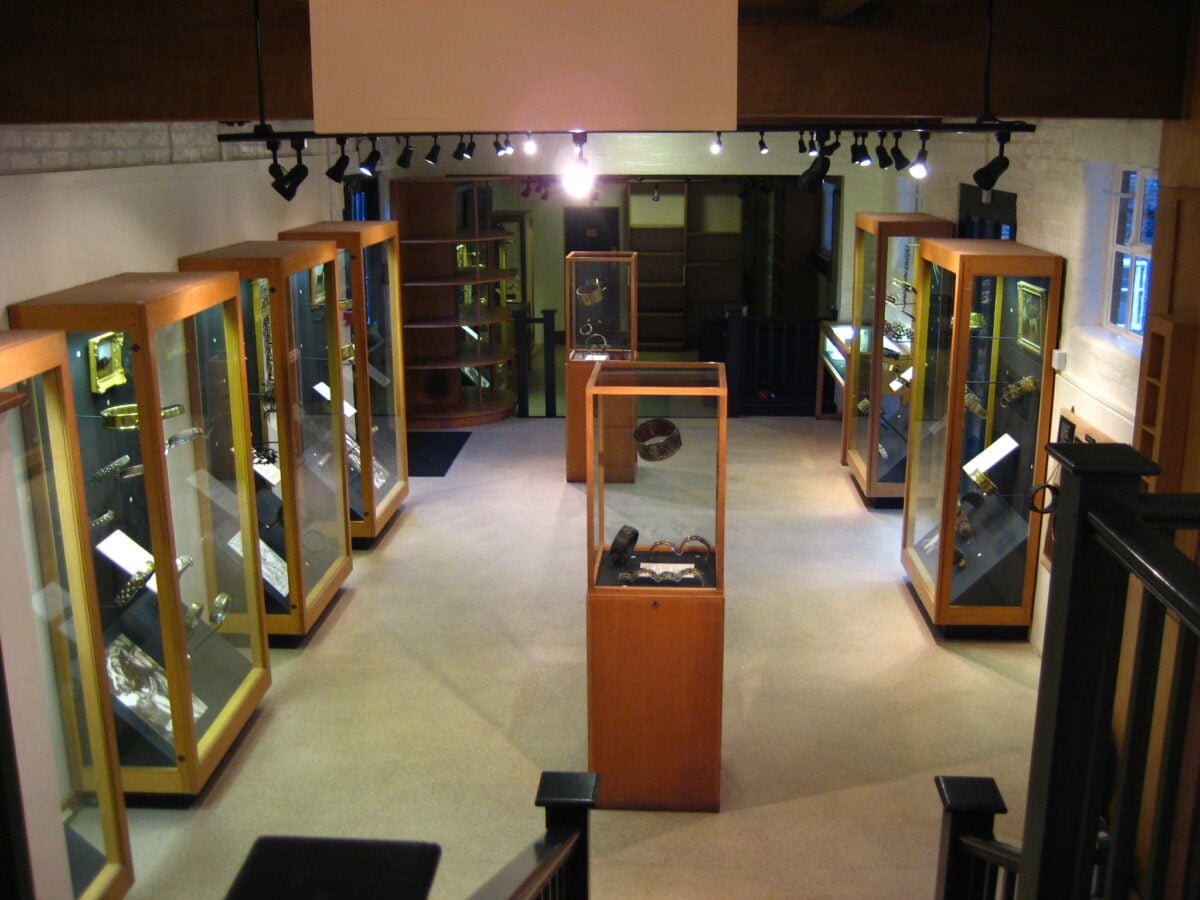
Leeds Castle in England has a museum in the gatehouse dedicated to dog collars throughout history. The collection spans five centuries, from medieval times to Victorian era, showing how dog collars evolved from purely functional restraints to ornate decorative pieces.
Some collars are spiked to protect hunting dogs from wolves and bears, others are engraved with the dog’s name and owner’s information (like a medieval version of an ID tag), and some are just ridiculously ornate with silver and gold decoration because wealthy people have always spent absurd amounts of money on their pets. The castle itself is worth visiting (it’s genuinely beautiful), but the dog collar museum is a weird little bonus that most people don’t expect.
It’s free with castle admission.
Museum of Death, California and Louisiana

There are locations in Hollywood and New Orleans, and they’re dedicated to death in all its forms. Exhibits include serial killer artwork, crime scene photos, autopsy instruments, coffins, embalming equipment, death masks, taxidermied animals, and video footage of autopsies and executions.
It’s not for everyone (massive understatement). The museum doesn’t shy away from the graphic reality of death—there are photos of crime scenes, murder victims, accidents, and suicides.
The curators claim it’s educational and meant to make people think about mortality. Whether it’s educational or just morbid curiosity is up for debate. You have to be over 18 to enter, and they warn visitors that some people faint.
The gift shop sells death-themed merchandise, which feels either perfectly appropriate or deeply wrong depending on your worldview.
Collections That Make You Question Humanity

Here’s what grabs you about these places – not only do they focus on odd stuff, but someone actually bothered gathering it, keeping it safe, sorting it out, then building a spot where folks can come see it. Take pickles, failed paintings, or souvenirs from dumped romances – people still feel this drive to save things, mark them down, show them off, even if nobody else gets why.
They stand for fixations, for hobbies most would call out-there, plus proof that however unusual you believe your tastes are, another person likely made an exhibit out of yours. Truthfully? There’s something oddly lovely in that idea.
More from Go2Tutors!

- The Romanov Crown Jewels and Their Tragic Fate
- 13 Historical Mysteries That Science Still Can’t Solve
- Famous Hoaxes That Fooled the World for Years
- 15 Child Stars with Tragic Adult Lives
- 16 Famous Jewelry Pieces in History
Like Go2Tutors’s content? Follow us on MSN.



