Dark Origins of Nursery Rhymes
You probably sang nursery rhymes as a child without thinking twice about the words. Teachers used them to help you learn patterns and rhythm. Parents recited them at bedtime.
They seemed innocent enough—simple verses about bridges falling and characters tumbling down hills. But many of these rhymes hide disturbing stories.
Some reference plagues and death. Others mock historical figures or commemorate violent events.
The cheerful melodies masked meanings that would have made perfect sense to people centuries ago but got lost over time.
Ring Around the Rosie

This one gets brought up constantly as proof that nursery rhymes have dark origins. The common theory links it to the Great Plague of London in 1665.
“Ring around the rosie” supposedly refers to the circular rash that appeared on plague victims. “Pocket full of posies” meant the flowers people carried to mask the smell of death.
“Ashes, ashes” relates to cremating bodies. “We all fall down” speaks for itself.
The problem is that this explanation only appeared in the 1960s. No historical evidence connects this rhyme to the plague.
The earliest versions don’t even match the details people claim. Still, the theory stuck because it makes for a compelling story about hidden horror in childhood songs.
London Bridge is Falling Down

This rhyme actually has multiple dark theories competing for attention. One suggests that builders buried children alive in the bridge’s foundation as human sacrifices to make the structure stronger.
Another points to Viking attacks on London when Olaf II of Norway pulled down the bridge in 1014. The most likely explanation is less dramatic but still unsettling.
London Bridge really did keep falling down throughout history. It collapsed multiple times, and each rebuild represented a massive expense and engineering challenge.
The rhyme probably just reflects the frustration and fear people felt watching their main crossing fail repeatedly.
Rock-a-Bye Baby

The image of a baby in a treetop cradle seems weird enough on its own. But the verse gets darker when you realize what happens next.
The wind blows, the bough breaks, and down comes baby, cradle and all. Some scholars trace this to Native American practices of hanging cradles in trees, which European colonists observed and found strange.
Others suggest it references the fall of the British monarchy, with the baby representing the royal line and the falling cradle symbolizing revolution. A grimmer interpretation sees it as a reference to infant mortality, which was devastatingly common when this rhyme emerged.
Three Blind Mice
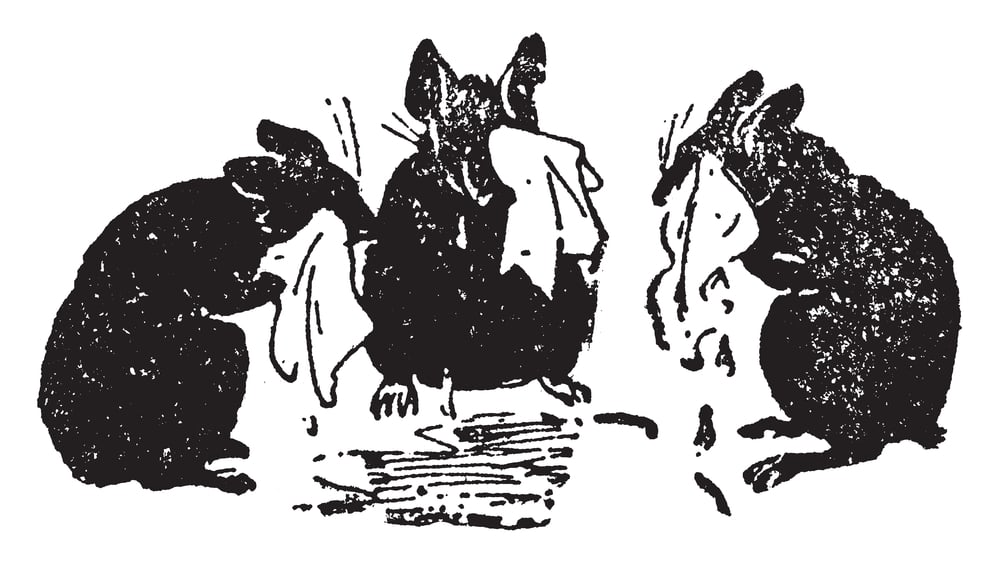
The mice in this rhyme run after the farmer’s wife, who cuts off their tails with a carving knife. Violent enough as is. But historians link this verse to Queen Mary I of England, known as Bloody Mary for burning Protestants at the stake during her reign.
The three blind mice represent three Protestant nobles who conspired against her. Mary, the farmer’s wife in the rhyme, had them executed for treason.
The blindness refers to their supposed heresy—their refusal to see the truth of Catholicism. This interpretation turns a silly animal rhyme into a coded message about religious persecution and political murder.
Mary, Mary, Quite Contrary
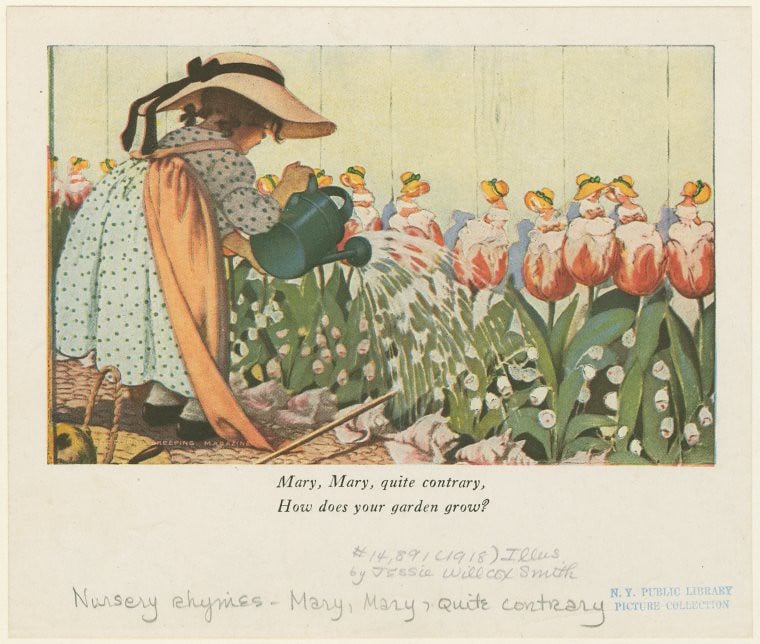
Speaking of Mary, this rhyme also points to Mary I. “Mary, Mary, quite contrary” mocks her attempt to reverse England’s Protestant reformation and restore Catholicism.
“How does your garden grow” refers to the graveyards filling up with executed Protestants. The “silver bells and cockle shells” represent instruments used during Catholic mass, which Protestants despised.
“Pretty maids all in a row” might reference the execution devices, though some historians suggest it means the miscarriages and stillbirths Mary suffered, ending her hopes of a Catholic heir.
Baa Baa Black Sheep
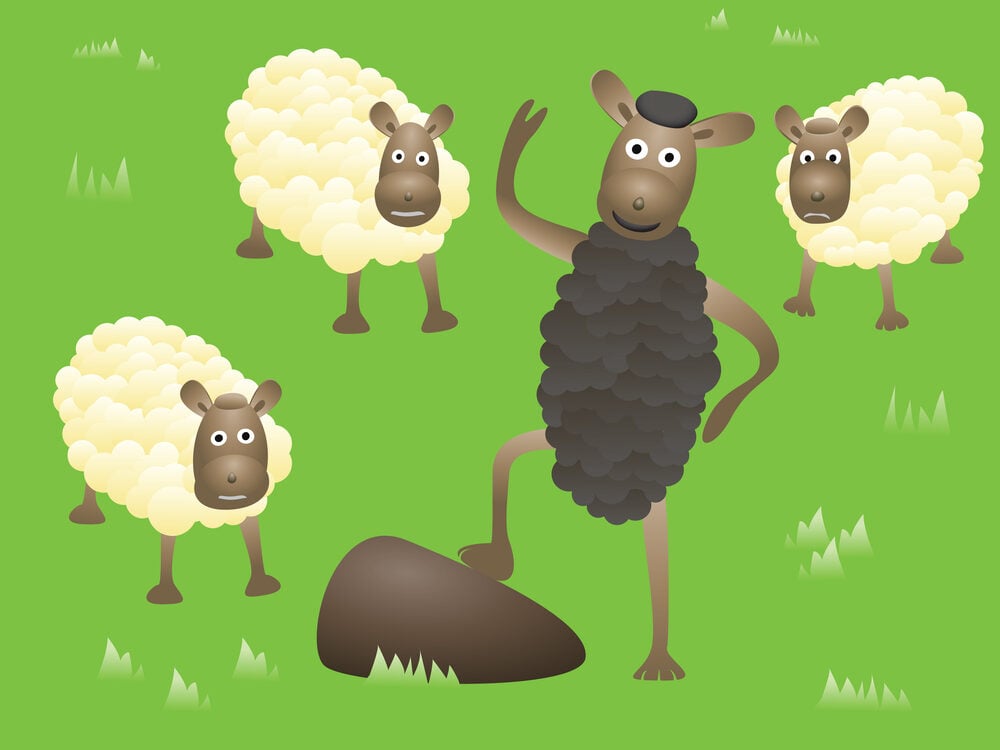
This rhyme sounds harmless until you look at medieval English economics. The tax system took a heavy toll on wool producers during the 13th century.
King Edward I imposed an export tax on wool that gave one-third to the king, one-third to the church, and left only one-third for the shepherd who did all the work. The “black sheep” represented the shepherd producing wool.
The three bags of wool show how the profits got divided, with the master (king) and the dame (church) taking their shares first. The little boy who lives down the lane—the actual shepherd—gets whatever’s left, which wasn’t much.
The rhyme became a way to complain about unfair taxation without directly criticizing the crown.
Humpty Dumpty

Most people picture an egg when they hear this rhyme, but that image came later. The original Humpty Dumpty was likely a cannon used by Royalists during the English Civil War in 1648.
The cannon sat on top of a church tower in Colchester during a siege. Parliamentary forces bombarded the tower until it collapsed, sending Humpty crashing to the ground.
The king’s horses and men tried to repair or remount the cannon but couldn’t. The Royalists lost the siege shortly after.
A massive siege cannon becoming nursery rhyme material shows how historical events filter into children’s songs through cultural memory.
Jack and Jill
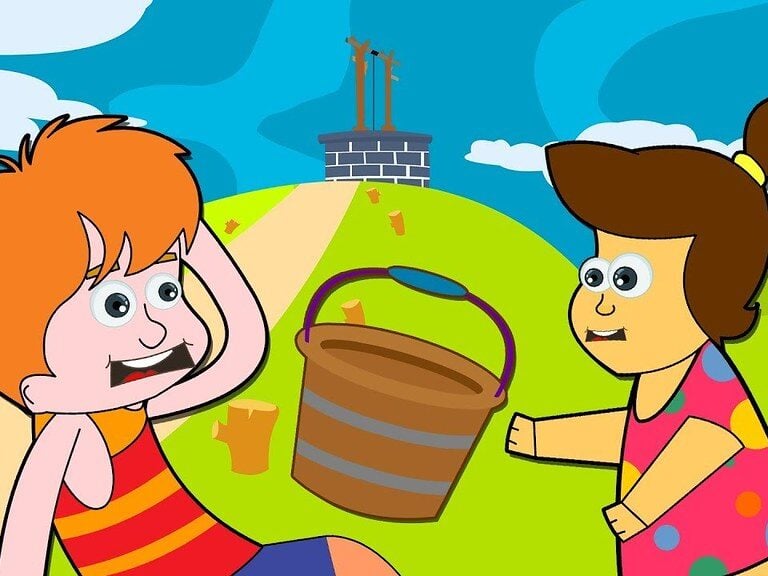
Two children going up a hill to fetch water makes no sense if you think about it. Water sources sit in valleys, not on hilltops.
The rhyme gets stranger when Jack falls and breaks his crown—unusual phrasing for a head injury—and Jill comes tumbling after. Some historians link this to the French Revolution.
King Louis XVI (Jack) got beheaded (lost his crown), and Queen Marie Antoinette (Jill) followed him to the guillotine soon after. Others trace it to even earlier Scandinavian mythology about children who angered the moon god.
The water-fetching detail appears in an ancient Norse legend about two children named Hjuki and Bil.
Georgie Porgie

“Georgie Porgie, pudding and pie, kissed the girls and made them cry. When the boys came out to play, Georgie Porgie ran away.”
This seemingly simple verse about a troublesome child actually targets George Villiers, Duke of Buckingham, who served as a favorite of King James I and later King Charles I. Villiers gained massive power and influence despite his low birth, which angered the nobility.
Rumors spread about his relationships with both kings and various courtiers. The rhyme mocks his behavior and suggests he acted inappropriately with women before fleeing when confronted by their male relatives or husbands.
His assassination in 1628 ended one of the most controversial political careers in English history.
Little Miss Muffet

A girl sitting on a tuffet eating curds and whey gets frightened by a spider. The rhyme seems to capture a child’s irrational fear of insects.
But Dr. Thomas Muffet, a 16th-century physician, had a daughter named Patience who inspired this verse. Dr. Muffet advocated for eating insects and spiders as medicine. He believed they had healing properties and could cure various ailments.
His daughter reportedly hated spiders, which made her father’s obsession with them especially traumatic. The rhyme immortalizes her fear while poking fun at her father’s bizarre medical theories.
Pop Goes the Weasel

This rhyme has a catchy tune that hides references to poverty in Victorian London. “Weasel” was slang for a coat or suit. “Pop” meant to pawn something.
The verse describes someone pawning their coat to get money for food and drink, a common occurrence in working-class neighborhoods. “Half a pound of tuppenny rice, half a pound of treacle” represents cheap food that poor families survived on.
“That’s the way the money goes” acknowledges how quickly any earnings disappeared. The seemingly playful song actually documents the grinding poverty that forced people to pawn their possessions just to eat.
Goosey Goosey Gander

“Goosey goosey gander, where shall I wander? Upstairs and downstairs and in my lady’s chamber. There I met an old man who wouldn’t say his prayers, so I took him by the left leg and threw him down the stairs.”
This violent verse refers to priest hunters during the 16th century when practicing Catholicism became illegal in England. Catholic priests hid in secret rooms in wealthy homes, conducting mass in private.
Protestant authorities searched houses looking for these hidden priests. The “old man who wouldn’t say his prayers” represents a Catholic priest refusing to renounce his faith.
Throwing him down the stairs depicts the punishment these priests faced when discovered.
Oranges and Lemons

Oranges plus lemons, go the chimes of St. Clement’s – seems happy till it ends: “Here comes a blade to slice your head.” This tune names old London churches with their ringing bells, yet finishes with a nod to beheadings done near the Tower.
The churches listed stretch along a path from the Tower to where executions happened. As prisoners walked that road for the last time, they listened to bell sounds.
Fruit mentions may hint at what inmates ate before dying – or just point to goods sold close to each chapel. However you see it, the verse changes a city sightseeing trip into something darker.
When Children’s Songs Remember What Adults Forget
These songs stuck around since creepy stories came with catchy tunes. Grown-ups passed them down even though they’d forgotten the original reasons behind them.
Over time, what they meant got lost – just the lines stayed. A few of these ideas could be off. Experts debate where they came from, questioning the proof now and then.
Yet the fact that such beliefs stick around reveals a real thing about nursery rhymes – hidden meanings tucked inside, passing down tales of sickness, hangings, struggle, or power shifts. Kids hum songs tied to old pain, unaware.
Yet the sorrow lingers out in the open – cloaked in basic phrases, stuck-in-your-head melodies that just won’t fade.
More from Go2Tutors!

- The Romanov Crown Jewels and Their Tragic Fate
- 13 Historical Mysteries That Science Still Can’t Solve
- Famous Hoaxes That Fooled the World for Years
- 15 Child Stars with Tragic Adult Lives
- 16 Famous Jewelry Pieces in History
Like Go2Tutors’s content? Follow us on MSN.



