Deepest Spots in the World’s Oceans
The ocean covers more than 70 percent of the planet, yet most of it remains less explored than the surface of the moon. The deepest parts sit at pressures that would crush most human-built structures, in total darkness, at temperatures just above freezing.
And yet life finds ways down there. What follows is a look at the most extreme depths on Earth — where the seafloor drops away into something almost incomprehensible.
Challenger Deep — The Deepest Place on Earth

Challenger Deep, located in the Mariana Trench in the western Pacific, holds the record for the deepest known point on Earth. It sits roughly 36,000 feet below the surface — about 11,000 meters.
To put that in perspective, if you dropped Mount Everest into Challenger Deep, its summit would still be more than a mile underwater. The trench forms where the Pacific Plate slides beneath the Mariana Plate, a process called subduction.
As the plates grind against each other, the seafloor is dragged downward over millions of years, creating the trench’s extreme depth. Challenger Deep specifically sits near the southern end of the Mariana Trench, and its lowest point has been visited only a handful of times — first by Swiss oceanographer Jacques Piccard and US Navy Lieutenant Don Walsh in 1960, and more recently by filmmaker James Cameron and a handful of scientific expeditions.
The water pressure at that depth is over 1,000 times greater than at the surface. Somehow, amphipods — small shrimp-like crustaceans — thrive down there.
So do bacteria, and other creatures that have never seen sunlight.
Sirena Deep — Challenger Deep’s Neighbor

Most people haven’t heard of Sirena Deep, but it’s the second deepest point in the Mariana Trench and one of the deepest places on the planet, reaching around 35,210 feet (10,732 meters). It sits about 124 miles east of Challenger Deep.
What makes Sirena Deep notable beyond raw depth is its biodiversity. Scientists who visited in 2010 found an unexpectedly rich ecosystem, with sea cucumbers, shrimp, and even small fish thriving under crushing pressure.
The trench floor wasn’t barren — it was alive.
Horizon Deep — The Tonga Trench’s Bottom

The Tonga Trench runs through the southwestern Pacific, northeast of New Zealand and east of the Tonga island chain. Its deepest point, Horizon Deep, reaches approximately 35,702 feet (10,882 meters), making it the second deepest trench in the world.
The Tonga Trench is also notable for being one of the most seismically active places on Earth. The Pacific Plate subducts beneath the Tonga Plate at one of the fastest rates measured anywhere — around 24 centimeters per year.
That speed drives both the trench’s depth and the frequency of major earthquakes in the region.
Factorian Deep — The Southern Ocean’s Abyss
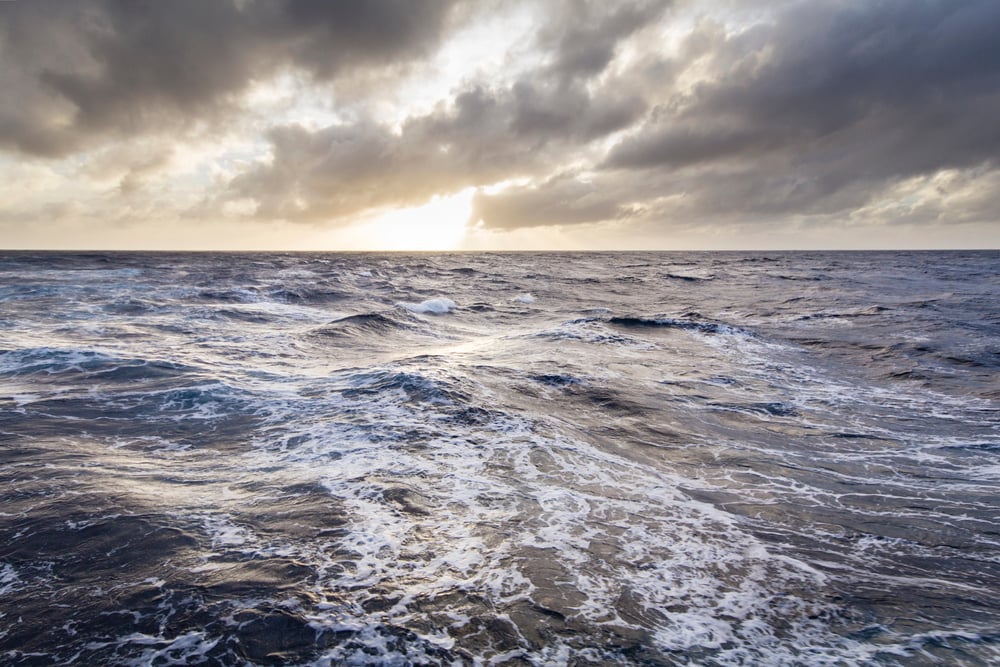
The South Sandwich Trench arcs through the South Atlantic near Antarctica, and its deepest point — the Factorian Deep — reaches about 24,390 feet (7,434 meters). That makes it the deepest point in the Southern Ocean.
It was named after the submersible DSV Limiting Factor, which surveyed the trench during the Five Deeps Expedition in 2019. That project, led by explorer Victor Vescovo, aimed to reach the deepest point in each of the world’s five oceans.
The Southern Ocean dive was among the most physically demanding, with brutal weather and icy water complicating every aspect of the mission.
Puerto Rico Trench — The Atlantic’s Lowest Point

The Puerto Rico Trench sits on the boundary between the Caribbean Plate and the North American Plate, just north of the island of Puerto Rico. Its deepest point reaches around 27,480 feet (8,376 meters), making it the deepest location in the Atlantic Ocean.
The trench is geologically complex. It’s not purely a subduction zone — the plates here move in oblique ways, creating a mix of trenching and lateral motion.
That makes the area prone to both deep earthquakes and tsunamis. The 1918 Puerto Rico earthquake, which triggered a destructive tsunami, originated near this trench.
Java Trench — The Indian Ocean’s Deepest Point

The Java Trench (also called the Sunda Trench) runs along the southern edge of the Indonesian archipelago and dips down to about 24,460 feet (7,455 meters) at its deepest — making it the deepest point in the Indian Ocean.
This trench sits at the boundary where the Australian Plate subducts beneath the Eurasian Plate. The 2004 Indian Ocean earthquake — one of the most powerful ever recorded — ruptured along this same fault system, triggering the catastrophic tsunami that killed over 200,000 people.
The trench is a reminder that deep ocean geology isn’t just an abstract curiosity. It shapes events that affect millions of people living near coastlines.
Emden Deep — The Philippine Trench

The Philippine Trench runs along the eastern side of the Philippine archipelago, and its deepest point, the Emden Deep, reaches about 34,580 feet (10,540 meters). It’s consistently ranked among the top five deepest points on Earth.
The trench was named after the German oceanographic vessel Emden, which surveyed it in 1927. Despite its extreme depth, the Philippine Trench sits in waters that are heavily used for fishing and international shipping — a strange contrast between surface activity and the silent abyss below.
Izu-Ogasawara Trench — A Chain of Depth
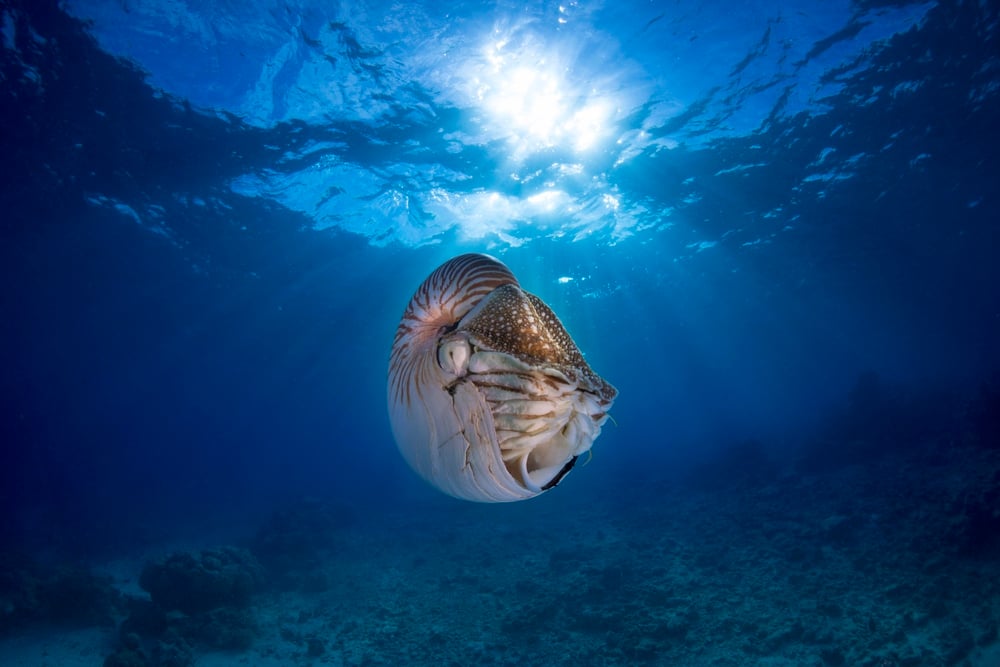
South of Japan, the Izu-Ogasawara Trench extends nearly 700 miles along the western Pacific. Its deepest point reaches about 32,087 feet (9,780 meters).
The trench connects to the Mariana Trench further south, forming part of a massive subduction system along the western Pacific’s tectonic boundary. The seafloor here has been studied for the unusual microbial communities that survive at such depths, feeding not on sunlight or even on organic material falling from above, but on chemical reactions in the rock itself.
Kermadec Trench — Close but Not Quite

The Kermadec Trench lies northeast of New Zealand, parallel to the Tonga Trench, and reaches depths of about 32,963 feet (10,047 meters). For a long time, estimates placed it deeper — but more recent precision surveys have given the Tonga Trench the clear edge.
That said, the Kermadec is still one of the least disturbed ocean environments on Earth. New Zealand has established a marine reserve over much of the region, protecting the trench from fishing and other activities.
Scientists have found giant crustaceans — supergiant amphipods — in the Kermadec that reach up to 34 centimeters in length. That’s not a creature you expect to find.
Kuril-Kamchatka Trench — Cold, Deep, and Overlooked

Running along the coast of Russia’s Kamchatka Peninsula and the Kuril Islands, the Kuril-Kamchatka Trench drops to about 34,449 feet (10,500 meters). It’s one of the deeper trenches in the Pacific, yet receives far less attention than the Mariana or Tonga systems.
Part of the reason is location — the trench sits in cold, rough North Pacific waters that aren’t easy to work in. Fewer research expeditions have gone there, which means its ecology is still not well understood.
What’s known is that the Kamchatka region above the water is one of the most volcanically active areas on Earth, and the seafloor below reflects that same geological intensity.
Cayman Trough — The Caribbean’s Deepest Secret

The Cayman Trough (or Cayman Trench) runs through the Caribbean Sea between Cuba and Jamaica, reaching depths of around 25,216 feet (7,686 meters). It’s the deepest point in the Caribbean and one of the deepest in the Atlantic basin.
Unlike the subduction trenches of the Pacific, the Cayman Trough formed through a different process — the spreading and rifting of the seafloor along a transform fault. Hydrothermal vents discovered there in 2010 were among the deepest ever found, sitting at around 16,400 feet (5,000 meters).
The organisms living around those vents survived without sunlight, relying entirely on the chemical energy released by the vents themselves.
Molloy Deep — The Arctic’s Abyss
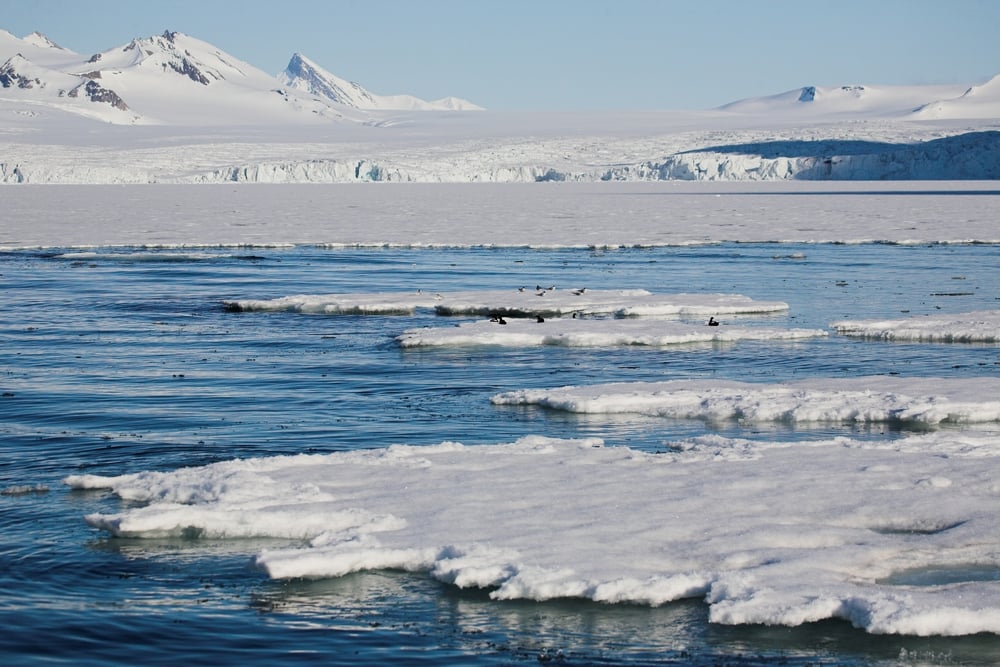
The Arctic Ocean is the shallowest of the five oceans on average, but it still has its own remarkable depth. The Molloy Deep, located in the Fram Strait between Greenland and Svalbard, reaches about 18,599 feet (5,669 meters).
It’s the deepest point in the Arctic Ocean. Conditions there are extreme in a different way than the Pacific trenches — the water is close to freezing, and the region sits under seasonal ice cover.
Research in the Molloy Deep has found cold-water corals and sponge communities that grow slowly over centuries, creating fragile ecosystems that take enormous amounts of time to recover from any disturbance.
Diamantina Trench — The Indian Ocean’s Runner-Up

Down below Australia, stretching across the southeast part of the Indian Ocean, lies the Diamantina Trench – plunging close to 26,401 feet, which is about 8,047 meters deep. At one point, scientists believed this spot marked the ocean’s lowest level, though later detailed mapping revealed the Java Trench actually takes the title.
Out here, the sea floor cracked open while sliding sideways, building the Diamantina without the usual sinking of tectonic plates. Far from ports or regular ship routes, it lies buried in isolation across vast empty water.
Sending ships to probe its depths takes effort few ocean sites require – more than even deep Pacific zones demand.
What Pressure Really Feels Like
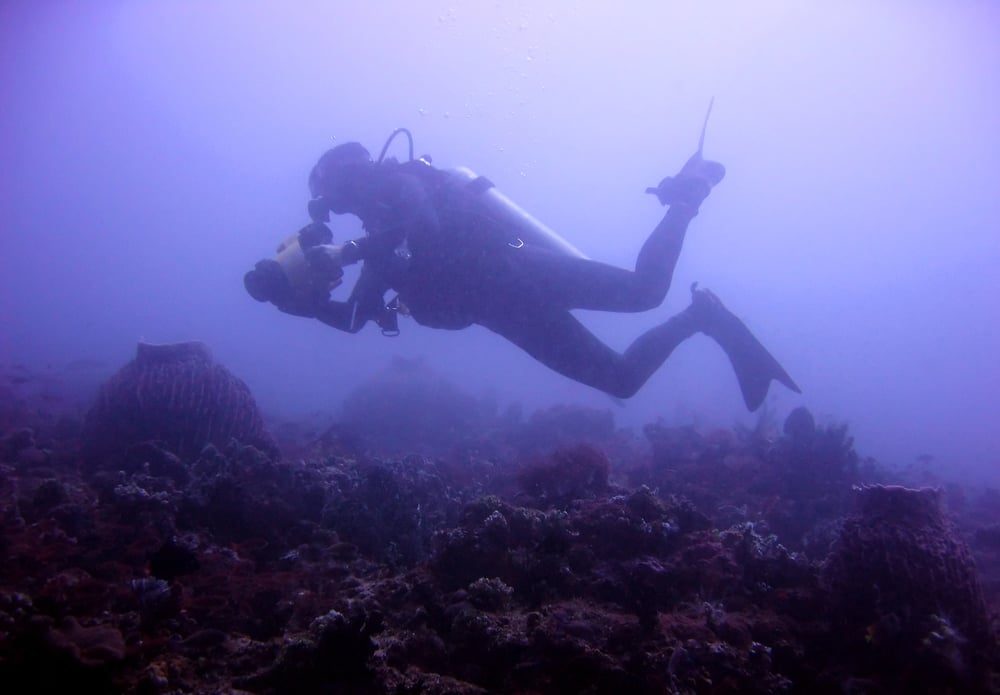
Hard to grasp what it feels like deep in ocean trenches just using digits. Down at 36,000 feet, squeeze hits around 1,086 times normal air pressure.
That works out close to 15,750 pounds pressing on every square inch. Cups made of Styrofoam ride science lines into those depths.
Back they return – shrunk small, shaped like tiny caps – a quiet sign of forces tough to imagine. A handful of people have made it down there inside tiny vessels, saying how deep the silence feels.
Light does not reach. Any memory of what lies up top fades completely.
The only sound sticks close – the steady drone of machines keeping them alive – while beams cut through dark water beyond the glass.
Down There the Rules Are Different

Beneath the waves, far down where light fades, existence bends in strange ways. Pressure crushes everything familiar, yet life persists anyway.
Sunlight never reaches these zones, so plants cannot grow. Instead, tiny bits drift downward, remains of beings that lived higher up.
This constant trickle feeds entire communities below. Some microbes skip eating altogether, pulling energy from stone itself.
Survival here runs on chemistry, not photosynthesis. Down in the dark, even time feels different.
Down in the Mariana Trench, snailfish were caught on camera below 27,000 feet – deeper than any fish before. Pressure would crush most life, yet theirs carry extra TMAO, a substance protecting their proteins.
Life at those depths runs on chemistry shaped by crushing weight. Each animal holds its own molecular workaround, something forged only because survival demanded it.
Life clings even where it should not. Down below, pressure crushes everything yet creatures move.
Though humans reach further, much stays hidden. What thrives in darkness surprises us every time. The planet guards its depths like a secret never meant to be told.
More from Go2Tutors!

- The Romanov Crown Jewels and Their Tragic Fate
- 13 Historical Mysteries That Science Still Can’t Solve
- Famous Hoaxes That Fooled the World for Years
- 15 Child Stars with Tragic Adult Lives
- 16 Famous Jewelry Pieces in History
Like Go2Tutors’s content? Follow us on MSN.



