Everyday Snapshots That Froze History in Time
Some photographs change everything. Not the carefully staged portraits or commissioned documentaries, but the accidental captures — moments when an ordinary person with a camera happened to be in the right place when history decided to unfold.
These images don’t just document what happened. They become the way we remember it.
The Hindenburg’s Final Moments
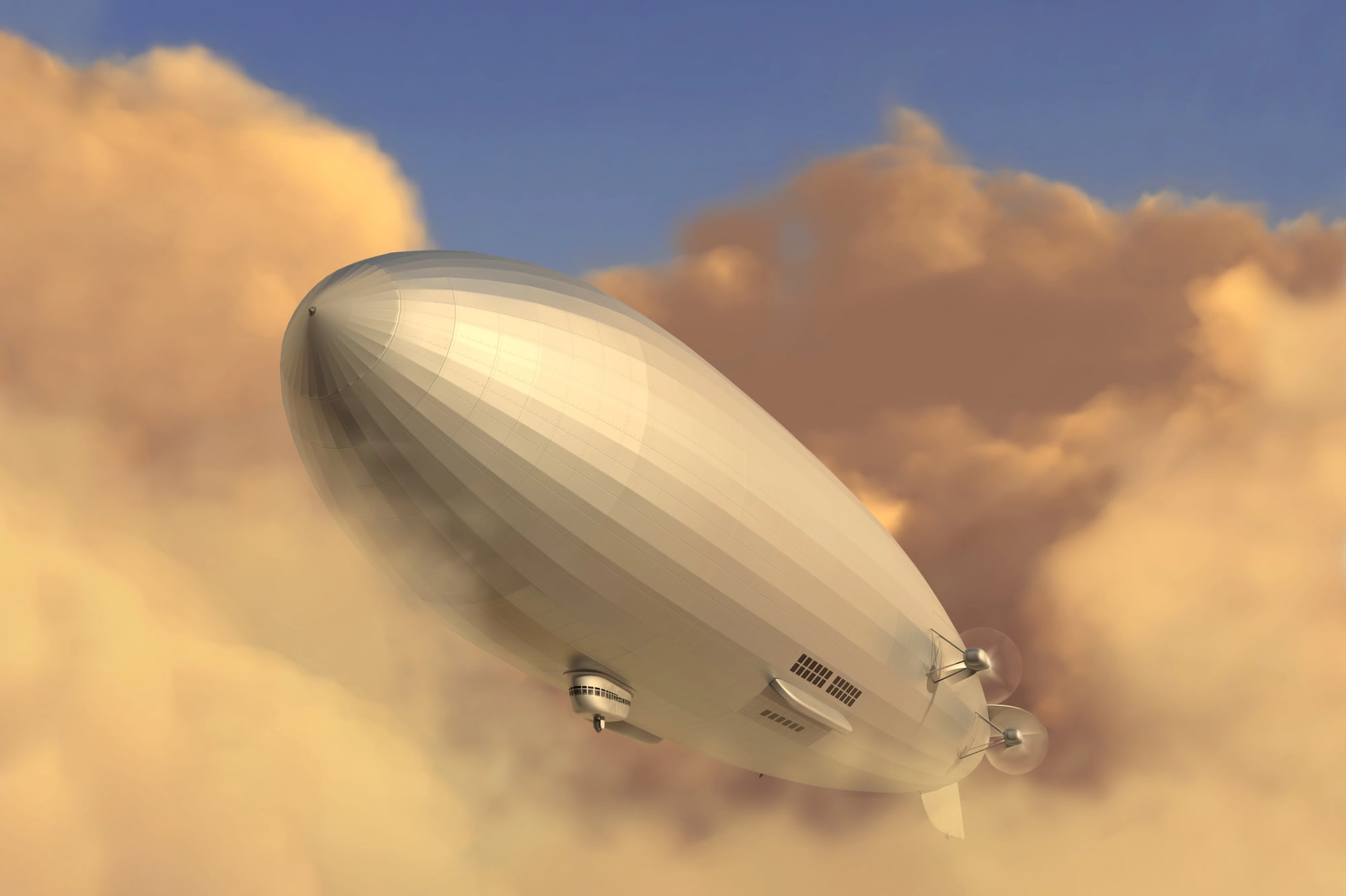
The Lakehurst Naval Air Station seemed routine that day in 1937. Sam Shere was just another photographer covering what should have been a standard airship landing.
Then the hydrogen ignited, and in 37 seconds, the age of passenger airships ended forever. Shere’s camera caught the exact moment — the massive dirigible collapsing into flames while tiny figures scattered below.
The image became so iconic that most people can picture the Hindenburg disaster without ever having lived through it.
V-J Day In Times Square
Alfred Eisenstaedt wandered through the celebrating crowds on August 14, 1945, when Japan surrendered and World War II finally ended.
He spotted a sailor grabbing a nurse and kissing her — a spontaneous moment of pure relief and joy that lasted maybe three seconds.
But those three seconds, frozen by Eisenstaedt’s camera, became the defining image of a nation celebrating the end of the most devastating war in human history.
The kiss represents something larger than itself: the collective exhale of millions who could finally believe the nightmare was over.
Tank Man At Tiananmen Square
The morning after the Chinese military cleared Tiananmen Square in June 1989, Jeff Widener positioned himself on a hotel balcony with a telephoto lens, and what he captured through that lens (a single protestor standing in front of a column of tanks, shopping bags in hand, refusing to move) defied every expectation of how power and resistance were supposed to work.
Here was David without even a sling — just grocery bags and stubborn conviction — facing down Goliath in the form of military hardware.
And somehow, impossibly, the tanks stopped. The man climbed onto the lead tank, apparently had a conversation with the crew, then climbed down and resumed his position until bystanders finally pulled him to safety.
The photograph became a symbol that transcended its moment because it captured something that shouldn’t have been possible but was: one ordinary person making an entire military column pause simply by standing his ground.
Widener nearly missed the shot entirely — his telephoto lens had been damaged the day before and was barely functioning. But sometimes history and happenstance align perfectly.
The Falling Man
People don’t like talking about Richard Drew’s photograph from September 11, 2001. But it captures something essential about that day that the images of collapsing buildings cannot quite convey.
A single person falls against the clear blue sky, arms at his sides, appearing almost peaceful in the midst of unthinkable chaos.
The photograph forces you to confront the individual human cost in a way that statistics never could.
Drew had positioned himself blocks away from the World Trade Center, trying to document the unfolding catastrophe, when he captured this image in a rapid sequence of shots.
Most newspapers refused to run it, finding it too disturbing, too invasive. But the photograph endures because it refuses to let the enormity of the tragedy obscure its fundamentally human dimension.
Behind The Iron Curtain
The Berlin Wall represented more than concrete and barbed wire. It was the physical manifestation of a divided world, splitting families, friends, and lovers with bureaucratic finality.
So when Peter Leibing photographed 19-year-old East German border guard Conrad Schumann leaping over the barbed wire into West Berlin in August 1961, the image carried symbolic weight far beyond its simple composition.
Schumann had been stationed at the border as construction began on what would become the Berlin Wall.
Leibing noticed the young guard seemed conflicted, glancing repeatedly toward the Western side. When Schumann suddenly sprinted toward the wire and leaped, Leibing was ready.
The photograph shows a moment of pure human agency — one person refusing to accept the arbitrary divisions imposed by politics and history.
The Napalm Girl
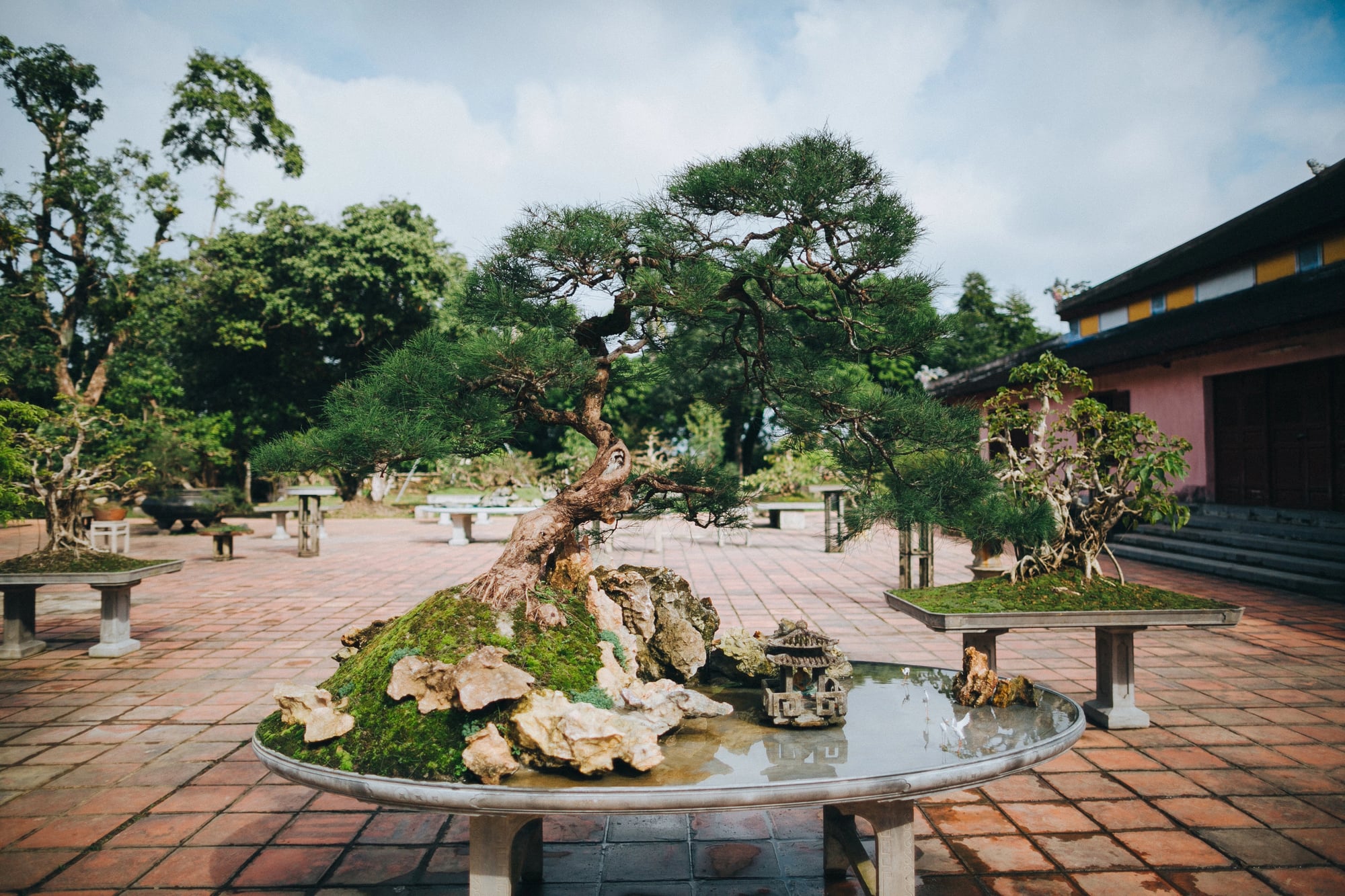
War photography often focuses on soldiers, equipment, and strategic positions. Nick Ut’s Pulitzer Prize-winning photograph from June 8, 1972, did something different entirely.
It showed 9-year-old Phan Thi Kim Phuc running unclothed down a road, her back severely burned by napalm, alongside other fleeing children and South Vietnamese troops.
Ut had been covering a routine military operation when South Vietnamese planes mistakenly dropped napalm on their own troops and nearby civilians.
The image he captured became one of the most influential photographs of the Vietnam War, helping turn American public opinion against the conflict.
But it also demonstrated photography’s power to transform abstract policy debates into visceral human reality. The girl survived, and Ut helped get her medical treatment before developing his film.
Lunch Atop A Skyscraper
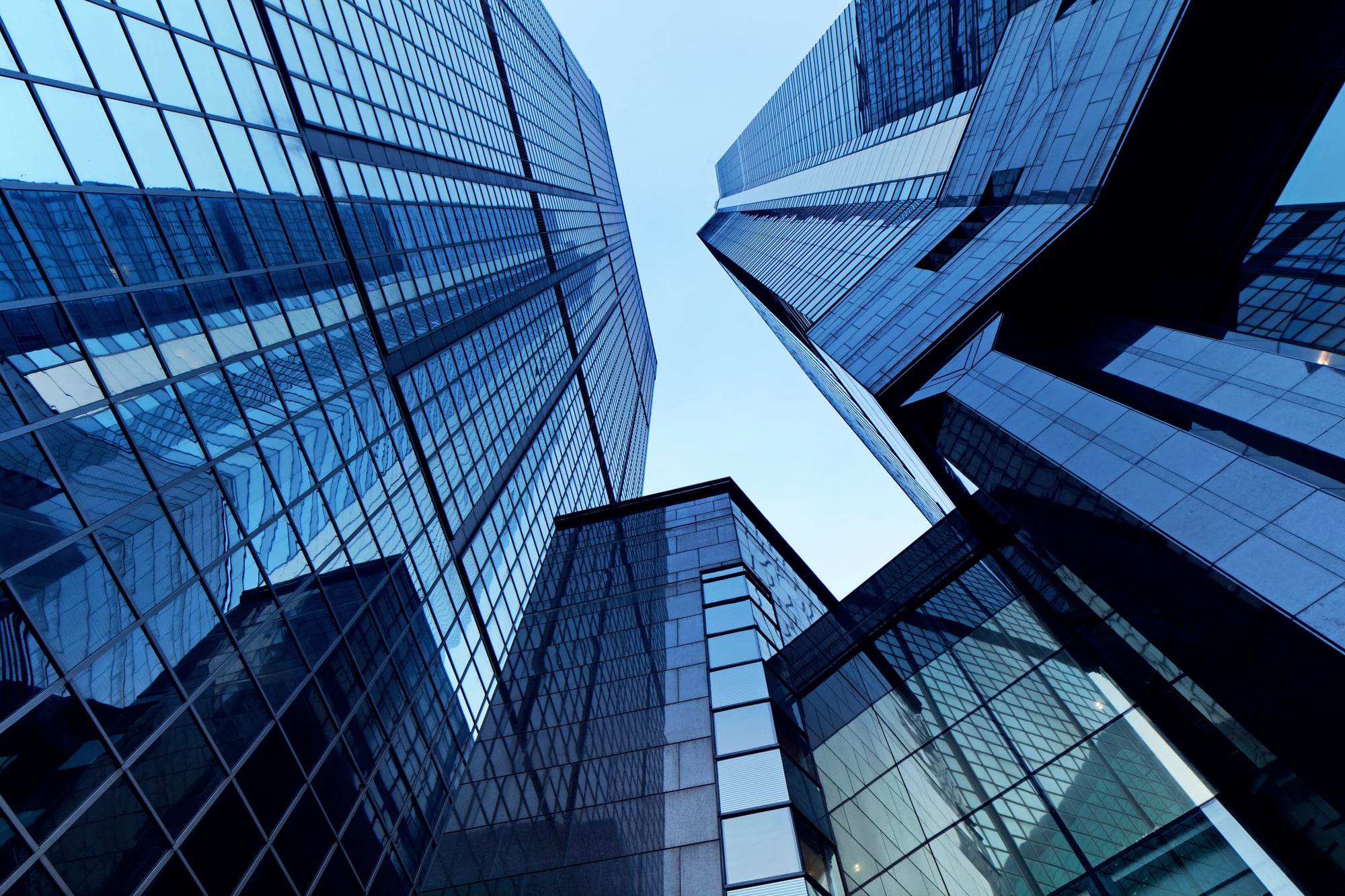
The photographer’s name was Charles C. Ebbets. The 11 construction workers eating lunch on a steel beam 840 feet above Manhattan in 1932 probably didn’t think much about the camera pointed their way.
They were building Rockefeller Center during the Great Depression, grateful for steady work, taking their break the only way they could — perched on a beam with their feet dangling over empty air.
The photograph captures something essentially American about that era: the combination of audacity, necessity, and casual bravery that built the country’s skyline during its darkest economic period.
These weren’t daredevils or showoffs. They were men doing dangerous work because it needed doing, treating extraordinary risk as ordinary routine.
The Dust Bowl Migration

Dorothea Lange encountered Florence Owens Thompson at a pea pickers’ camp in California in March 1936.
Thompson was 32 years old, a widow with seven children, stranded without work after the pea crop had frozen.
Lange took several photographs, but the one that became iconic shows Thompson’s weathered face and worried expression, her hand raised to her chin, with two of her children leaning against her shoulders, faces turned away from the camera.
Lange later said she was drawn to Thompson’s dignity despite her obvious desperation.
The photograph became the defining image of the Great Depression, representing not just economic hardship but the human resilience required to endure it.
Thompson’s expression contains multitudes — worry, determination, love, exhaustion — all the complex emotions of someone carrying impossible burdens with grace.
The Moon Landing
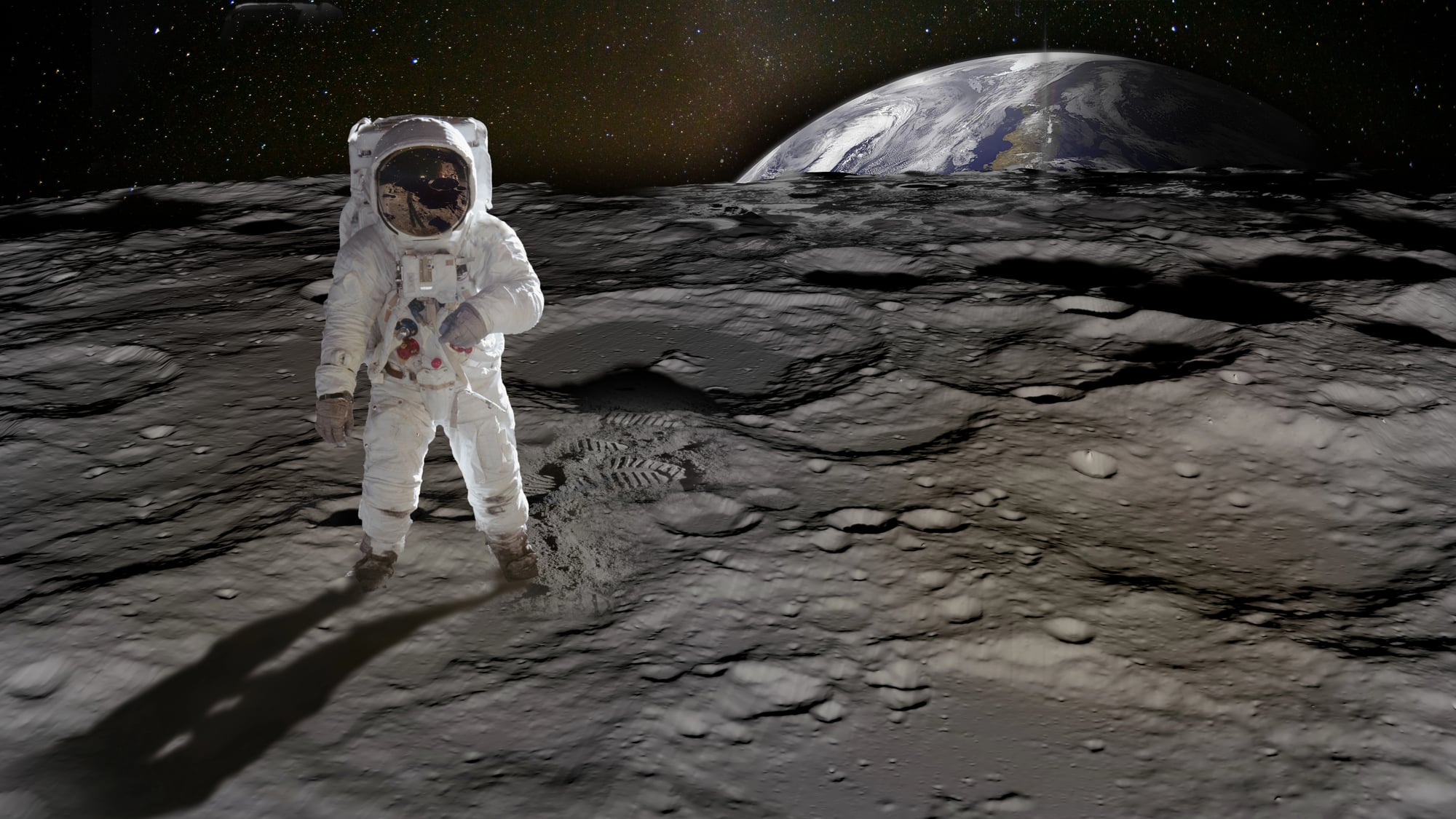
Neil Armstrong stepped onto the lunar surface on July 20, 1969, but the photograph most people remember shows Buzz Aldrin’s reflection in his helmet visor.
Armstrong took the picture, and in doing so, created one of the most surreal images in human history: an astronaut standing on an alien landscape, with the photographer, the lunar module, and the American flag all visible in the curved reflection of his faceplate.
The photograph works because it captures the strangeness of the moment alongside its triumph.
Here were two human beings standing somewhere no human had ever stood, planting a flag on a world that had existed in human imagination for millennia but never under human feet.
The image proves the achievement while simultaneously making it feel dreamlike and impossible.
The Watts Riots
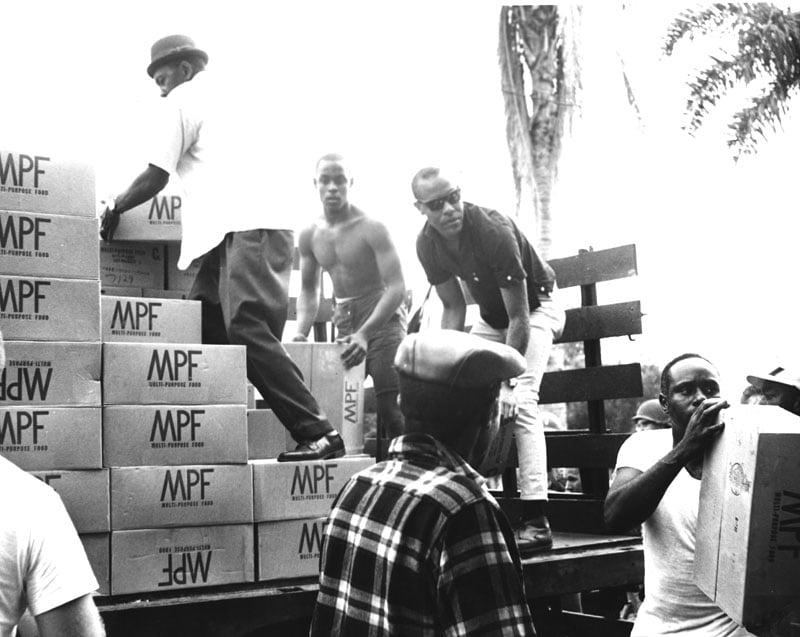
Most riot photography focuses on the violence and destruction. But when Leonard Freed photographed the Watts riots in Los Angeles in August 1965, he captured something more complex.
His most powerful image shows a young Black man standing amid the burning buildings, his expression neither angry nor triumphant but simply determined.
The photograph suggests that what looked like mindless destruction to outside observers represented something more purposeful to those living it.
Freed spent days in Watts during the uprising, and his photographs reveal the complexity of community anger that had been building for years.
The riots weren’t random violence but a response to specific conditions — police brutality, economic exclusion, political powerlessness — that had made normal channels of change seem impossible.
The Fall Of Saigon
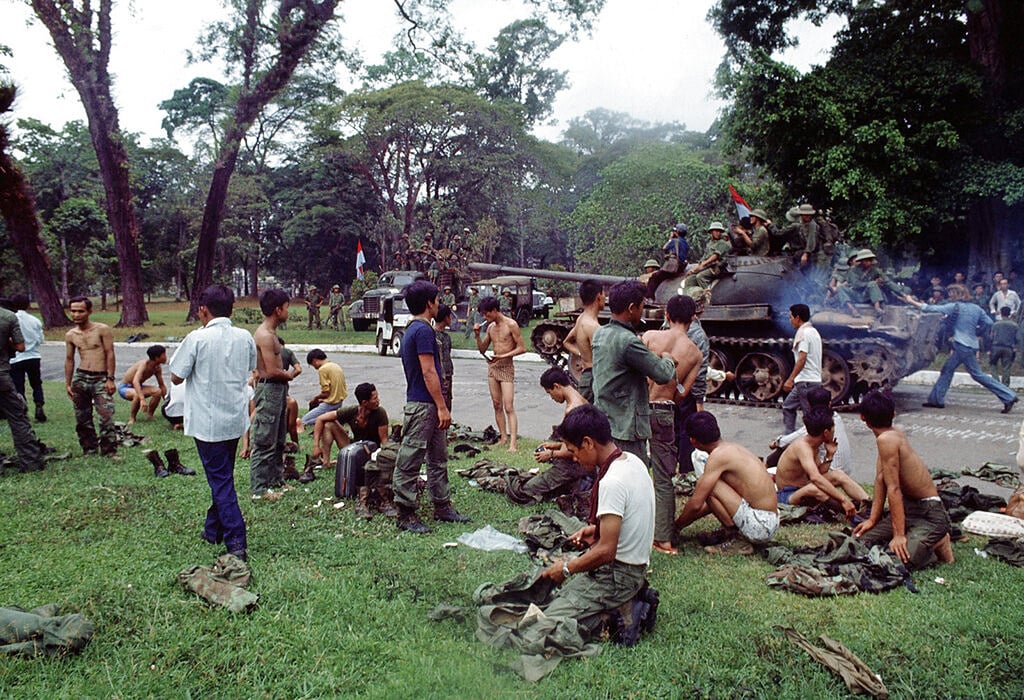
Hubert van Es positioned himself on a rooftop on April 30, 1975, as North Vietnamese forces entered Saigon and the last Americans evacuated the city.
His photograph shows people climbing a ladder to board a helicopter on what appears to be the roof of the American embassy.
The image became the defining symbol of American withdrawal from Vietnam — desperate, chaotic, and undignified.
Actually, the helicopter was evacuating people from an apartment building housing CIA personnel, not the embassy itself.
But the photograph’s symbolic power transcended its specific location. It captured the end of America’s longest war in a single frame: people fleeing, a helicopter struggling to lift off, the visible collapse of a decade-long military effort.
The Challenger Explosion
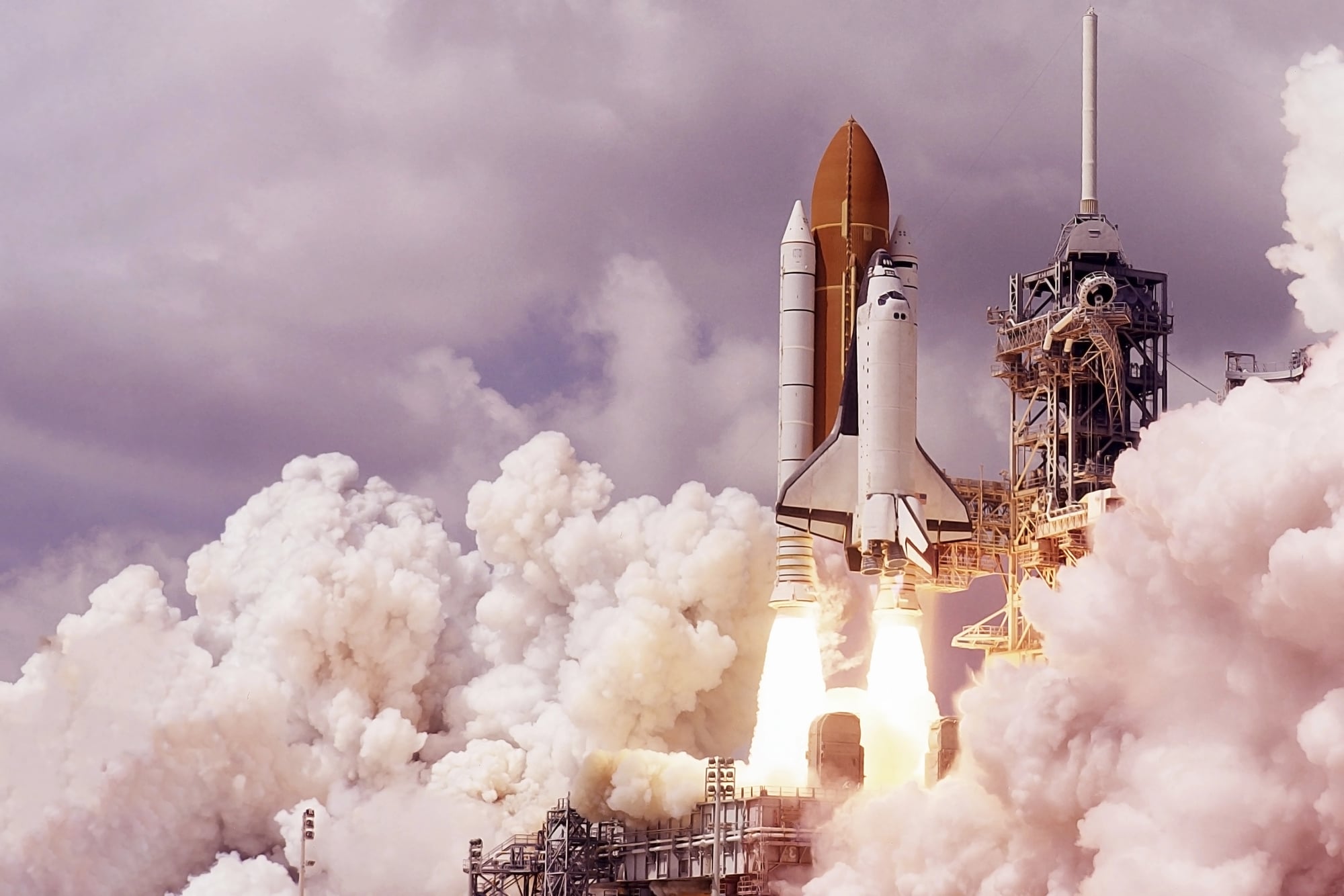
The Space Shuttle Challenger lifted off on January 28, 1986, carrying seven crew members, including Christa McAuliffe, who would have been the first teacher in space.
Thousands of photographers documented the launch, but the images that endured show the moment 73 seconds after liftoff when the shuttle broke apart, creating a distinctive Y-shaped cloud pattern against the blue Florida sky.
The photographs captured not just a technical failure but the end of America’s sense of space travel as routine.
For years, shuttle launches had become almost commonplace, reliable enough to send a civilian teacher into orbit.
The Challenger explosion shattered that confidence, and the photographs preserve both the moment of destruction and the innocence that died with it.
Woodstock Morning

The festival organizers expected maybe 50,000 people. Instead, nearly half a million showed up at Max Yasgur’s farm in upstate New York in August 1969.
Photographer Burk Uzzle captured the morning after the final concert: an endless field of people, tents, blankets, and debris stretching to the horizon under the early light.
Uzzle’s aerial photograph shows what Woodstock actually was beneath the mythology — not just a concert but a temporary city, a three-day experiment in communal living that somehow worked despite every logistical disaster imaginable.
The image captures both the scale of the gathering and its essential peacefulness.
Nearly half a million people, most of them young, most of them using drugs, most of them living outdoors in difficult conditions, and somehow it remained peaceful.
When The Moment Finds The Camera
Photography’s power lies not in planning but in presence. The most historically significant images rarely result from careful staging or elaborate preparation.
Instead, they happen when someone with a camera finds themselves witnessing something unprecedented and has the presence of mind to document it before it disappears forever.
These photographs endure because they transform historical events into human experiences.
Statistics become faces. Policy decisions become individual consequences.
Abstract concepts like war, progress, and social change become visible in single frames that anyone can understand immediately.
The best historical photography doesn’t just show us what happened — it shows us what it felt like when it happened.
More from Go2Tutors!

- The Romanov Crown Jewels and Their Tragic Fate
- 13 Historical Mysteries That Science Still Can’t Solve
- Famous Hoaxes That Fooled the World for Years
- 15 Child Stars with Tragic Adult Lives
- 16 Famous Jewelry Pieces in History
Like Go2Tutors’s content? Follow us on MSN.