Vintage Cars That Have Held Their Value Well
Most cars lose value the moment they leave the dealership lot.
It’s one of the most reliable truths in automotive ownership, a financial reality that makes buying new vehicles feel slightly masochistic.
But some cars defy this pattern entirely.
Instead of depreciating into near-worthlessness, certain vintage models have maintained their value or, in many cases, appreciated dramatically over the decades.
These aren’t necessarily the fastest cars or the most technologically advanced.
They’re the ones that captured something beyond mere transportation, whether through design, performance, cultural significance, or simple rarity.
Collectors and enthusiasts watch auction results closely, tracking which models are climbing and which are plateauing.
The vintage car market has its own logic, influenced by nostalgia, film appearances, racing heritage, and the unpredictable whims of what a generation decides is worth preserving.
Here’s a look at some vintage cars that have proven to be surprisingly sound investments.
Porsche 911
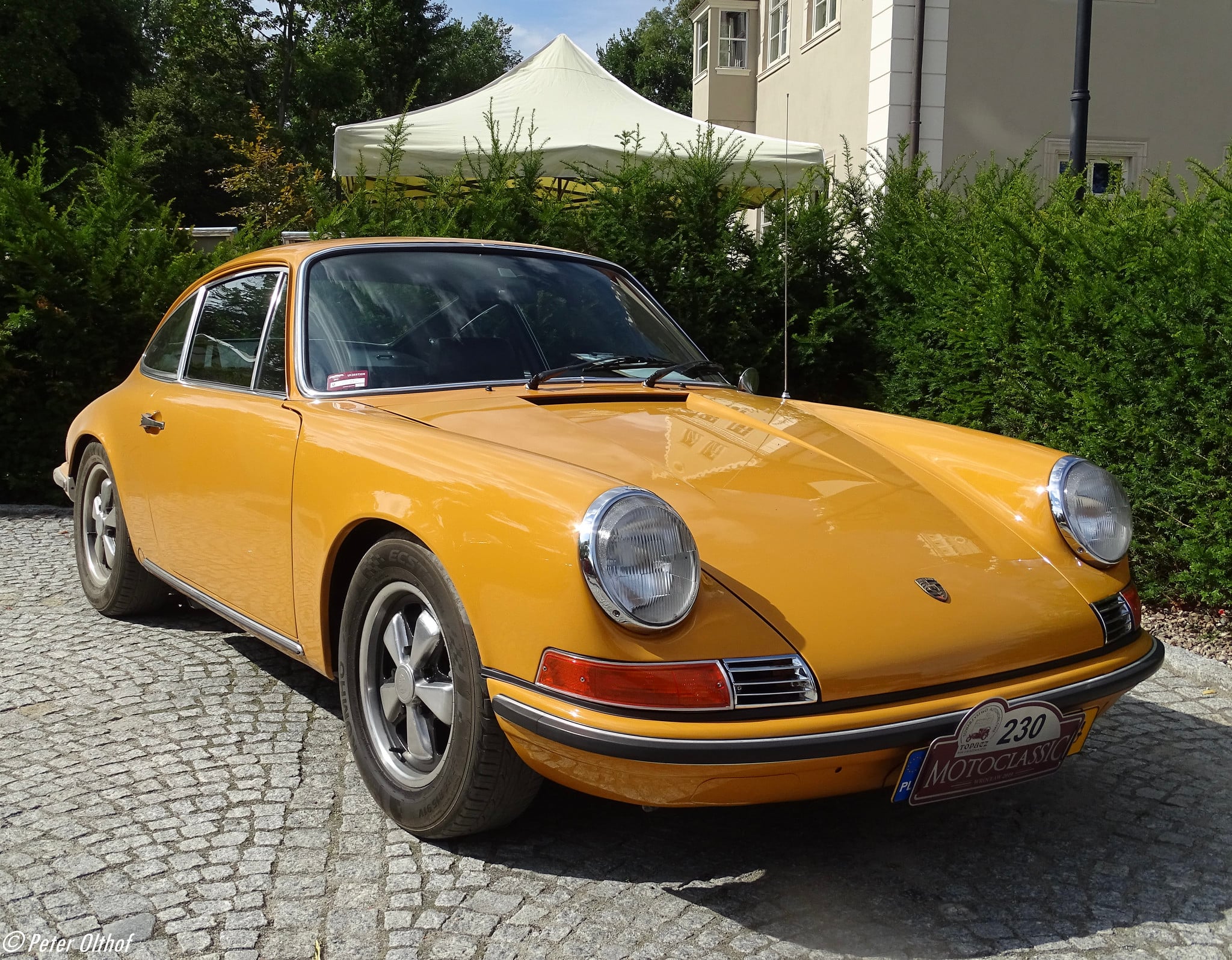
The Porsche 911 might be the most consistently valuable sports car ever produced.
Production began in 1964 as a replacement for the 356, establishing a design language and driving experience that has remained remarkably consistent across six decades.
The early models, particularly those from the 1960s and early 1970s, have seen substantial appreciation.
A 1973 Porsche 911 Carrera RS, considered by many to be the pinnacle of early 911 design, originally sold for around $11,000.
Today, pristine examples regularly sell for well over half a million dollars at auction, with exceptional specimens reaching seven figures.
What makes the 911 special as an investment is its combination of usability and collectibility.
Unlike many vintage cars that spend their lives in climate-controlled garages, 911s can still be driven regularly without destroying their value, assuming proper maintenance.
The air-cooled models, produced through the 993 generation that ended in 1998, are particularly sought after, with the market distinguishing between various sub-models and production years with remarkable specificity.
A 1989 Speedster commands different money than a 1987 Carrera, even though they’re separated by just two model years.
The 911’s value retention stems partly from Porsche’s reputation for engineering excellence and partly from the car’s iconic status in automotive culture.
It appeared in films, won races, and became shorthand for a certain type of driving purity that enthusiasts are willing to pay considerable sums to experience.
Ferrari 250 GTO
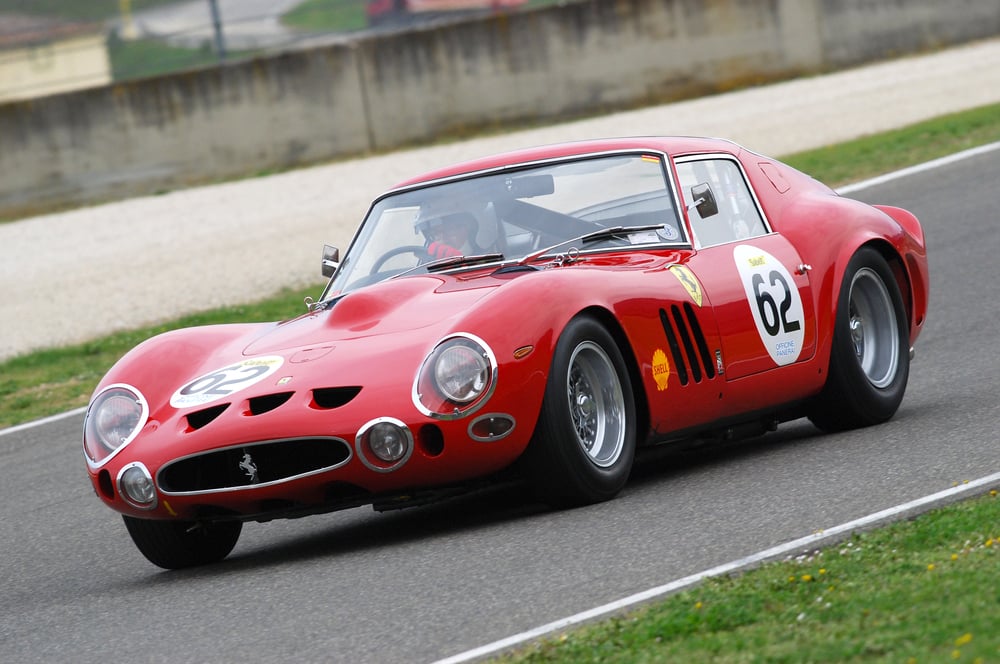
If there’s a single car that represents the peak of the collector market, it’s the Ferrari 250 GTO.
Between 36 and 39 were built from 1962 to 1964, originally created to meet FIA Group 3 Grand Touring homologation requirements for racing.
These weren’t intended as investments.
They were race cars, brutal and loud and built for competition.
But they also happened to be stunningly beautiful, with bodywork by Scaglietti that many consider the finest automotive design ever created.
In the 1960s, you could buy a 250 GTO for around $18,000.
By the 1980s, they were selling for a few hundred thousand.
In 2018, chassis 4153GT sold privately for $70 million, setting the record as the most expensive car ever sold.
The 250 GTO’s value comes from perfect scarcity.
There aren’t enough of them for the number of billionaires who want one.
The cars rarely come to market, and when they do, they’re usually sold privately rather than at public auction.
Ownership has become a status symbol beyond mere wealth, a signal that you’re part of an extremely exclusive club.
The racing heritage helps.
Many 250 GTOs competed successfully at Le Mans, the Targa Florio, and other endurance races, giving them provenance that adds to their mystique.
Still, the astronomical prices feel divorced from any rational valuation.
These cars have transcended being vehicles and become something closer to art objects, valued not for what they do but for what they represent.
Ford Mustang Boss 429
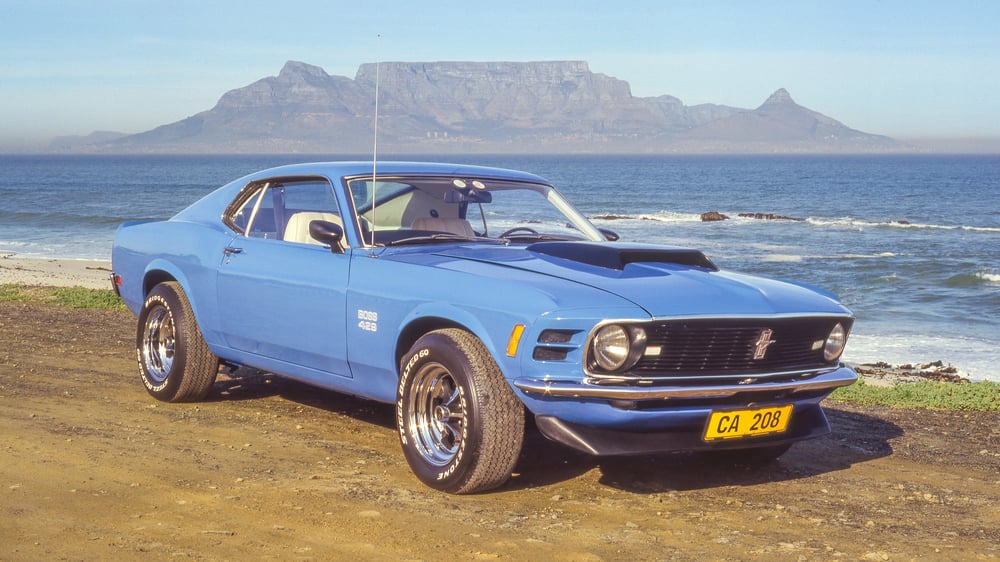
American muscle cars have had a complicated relationship with the collector market.
Many models that seemed destined for appreciation have languished, while others have surprised everyone by climbing steadily.
The Ford Mustang Boss 429 falls firmly into the latter category.
Built by Kar Kraft in 1969 and 1970, the Boss 429 was Ford’s homologation special to qualify its massive 429 cubic inch engine for NASCAR racing.
Only 1,358 were built across both years, with 859 produced in 1969 and 499 in 1970.
They were expensive when new, priced around $4,800 at a time when a standard Mustang cost about half that.
The Boss 429 wasn’t the most practical muscle car.
The enormous engine barely fit in the Mustang’s engine bay, requiring Kar Kraft to extensively modify the shock towers and other components.
The car was heavy, difficult to work on, and not particularly fast in stock form due to restrictive exhaust and intake systems designed to meet NASCAR rules rather than street performance.
But it had presence.
That big, hand-assembled engine with its crescent-shaped combustion chambers was a work of mechanical art.
Over the decades, as muscle car prices generally climbed, the Boss 429’s rarity pushed it to the top of the market.
Today, good examples sell for $250,000 to $400,000, with the best cars occasionally reaching even higher at major auctions.
The value reflects not just performance but the Boss 429’s status as one of the rarest and most extreme expressions of American muscle car culture.
Mercedes-Benz 300SL Gullwing
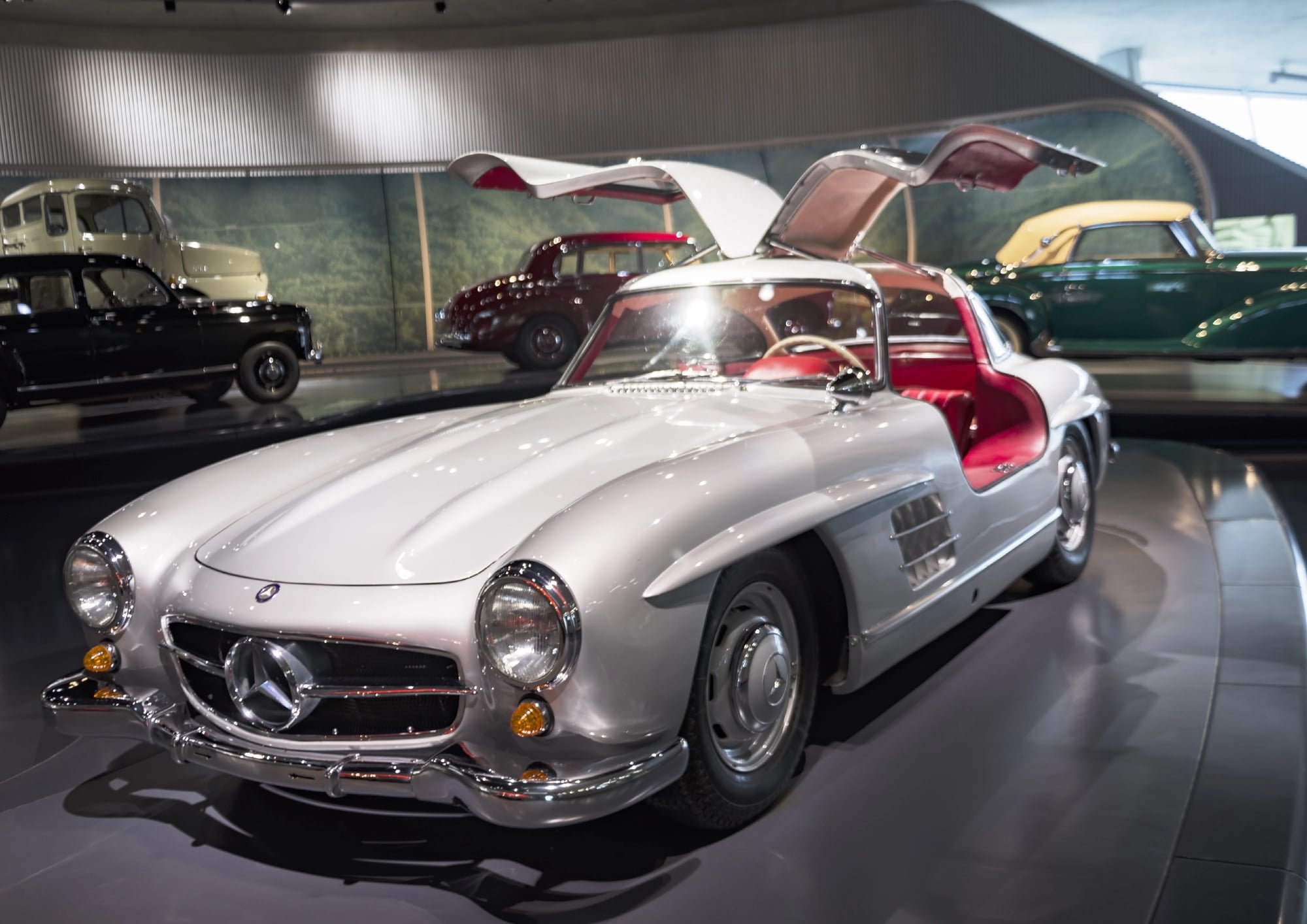
The Mercedes-Benz 300SL, introduced in 1954, brought racing technology to the road in a package that looked like nothing else on the street.
Those distinctive gullwing doors, necessitated by the car’s tubular space frame chassis, became instantly iconic.
The 300SL was also notable as the first production car with direct fuel injection, helping it achieve speeds over 160 miles per hour and making it the fastest production car of its era.
Mercedes built 1,400 gullwing coupes before switching to a conventional roadster version in 1957, which saw 1,858 examples produced through 1963.
When new, the 300SL cost about $7,000, which was expensive but not outrageous by luxury sports car standards.
For decades afterward, values remained relatively stable.
You could buy a decent 300SL in the 1980s for perhaps $50,000 to $100,000.
Then the collector market exploded.
By the 2010s, even rough examples were selling for over $1 million, with the best cars reaching $1.5 million or more.
The appreciation reflects several factors.
The gullwing is visually spectacular, with those doors creating an entrance that never fails to impress.
The car has serious racing heritage, derived directly from Mercedes’ competition program.
And there’s the Mercedes brand itself, which carries weight with collectors who value engineering precision and historical significance.
The 300SL represents post-war European optimism and technical achievement, a car that proved sports cars could be both fast and sophisticated.
Toyota Supra Mk IV
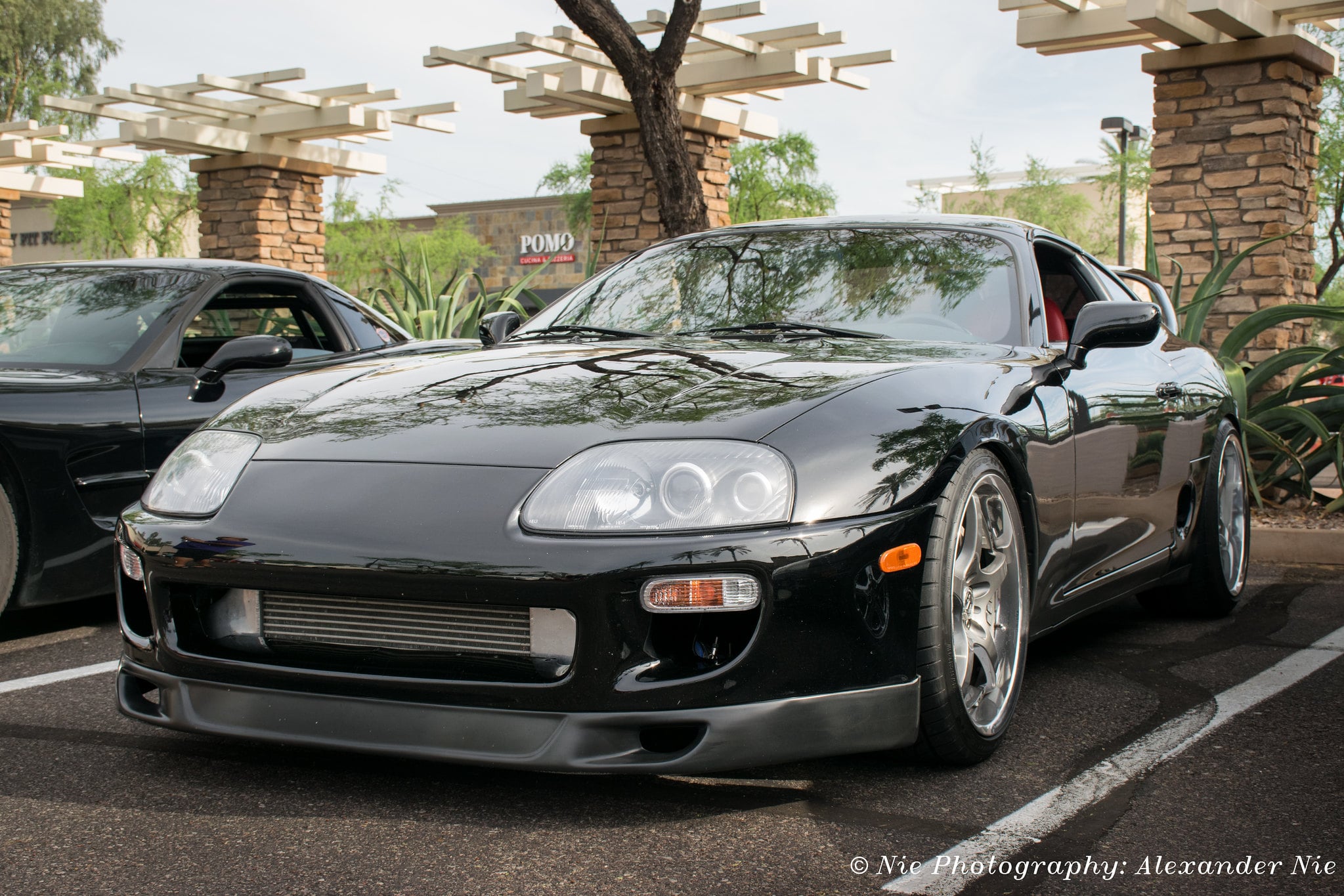
Japanese sports cars have been the collector market’s surprise story of the past decade.
Cars that were affordable and somewhat overlooked 15 years ago have seen dramatic price increases, and no model exemplifies this trend better than the fourth-generation Toyota Supra.
Produced from 1993 to 2002 in Japan, with U.S. sales ending in 1998, the Mk IV Supra featured Toyota’s legendary 2JZ-GTE engine.
This twin-turbocharged inline-six produced 320 horsepower in its U.S. specification and became famous in tuning circles for its ability to handle massive power increases with relatively simple modifications.
When the Mk IV Supra was new, it wasn’t particularly successful.
Priced around $40,000, it competed against cars like the Dodge Viper and Chevrolet Corvette that offered more displacement and sometimes more performance for similar money.
Sales were modest, leading to the early end of U.S. imports.
But then something shifted.
The Supra’s appearance in ‘The Fast and the Furious’ in 2001 introduced it to a new audience.
The tuning community embraced the 2JZ engine as perhaps the ultimate platform for building high-horsepower street cars.
Nostalgia for 1990s Japanese sports cars grew as that generation of enthusiasts gained purchasing power.
Prices started climbing.
A clean, low-mileage Mk IV Supra that might have sold for $20,000 in 2010 now commands $150,000 to $200,000 or more at top auctions, depending on condition and originality.
The appreciation has been so dramatic that it sparked concerns about a bubble, but prices have remained stubbornly high, suggesting the market has genuinely revalued these cars upward.
Jaguar E-Type Series 1

When Enzo Ferrari reportedly called the Jaguar E-Type the most beautiful car ever made, he wasn’t engaging in marketing hyperbole.
The E-Type, introduced at the Geneva Motor Show in March 1961, combined stunning aesthetics with genuine performance and, by the standards of exotic sports cars, reasonable pricing.
The early Series 1 cars, produced until 1968, are the most valuable, particularly the roadsters and the extremely rare lightweight competition models, of which only 12 were built.
An E-Type cost around $5,500 new.
Today, exceptional Series 1 roadsters sell for $150,000 to $300,000, with the lightweight competition cars reaching several millions.
The E-Type’s value comes from its position at the intersection of beauty, performance, and British automotive heritage.
The car was genuinely fast when new, with the factory claiming speeds approaching 150 miles per hour, though independent tests typically recorded slightly lower figures.
It had independent rear suspension and disc brakes at a time when many sports cars still used solid rear axles and drums.
Driving an E-Type today reveals a car that feels remarkably modern in many ways, with balanced handling and adequate power, even by contemporary standards.
The market distinguishes carefully between different E-Type variants, with flat-floor Series 1 cars commanding significant premiums over later versions.
Condition matters enormously.
E-Types rust spectacularly if not properly maintained, and a restoration can easily cost more than the car is worth, making original, unmolested examples increasingly precious.
What Drives Value
The vintage car market operates on principles that sometimes seem irrational but follow their own logic.
Scarcity matters, but not absolutely.
Some rare cars remain worthless because nobody wants them, while relatively common models like the Porsche 911 hold value through sustained demand.
Cultural significance plays an enormous role.
Cars that appeared in important films or won major races carry premiums that have nothing to do with their mechanical qualities.
Nostalgia drives much of the market, with each generation elevating the cars of their youth into collectible status.
What’s clear is that certain cars have proven to be far better stores of value than anyone expected.
They represent moments in automotive history worth preserving, whether for their beauty, performance, or simply the memories they evoke.
The best vintage cars aren’t just investments.
They’re rolling pieces of history that happen to appreciate while sitting in your garage, which makes them considerably more interesting than stocks or bonds.
That combination of pleasure and profit explains why the collector car market continues to thrive, even when the prices seem to defy economic sense.
More from Go2Tutors!

- The Romanov Crown Jewels and Their Tragic Fate
- 17 Halloween Costumes Once Considered Taboo
- Famous Hoaxes That Fooled the World for Years
- 15 Child Stars with Tragic Adult Lives
- 16 Famous Jewelry Pieces in History
Like Go2Tutors’s content? Follow us on MSN.