Facts About Emperor Qin Shi Huangdi and His Terracotta Army
What lives on about Qin Shi Huangdi isn’t just his rule – but the world beneath the earth he prepared. Though he stitched together warring states into one realm, redrawing power across ancient Asia, its stone soldiers standing guard in silence that echo loudest today.
While laws and walls rose during his time, eyes now turn instead to tunnels hidden below fields. Because long after decrees faded, something else endured – armies buried deep, waiting.
Hidden For Ages Beneath Dust And Silence

Hidden for ages beneath dust and silence, the Terracotta Army reveals what one emperor dreamed while building his afterlife. Not just soldiers but echoes – each figure shaped by hands long gone, yet still standing.
Power here did not fade when rulers died; it marched on, row after row, face after face. Exactness carved in clay pulls experts and wanderers, year after year, drawn without knowing why.
A Peek Into What’s Real About The Ruler And The Soldiers Who Stand Watch Even Now

A peek into what’s real about the ruler and the soldiers who stand watch even now. Truths unfold when you study the leader and his lasting guard.
The First Emperor Of A Unified China

Qin Shi Huangdi became the first emperor of China in 221 BCE after conquering rival states and ending centuries of division. Before his rule, the region was fragmented into competing kingdoms during the Warring States period.
His unification brought centralized control, standardizing systems like currency, measurements, and even written script. This created a foundation for governance that would influence Chinese civilization long after his reign ended.
A Ruler Known For Control And Reform
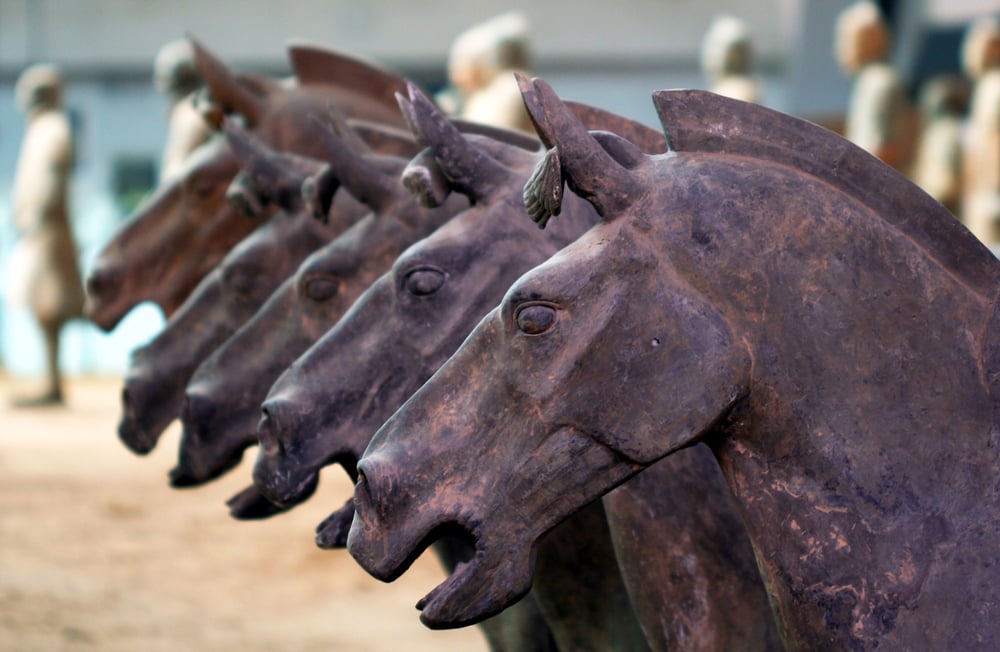
The emperor’s leadership style was strict and highly centralized. He implemented sweeping reforms designed to strengthen the state and limit opposition, often with little tolerance for dissent.
These policies helped stabilize the newly unified empire, but they also created an environment of fear. His rule reflects the balance between order and control that defined much of his legacy.
The Vision Of An Afterlife Empire

Qin Shi Huangdi believed his authority would continue after death, which shaped the design of his massive burial complex. Rather than a simple tomb, he envisioned an entire underground empire.
This belief drove the creation of the Terracotta Army, intended to protect him in the afterlife. The scale of the project reflects both personal belief and the resources available to an emperor of his power.
The Discovery In 1974

The Terracotta Army remained hidden for over two thousand years until local farmers discovered it in 1974 while digging a well near Xi’an. What began as a routine task quickly turned into one of the most significant archaeological finds of the 20th century.
The discovery revealed thousands of life-sized figures buried in formation, sparking global interest and ongoing excavation efforts that continue to this day. Each new section uncovered adds further detail to an already complex picture.
Thousands Of Unique Soldiers

One of the most remarkable aspects of the Terracotta Army is that no two figures are exactly alike. Each soldier was crafted with individual facial features, expressions, and details.
This level of variation suggests a sophisticated production process that combined standardization with customization. It gives the army a sense of realism that feels surprisingly modern.
A Full Military Formation

The army is not just a collection of statues but a structured military force. It includes infantry, archers, cavalry, and chariots, all arranged in strategic formations.
This organization reflects real military practices of the time. The layout suggests that the army was designed to function symbolically as it would in life, reinforcing the emperor’s authority even in death.
Originally Painted In Color

Today, the Terracotta Army appears in muted earth tones, but originally, the figures were painted in bright, vivid colors. These pigments included reds, blues, and greens that added lifelike detail.
Over time, exposure to air caused much of the paint to fade or peel away. Even so, traces remain, offering clues about how striking the army once looked.
Built By Thousands Of Workers
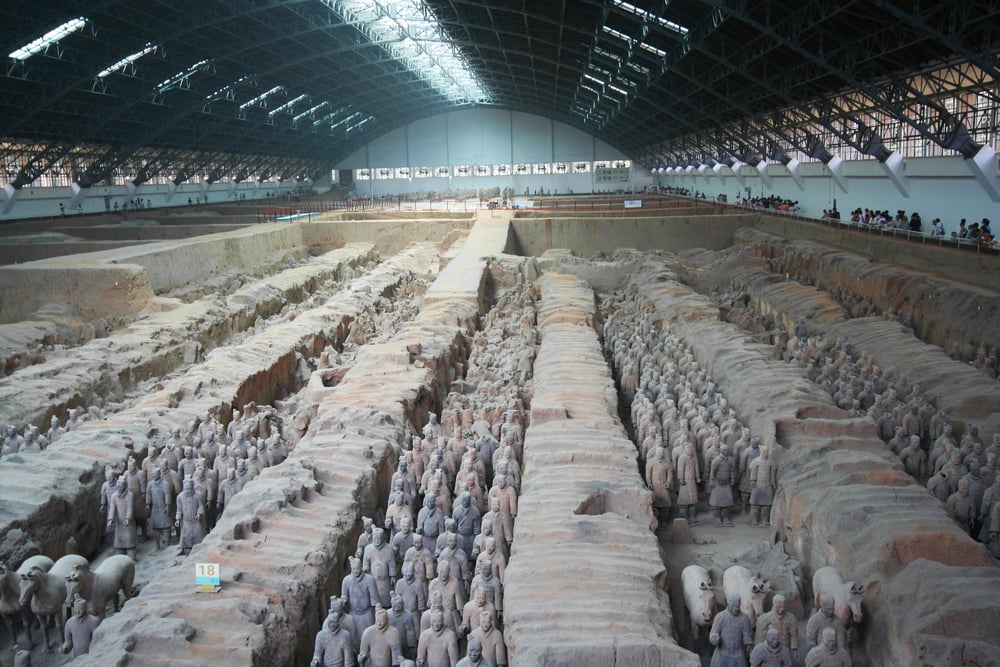
The construction of the Terracotta Army required a massive workforce, including artisans, laborers, and craftsmen. It is estimated that hundreds of thousands of people were involved in building the broader tomb complex.
This scale of labor reflects both the emperor’s ambition and the centralized power he wielded. The project likely took decades to complete.
Weapons That Were Once Functional

Many of the figures were originally equipped with real weapons, including swords, spears, and crossbows. Some of these weapons have been recovered in remarkably well-preserved condition.
The use of functional weapons adds another layer of realism. It suggests that the army was intended to be more than symbolic, reinforcing its role as a protective force.
The Unopened Tomb

While the Terracotta Army has been extensively studied, the emperor’s central tomb remains largely unopened. Concerns about preservation and potential damage have delayed full excavation.
Ancient texts describe the tomb as containing rivers of mercury and elaborate mechanisms. Whether these descriptions are fully accurate remains uncertain, adding an element of mystery to the site.
A Reflection Of Absolute Power
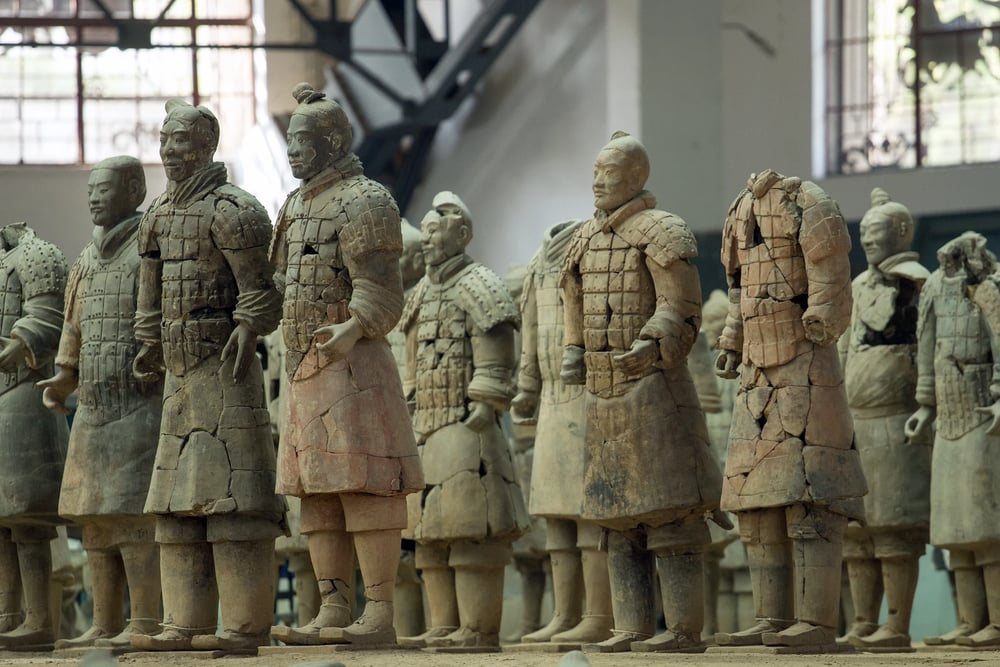
The scale and detail of the Terracotta Army reflect the immense authority of Qin Shi Huangdi. Few rulers in history have commanded such resources for a single project.
At the same time, the army reveals the human cost of that power. The labor required and the conditions under which it was carried out remain part of the story.
Influence Beyond His Lifetime

Qin Shi Huangdi’s impact extended far beyond his reign. His systems of governance, infrastructure, and standardization shaped the development of China for centuries.
Even so, his methods were often controversial. His legacy remains a blend of innovation and intensity, reflecting both achievement and control.
The Site Today

Today, the Terracotta Army is a major historical and cultural site, attracting visitors from around the world. Ongoing research continues to reveal new details about its construction and purpose.
The site has become a symbol of China’s ancient history, offering a tangible connection to a distant era. It continues to evolve as new discoveries are made and preservation methods improve.
A Legacy Carved In Clay
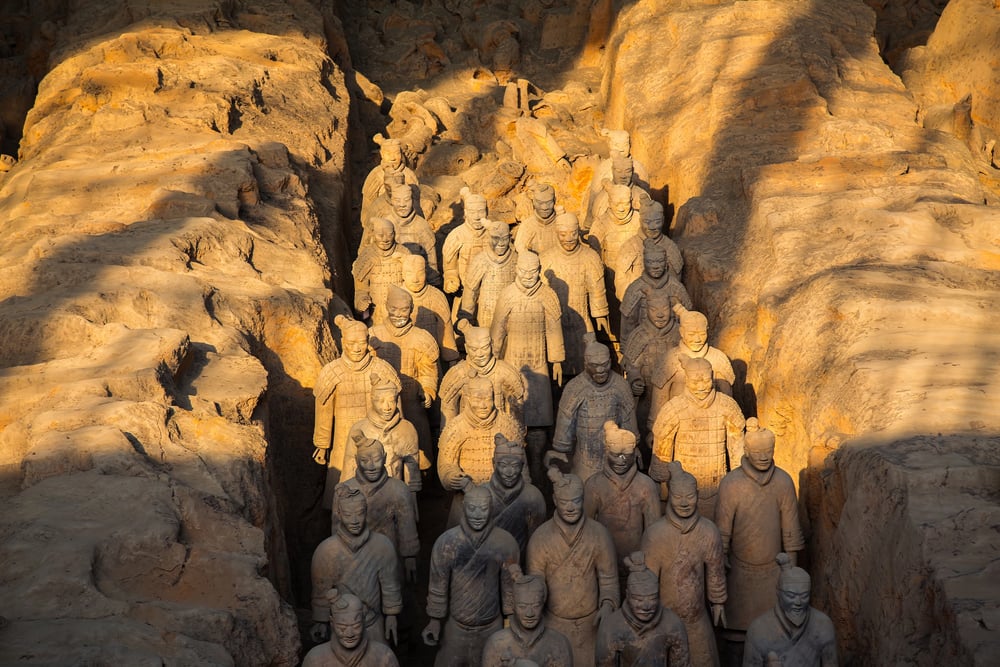
Buried for ages, the clay soldiers waited without a sound – then suddenly appeared, thanks to someone digging near a field. These figures tell more than art ever could about Qin Shi Huangdi, whose reach reshaped an entire land.
Power did not stop at death, it seems; instead, it marched on in silence beneath dirt and time. Each face stands apart, shaped differently, yet all serve the same unseen command.
More from Go2Tutors!

- The Romanov Crown Jewels and Their Tragic Fate
- 13 Historical Mysteries That Science Still Can’t Solve
- Famous Hoaxes That Fooled the World for Years
- 15 Child Stars with Tragic Adult Lives
- 16 Famous Jewelry Pieces in History
Like Go2Tutors’s content? Follow us on MSN.