Facts People Confuse Because of Bad Explanations
Teachers mean well. Textbooks try their best.
But sometimes the simplified version of a concept creates more confusion than clarity. The explanation that’s supposed to make something easier to understand ends up planting a misconception that’s harder to shake than the original confusion.
These aren’t complete lies—they’re oversimplifications, analogies pushed too far, or teaching shortcuts that work in the moment but fall apart under scrutiny. Students nod along, thinking they understand, then carry forward a warped version of reality that trips them up later.
The problem isn’t the students. The problem is that some explanations are just bad at their job.
Seasons Happen Because Earth Gets Closer to the Sun

Elementary teachers often explain seasons using a diagram of Earth’s elliptical orbit around the sun. When Earth is closer, it’s summer.
When Earth is farther away, it’s winter. Simple, visual, wrong.
If distance caused seasons, the entire planet would have summer at the same time. But when it’s summer in North America, it’s winter in Australia.
The actual cause is Earth’s axial tilt. During summer in the Northern Hemisphere, that part of Earth tilts toward the sun, receiving more direct sunlight for longer periods.
Six months later, the same hemisphere tilts away, resulting in winter.
The distance explanation feels intuitive. Closer to heat source equals hotter.
The problem is Earth’s orbit is nearly circular, and the distance variation is minimal compared to the effect of tilt. Some textbooks even include diagrams showing an exaggerated elliptical orbit that reinforces the misconception.
Students who learn the distance explanation have to unlearn it when they encounter the real explanation later. The bad explanation creates unnecessary work.
Worse, it makes some people distrust the correct explanation because they’ve already “learned” something different.
Blood Turns Blue When It Loses Oxygen

Diagrams in anatomy books show arteries in red and veins in blue. Teachers explain that oxygen-rich blood is red, while oxygen-poor blood is blue.
Look at your wrists—those blue lines under your skin are veins carrying blue blood back to your heart and lungs.
Blood is always red. Oxygenated blood is bright red.
Deoxygenated blood is dark red, almost maroon. The blue you see through your skin is an optical illusion caused by how light penetrates and reflects through tissue.
Your veins aren’t blue, and neither is the blood inside them.
The color-coding in textbooks was never meant to represent actual blood color. It’s a diagrammatic convention to distinguish arteries from veins.
But when teachers don’t clarify this, students naturally assume the colors are realistic. The explanation that was supposed to help students track blood flow instead created a false belief about blood color.
This misconception is so widespread that many adults confidently repeat it. They’ve seen their own veins.
They’ve looked at the diagrams. The bad explanation gave them a framework that matched their observations, even though the framework was built on false premises.
Evolution Means Progress Toward Perfection
Biology teachers explain evolution as species changing over time, getting better adapted to their environments. Fish evolved into amphibians, reptiles into mammals, apes into humans.
Each step represents improvement, progress up the evolutionary ladder toward more complex, more advanced forms of life.
Evolution has no direction. There’s no ladder, no hierarchy, no ultimate goal.
Species change in response to environmental pressures, but “change” doesn’t mean “improvement.” Organisms alive today aren’t more evolved than organisms from millions of years ago—they’re just differently adapted to different circumstances.
Bacteria haven’t evolved into complex multicellular organisms because bacteria are spectacularly successful at being bacteria. Sharks haven’t changed much in millions of years because their current form works extremely well for their ecological niche.
Evolution favors whatever survives and reproduces, not whatever seems more impressive to humans.
The progress explanation misleads students into thinking evolution has a plan or purpose. It encourages the idea that humans are the pinnacle of evolution, the inevitable result of a process aimed at creating intelligence.
This makes it harder to understand that humans are just one branch among millions, no more “evolved” than any other living species.
Gravity Is a Force That Pulls Things Down

Physics teachers introduce gravity as the force that makes things fall. Drop a pencil, it goes down.
Jump in the air, gravity pulls you back down. Everything wants to fall toward the center of Earth because gravity pulls downward.
Gravity doesn’t pull downward. Gravity pulls objects toward each other based on their mass.
On Earth, “down” happens to be the direction toward the planet’s center because Earth has so much mass. But there’s no universal “down” in space.
Astronauts on the International Space Station experience gravity—they’re falling toward Earth constantly, but moving sideways fast enough that they keep missing it.
The “pulls down” explanation works for objects on Earth’s surface, but it creates confusion when students try to understand orbital mechanics, why the moon doesn’t fall, or how gravity works between objects in space.
The simplified version becomes an obstacle to understanding the actual concept.
When students learn gravity as “the force that pulls things down,” they struggle with the idea that gravity is what keeps planets in orbit, holds galaxies together, and shapes the structure of the universe.
The bad explanation works for dropping pencils but fails for everything else.
Centrifugal Force Pushes You Outward
Ride a merry-go-round, and you feel pushed toward the outside. Sit in a car taking a sharp turn, and something seems to throw you toward the door.
Physics teachers explain this as centrifugal force—the outward force you experience during circular motion.
Centrifugal force doesn’t exist. What you feel is your body’s inertia trying to keep moving in a straight line while the merry-go-round or car forces you into a curve.
The sensation of being pushed outward is actually your body resisting the inward force that’s making you change direction.
The real force is centripetal force—the inward force required to make something move in a circle. On a merry-go-round, friction and the bars you’re holding provide centripetal force, pulling you inward.
Your inertia makes it feel like you’re being pushed outward, but that’s not a real force acting on you.
Physics teachers sometimes introduce centrifugal force as a convenient fiction for solving certain problems. But students who learn it as a real force get confused when trying to draw force diagrams or understand circular motion in detail.
The fictional force makes intuitive sense but conflicts with how forces actually work.
Diamonds Are Compressed Coal

People explain diamond formation as what happens when coal gets compressed over millions of years under intense pressure. The carbon in coal rearranges into diamond structure.
It’s a great metaphor for transformation—pressure creates something valuable from something ordinary.
Diamonds don’t come from coal. Both are carbon, but they form under completely different conditions.
Diamonds crystallize from carbon-rich fluids deep in Earth’s mantle, at depths far below where coal exists. Most diamonds formed billions of years ago, long before plants existed to create coal deposits.
The coal explanation sounds plausible because both materials are carbon and the transformation fits a poetic narrative about pressure creating beauty. But the story bears no relationship to actual geology.
Students who believe this explanation misunderstand both how diamonds form and where they come from.
Geologists encounter this misconception constantly. The bad explanation spread because it was easy to remember and emotionally satisfying.
Correcting it requires explaining Earth’s mantle structure, carbon chemistry, and geological time scales—much more complex than the simple false explanation.
Different Tongue Regions Taste Different Flavors

Science teachers show the tongue map: sweet at the tip, sour on the sides, bitter at the back, salty on the edges. Students stick sugar on different parts of their tongues to test it.
The map seems to work, confirming what the textbook shows.
Every part of your tongue can taste every flavor. Taste receptors for all basic tastes exist throughout your tongue and mouth.
The tongue map originated from a misinterpretation of a 1901 study and has been debunked for decades, but it persists in classrooms because it’s simple and seems to explain why certain tastes feel stronger in certain areas.
The illusion works because of confirmation bias and the fact that the tongue does have varying sensitivity across different regions—just not divided by taste type. When students expect to taste sweet more strongly at the tip, they pay more attention to those sensations and ignore conflicting evidence.
The bad explanation undermines trust in science education when students later learn it’s false. If teachers taught them something that was wrong, what else might be incorrect?
The tongue map seemed so definite, so well-established, that its falseness makes other scientific facts seem less reliable.
You Only Use Ten Percent of Your Brain
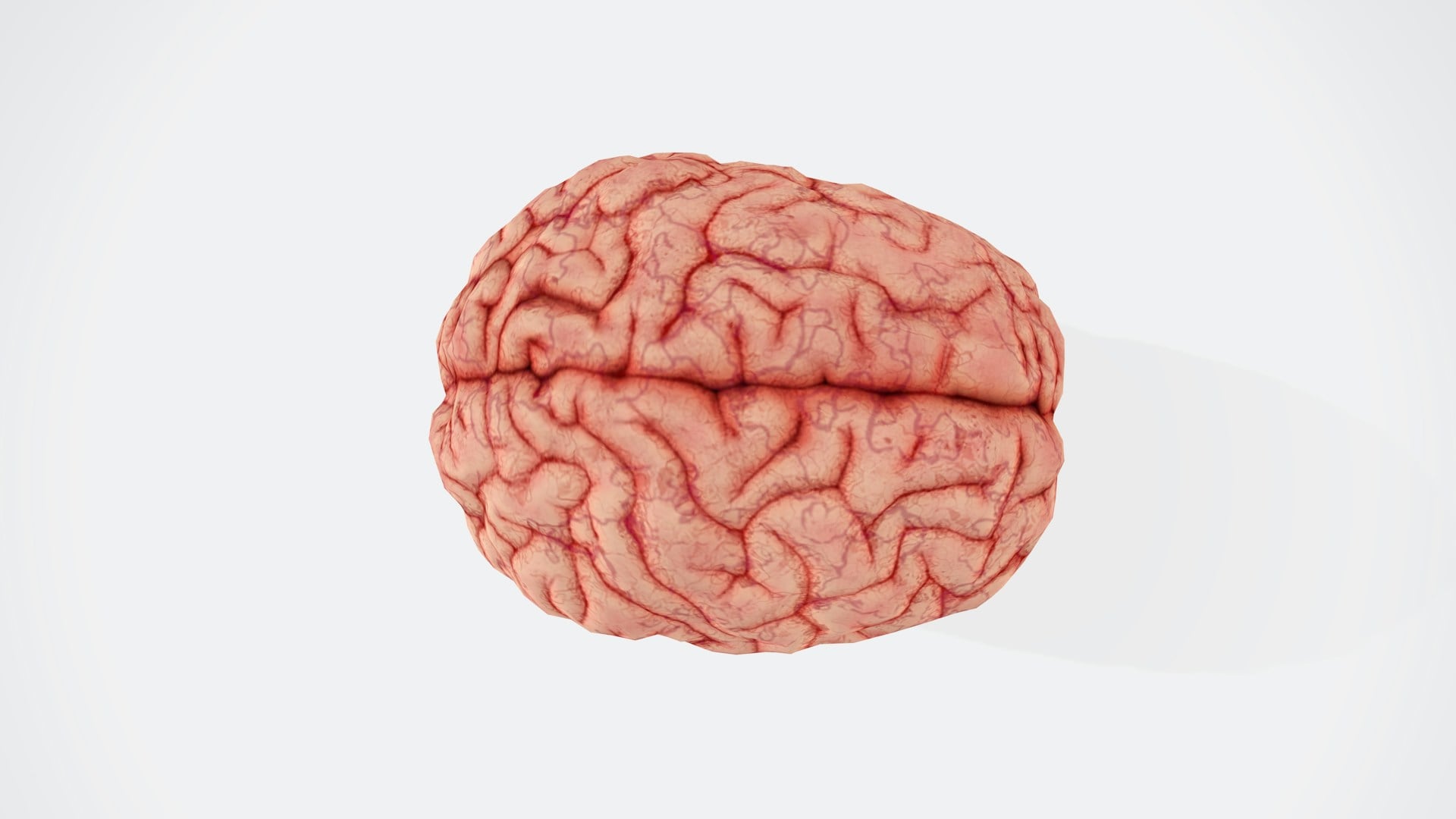
Psychology and biology teachers sometimes mention this claim while discussing brain function. Only ten percent of your brain is active at any given time.
The other ninety percent sits idle, waiting to be activated by the right technique, drug, or mental exercise.
You use all of your brain. Brain imaging shows activity throughout the brain during various tasks.
Different regions handle different functions, and not all areas are active simultaneously, but over the course of a day you use every part of your brain. Evolution wouldn’t maintain such an energy-hungry organ if ninety percent went unused.
This misconception probably started as a misunderstanding of legitimate neuroscience. Perhaps someone said that scientists only understood ten percent of brain function, or that neurons represent ten percent of brain cells (the rest being support cells).
Somewhere along the way, the statement transformed into “you only use ten percent of your brain.”
The bad explanation persists because it’s appealing. If ninety percent of your brain sits idle, imagine the potential you could unleash by accessing it.
The claim sells self-help books, brain-training programs, and supplements. The truth—that you’re already using your whole brain—is less exciting but more accurate.
Lightning Never Strikes the Same Place Twice

Safety instructors teach this to explain why you shouldn’t stand under trees or on hilltops during thunderstorms. Once lightning hits a spot, it won’t hit there again.
Seek shelter away from previous strike locations.
Lightning frequently hits the same locations repeatedly. Tall structures like skyscrapers and radio towers get struck dozens of times per year.
The Empire State Building gets hit about 25 times annually. Lightning follows the path of least resistance from cloud to ground, and certain locations provide better paths than others.
The saying probably originated as practical advice poorly worded. The intended message was something like “don’t assume you’re safe just because lightning hasn’t struck near you yet,” but it got flipped into “lightning won’t strike the same place twice.”
The bad phrasing created a false fact that contradicts the underlying safety message.
People who believe this literally might take unnecessary risks near previous strike sites. The explanation that was supposed to keep people safe from lightning instead gave them false confidence in dangerous situations.
Veins Are Blue Because They Carry Carbon Dioxide

After learning that blood isn’t actually blue, some people get a different explanation: veins look blue because they carry carbon dioxide, while arteries carry oxygen. The carbon dioxide somehow makes the blood appear blue through the skin.
Veins appear blue for the same optical reason mentioned earlier—how light interacts with skin and tissue. It has nothing to do with carbon dioxide.
Veins do carry blood with less oxygen and more carbon dioxide than arteries, but this affects the shade of red, not the color you see through your skin.
This explanation attempts to salvage the observation (veins look blue) by finding a different cause, but it just replaces one wrong explanation with another. Teachers who correct the first misconception sometimes accidentally introduce the second, keeping students confused about the same thing they were trying to clarify.
The succession of bad explanations makes it harder to accept the real one. Students wonder why teachers keep changing the story.
Maybe blood really is blue and teachers just won’t admit it.
Sugar Makes Kids Hyperactive

Parents and teachers explain that sugar causes hyperactivity in children. Eat candy, get wild.
The explanation seems obvious—everyone’s seen kids at birthday parties bouncing off walls after cake and soda.
Multiple studies show no direct link between sugar consumption and hyperactivity in children. The birthday party phenomenon happens because kids are excited, overstimulated by games and social interaction, and freed from normal behavioral constraints—not because of the cake.
The bad explanation persists because of confirmation bias and correlation without causation. Parents expect sugar to cause hyperactivity, so they notice and remember instances that confirm this belief while ignoring counterexamples.
Kids often get sugary treats in situations that would make them excited anyway.
When teachers and parents blame sugar for behavior issues, they miss actual causes and effective solutions. The false explanation shapes how adults manage children’s diets and behavior, often creating unnecessary restrictions based on a myth.
Humans Evolved From Chimpanzees

Biology teachers trace human evolution, showing pictures of apes gradually becoming more upright and human-like. The progression suggests chimps evolved into humans over millions of years.
Understanding human origins means understanding how we emerged from our chimpanzee ancestors.
Humans didn’t evolve from chimpanzees. Humans and chimpanzees evolved from a common ancestor that lived about six million years ago.
That ancestor wasn’t a chimp—it was a different species that gave rise to two lineages. One led to modern chimps and bonobos, the other to various hominin species including humans.
The “evolved from chimps” explanation creates several problems. It makes evolution seem linear rather than branching.
It suggests modern chimps are primitive versions of humans rather than species that evolved alongside us. It confuses students about how evolutionary relationships actually work.
When people say “if humans evolved from monkeys, why are there still monkeys?” they’re responding to this bad explanation. The question doesn’t make sense if you understand common ancestry, but it’s a logical response to the misleading way evolution often gets taught.
Chameleons Change Color to Match Their Surroundings

Science teachers explain camouflage using chameleons as the prime example. These lizards change color to blend into their environment, turning green on leaves or brown on branches.
It’s nature’s perfect disguise.
Chameleons change color primarily for communication and temperature regulation, not camouflage. They display different colors to signal mood, defend territory, attract mates, and absorb or reflect heat.
While some color changes can help them blend in, that’s not the main purpose of their color-changing ability.
The camouflage explanation sounds logical and makes a good story. It fits what people think they know about chameleons from cartoons and nature documentaries that emphasize the most dramatic color changes.
But it misrepresents how and why chameleons actually use their color-changing cells.
Students who learn the camouflage explanation miss the more interesting biological reality. Chameleons have a sophisticated communication system written in color.
The bad explanation reduces this to simple hiding behavior, making chameleon biology seem less complex than it actually is.
Cracking Your Knuckles Causes Arthritis

Health teachers and parents warn that cracking knuckles leads to arthritis. The sound is joints getting damaged, cartilage wearing down, setting up joint problems decades later.
Stop cracking or you’ll regret it when you’re older.
Studies show no connection between knuckle-cracking and arthritis. The popping sound comes from gas bubbles forming or collapsing in joint fluid, not from damage to the joint structure.
People who crack their knuckles for decades don’t develop arthritis at higher rates than those who don’t.
This explanation probably started as a way to discourage an annoying habit. Parents didn’t like the sound, so they found a health reason to make kids stop.
The warning was easier than saying “it bothers me, please stop.”
The false health claim turns a harmless habit into a source of anxiety. People who crack their knuckles worry about future joint problems that won’t happen.
The bad explanation weaponizes health fears to modify behavior, teaching kids that made-up consequences work just as well as real ones.
You Lose Most Body Heat Through Your Head

Outdoor safety instructors emphasize wearing hats because you lose most of your body heat through your head. In cold weather, an uncovered head means hypothermia risk.
Protect your head and you’ll stay warm.
You lose heat from any uncovered body part proportional to its surface area. Your head accounts for about ten percent of your body surface, so you lose about ten percent of body heat through your head—assuming it’s the only uncovered part.
If your whole body is uncovered, each part loses heat according to its size and blood flow.
This misconception came from a military study where subjects wore arctic survival suits with uncovered heads. Obviously, most heat loss occurred through the only exposed body part.
But this got misinterpreted as “heads naturally lose more heat than other body parts.”
The bad explanation makes people focus on hats while neglecting gloves, scarves, and layered clothing. It overstates the importance of one body part at the expense of overall cold-weather strategy.
Hat-wearing helps, but not because your head is magically more heat-leaky than your hands or torso.
Bats Are Blind

Science teachers describe echolocation by explaining that bats are blind and navigate using sound. They emit high-pitched squeaks and listen for echoes, creating a sound-picture of their surroundings.
Blindness made bats evolve this remarkable ability.
Bats aren’t blind. Most bat species can see, some quite well.
They use echolocation because it works better than vision in the dark environments where they hunt and navigate. Echolocation isn’t a compensation for blindness—it’s a sophisticated sense that exists alongside vision.
The “blind as a bat” saying probably came from observing bats flying in darkness without crashing into things. People assumed they must be blind because they couldn’t possibly see in such low light.
When scientists discovered echolocation, it seemed to confirm the blindness hypothesis.
Students who learn bats are blind misunderstand both bat biology and why echolocation evolved. The bad explanation frames echolocation as a disability compensation rather than an additional sense that provides advantages.
It makes bats seem more limited than they actually are.
Goldfish Have Three-Second Memory

Pet store employees and parents explain that goldfish forget everything after three seconds. The fish swimming around that bowl has no memory of where it’s been or what it’s seen.
This supposedly makes small bowls acceptable housing—the fish won’t remember being confined.
Goldfish can remember things for months. They learn to recognize their feeders, remember feeding schedules, navigate mazes, and respond to training.
Their memory capabilities far exceed three seconds. The claim is completely false.
This explanation serves economic and convenience purposes. If goldfish have no memory, they don’t need complex environments or adequate space.
Small bowls are fine because the fish won’t remember being bored or cramped. The false explanation justifies poor pet care.
Children who believe this learn that some animals are too simple to matter. The bad explanation teaches casual cruelty by framing it as harmless.
The fish won’t remember suffering, so suffering doesn’t count.
Going Outside with Wet Hair Makes You Catch a Cold

Parents and teachers warn that going outside with wet hair causes colds. Your damp head makes you vulnerable to illness.
Dry your hair or you’ll get sick.
Colds are caused by viruses, not cold temperatures or wet hair. You catch a cold by being exposed to cold viruses, typically through respiratory droplets from infected people.
Wet hair might make you uncomfortable, but it doesn’t make you more susceptible to viral infection.
This explanation confuses correlation with causation. Cold and flu season coincides with cold weather because people spend more time indoors in close contact, making virus transmission easier.
The association between cold weather and illness isn’t because cold causes sickness—it’s because cold weather creates conditions where viruses spread more easily.
The bad explanation leads to unnecessary anxiety and wasted energy on ineffective prevention strategies. Drying your hair won’t prevent colds, but washing your hands and avoiding sick people will.
The Explanation Trap

Bad explanations are sticky. They’re usually simpler than the truth, easier to remember, and satisfying in their apparent completeness.
They answer the immediate question without raising new complications. For teaching purposes, they seem efficient.
But efficiency isn’t the same as accuracy. The shortcut that saves time in third grade creates confusion in high school.
The analogy that makes sense to beginners becomes an obstacle for intermediate learners. The simplified version that helps students pass the test leaves them unprepared for real understanding.
Some bad explanations are intentional simplifications that teachers plan to correct later. Others are genuine mistakes that propagate through textbooks and lesson plans.
Some persist because correcting them seems less important than covering new material. The curriculum moves forward, leaving misconceptions unaddressed.
The real damage isn’t just false information. It’s the lesson students learn about how knowledge works.
If authorities teach things that turn out to be false, why trust any expert? If simple explanations keep getting replaced with more complicated ones, maybe the complicated ones are just another layer of falsehood.
Teaching Without Lying

Good explanations acknowledge their own limitations. They say “this is a simplified version” or “this model works for what we’re discussing now, but there are exceptions.”
They prepare students for future complexity instead of presenting simplified versions as complete truth.
The best teachers know when to say “that’s a great question that we’ll explore more deeply next year” instead of giving a too-simple answer now. They resist the pressure to make everything immediately understandable, accepting that some concepts require prerequisites.
Students can handle more nuance than many textbooks assume. Saying “it’s complicated and we’re starting with a basic version” respects their intelligence more than presenting falsehoods as facts.
Admitting uncertainty teaches better lessons about knowledge than false certainty. But changing how concepts get taught requires rewriting curricula, retraining teachers, and fighting against decades of accumulated bad explanations.
It’s easier to keep teaching the same simplified versions, even knowing they’ll cause problems later.
Until that changes, students will keep learning facts that aren’t quite true, explanations that don’t quite explain, and lessons that will need to be unlearned before real understanding becomes possible.
More from Go2Tutors!

- The Romanov Crown Jewels and Their Tragic Fate
- 13 Historical Mysteries That Science Still Can’t Solve
- Famous Hoaxes That Fooled the World for Years
- 15 Child Stars with Tragic Adult Lives
- 16 Famous Jewelry Pieces in History
Like Go2Tutors’s content? Follow us on MSN.