Wild Facts About the Marine Iguanas of the Galapagos
Picture a creature that looks like it crawled straight out of prehistoric times, then decided to master the art of underwater dining. Marine iguanas seem almost impossible — lizards that swim in saltwater, sneeze salt crystals, and turn brilliant colors when they’re ready to mate.
They exist only in the Galapagos Islands, where evolution apparently decided to get creative with the basic iguana blueprint. These are animals that shouldn’t work according to conventional reptile logic, yet they’ve been thriving in one of the world’s most challenging environments for thousands of years.
They’re the Only Seafaring Lizards on Earth
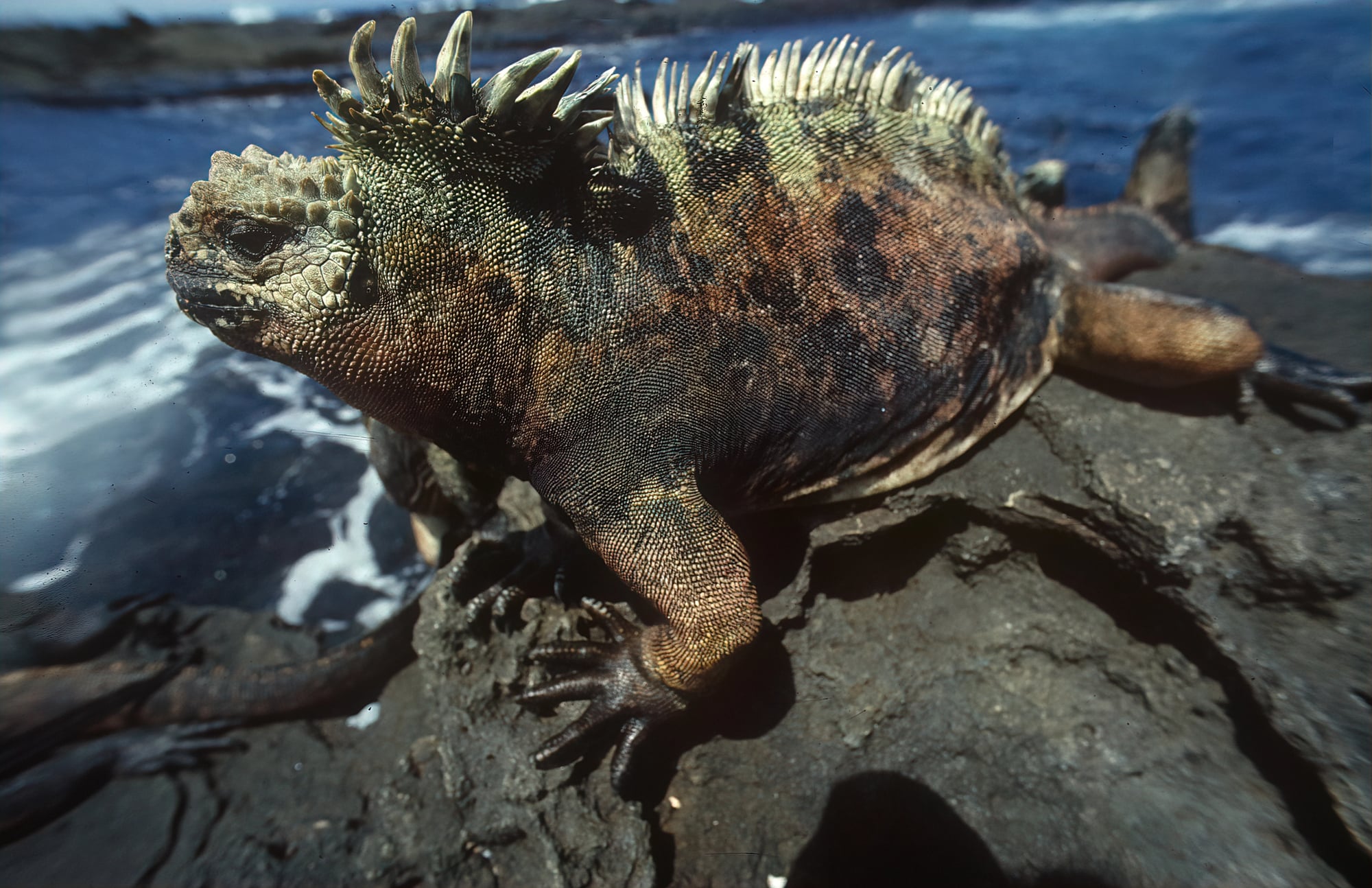
Marine iguanas broke the reptile rulebook. No other lizard species has figured out how to make a living in the ocean.
They dive into Pacific waters that would send most reptiles into shock, hold their breath underwater, and return to shore with bellies full of seaweed. Most reptiles avoid saltwater entirely.
These iguanas made it their dining room.
The Males Can Hold Their Breath for Over an Hour
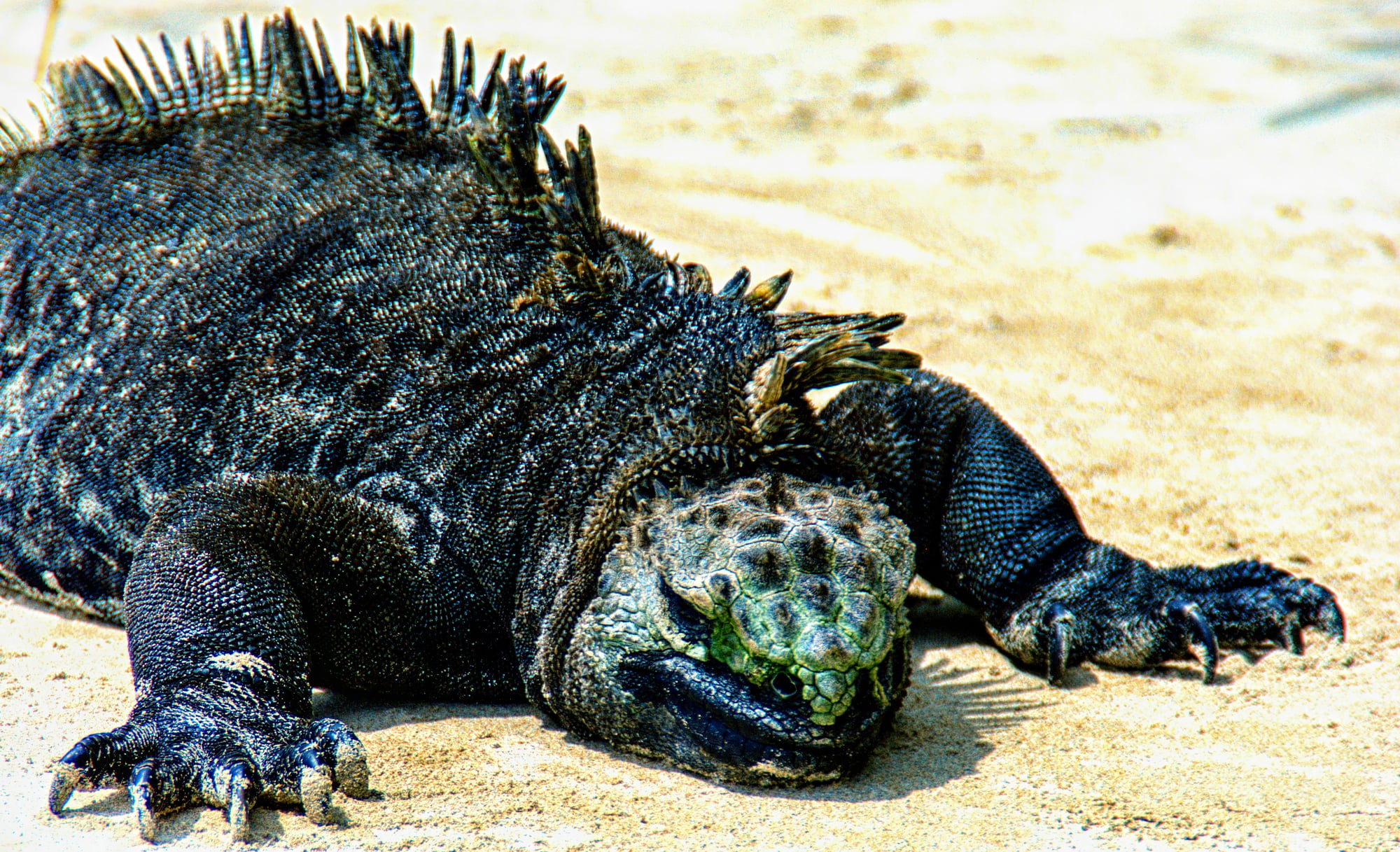
When a male marine iguana dives for algae, time becomes irrelevant. The larger males can stay submerged for more than 60 minutes (though the typical dive lasts around 30 minutes, which is still remarkable for any air-breathing animal that isn’t a whale or seal).
Their heart rate drops dramatically underwater — a biological trick that conserves oxygen while they graze on the seafloor, sometimes at depths exceeding 30 feet, where the pressure would make most surface dwellers deeply uncomfortable. The smaller females and juveniles stick to shorter dives, usually under 10 minutes.
But even that puts them in rare company among reptiles.
They Shrink During Tough Times
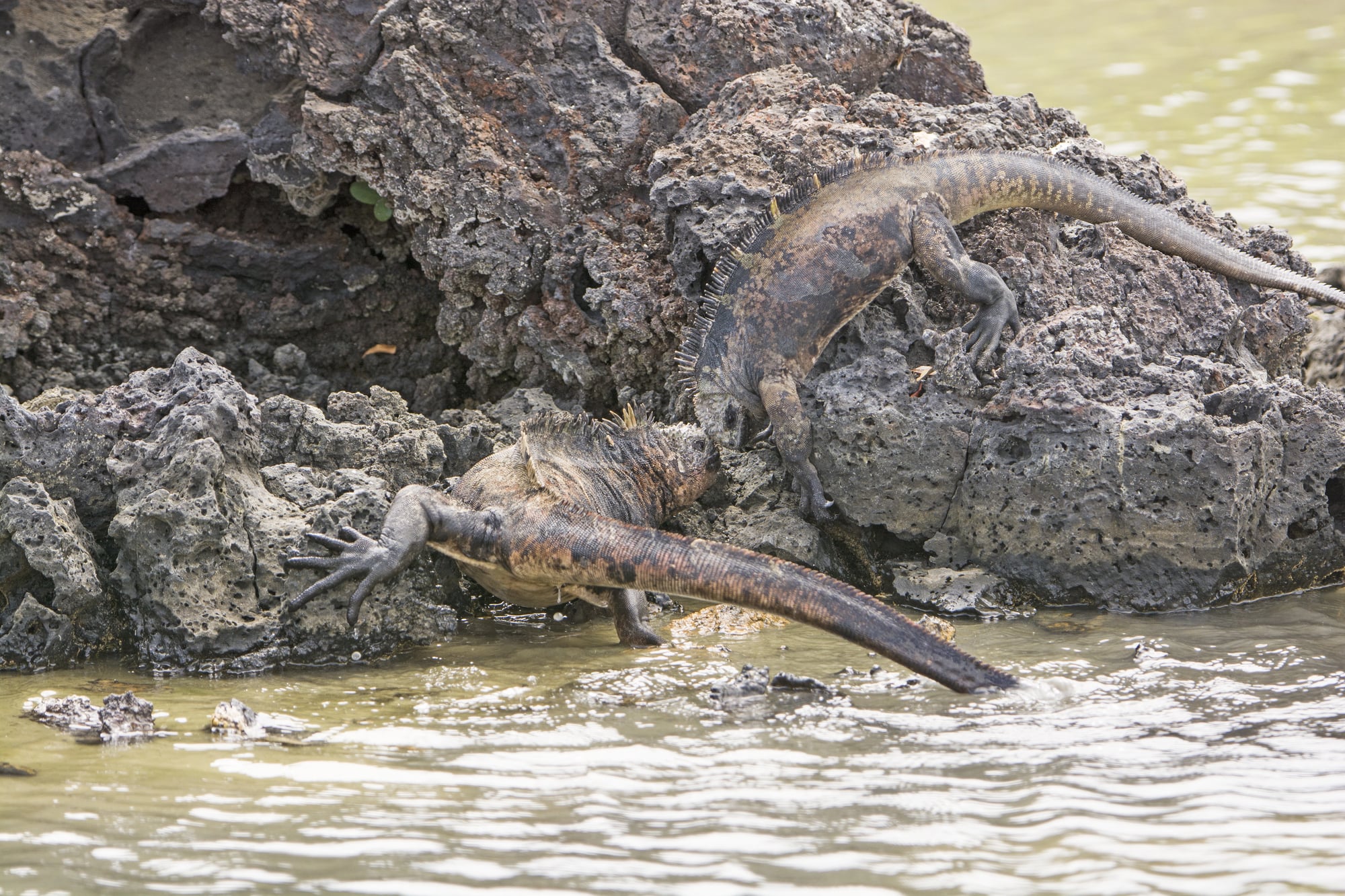
Imagine if your body could literally downsize during a recession. Marine iguanas possess this remarkable ability — during El Niño years when food becomes scarce (because the warm waters kill off their preferred algae), these lizards can actually reduce their body length by up to 20 percent.
Not just lose weight, mind you. Shrink.
They accomplish this by absorbing bone tissue and letting their vertebrae compress. Once conditions improve and food returns, they grow back to their original size.
It’s like having a biological mortgage that adjusts to economic conditions, except it works in reverse — you get smaller when times are hard, bigger when they’re good.
Their Salt-Sneezing Abilities Are Legendary
Marine iguanas have turned sneezing into an art form. Every few minutes, you’ll see one shoot a stream of salt crystals from its nostrils with the precision of a tiny cannon.
The white, crusty salt that accumulates on their heads makes them look like they’ve been dusted with powdered sugar. This isn’t just showing off.
Their specialized salt glands filter excess sodium from their bloodstream and concentrate it into a brine that’s saltier than seawater. Without this ability, eating marine algae would poison them.
The constant sneezing is literally keeping them alive.
They Change Colors Like Living Mood Rings
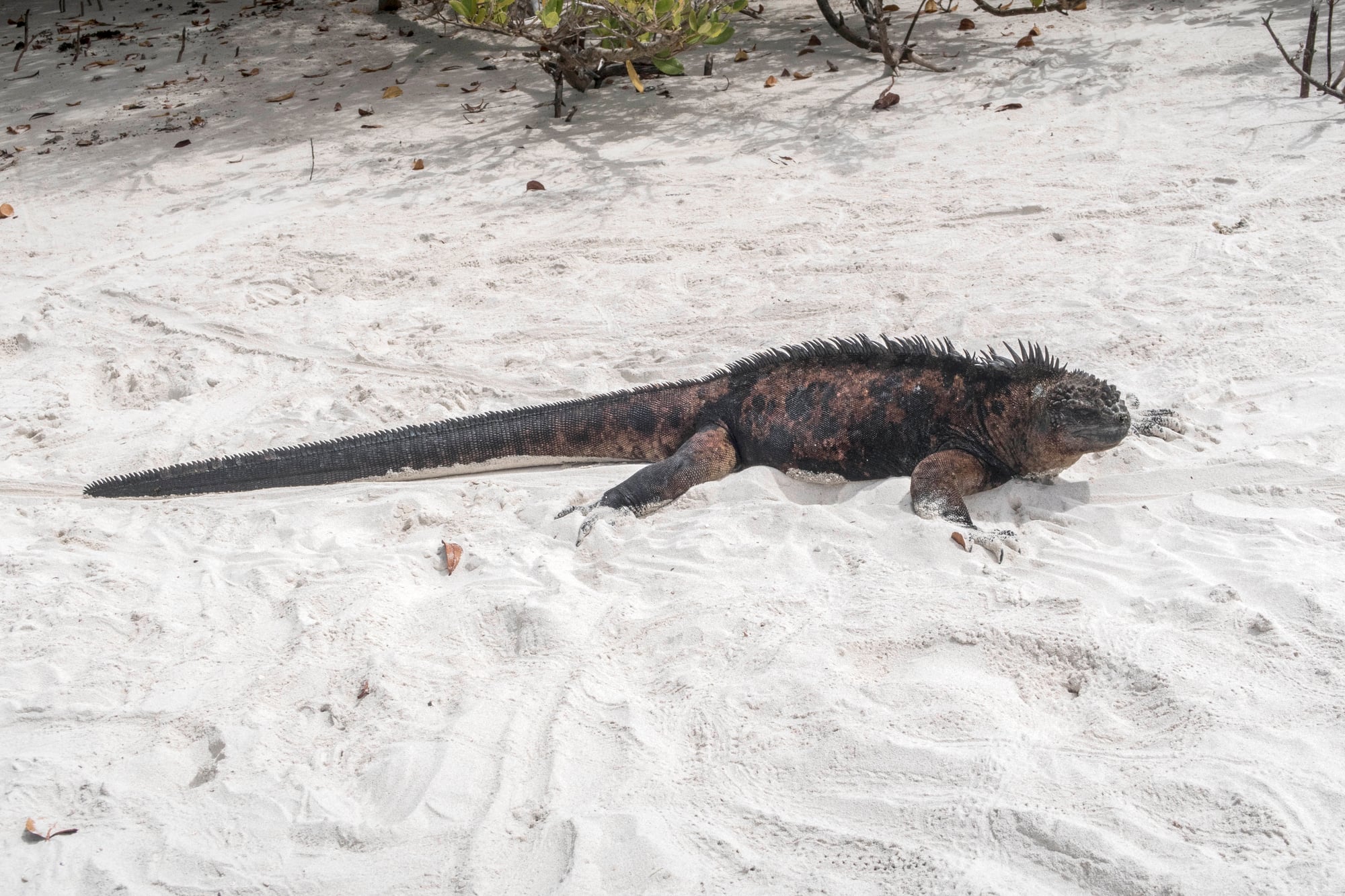
There’s something almost magical about watching a marine iguana transform from dull black to vibrant red, orange, and turquoise during breeding season. The males become living stained glass windows — their normally dark skin erupts into colors that seem borrowed from a tropical sunset.
Red patches bloom across their backs, bright orange spreads along their sides, and patches of blue-green appear like scattered jewels. And then, just as suddenly as it appeared, the color fades.
Outside of breeding season, they return to their practical black, which absorbs heat more efficiently from the volcanic rocks where they spend their time warming up. The transformation feels like watching someone put on their finest clothes for a special occasion, then change back into work clothes when the party’s over.
Their Swimming Technique Is Pure Efficiency
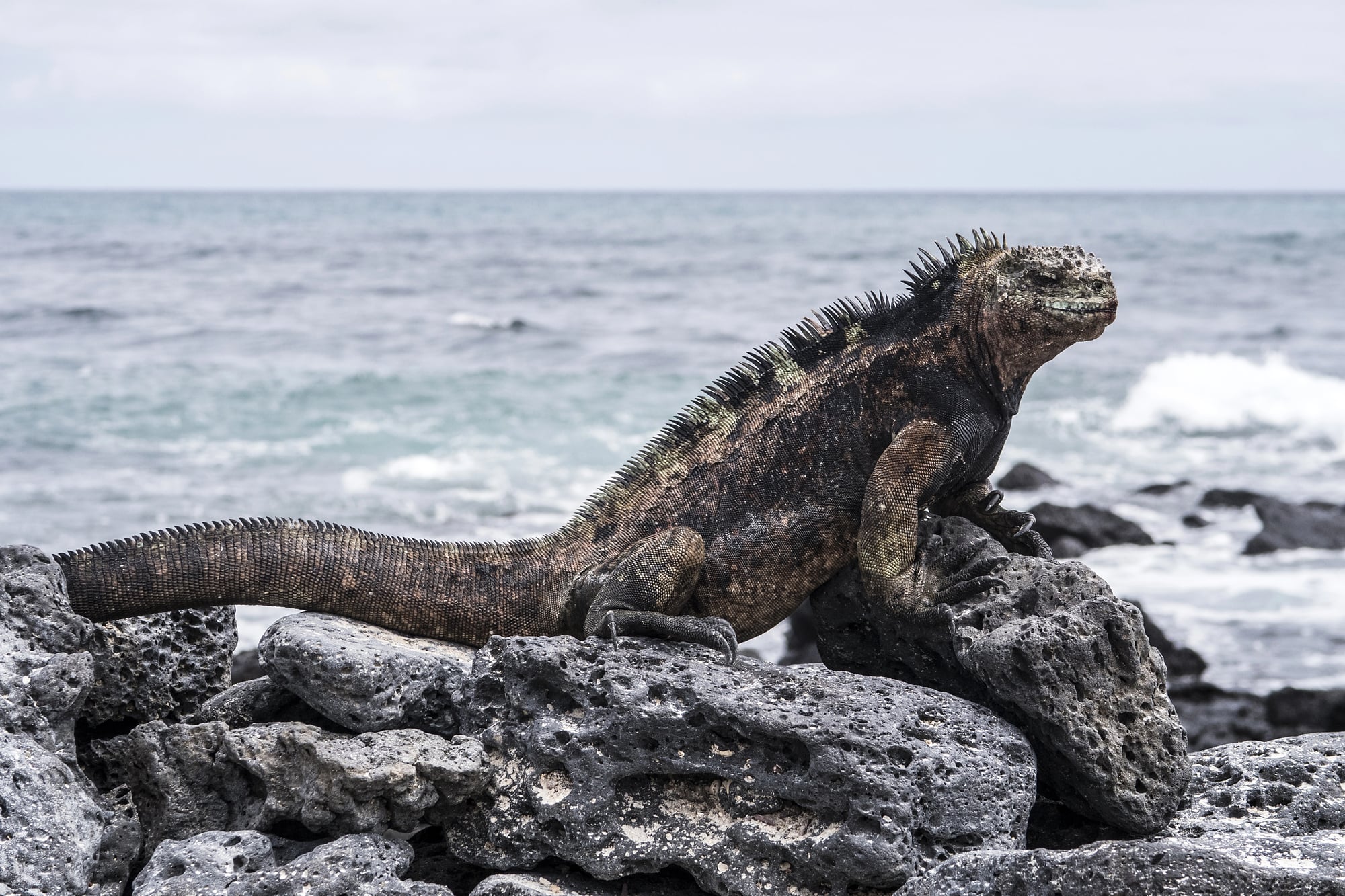
Marine iguanas swim like reptilian torpedoes. They keep their legs pressed against their bodies and propel themselves entirely with their flattened tails, which move in an S-shaped wave from head to tip.
The motion is hypnotic to watch — smooth, powerful, and completely unlike the frantic paddling you might expect from a land animal that learned to swim. Their feet are webbed, but they use them mainly for steering and gripping underwater rocks while they feed.
The tail does the real work, pushing them through the water with surprising speed and grace.
They’re Solar-Powered Creatures
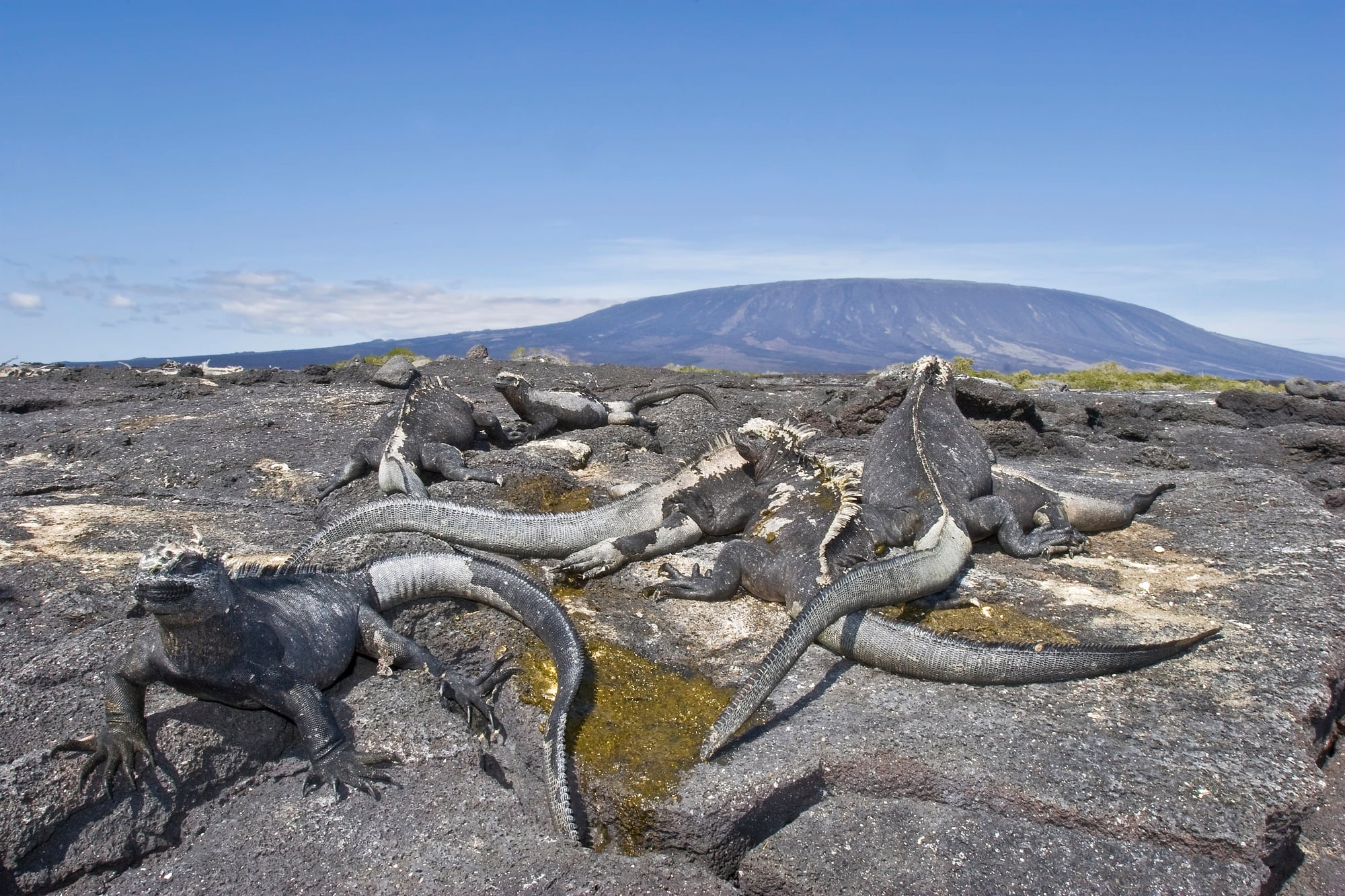
After each dive into the cold Pacific waters, marine iguanas become living solar panels. They sprawl across the black volcanic rocks in what looks like a massive reptilian sunbathing session, but this behavior is critical for their survival.
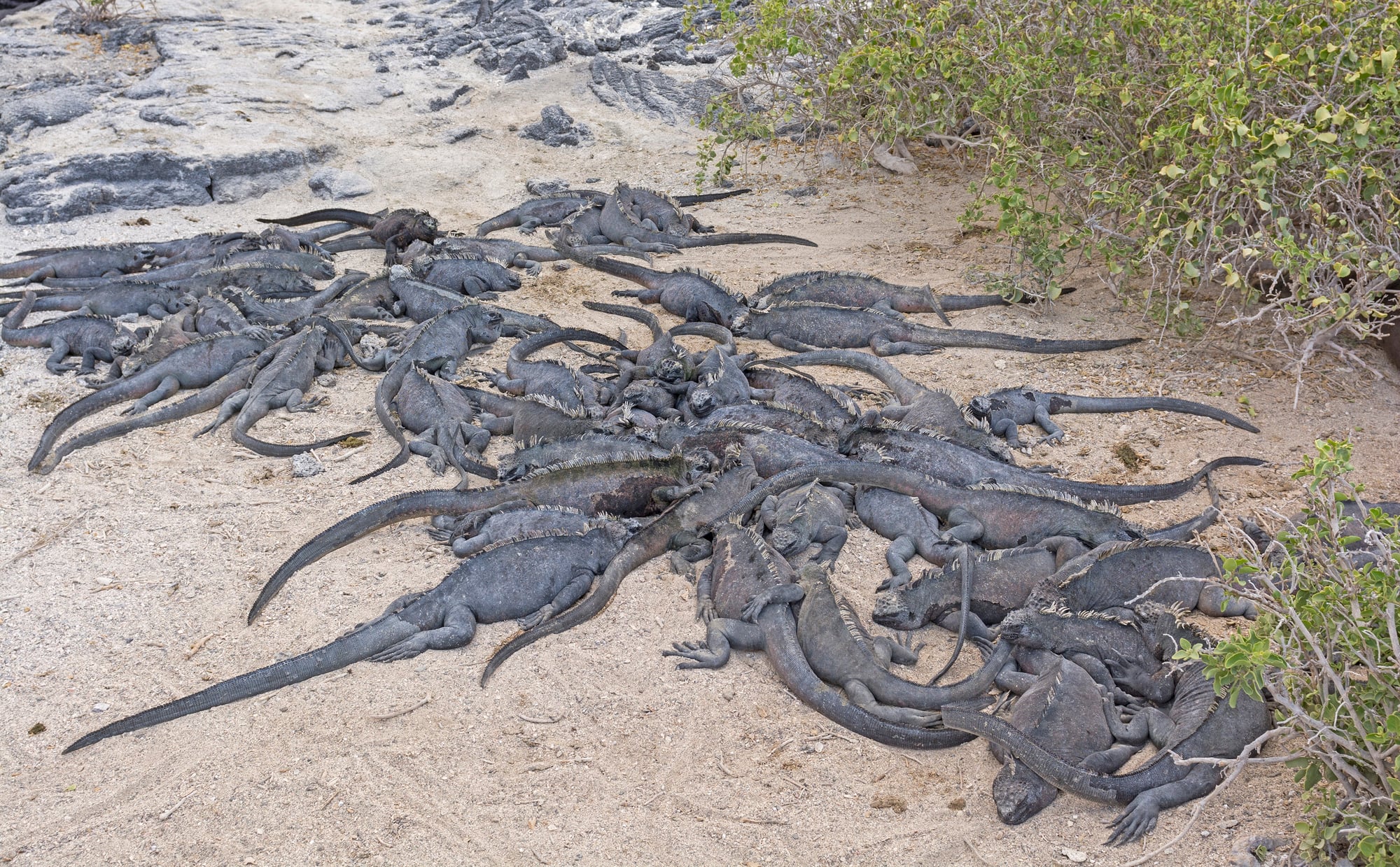
The ocean water drops their body temperature dangerously low, and they need to warm up before they can digest their food or function normally. Groups of iguanas pile on top of each other in warming clusters.
They’re not being social — they’re being practical. More bodies means more shared heat, and in the Galapagos, every degree matters.
They’ve Mastered the Art of Not Drowning
When marine iguanas dive, their bodies shut down non-essential functions with the efficiency of a submarine going into emergency mode. Their heart rate can drop to just a few beats per minute (and sometimes seems to stop entirely, though it actually continues at an almost undetectable rate), blood flow redirects away from their limbs and toward their brain and vital organs, and their metabolism slows to a crawl that would make a hibernating bear jealous.
But here’s the thing that really sets them apart: they seem to know exactly how long they can stay down. Scientists have observed that iguanas surface with remarkable timing, right before their oxygen reserves hit critical levels.
They’ve calibrated their internal clocks to match their oxygen capacity.
Baby Marine Iguanas Face a Gauntlet of Predators
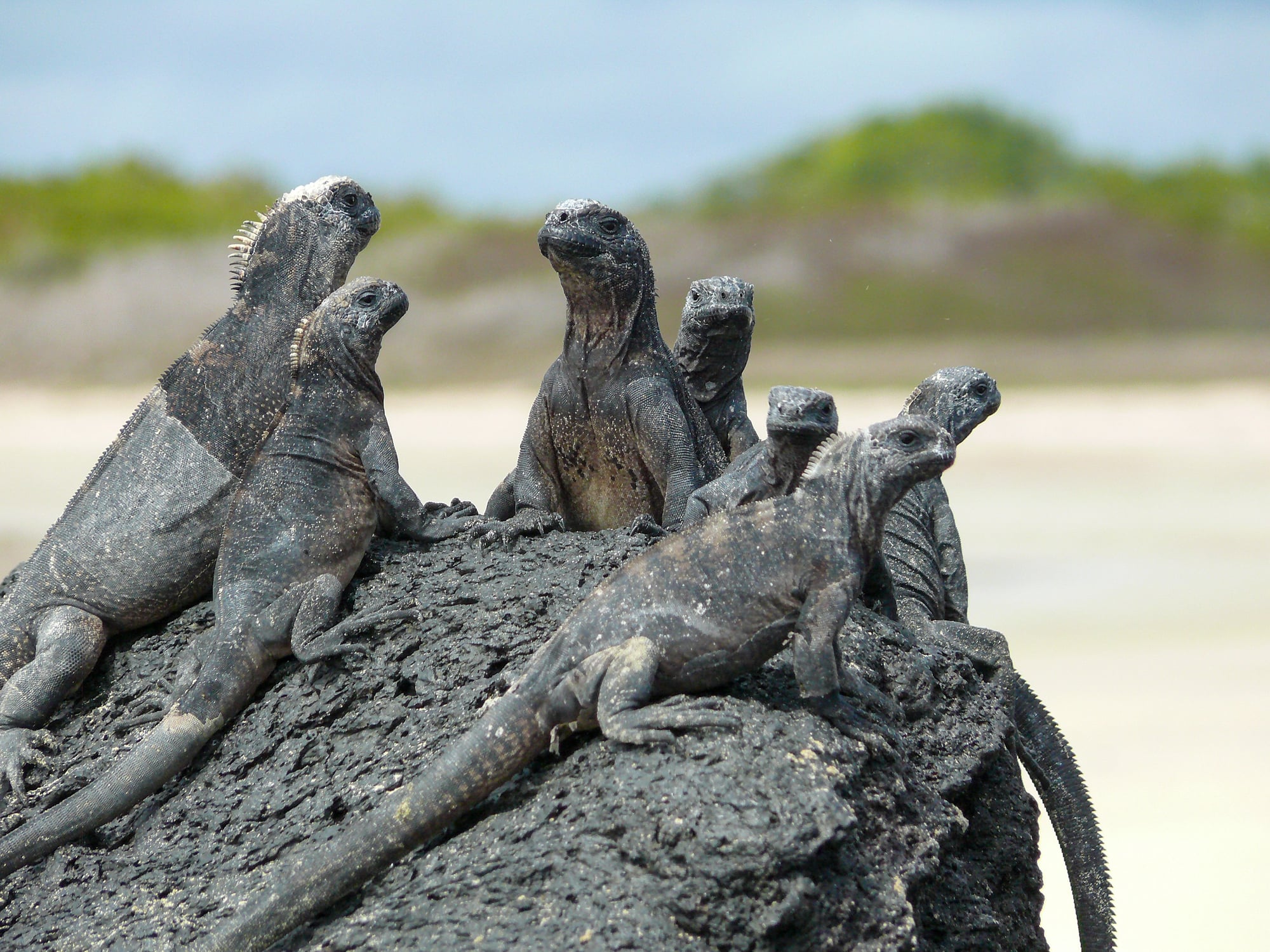
The early life of a marine iguana reads like a survival horror story. Newly hatched babies, no bigger than a human finger, must immediately navigate a world filled with creatures that view them as bite-sized snacks.
Galapagos hawks circle overhead, herons stalk the shoreline, and snakes lurk in the vegetation — all waiting for a chance at an easy meal. The babies compensate for their vulnerability with speed and numbers.
They hatch in large groups and make a mad dash for the rocks near the ocean, where they can hide in crevices too small for larger predators. Those that make it to the rocks have a fighting chance.
Those that don’t become statistics.
Their Teeth Grow Continuously
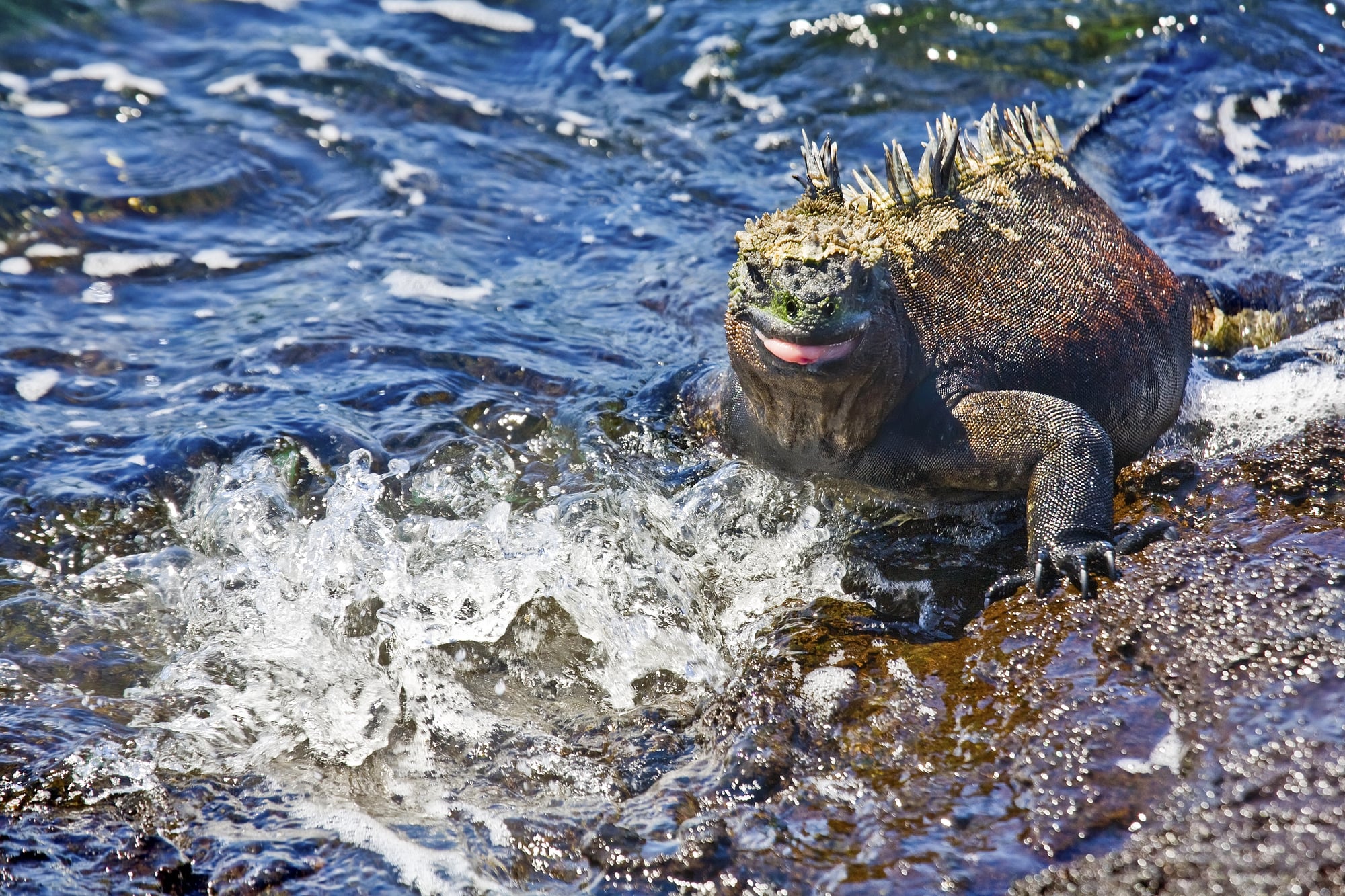
Marine iguanas have solved the problem of tooth wear through simple persistence. Their teeth never stop growing, which is fortunate since they spend their lives scraping algae off volcanic rocks — a process that would quickly wear down ordinary teeth to useless nubs.
The constant growth means their teeth stay sharp enough to efficiently harvest their underwater gardens. It’s like having a self-sharpening tool that never needs replacement.
They’re Surprisingly Fast Swimmers
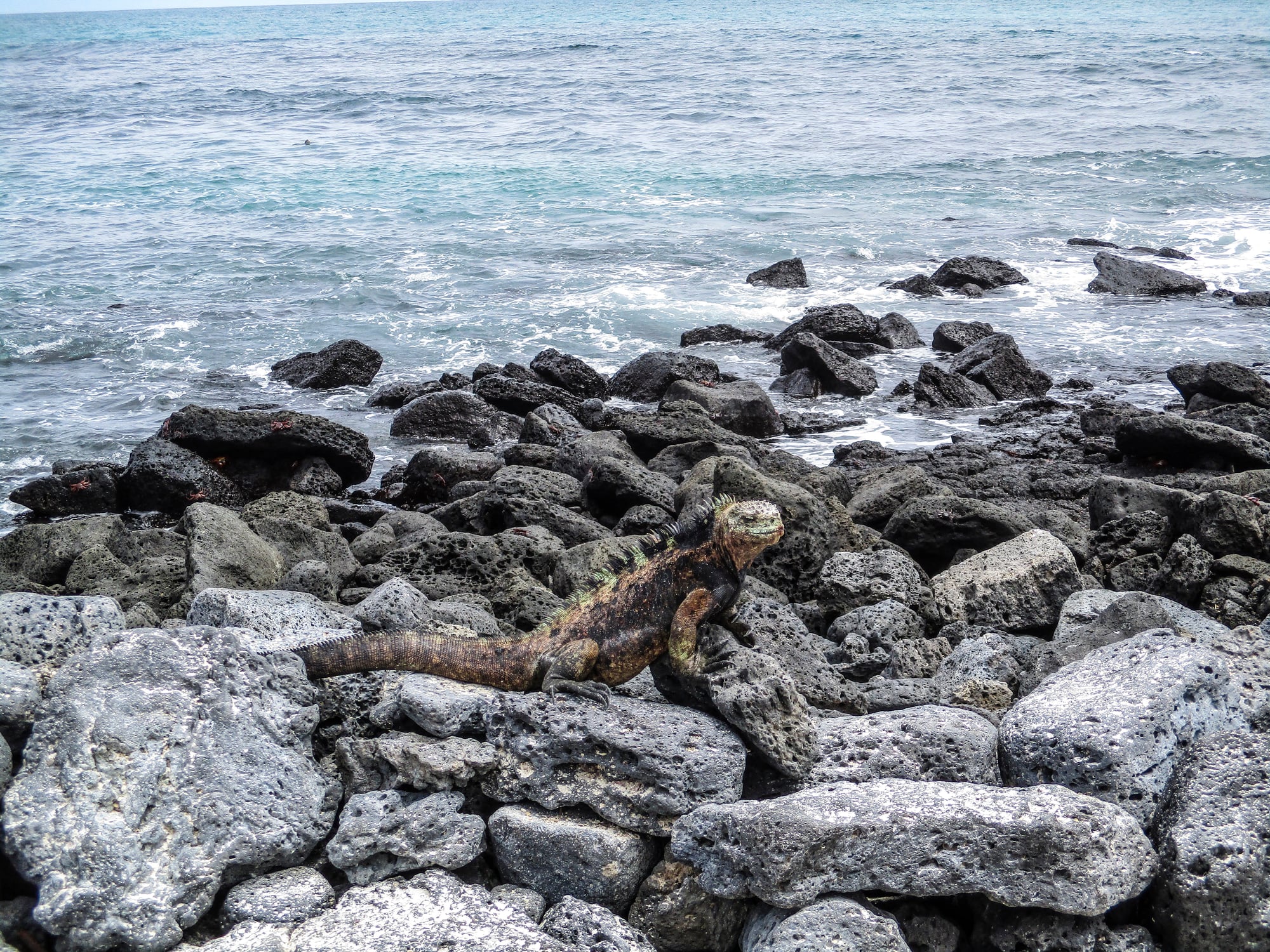
Don’t let their lizard origins fool you — marine iguanas can reach swimming speeds of up to 1.5 miles per hour underwater. That might not sound impressive until you remember that they’re cold-blooded reptiles navigating in water that’s often 20 degrees cooler than their preferred body temperature.
For comparison, that’s faster than many fish their size, and they’re doing it while holding their breath and fighting ocean currents.
Each Island Population Is Genetically Distinct
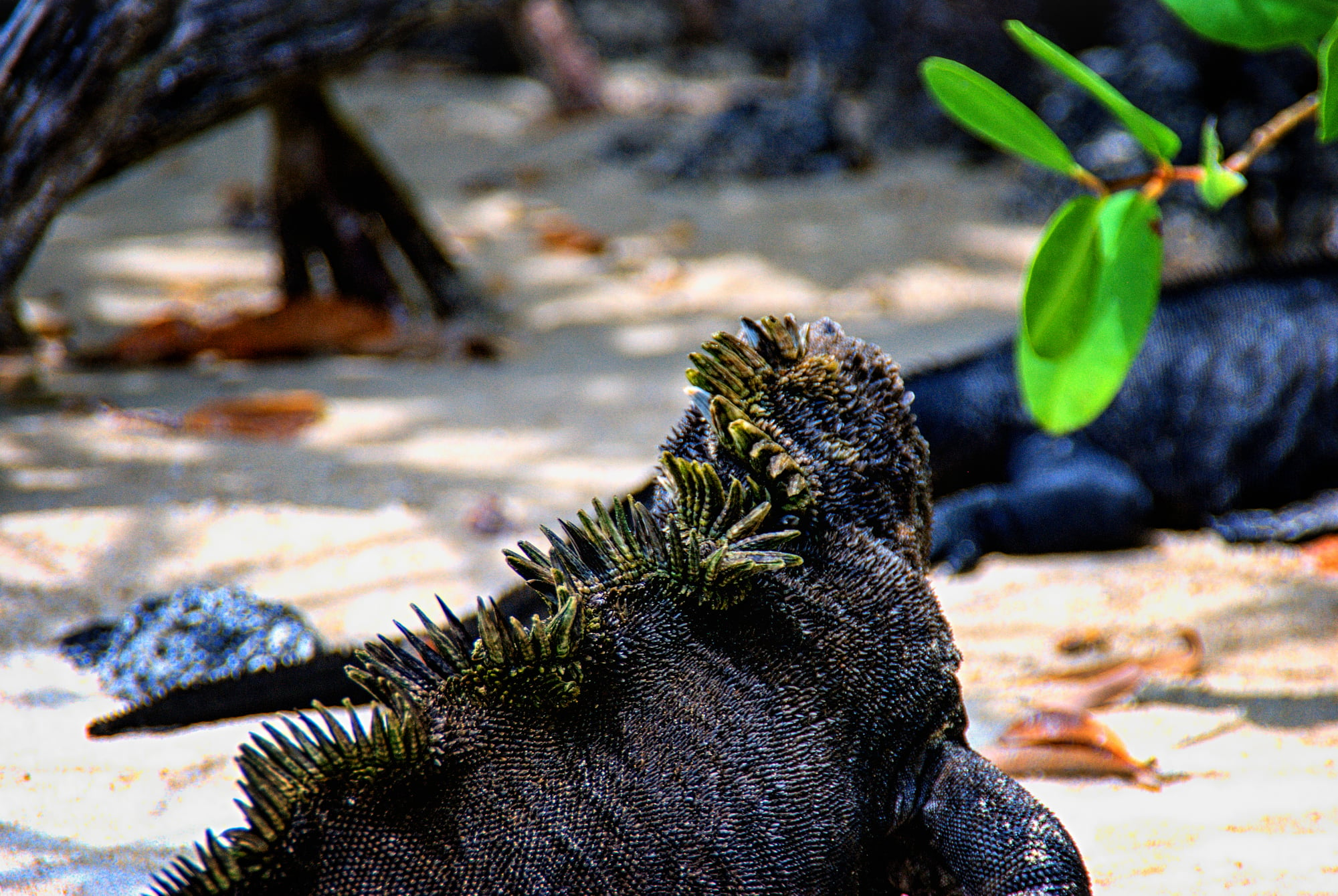
Marine iguanas have been island-hopping in the Galapagos for so long that each island’s population has developed its own genetic signature. The iguanas on Española Island are different from those on Santa Cruz, which are different from those on Fernandina — not just in appearance, but at the molecular level.
Some populations have developed larger body sizes, others have different color patterns, and some have slightly different diving abilities. It’s evolution in real time, playing out across a chain of volcanic islands.
They’re Living Fossils with a Modern Twist
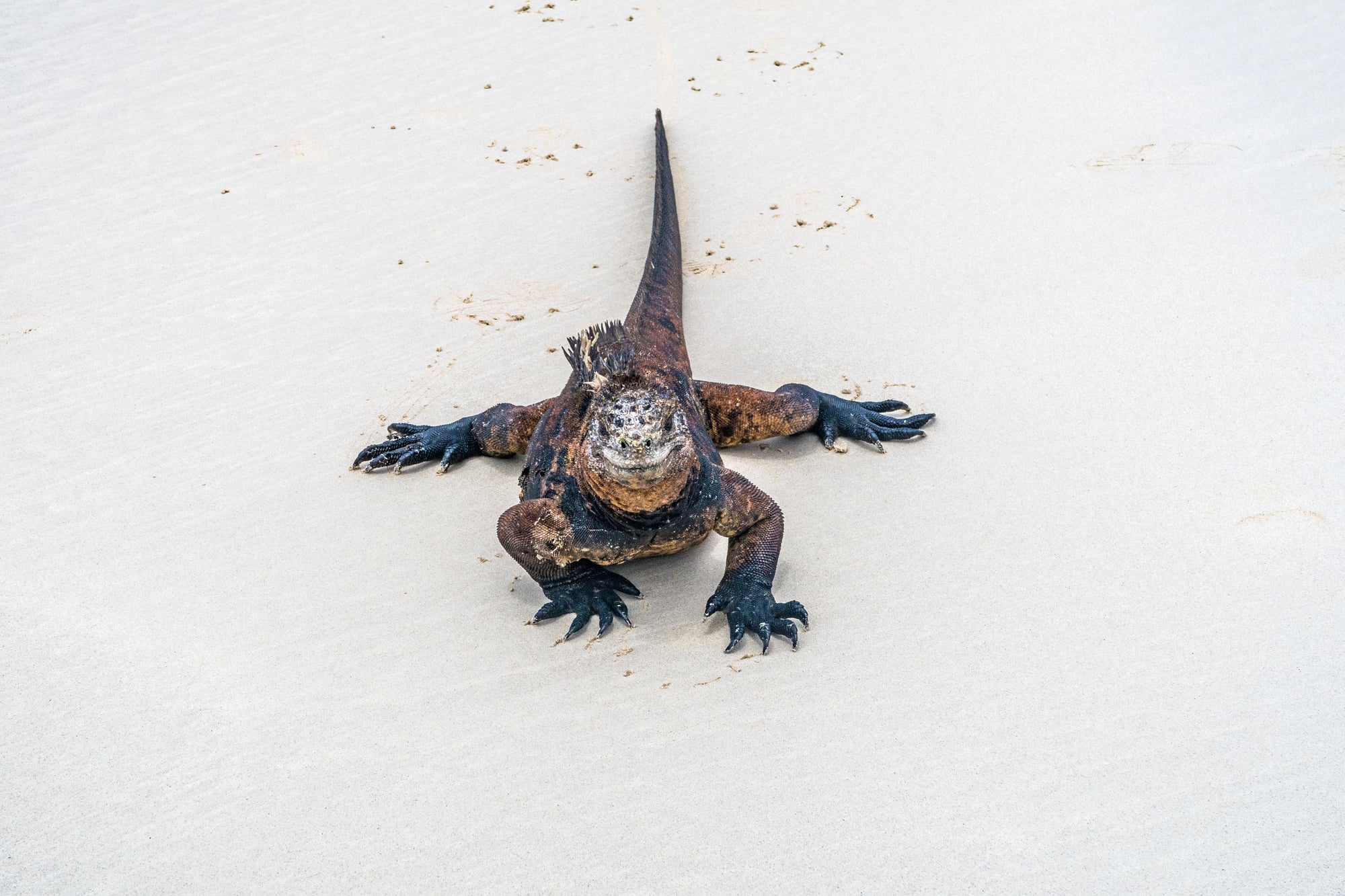
Looking at a marine iguana is like peering through a window into the deep past, but with a distinctly contemporary adaptation story. Their basic body plan hasn’t changed much in millions of years — the same sturdy build, the same powerful tail, the same prehistoric profile that makes them look like miniature dragons.
Yet every aspect of their physiology has been fine-tuned for a lifestyle that no other iguana species has ever attempted. They’re ancient creatures that learned a completely new way of living, which might be the most remarkable thing about them.
In a world where adaptation often means small, incremental changes over vast periods of time, marine iguanas represent something more dramatic: a fundamental career change that worked out spectacularly well.
Guardians of an Ancient Experiment
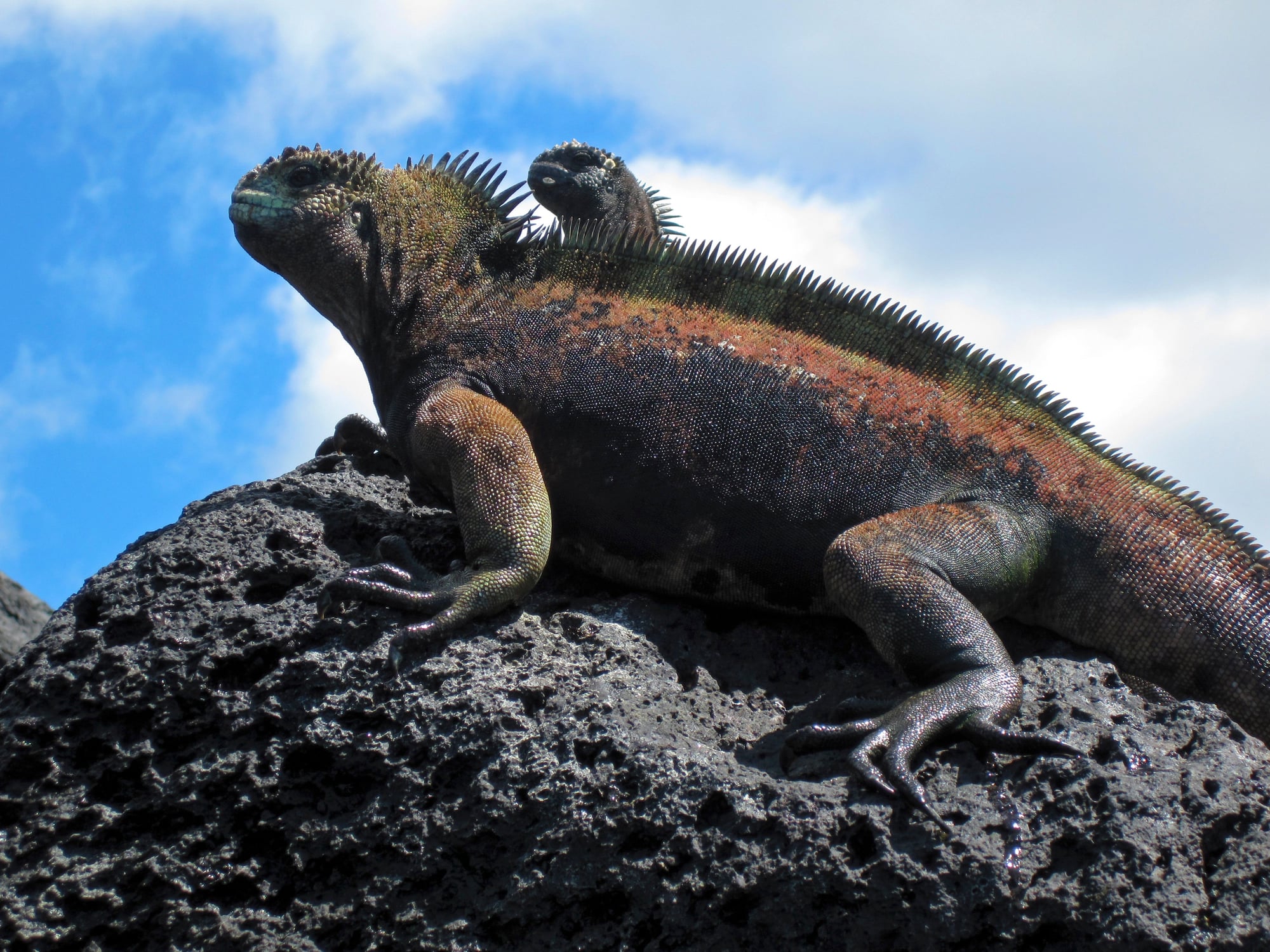
These creatures remind us that evolution isn’t just about survival — it’s about possibility. Marine iguanas exist because somewhere in their lineage, an ordinary land iguana decided that the ocean looked like it might have something interesting to offer.
That decision, multiplied across countless generations, created something that shouldn’t exist according to the rules most reptiles follow. The Galapagos Islands remain their only home, and they remain our best example of what happens when life gets creative with the basic instructions.
They’re not just surviving in their harsh environment — they’re mastering it, one salty sneeze at a time.
More from Go2Tutors!

- The Romanov Crown Jewels and Their Tragic Fate
- 13 Historical Mysteries That Science Still Can’t Solve
- Famous Hoaxes That Fooled the World for Years
- 15 Child Stars with Tragic Adult Lives
- 16 Famous Jewelry Pieces in History
Like Go2Tutors’s content? Follow us on MSN.



