Famous American Roadside Attractions That Vanished
Remember when road trips meant more than just getting from point A to point B? Back when the journey itself was the destination, America’s highways were lined with bizarre, wonderful, and utterly impractical attractions that existed for no reason other than to make travelers stop, stare, and maybe spend a few dollars.
These weren’t just businesses — they were dreams made of fiberglass, concrete, and pure imagination.
Many of these roadside wonders have disappeared, victims of interstate bypasses, changing travel habits, and the simple passage of time. What remains are faded postcards, blurry photographs, and the memories of those lucky enough to have experienced them.
Here are some of the most memorable American roadside attractions that have vanished into history.
The Giant Orange
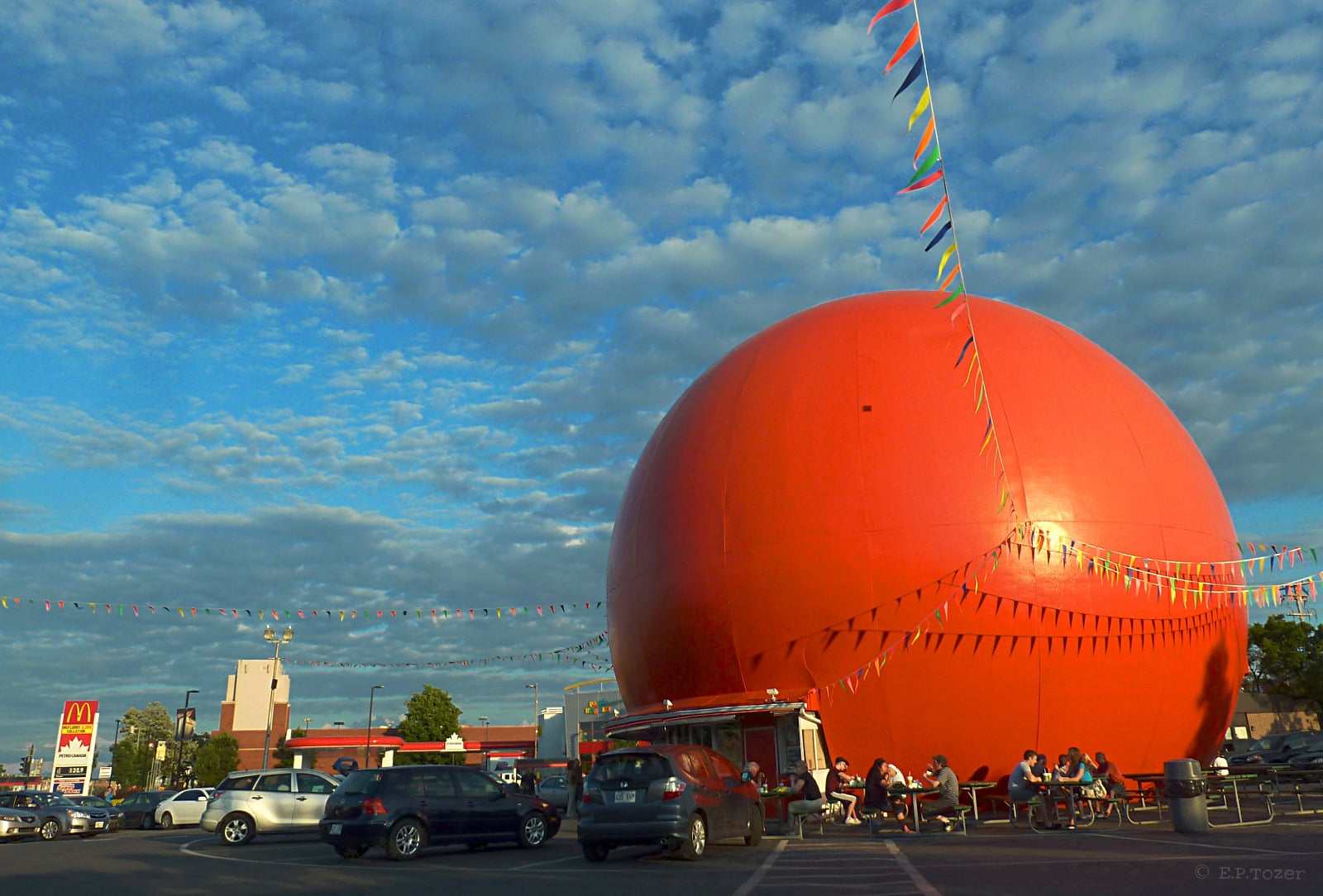
California’s citrus industry knew how to sell itself. Starting in the 1920s, enormous orange-shaped buildings began sprouting along the state’s highways, each one housing juice stands that sold fresh-squeezed orange juice to passing motorists.
These weren’t subtle roadside signs — they were 20-foot-tall concrete oranges that you could see from miles away.
The most famous stood along Route 99 near Los Angeles. Drivers would pull over, walk inside the giant fruit, and emerge with a cup of juice and a story to tell.
The orange was perfectly spherical, painted bright orange (naturally), with a small door cut into its side and windows that looked like dimples in the rind.
Most of these citrus monuments disappeared when the Interstate Highway System redirected traffic away from the old routes. The last major one was demolished in the 1980s.
California still has a few surviving orange-shaped buildings, but they’re replicas — charming imitations of something that once felt completely natural along a highway where anything seemed possible.
Dinosaur Park
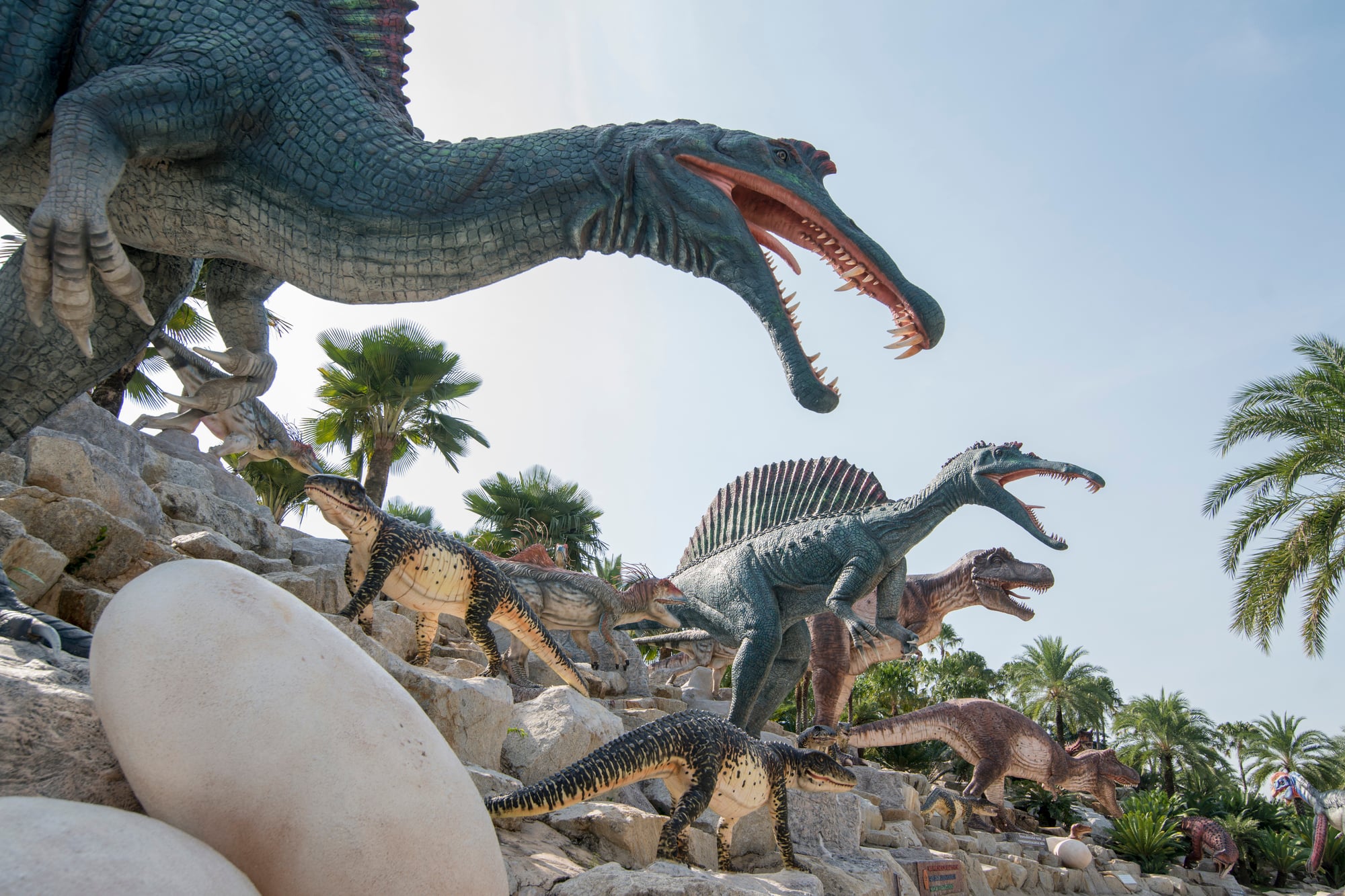
Long before Jurassic Park made dinosaurs terrifying again, they were friendly roadside companions welcoming families to South Dakota’s Black Hills. Dinosaur Park opened in 1936 on a hill overlooking Rapid City — seven life-sized concrete dinosaurs that became the region’s most photographed attraction after Mount Rushmore (which, coincidentally, was still under construction when the dinosaurs arrived first).
These weren’t scientifically accurate creatures (the paleontology of the 1930s was enthusiastic but imprecise), but that somehow made them more endearing.
The Tyrannosaurus Rex wore a permanent grin, the Triceratops looked more like an oversized rhinoceros, and the Apatosaurus — neck stretched toward the horizon — seemed to be perpetually searching for something just out of reach.
Kids climbed on them, parents posed next to them, and everyone left with the satisfaction of having encountered actual dinosaurs, even if they were made of concrete and painted green.
The dinosaurs have remained a popular tourist attraction throughout their entire existence. In 2024, Dinosaur Park received a major $3.5 million renovation and accessibility improvement project, demonstrating the community’s continued commitment to preserving these beloved concrete giants.
The park continues to welcome visitors today, maintaining the same family-friendly approach that has defined it since the 1930s.
The World’s Largest Round of Twine
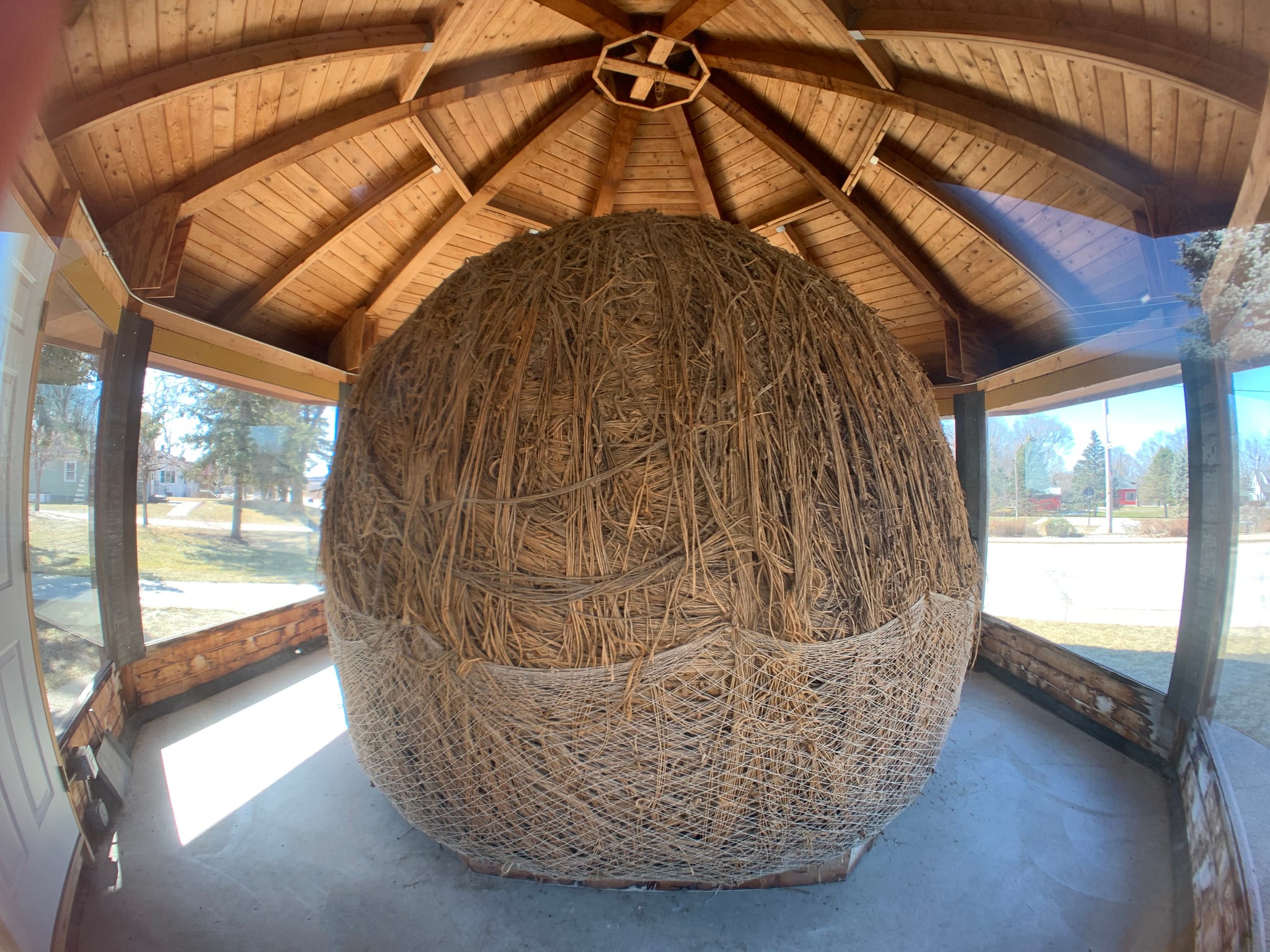
Kansas farmer Frank Stoeber started wrapping twine into an orb on Christmas Eve, 1953, and by the 1970s he had created a sphere that weighed 17,400 pounds and measured 40 feet in circumference.
This wasn’t a publicity stunt or a business venture — it was simply what Frank did in his spare time, year after year, methodically adding layer after layer of sisal twine in his barn.
Word spread (as word tends to spread about 8-ton twine spheres), and visitors began showing up at his farm outside Cawker City. Frank didn’t charge admission or sell souvenirs.
He just showed people his twine, explained his process, and seemed genuinely pleased that others found his project interesting.
The orb became a pilgrimage site for anyone driving across Kansas who needed proof that dedication and persistence could create something magnificent, even if that something served no practical purpose whatsoever.
After Frank died in 1974, the community moved his twine to a gazebo in downtown Cawker City, where visitors could continue adding their own pieces.
But the original barn setting — where you had to duck under farm equipment to see the massive sphere in its natural habitat — had been part of the experience.
The twine round still exists, but it’s become a tourist attraction rather than a farmer’s quiet obsession.
The Enchanted Forest
Maryland’s Enchanted Forest opened in 1955 as a fairy tale theme park where children could walk through actual storybook scenes. Before Disney perfected the sanitized magic kingdom formula, this 20-acre wonderland in Ellicott City offered something more homemade and intimate — a place where Little Red Riding Hood’s cottage sat next to Cinderella’s pumpkin coach, and the Three Bears’ house stood exactly as tall as a seven-year-old’s imagination required.
The park’s charm came from its handcrafted quality. Local artisans had built every structure, painted every scene, and populated the forest with characters that looked slightly imperfect in the way that handmade things do.
The Gingerbread House smelled like actual gingerbread (a carefully guarded scent secret), and Humpty Dumpty sat on his wall looking perpetually worried about his upcoming fall, as if he knew what the nursery rhyme had in store for him.
But fairy tale parks couldn’t compete with roller coasters and video games. The Enchanted Forest closed in 1989, though some of its structures were relocated to a farm in western Maryland.
The original forest was cleared for a shopping center. Children who had once walked through storybook scenes now shop for groceries where the Three Little Pigs’ brick house used to stand.
The Corn Palace
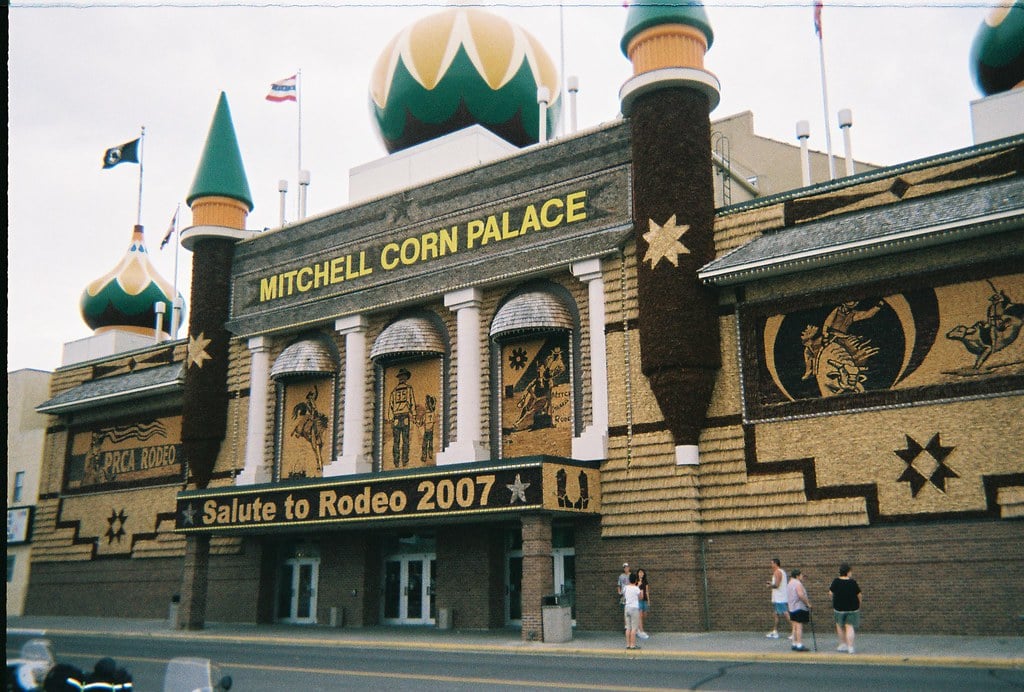
Mitchell, South Dakota, discovered that corn could be architecture. Every year since 1892, the town has decorated its municipal auditorium with elaborate murals made entirely from different colors of corn, grain, and native grasses.
The building itself — a Moorish Revival structure with onion domes and minarets — looked like something transplanted from a Middle Eastern bazaar, which made the corn decorations even more surreal.
The original Corn Palace was built in 1892, replaced by a second structure in 1905, and then rebuilt into its current form in 1921 with a design by the architectural firm Rapp and Rapp.
Russian-style onion domes and Moorish minarets were added in 1937, giving the Palace the distinctive appearance that it has today.
What made these Corn Palaces special wasn’t just the corn murals — it was the sheer audacity of the concept. A prairie town had decided that corn could be art, that agriculture could be architecture, and that tourists would drive hundreds of miles to see grain arranged in patterns.
And they did drive hundreds of miles, because in an era before interstate highways homogenized roadside America, the Corn Palace represented something uniquely Great Plains: the belief that local materials and local pride could create something worth seeing.
The current version still draws visitors, but it feels more like a tourist attraction than a genuine expression of agricultural optimism.
The Mystery Spot
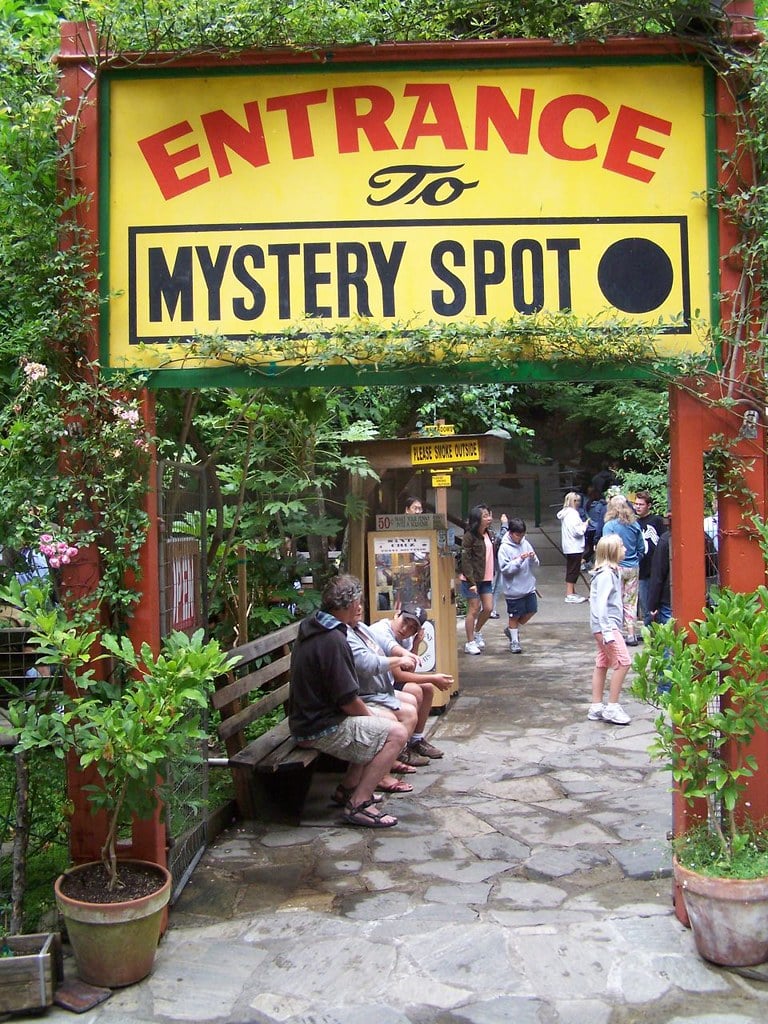
California’s redwood forests were already mysterious enough, but in 1939 someone decided they needed help. The Mystery Spot opened near Santa Cruz as a place where the laws of physics supposedly didn’t apply — orbs rolled uphill, people stood at impossible angles, and water flowed in defiance of gravity.
The explanations ranged from magnetic anomalies to alien interference, though the real mystery was how optical illusions and tilted floors could fool so many visitors so effectively.
What made the Mystery Spot work wasn’t the “science” behind it, but the commitment to the performance. Tour guides delivered their presentations with complete sincerity, visitors played along with the illusions, and everyone left with the pleasant feeling of having experienced something unexplainable.
The attraction existed in that sweet spot between belief and skepticism where roadside magic thrives.
The original Mystery Spot burned down in the 1990s (though it was rebuilt), taking with it decades of accumulated atmosphere — the worn wooden floors, the hand-painted signs, and the particular mustiness that comes from years of tour groups shuffling through tilted rooms.
The new version recreates the illusions but can’t recreate the history. Sometimes the mystery isn’t in the physics; it’s in the accumulated layers of time and human attention.
Wigwam Village
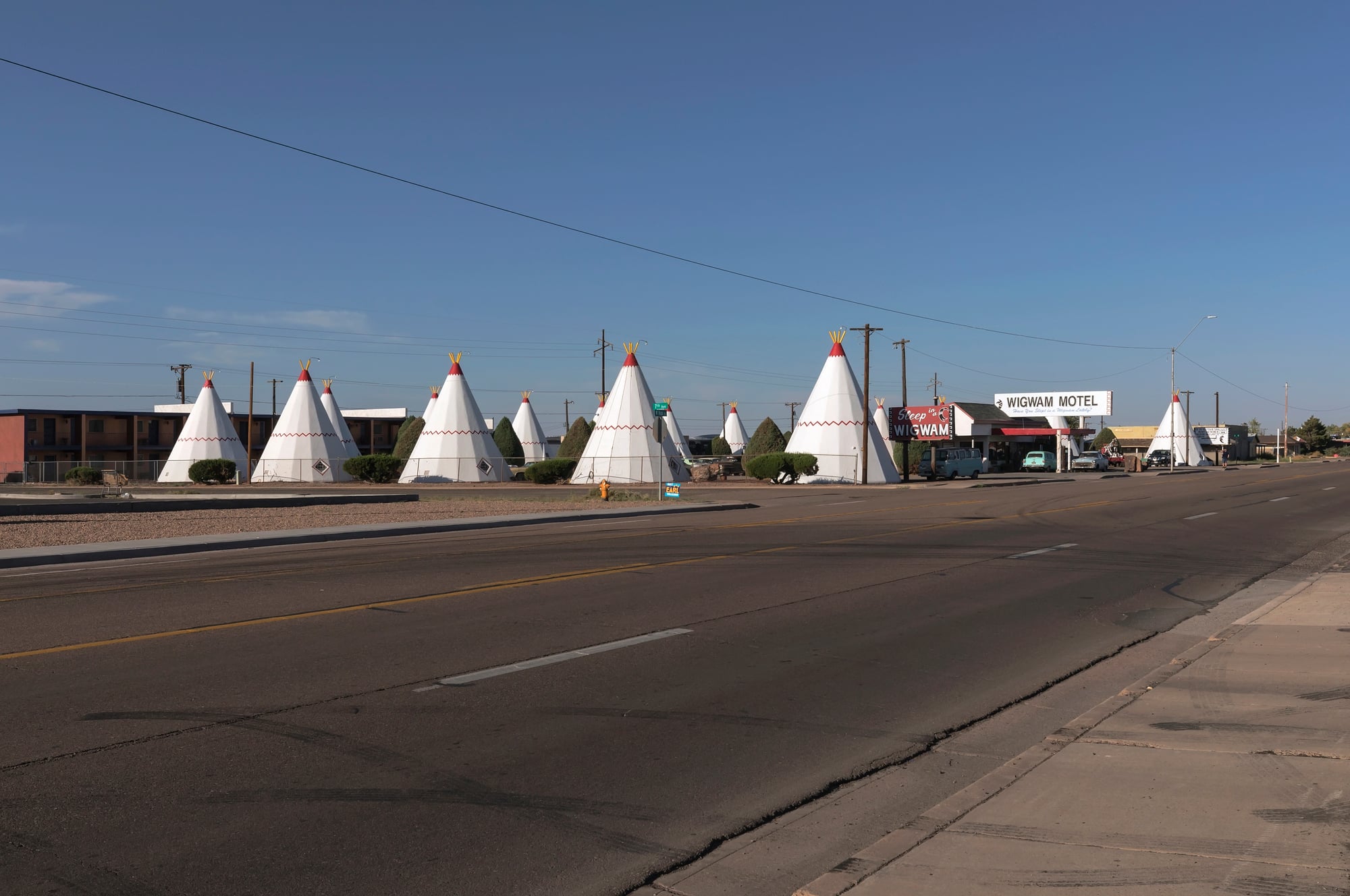
Kentucky inventor Frank Redford had a simple idea: people would pay to sleep in concrete tepees. He was right. The first Wigwam Village opened in 1935, and the concept spread across the country — motor courts where travelers could spend the night inside 30-foot-tall concrete wigwams, each one equipped with modern amenities and a bed shaped like a tepee.
The wigwams weren’t trying to be historically accurate (they were concrete, air-conditioned, and featured modern plumbing), but they offered something that standard motels couldn’t: the chance to sleep inside a completely impractical building that existed purely for the joy of sleeping inside something shaped like a tepee.
Children loved them, parents photographed them, and everyone who stayed in one had a story to tell.
Most of the Wigwam Villages disappeared as chain motels standardized roadside lodging. A few survive, but they’ve become novelty destinations rather than practical stopping points for ordinary travelers.
The original villages served families who were driving cross-country and wanted their accommodations to be part of the adventure, not just a place to sleep between driving shifts.
The Big Duck

Long Island’s poultry farmers needed a way to sell duck eggs, so in 1931 they built a store shaped like a 20-foot-tall duck. The Big Duck wasn’t a roadside gimmick — it was functional architecture that happened to look like waterfowl.
Customers would park next to the duck’s feet, enter through a door in its side, and buy eggs and ducks from vendors working inside the bird’s hollow body.
The duck worked because it was both absurd and practical. The shape announced what was for sale more effectively than any sign could, and the sheer strangeness of shopping inside a giant duck made the experience memorable enough that customers returned and brought friends.
The duck became a landmark for anyone driving through eastern Long Island, a reliable point of reference in an area where one farm stand looked much like another.
The original Big Duck was moved several times before finding a permanent home as a historical landmark (it still exists, though it no longer sells poultry).
But its roadside context disappeared when suburban development replaced the duck farms. The Big Duck now sits in a park, preserved as a curiosity rather than serving its original purpose as a perfectly logical solution to the problem of how to sell duck eggs to passing motorists.
Reptile Gardens
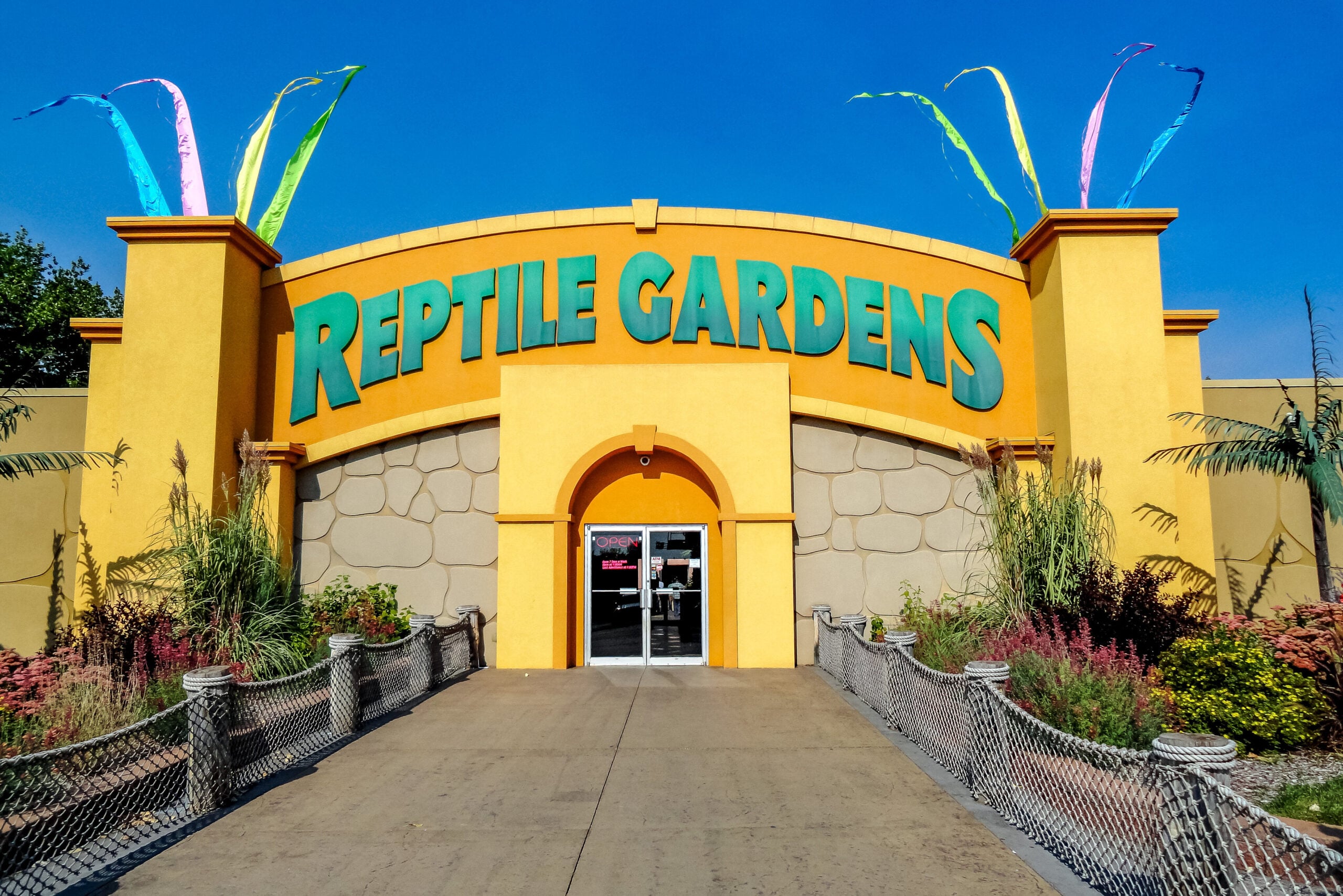
South Dakota’s Reptile Gardens opened in 1937 as America’s first major reptile attraction, but it was more than just snakes in cages. The gardens featured elaborate shows where handlers would wrestle alligators, milk venomous snakes, and lecture audiences about the misunderstood nature of reptiles.
The centerpiece was a massive outdoor pit where visitors could look down at dozens of rattlesnakes sunning themselves on fake rocks.
The attraction’s founder, Earl Brockelsby, had a genuine passion for herpetology, and that enthusiasm shaped everything about the gardens.
The shows were educational as well as thrilling, the displays were designed to showcase natural behaviors, and the whole operation felt more like a wildlife preserve than a roadside zoo.
Brockelsby believed that people feared reptiles because they didn’t understand them, and he dedicated his life to changing those perceptions one visitor at a time.
The original Reptile Gardens still operates, but it’s become a conventional tourist attraction with gift shops and staged performances.
The intimate, educational atmosphere of the early years — when Brockelsby himself might give you a personal tour and introduce you to his favorite snakes by name — disappeared as the operation expanded and commercialized.
The reptiles are still there, but the sense of discovery is gone.
The House of Tomorrow
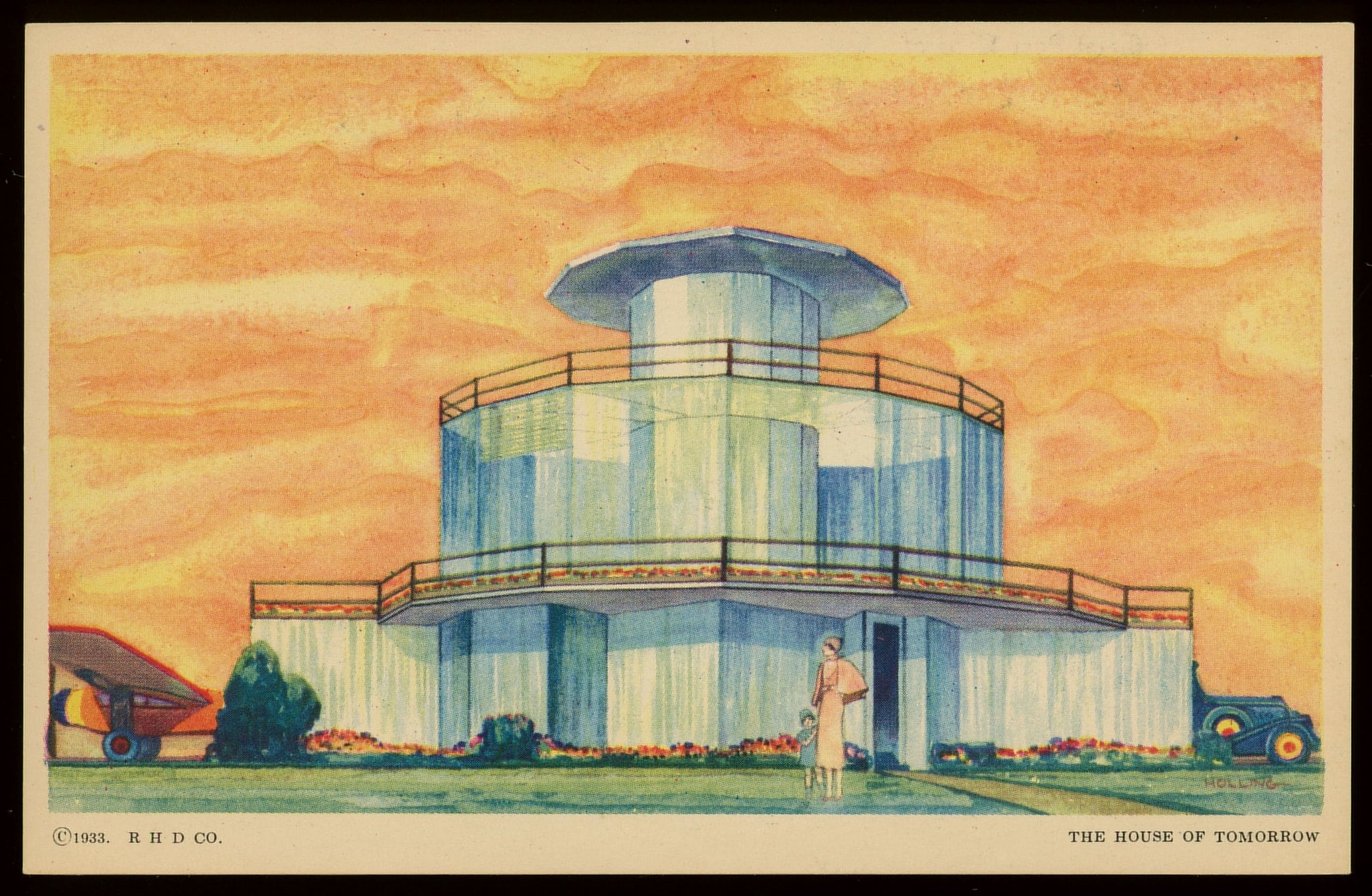
The 1933 Chicago World’s Fair introduced America to the House of Tomorrow, a 12-sided glass house designed to showcase how families would live in the distant future of the 1960s.
After the fair ended, the house was moved to Indiana Dunes State Park, where it became a roadside attraction for anyone curious about tomorrow’s domestic arrangements.
The house featured central air conditioning, a dishwasher, and a three-car garage at a time when most American homes had none of those things (and most American families didn’t own three cars).
But the real attraction was the house’s radical transparency — glass walls that made privacy impossible and domestic life completely visible.
Visitors could walk through rooms where every activity, from cooking to sleeping, would be on display to neighbors and passersby.
The House of Tomorrow was demolished in the 1970s when its experimental materials began failing and maintenance became impossible.
The future it represented — a world where technology would solve all domestic problems and privacy would become obsolete — never quite arrived as predicted.
The house became a historical curiosity, a reminder that previous generations’ visions of the future often reveal more about their present anxieties than about what actually lies ahead.
The World’s Largest Prairie Dog
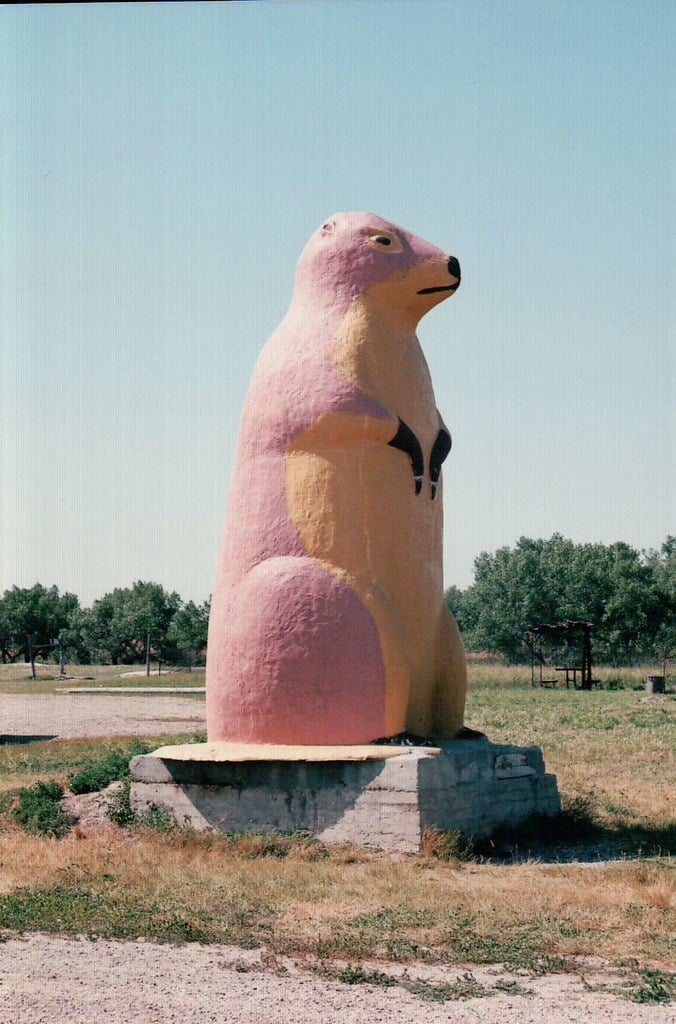
South Dakota specialized in roadside monuments to local wildlife, and the World’s Largest Prairie Dog stood as testament to the state’s commitment to celebrating even its smallest creatures.
The 12-foot-tall fiberglass prairie dog sat on its haunches outside a trading post in Kadoka, greeting travelers with the kind of outsized enthusiasm that only roadside attractions could provide.
The prairie dog wasn’t just a sculpture — it was a statement about the value of stopping, looking, and appreciating creatures that most people considered pests.
Prairie dogs are social animals that live in complex underground communities, communicate through sophisticated chirping systems, and demonstrate behaviors that scientists are still studying.
The giant roadside version captured something essential about their alert, curious nature.
When the trading post closed in the 1990s, the prairie dog was sold to a private collector and disappeared from the roadside.
Its absence left a gap in the landscape that seemed disproportionate to its actual size.
The prairie dog had served as a landmark, a conversation starter, and a reminder that South Dakota took all of its wildlife seriously enough to build monuments to them.
Without it, that stretch of highway became just another stretch of highway.
The Alligator Farm
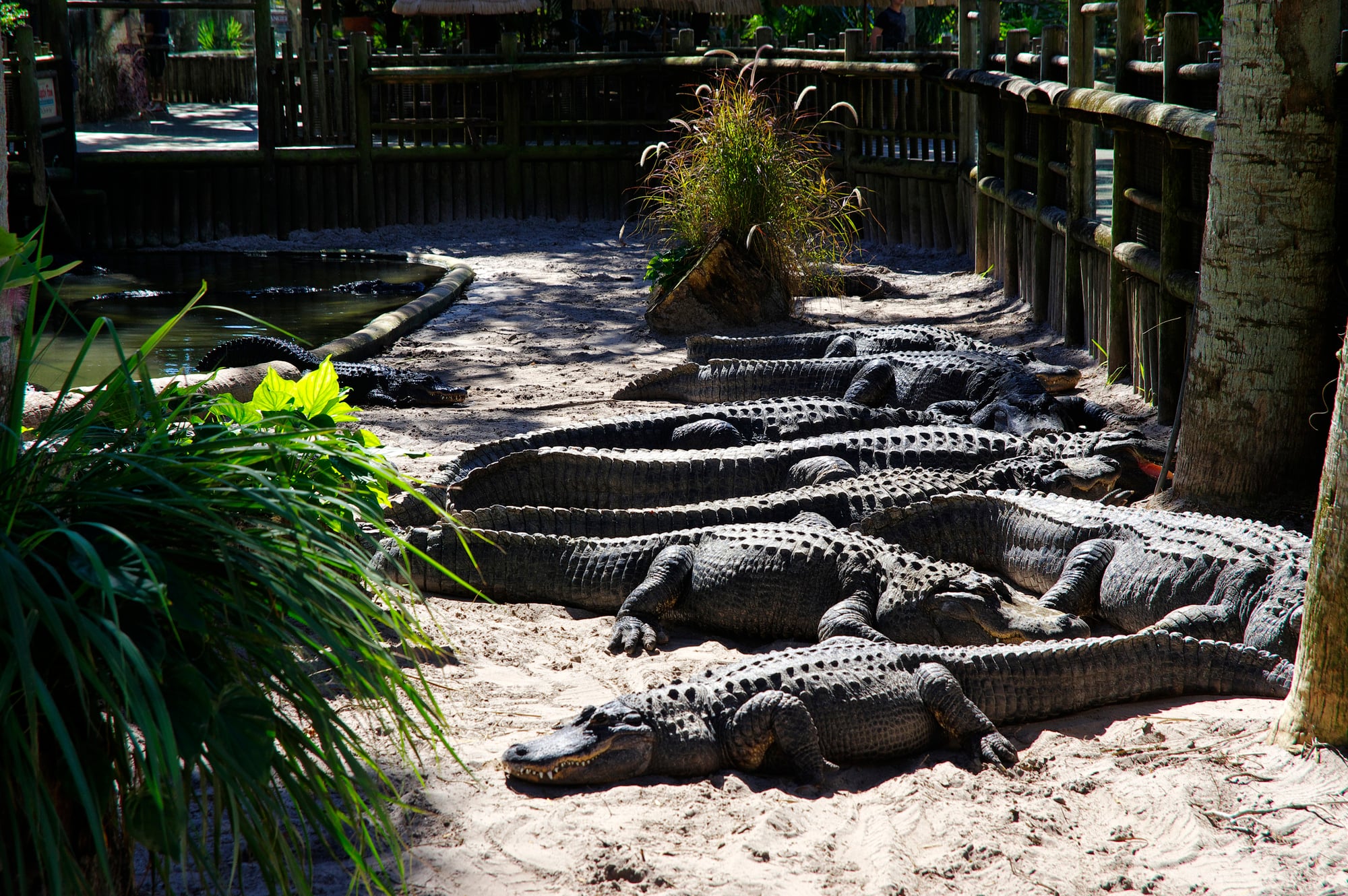
Florida’s original Alligator Farm opened in St. Augustine in 1893, but it was the roadside versions that followed — dozens of smaller attractions scattered throughout the state — that really captured the imagination of tourists seeking authentic Florida experiences.
These weren’t zoos or educational facilities; they were working farms where visitors could watch alligators being fed, see leather goods being made, and purchase souvenirs carved from actual alligator parts.
The best alligator farms felt genuinely dangerous. Wooden walkways crossed pools filled with 12-foot alligators that looked capable of launching themselves onto the platform at any moment (they probably were).
The farms smelled like swamp water and reptile musk, the guides carried long poles for reasons they didn’t always explain, and the whole experience felt like a glimpse into prehistoric Florida.
Most of these roadside alligator farms closed when liability insurance became prohibitively expensive and animal welfare regulations made the old casual approach impossible.
Modern alligator attractions are safer, more educational, and probably more humane, but they’ve lost the sense of genuine wildness that made the originals so compelling.
Those early farms offered visitors a chance to encounter Florida as it existed before air conditioning and theme parks — hot, humid, and populated by creatures that viewed humans as potential meals rather than paying customers.
The Indian Trading Post
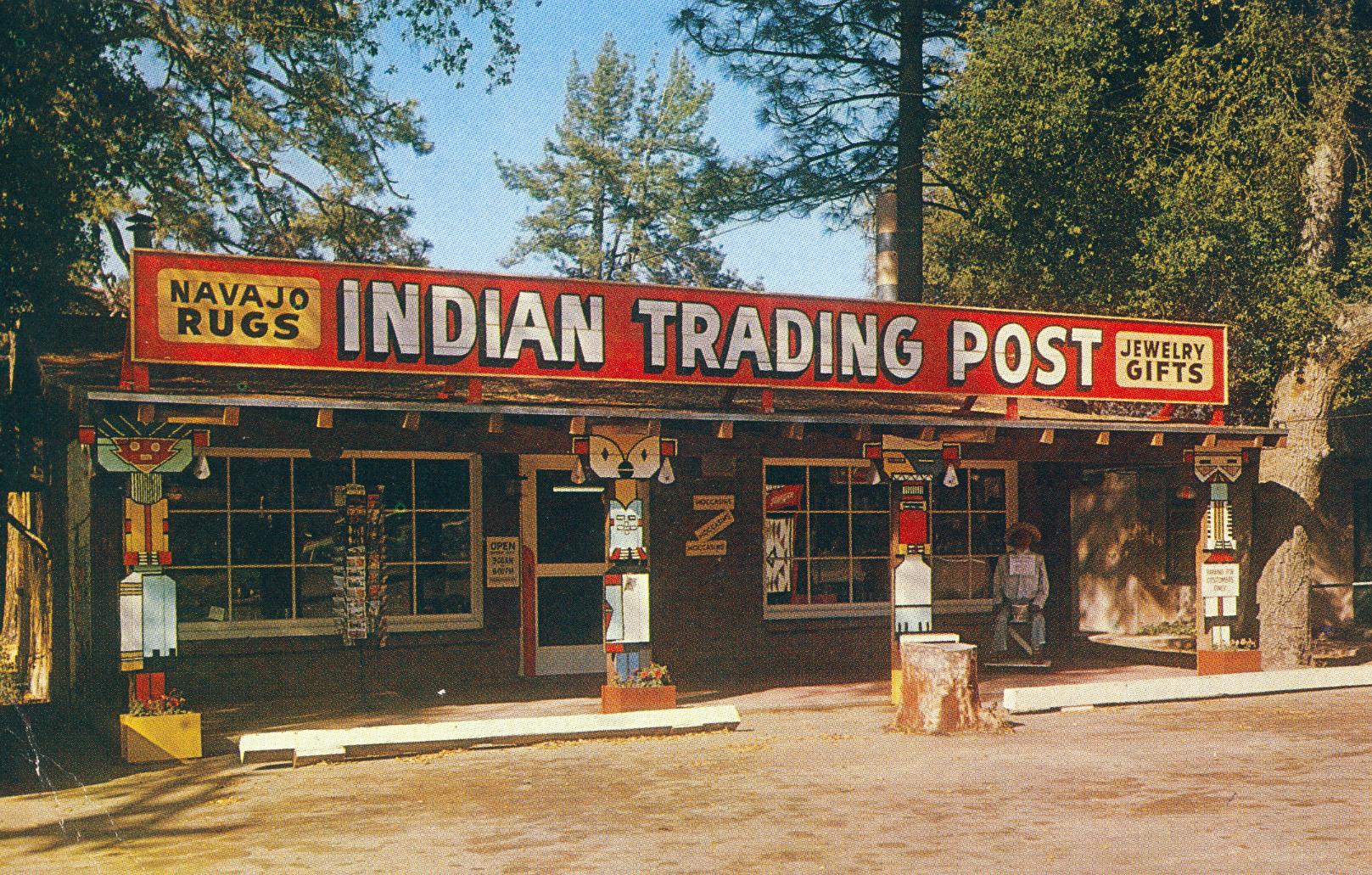
Route 66 was lined with trading posts that promised authentic Native American crafts, but most were run by entrepreneurs who had never lived on a reservation and sold mass-produced souvenirs made in factories far from any tribe.
The customers didn’t seem to mind. They wanted dream catchers, turquoise jewelry, and moccasins that looked like what they imagined Native Americans might make, even if the reality was more complicated.
The trading posts served a function that went beyond commerce. They provided a way for tourists to engage with (their idea of) Native American culture in a context that felt safe and predictable.
The proprietors, whether Native American or not, understood their role as cultural interpreters, explaining traditions, demonstrating crafts, and helping visitors navigate the difference between authentic and replica items.
The best trading posts became cultural education centers that happened to sell souvenirs.
The decline of cross-country car travel killed most of these roadside trading posts, though a few survive as historical attractions.
The relationship between Native American communities and roadside tourism was always complex, but the trading posts served as one of the few places where tourists and tribal cultures intersected regularly.
Their disappearance represents a loss of cultural contact, however imperfect that contact might have been.
Echoes in the Rearview Mirror
The roadside attractions that defined mid-century American travel didn’t just vanish — they were replaced by something more efficient, more predictable, and infinitely less interesting.
Interstate highways bypassed the old routes, chain restaurants replaced local diners, and GPS navigation eliminated the possibility of stumbling across something unexpected.
Progress, it turns out, has a way of smoothing out the wrinkles that made travel memorable.
What we lost wasn’t just a collection of giant oranges and concrete dinosaurs. We lost the belief that the journey itself could be destination enough, that stopping to see something ridiculous was time well spent, and that America was vast enough to contain multitudes of local dreams made manifest in fiberglass and concrete.
The roadside attraction was democracy in action — anyone with imagination, ambition, and a good location could build something that would make travelers stop, stare, and remember.
Those attractions existed because someone believed that a 20-foot-tall duck or a round of twine was worth preserving, worth showing to strangers, worth the effort it took to maintain year after year.
They remind us that America was built by people who thought big, built weird, and trusted that other people would appreciate their particular brand of roadside magic.
The highways are more efficient now, but they’re also more lonely. Sometimes the longest distance between two points is the most interesting route of all.
More from Go2Tutors!

- The Romanov Crown Jewels and Their Tragic Fate
- 13 Historical Mysteries That Science Still Can’t Solve
- Famous Hoaxes That Fooled the World for Years
- 15 Child Stars with Tragic Adult Lives
- 16 Famous Jewelry Pieces in History
Like Go2Tutors’s content? Follow us on MSN.