Famous Espionage Gadgets You Didn’t Know Existed
Secret missions thrive on creativity. Before computers tracked every move, agents carried hidden gadgets made to look ordinary.
These tools slipped through checks because they mimicked common objects too well. Spies moved unseen, folding their actions into routines others never questioned.
Quiet inventions shaped quiet influence across decades of tension.
Decades passed before anyone heard about several of these devices. Long after the Cold War ended, pieces started emerging – through old files cleared for release, exhibits tucked inside spy archives – exposing how odd yet functional some hidden tech really was.
Things people dismissed as made-up stories? Actually existed.
A peek behind the curtain reveals tools built for secrecy, each odder than the last. Hidden inside everyday items, they moved without notice.
Some responded to sound, others vanished when touched. Crafted to deceive, their shapes fooled even careful eyes.
Silence was often their greatest ally. From buttons that recorded voices to pens spitting poison, function hid in plain sight.
Cold War tensions birthed many of these devices. Not all were successful – some failed quietly.
Yet persistence drove inventors forward. Each attempt reshaped what stealth could be.
Lipstick Pistol
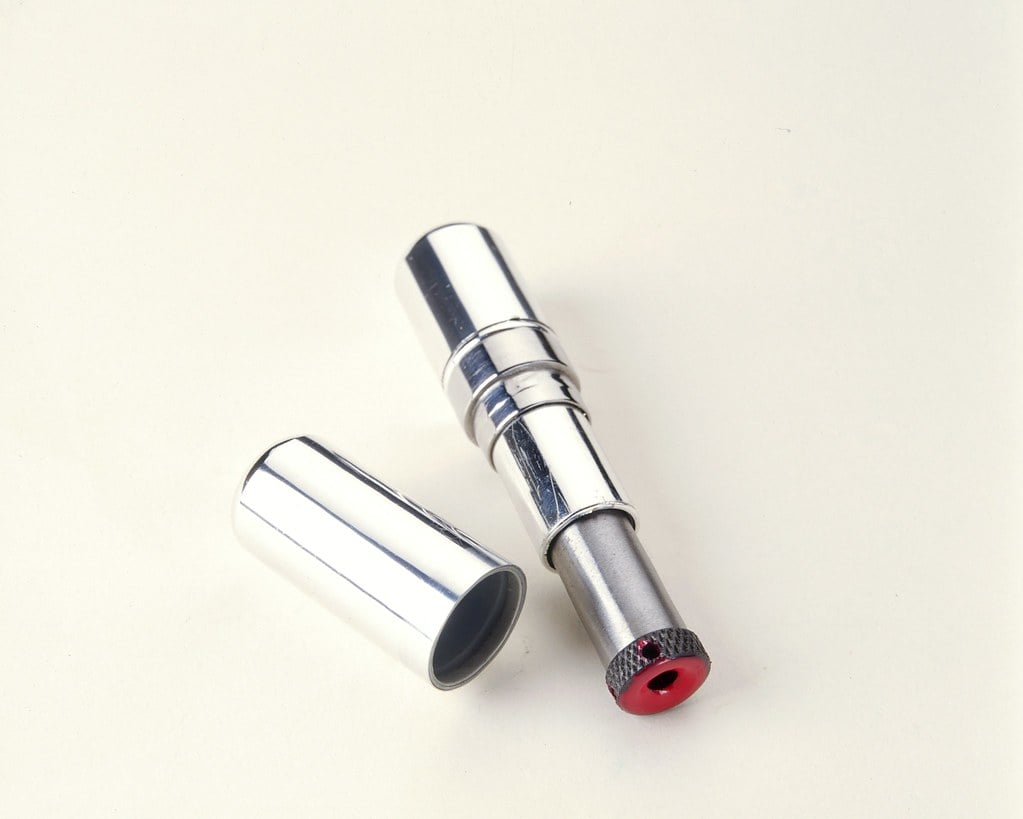
One of the most striking espionage gadgets ever discovered looks deceptively ordinary. Known as the ‘lipstick pistol,’ the device was designed to resemble a small cosmetic tube but concealed a single-shot firearm inside.
Developed during the Cold War, the gadget allowed operatives to carry a hidden weapon without attracting suspicion. The compact device typically fired a small-caliber round and could easily fit into a purse or pocket.
Western intelligence officials reportedly discovered one of these unusual weapons during a security inspection in the early 1960s.
Even so, the lipstick pistol symbolized a broader philosophy in spy technology. Intelligence agencies often prioritized concealment over power, recognizing that the ability to avoid attention was usually far more valuable than carrying conventional weapons.
Buttonhole Camera
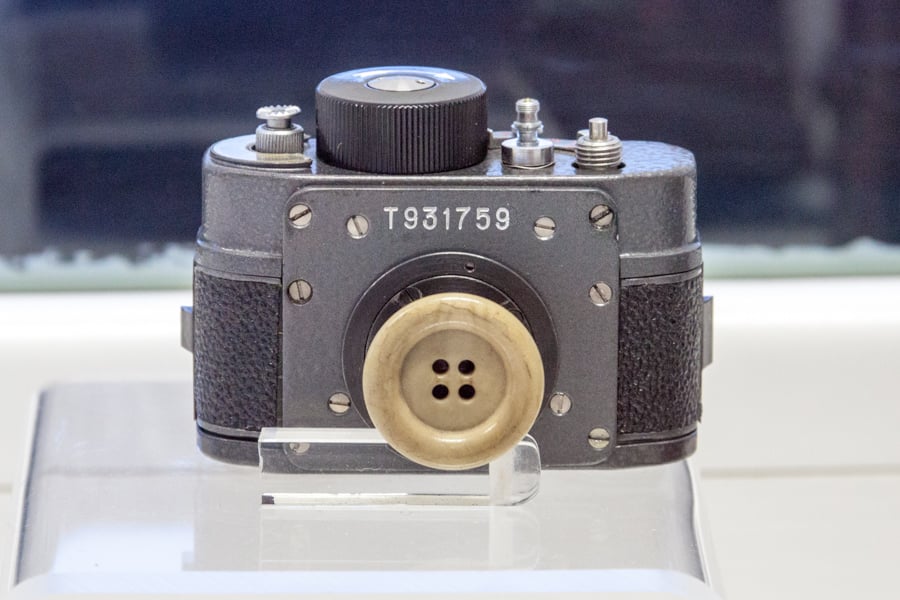
Miniature photography became one of the most valuable tools for intelligence gathering during the 20th century. Among the most ingenious designs was the buttonhole camera, which could be hidden inside a coat or jacket while the lens peeked discreetly through a button.
Operatives could photograph documents, buildings, or secret meetings simply by standing nearby. The camera mechanism was usually connected to a small trigger hidden inside a pocket, allowing the spy to capture images without obvious movement.
Early versions used miniature film cartridges that could store dozens of photographs.
That quiet efficiency made the buttonhole camera one of the earliest examples of wearable surveillance technology. Even in crowded environments such as diplomatic receptions or busy streets, agents could quietly gather visual intelligence without anyone realizing a camera was present.
Hollow Coin for Microfilm

At first glance, a simple coin seems like the least suspicious object imaginable. Intelligence agencies recognized this advantage and developed hollow coins capable of storing tiny pieces of microfilm or written messages.
The coin could be opened by pressing a hidden seam along its edge, revealing a small cavity inside. Inside that space, agents could place rolled microfilm containing coded instructions or photographed documents.
Because the coin appeared completely ordinary, it could be carried through security checkpoints or passed between contacts without attracting attention.
One famous example surfaced in New York in 1953 when a newspaper boy dropped a coin that unexpectedly split open. Inside was a tiny strip of microfilm containing coded numbers, eventually traced to a Soviet espionage network operating in the United States.
The Umbrella Dart Weapon

Perhaps the most unusual espionage device ever used in a real operation was the umbrella dart weapon. From the outside, it looked like an ordinary umbrella carried by a pedestrian on a rainy day.
Inside the shaft, however, was a mechanism capable of firing a tiny metal dart. The device became widely known after the 1978 assassination of Bulgarian dissident Georgi Markov in London.
As Markov waited near a bus stop, he reportedly felt a sharp sensation in his leg before noticing a man picking up an umbrella nearby.
Investigators later discovered that the dart contained a microscopic pellet filled with poison. The pellet had been engineered with tiny perforations that allowed the toxin to dissolve slowly once inside the body.
The incident shocked intelligence agencies around the world and demonstrated just how sophisticated covert devices had become.
Pigeon-Mounted Camera
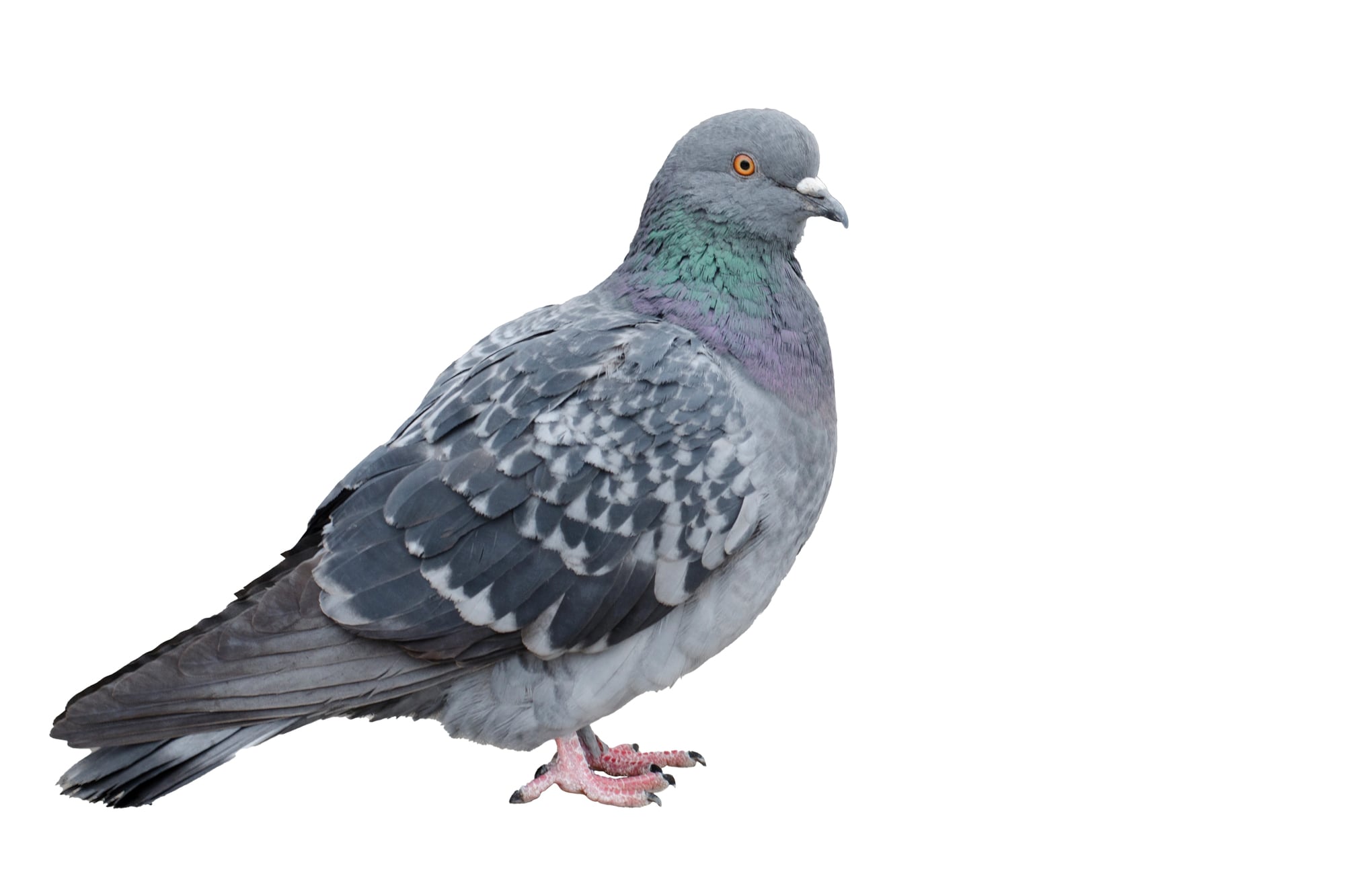
During the early decades of aerial photography, intelligence agencies experimented with surprisingly creative methods for capturing images from above. One of the most unusual involved attaching miniature cameras to trained pigeons.
The cameras were equipped with automatic timers that triggered photographs while the birds flew over strategic locations. Lightweight harnesses secured the equipment without preventing the birds from flying normally.
After completing their flight, the pigeons would return to their loft, bringing the exposed film with them.
Although it may sound unusual today, pigeon photography produced valuable reconnaissance images during the early 20th century. At a time when aircraft technology was still developing, trained birds offered a surprisingly reliable method for capturing aerial views of landscapes and military positions.
Shoe Heel Radio Transmitter
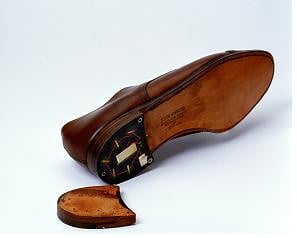
Communication has always been one of the greatest challenges in espionage. To avoid detection, intelligence engineers designed transmitters small enough to fit inside everyday clothing and accessories.
One inventive solution involved hiding a miniature radio transmitter inside the heel of a shoe. The device allowed agents to send coded signals without carrying bulky equipment.
A small switch or microphone could be concealed elsewhere in the agent’s clothing, connected through thin wires.
Even so, the brilliance of the design lay in its location. Shoes were rarely inspected closely, allowing the transmitter to pass unnoticed through routine security checks.
In high-stakes situations where communication needed to remain invisible, such discreet engineering proved extremely valuable.
The CIA’s ‘Acoustic Kitty’

One of the most ambitious espionage experiments of the Cold War involved an attempt to use a domestic animal as a listening device. The project, later nicknamed ‘Acoustic Kitty,’ aimed to place miniature audio equipment inside a trained cat.
The concept was simple in theory. A cat could wander near outdoor conversations without drawing suspicion, while hidden microphones transmitted the audio to nearby receivers.
Engineers attempted to conceal the electronic components carefully while training the animal to move toward certain locations.
In practice, the project faced serious challenges. Cats proved difficult to train for controlled movements, and environmental distractions made the plan unreliable.
Although the project was eventually abandoned, it remains one of the most unusual examples of Cold War experimentation.
Spy Cameras Hidden in Everyday Objects
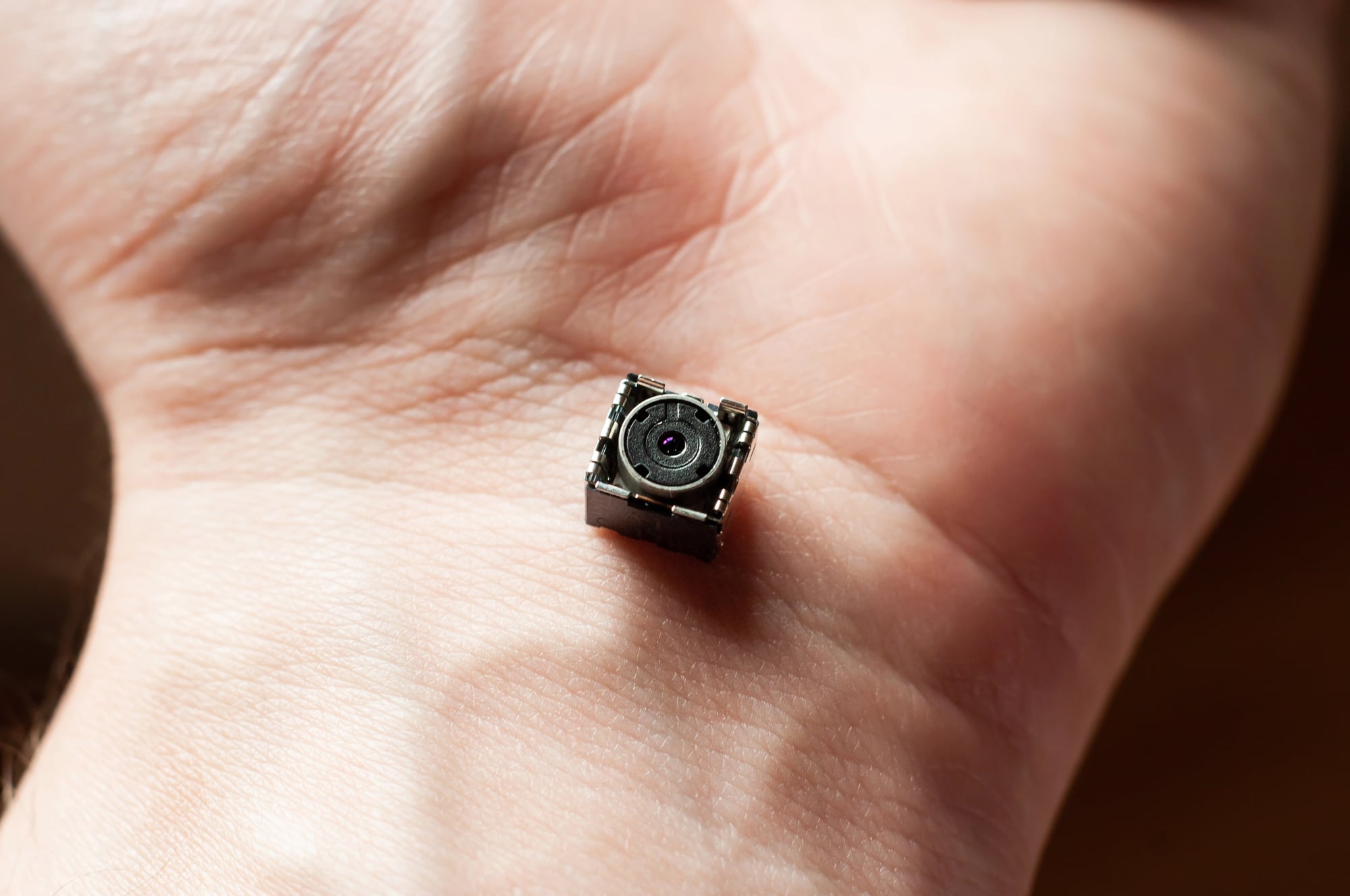
As photography technology improved, intelligence agencies developed a wide range of miniature cameras disguised as everyday objects. These devices appeared as pens, lighters, watches, or small household items.
The goal was simple: allow operatives to gather visual information while appearing completely ordinary. A pen resting in a jacket pocket or a lighter placed on a table could quietly contain a working camera lens.
Many of these devices used specially designed film cartridges engineered to fit inside extremely small casings.
Still, the creativity behind these gadgets often impressed engineers as much as intelligence officers. The ability to hide complex mechanical systems inside objects people handled every day required extraordinary precision and inventive thinking.
Dead Drop Containers
Passing information between spies has always been one of the most delicate parts of espionage work. To reduce the risk of face-to-face meetings, intelligence agencies developed hidden containers known as dead drops.
These containers were disguised as ordinary objects found in public spaces. Some looked like rocks, pieces of trash, or sections of brick.
Inside, a hollow compartment could store written instructions, microfilm, or small recording devices.
Agents would hide the container in a predetermined location, allowing another operative to retrieve the message later.
Even today, intelligence professionals still rely on variations of this method because it allows information to be exchanged without two people ever meeting directly.
Why These Gadgets Still Capture the Imagination
Secret spy tools show how curiosity meets global power struggles. Born in the Cold War, most gadgets emerged because spies pushed each other to extremes.
Impossible challenges drove inventors to build things that once felt like fiction. Wild ideas became real when engineers faced tough demands.
Even now, old methods linger in how spies operate. Modern gear runs on computers, space gadgets, or complex programs – still chasing the same idea.
Staying hidden while pulling secrets stays the core mission. Quiet watching matters just as much today.
Secrets shaped invention, back then. Odd tools from old spy days weren’t just smart builds – each hinted at lives lived behind layers.
A button could hold code; silence often meant planning. Hidden jobs hid inside common things.
Purpose bent around concealment, always. Even paperclips strained under meaning.
More from Go2Tutors!

- The Romanov Crown Jewels and Their Tragic Fate
- 13 Historical Mysteries That Science Still Can’t Solve
- Famous Hoaxes That Fooled the World for Years
- 15 Child Stars with Tragic Adult Lives
- 16 Famous Jewelry Pieces in History
Like Go2Tutors’s content? Follow us on MSN.