Famous Hoaxes And Pranks That Fooled the World
People have been tricking each other since the beginning of time, but some pranks were so well-executed that they fooled entire nations. These hoaxes made headlines, sparked debates, and left millions of people wondering how they ever fell for it.
Some were harmless fun while others caused genuine panic and confusion. Let’s look at some of the biggest tricks that actually worked on a massive scale.
The Cardiff Giant
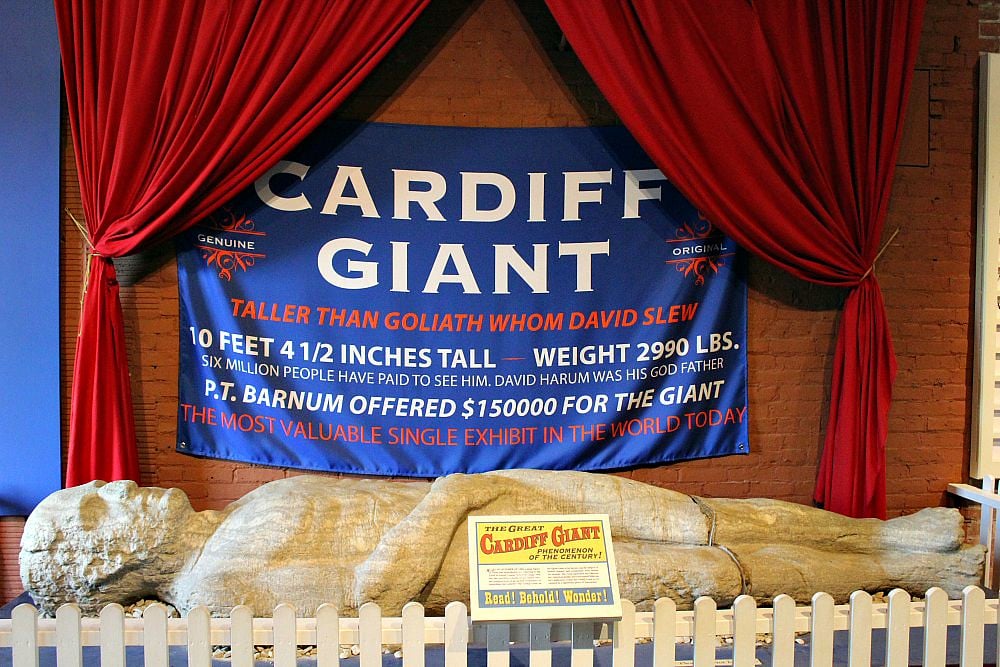
In 1869, workers digging a well in Cardiff, New York discovered what appeared to be a 10-foot-tall petrified man buried in the ground. Thousands of people paid money to see this ‘ancient giant,’ with some religious leaders claiming it proved stories from the Bible.
The truth came out a year later when the creator, George Hull, admitted he had carved the giant from gypsum as a joke to mock people who believed everything literally. Hull had buried it a year earlier specifically so it could be ‘discovered,’ and he made a fortune from admission fees before anyone caught on.
War of the Worlds radio broadcast

Orson Welles terrified America on October 30, 1938, with a radio adaptation of H.G. Wells’ science fiction novel. The broadcast was designed as a series of fake news bulletins reporting that Martians had landed in New Jersey and were destroying everything with heat rays.
Listeners who tuned in late missed the disclaimer that it was fiction and genuinely believed aliens were invading Earth. People fled their homes, called the police, and prepared for the end of the world.
Newspapers reported mass panic, though historians now believe the hysteria was somewhat exaggerated by media outlets angry that radio was becoming more popular than print.
The Piltdown Man
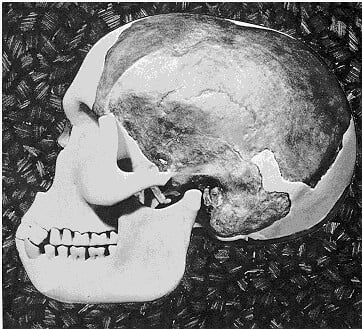
British scientists announced in 1912 that they had found the missing link between apes and humans in a gravel pit in Piltdown, England. The skull fragments appeared to show a creature with a human-like cranium and an ape-like jaw, exactly what evolution theory predicted. Scientists studied and debated the Piltdown Man for over 40 years until better testing methods in 1953 revealed it was a complete fake. Someone had taken a human skull and an orangutan jaw, stained them to look ancient, and filed down the teeth to make them match.
Crop circles
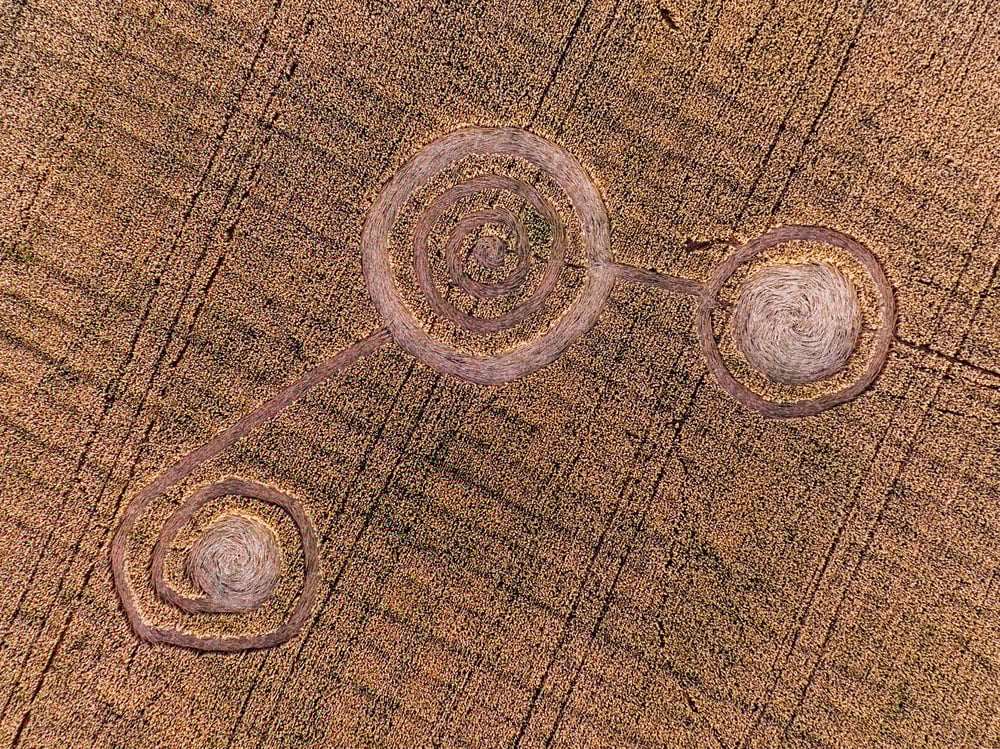
Mysterious patterns started appearing in English wheat fields during the 1970s, and people immediately jumped to conclusions about alien visitors. The perfectly geometric designs became increasingly complex over the years, with some stretching hundreds of feet across. UFO enthusiasts, scientists, and curious tourists flocked to England to study these phenomena. Then in 1991, two men named Doug Bower and Dave Chorley admitted they had created the circles using simple tools like planks and rope. They had started the whole thing as a joke in 1978 and kept it going for over a decade, laughing as the world came up with elaborate theories about their handiwork.
The Cottingley Fairies

Two young cousins in England took photographs in 1917 that appeared to show them playing with tiny winged fairies. Frances Griffiths and Elsie Wright used a camera to capture images of what looked like miniature people with wings dancing around their garden.
Even Sir Arthur Conan Doyle, the creator of Sherlock Holmes, believed the photos were genuine and wrote articles defending their authenticity. The girls kept up the story for over 60 years before finally admitting in the 1980s that they had simply cut fairy pictures out of a children’s book and held them up with hatpins.
The Surgeon’s Photograph

The most famous image of the Loch Ness Monster showed what appeared to be a long-necked creature rising out of the Scottish lake in 1934. The photograph, supposedly taken by a respectable London surgeon named Robert Kenneth Wilson, convinced countless people that a prehistoric monster lived in the lake.
The photo appeared in newspapers worldwide and sparked decades of Nessie-hunting expeditions. In 1994, a man named Christian Spurling confessed on his deathbed that he had helped create a fake monster using a toy submarine and a sculpted head, all as revenge against the Daily Mail newspaper.
The Great Moon Hoax

The New York Sun newspaper published a series of articles in 1835 claiming that a famous astronomer had discovered life on the moon. The stories described bat-winged humanoids, unicorns, and beavers that walked on two legs, all supposedly visible through a powerful new telescope.
Readers were fascinated, and the newspaper’s circulation skyrocketed as people rushed to buy copies. The Sun never officially admitted the hoax, but the reporter who wrote the articles later acknowledged he had made everything up to boost sales during a slow news period.
Spaghetti trees

The BBC fooled Britain on April Fools’ Day 1957 with a documentary showing Swiss farmers harvesting spaghetti from trees. The segment featured footage of people carefully plucking strands of pasta from tree branches and laying them out to dry in the sun.
Many British viewers had never seen spaghetti before, as it was still exotic in 1950s England, so they had no reason to doubt the report. Hundreds of people called the BBC asking how they could grow their own spaghetti trees, and the broadcaster supposedly told them to place a sprig of spaghetti in a tin of tomato sauce and hope for the best.
The Turk

A mechanical chess-playing machine toured Europe and America from 1770 to 1854, defeating nearly everyone who challenged it, including Benjamin Franklin and Napoleon Bonaparte. The Turk appeared to be an automated robot dressed in Turkish robes, sitting behind a wooden cabinet and moving chess pieces with mechanical precision.
Wolfgang von Kempelen, the inventor, would open various doors and drawers to show the complex machinery inside before each match. The secret was revealed after Kempelen’s death when people discovered that a skilled chess player had been hiding inside the cabinet the entire time, using magnets and levers to control the Turk’s arm movements.
Balloon Boy

In October 2009, the Heene family from Colorado reported that their six-year-old son Falcon had accidentally floated away in a homemade helium balloon shaped like a flying saucer. News helicopters followed the balloon for two hours as it drifted across Colorado, while millions of viewers watched the drama unfold on live television.
When the balloon finally landed, rescuers found it empty, sparking fears that the boy had fallen out. Falcon turned up hiding in the attic at home, and authorities quickly determined the whole thing had been staged by his parents to get publicity for a reality TV show they were trying to pitch.
Alien autopsy film
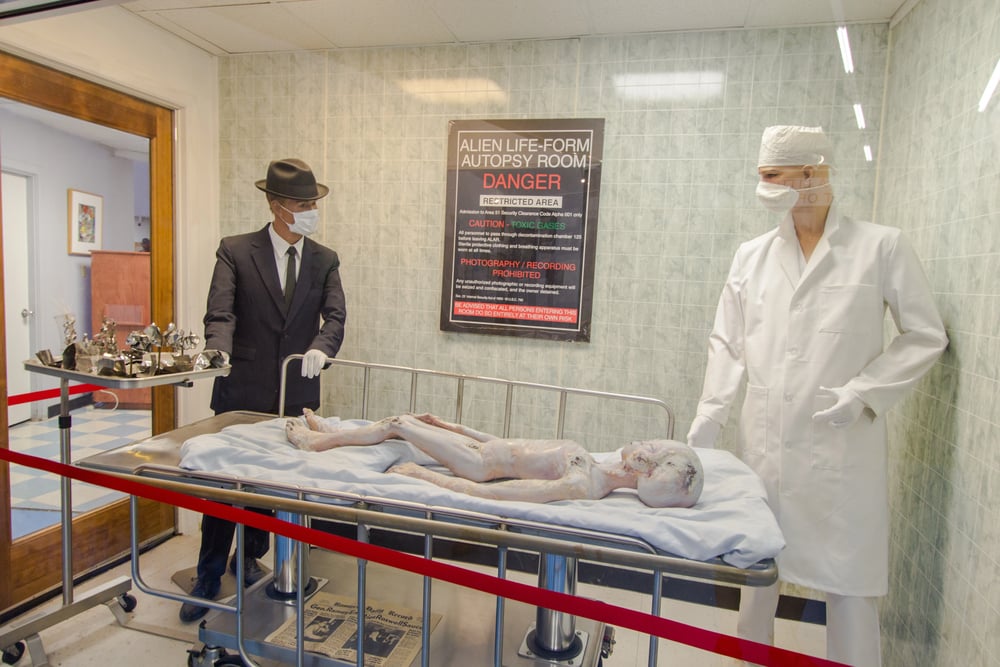
A black-and-white film surfaced in 1995 claiming to show military doctors performing an autopsy on an alien body recovered from the Roswell crash in 1947. The grainy footage appeared authentic to many viewers, showing figures in protective suits examining a humanoid creature with large eyes and six fingers.
Television networks around the world broadcast the film, and UFO researchers debated its legitimacy for years. The filmmaker Ray Santilli eventually admitted in 2006 that he had created the footage using animal organs, chicken entrails, and a dummy, though he still claimed he had seen a real alien autopsy film that had deteriorated.
The Hitler diaries

German magazine Stern paid nearly four million dollars in 1983 for what they believed were Adolf Hitler’s personal diaries, supposedly rescued from a plane crash in 1945. Historians and handwriting experts initially declared the 60 volumes authentic, and major news organizations prepared to publish excerpts.
The diaries contained mundane details about Hitler’s daily life and observations about World War II events. Chemical analysis soon revealed that the paper, ink, and glue were all manufactured after 1945, and the forger, Konrad Kujau, confessed to creating them over several years using modern materials and copying passages from published books about Hitler.
Bigfoot footage
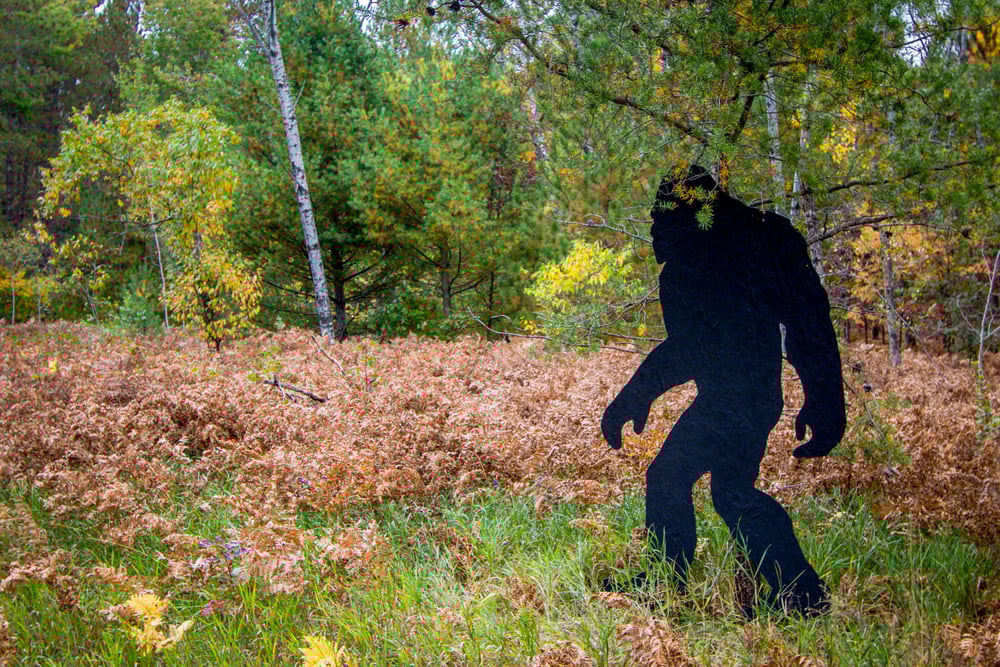
Roger Patterson and Robert Gimlin filmed what appeared to be a large, hairy, ape-like creature walking through a forest in California in 1967. The footage shows the creature turning to look at the camera before disappearing into the trees, and it remains the most analyzed piece of Bigfoot evidence ever recorded.
Believers point to the creature’s unusual gait and muscle movement as proof of authenticity. However, several people have claimed over the years to have worn the costume in the film, and costume experts have noted that the proportions match a modified gorilla suit available in the 1960s.
Taxil’s confession
Back then, Leo Taxil put out detailed stories during the 1890s saying Freemasons served the devil, carried out strange ceremonies with demons, even killed people. One tale featured a woman – Diana Vaughan – who said she once held power inside the group before becoming Catholic.
Churches and papers in both Europe and America treated Taxil’s claims like solid proof of secret Masonic horrors. But come 1897, he gathered reporters, stood up, confessed it was all made up just to laugh at how easily the Catholic Church believed nonsense; Diana? Never real at all.
The Trojan Horse Virus Hoax

A sudden wave of messages surged through inboxes during the 1990s, carrying fear instead of facts. Reading one particular email – marked ‘Good Times’ – was said to wipe out everything on a computer forever.
Because of these claims, countless individuals passed the alert along, trusting its urgency. Entire offices told staff to erase those emails unread.
Yet behind the panic sat nothing but fiction; no harmful code was ever attached. The rumor grew wilder each time someone hit forward.
In truth, it wasn’t malware spreading – it was a myth. This moment revealed how fast false ideas travel when masked as warnings.
Fooling us back then? It’s fooling us today, too

Folks believed those tricks simply because they craved wonder – maybe ghosts felt real, old ideas seemed confirmed, or a wild tale just sounded fun. Nowadays faking images takes seconds, yet checking facts does too.
What pulled crowds toward pixie snapshots and lunar monsters now fuels online lies spreading fast. The flaw sits not in how clever the lie looks, but in how eager we are to swallow it whole.
More from Go2Tutors!

- The Romanov Crown Jewels and Their Tragic Fate
- 13 Historical Mysteries That Science Still Can’t Solve
- Famous Hoaxes That Fooled the World for Years
- 15 Child Stars with Tragic Adult Lives
- 16 Famous Jewelry Pieces in History
Like Go2Tutors’s content? Follow us on MSN.