Famous inventors you didn’t learn about in school
When you think of great inventors, names like Thomas Edison, Alexander Graham Bell, and the Wright Brothers probably come to mind. These figures dominate history textbooks and museum exhibits, their stories told and retold until they become the face of human innovation. But the truth is, countless brilliant minds have shaped our modern world in ways that would shock you—and most of their names never made it into your classroom.
From Hollywood actresses who invented the technology behind Wi-Fi to mathematicians whose calculations sent humans to the moon, the real story of invention is far more diverse and fascinating than traditional education suggests. Many of these overlooked innovators faced barriers because of their gender, race, or simply bad timing, yet their contributions continue to impact your daily life in ways you’ve never realized.
Here is a list of 11 remarkable inventors whose stories deserve to be heard, whose innovations changed the world, and whose legacies have been hidden in the shadows for far too long.
Hedy Lamarr
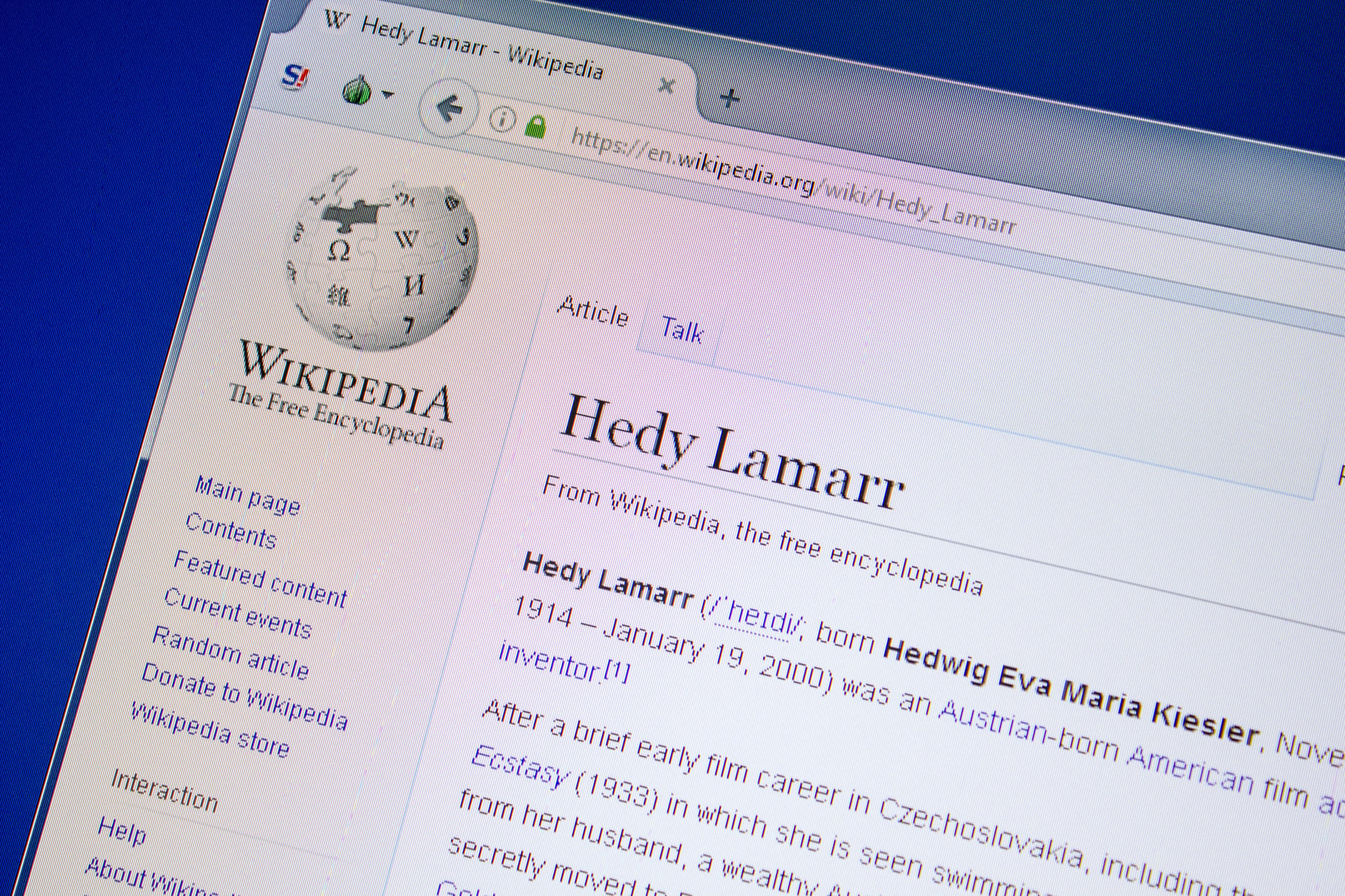
Most people remember Hedy Lamarr as a glamorous Hollywood actress from the 1930s and ’40s, starring in films like ‘Algiers’ and ‘Samson and Delilah.’ What they don’t know is that this Austrian-born beauty was also a brilliant inventor who laid the groundwork for modern wireless communication.
During World War II, she partnered with composer George Antheil to develop frequency-hopping spread spectrum technology, designed to prevent enemy forces from jamming Allied torpedo guidance systems. The U.S. Navy initially dismissed their 1942 patent as impractical, but decades later, this same technology became the foundation for Wi-Fi, Bluetooth, and GPS systems.
Katherine Johnson

Before computers did the math, there was Katherine Johnson—a brilliant mathematician whose precise calculations were so trusted that astronaut John Glenn specifically requested she verify the computer’s work before his historic 1962 orbital flight. Working at NASA during the space race, Johnson calculated trajectories for Project Mercury and the Apollo 11 moon landing, her work proving essential to getting astronauts safely to space and back.
Her mathematical genius helped America win the space race, yet her contributions remained largely unknown until the 2016 film ‘Hidden Figures’ brought her story to mainstream attention.
Like Go2Tutors’s content? Follow us on MSN.
Garrett Morgan

Traffic lights seem like such a basic part of city life that it’s hard to imagine someone actually had to invent them. Garrett Morgan, an African-American inventor and entrepreneur, created the three-position traffic signal after witnessing a severe accident between a car and a horse-drawn carriage.
His 1923 design included the crucial yellow warning light that gives drivers time to prepare for a red light. Morgan also invented an early gas mask that was used to rescue workers trapped in a tunnel explosion beneath Lake Erie in 1916, saving dozens of lives.
Grace Hopper

Computer programming as we know it exists because of Grace Hopper, a U.S. Navy rear admiral who revolutionized how humans communicate with machines. In the 1950s, she developed the first compiler for computer programming, which translated English-like instructions into machine code that computers could understand.
This breakthrough led to the creation of COBOL, one of the first high-level programming languages that made computers accessible to people who weren’t mathematicians or engineers. Without Hopper’s innovations, personal computers and user-friendly software might have remained science fiction for decades longer.
Norbert Rillieux

Sugar was once a luxury item so expensive that only the wealthy could afford it, partly because the refining process was incredibly dangerous and inefficient. Norbert Rillieux, a free Black man educated in Paris, revolutionized sugar production in the 1840s with his multiple-effect evaporator system.
His invention used steam and vacuum chambers to safely and efficiently extract sugar from sugarcane juice, dramatically reducing costs and making sugar accessible to ordinary people. Rillieux’s evaporation principles are still used today in industries ranging from food processing to pharmaceuticals, making modern manufacturing possible.
Like Go2Tutors’s content? Follow us on MSN.
Stephanie Kwolek

Kevlar is five times stronger than steel by weight, yet most people have never heard of Stephanie Kwolek, the American chemist who accidentally discovered this remarkable material in 1965. While working at DuPont, she was trying to create lightweight fibers for tire reinforcement when she stumbled upon a cloudy, unusual solution that other scientists might have thrown away.
Her curiosity led to testing this strange substance, which turned out to be incredibly strong and heat-resistant. Today, Kevlar protects police officers and soldiers in body armor, reinforces everything from bicycle tires to racing sails, and even makes better frying pans.
Mary Anderson

Every time you turn on your windshield wipers during a rainstorm, you’re using Mary Anderson’s 1903 invention. During a visit to New York City, this Alabama real estate developer noticed that streetcar drivers had to stop frequently to manually clear snow and ice from their windshields.
She designed a spring-loaded arm with a rubber blade that could be operated from inside the vehicle to keep the windshield clear. Car manufacturers initially rejected her idea as a dangerous distraction, but by 1916, windshield wipers had become standard equipment on American automobiles.
Josephine Cochrane

The dishwasher exists because a wealthy Illinois woman got tired of her servants breaking her fine china. Josephine Cochrane’s 1886 invention used water jets and a motorized rack system to clean dishes more thoroughly and safely than hand washing.
She initially marketed her machine to hotels and restaurants, where it proved so effective that word spread quickly through the hospitality industry. While home dishwashers didn’t become common until the 1950s, Cochrane’s basic design principles still guide modern dishwasher engineering.
Like Go2Tutors’s content? Follow us on MSN.
Margaret Knight

Paper bags with flat bottoms are so common that it’s impossible to imagine shopping without them, but they require genuine innovation to create. Margaret Knight invented the machine that automatically folded and glued these square-bottom bags in 1867, revolutionizing packaging and retail.
When she applied for her patent, a man named Charles Annan tried to steal her design, claiming that a woman couldn’t have invented such a complex machine. Knight successfully defended her patent in court, proving her invention with detailed notes and a working model she had built herself.
Sarah Boone

The ironing board seems like such a simple concept, but it took real ingenuity to perfect. Sarah Boone, born into slavery, became a dressmaker in Connecticut and grew frustrated with trying to iron fitted women’s clothing on flat, rectangular boards.
In 1892, she patented an improved ironing board with a narrow, curved shape that perfectly fit into sleeves and around the fitted waists that were fashionable at the time. Her design made it possible to create wrinkle-free garments efficiently, supporting the booming textile industry of the late 1800s.
Alice Parker
Central heating systems that keep millions of homes warm trace their origins to Alice Parker’s 1919 patent for a natural gas heating furnace. Unlike the dangerous wood-burning and coal-heating systems common at the time, Parker’s design used natural gas and a series of ducts to distribute heat evenly throughout a building.
Her invention made home heating safer, more efficient, and more convenient, laying the foundation for the central heating systems that are now standard in homes and offices across the country.
Like Go2Tutors’s content? Follow us on MSN.
The Legacy Lives On
These inventors didn’t just create gadgets—they solved problems that improved daily life for millions of people. Their innovations connect us to each other, keep us safe, make our work easier, and even help us explore space.
Many faced discrimination, limited resources, or simply lived in times when their contributions weren’t valued, yet they persevered and changed the world anyway. Today’s classrooms are slowly beginning to include these stories, recognizing that innovation comes from all backgrounds and walks of life.
Understanding this fuller picture of invention doesn’t just give credit where it’s due—it shows young people that they too can be inventors, regardless of their background or the barriers they might face.
More from Go2Tutors!

- 16 Historical Figures Who Were Nothing Like You Think
- 12 Things Sold in the 80s That Are Now Illegal
- 15 VHS Tapes That Could Be Worth Thousands
- 17 Historical “What Ifs” That Would Have Changed Everything
- 18 TV Shows That Vanished Without a Finale
Like Go2Tutors’s content? Follow us on MSN.