Famous Landmarks That Were Almost Destroyed
The world’s most recognizable buildings and monuments have survived wars, natural disasters, and countless close calls throughout history. Many of these iconic structures came within inches of being wiped off the map forever.
Some faced demolition crews with wrecking equipment ready to go, while others barely survived bombs, fires, and earthquakes that should have leveled them completely. Here are some incredible stories of famous landmarks that nearly vanished from existence.
The Eiffel Tower

The Eiffel Tower was supposed to come down in 1909, just 20 years after it went up. Parisians hated the iron structure when it first appeared, calling it an eyesore that ruined the city’s beautiful skyline.
The original permit only allowed the tower to stand for two decades, and city officials planned to dismantle it piece by piece. Gustave Eiffel saved his creation by proving it made a perfect radio antenna, which convinced the government to keep it standing.
Without that last-minute radio equipment installation, Paris would have lost its most famous symbol before World War I even started.
The Parthenon
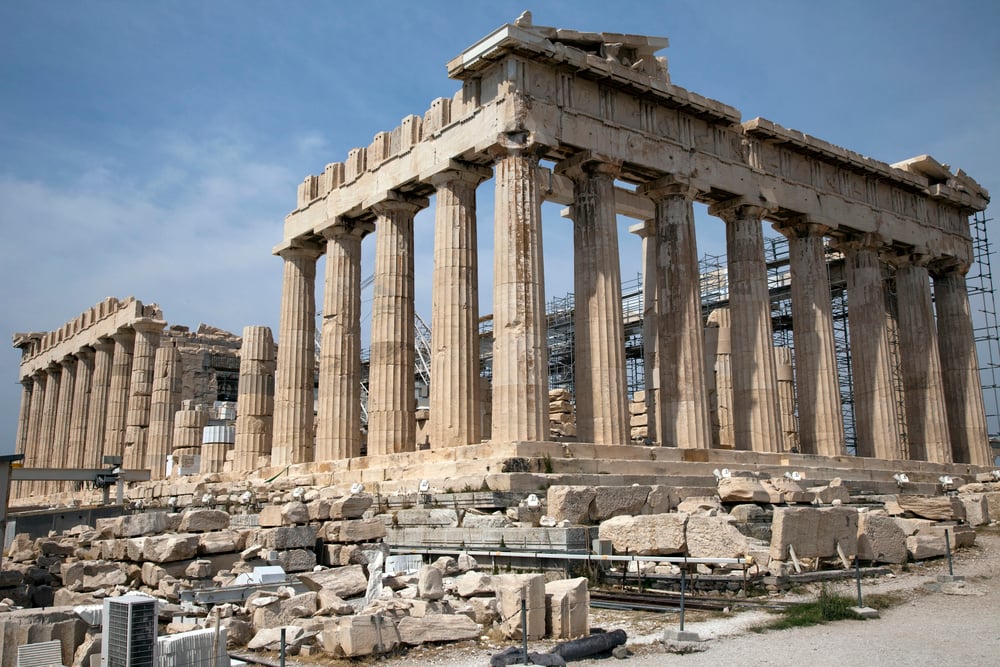
The Parthenon survived for over 2,000 years with relatively minor damage until 1687 when it almost disappeared completely. Venetian forces attacked Athens and fired cannonballs directly at the ancient temple, which the Ottomans were using to store gunpowder at the time.
One lucky shot hit the powder storage, causing a massive explosion that blew the roof off and destroyed most of the interior columns. The blast killed hundreds of people sheltering inside and left the building in the damaged state tourists see today.
Before that explosion, the Parthenon was still mostly intact and could have survived another thousand years.
Big Ben’s clock tower

German bombers targeted Big Ben repeatedly during World War II, and one bomb actually hit the tower in 1941. The explosion went off just above the clock face, blowing out windows and damaging the roof structure.
Shrapnel from the blast punctured the clock’s mechanism, but somehow the famous bells kept ringing throughout the attack. Engineers found that if the bomb had landed just a few feet lower, it would have destroyed the entire clock mechanism and possibly brought down the tower.
The damage took years to repair, but the tower stayed standing through the entire war.
The Colosseum

Lightning strikes, earthquakes, and stone thieves nearly erased the Colosseum from Rome over the centuries. Medieval builders treated the ancient arena like a free construction supply store, carting away tons of marble and stone to build churches and palaces across the city.
By the 1700s, more than half of the original structure had been stripped away or had collapsed from neglect. Pope Benedict XIV finally stopped the destruction by declaring the Colosseum a sacred Christian site in 1749.
Without that declaration, Romans probably would have kept dismantling it until nothing remained but the foundation.
The Statue of Liberty

The Statue of Liberty almost fell apart from rust and corrosion by the 1980s, with some sections so weak that a strong wind could have knocked pieces off. The iron framework inside the copper skin had corroded so badly that engineers found the statue’s arm was in danger of falling off into the harbor.
Water had been leaking inside for decades, and the original iron supports were literally turning to dust. The French company that built Lady Liberty’s original framework had to completely rebuild the internal structure between 1984 and 1986.
If the restoration had been delayed even five more years, a major storm could have toppled the entire statue.
Angkor Wat

Angkor Wat disappeared under jungle growth for centuries after the Khmer Empire collapsed, and trees nearly pulled the entire temple complex apart. Massive roots from fig and silk-cotton trees grew through the stone blocks, slowly pushing walls apart and cracking foundations.
The Khmer Rouge regime later used the temple grounds as a military base and weapons storage area in the 1970s. Landmines planted around the complex killed several archaeologists and made restoration work almost impossible for years.
Teams are still working to remove trees and stabilize structures that are on the verge of collapse.
The Leaning Tower of Pisa

The Leaning Tower of Pisa tilted so far by 1990 that engineers gave it less than a decade before it would topple over on its own. The tower was leaning more than 15 feet from vertical, and the tilt was increasing by about one millimeter every year.
Italian officials closed the tower to tourists and started a desperate 11-year effort to reduce the lean without straightening it completely. Engineers removed soil from under the high side and added 600 tons of lead weights to the north side as a temporary fix.
The tower now leans about 15 inches less than it did before the work started, buying it another 200 years of stability.
Mount Rushmore

Dynamite cracks and water damage nearly destroyed Mount Rushmore’s presidential faces within decades of their completion in 1941. The sculptor used over 400 tons of dynamite to blast the faces into the granite, leaving thousands of cracks throughout the rock.
Water seeping into these cracks freezes in winter and expands, slowly pushing the rock apart from the inside. Workers have to inspect and repair the monument constantly, filling cracks with sealant to prevent chunks of the faces from falling off.
A preservation project in the 1990s found that parts of Thomas Jefferson’s face were close to breaking away from the mountain.
Notre-Dame Cathedral

The 2019 fire at Notre-Dame came within 30 minutes of causing a complete collapse that would have destroyed the 850-year-old cathedral forever. Flames reached the wooden roof structure and quickly spread across the entire top of the building, causing the iconic spire to crash through the ceiling.
The stone vaults below the burning roof started to crack from the intense heat, and if they had failed, the walls would have collapsed inward. Firefighters made a desperate decision to spray water directly on the vaults, which could have caused them to shatter, but it was the only way to cool them down fast enough.
The cathedral’s bell towers were minutes away from catching fire when crews finally got the blaze under control.
The Sydney Opera House

The Sydney Opera House construction almost bankrupted Australia and came close to being abandoned as an unfinished concrete skeleton. The revolutionary shell design was so complicated that engineers couldn’t figure out how to build it for years after construction started.
Costs skyrocketed from an estimated seven million dollars to over 100 million, and the Danish architect Jørn Utzon quit the project after constant fights with the government. Many officials wanted to tear down what had been built and start over with a simpler design.
The building finally opened in 1973, 10 years behind schedule, and Australia came within a vote of canceling the entire project multiple times.
Machu Picchu

Machu Picchu sat empty and forgotten for 400 years, giving nature plenty of time to reclaim the Inca city and hide it from the world. Earthquakes damaged many structures, and landslides buried entire sections of the site under tons of dirt and rocks.
When explorer Hiram Bingham arrived in 1911, he found buildings so overgrown with vegetation that he could barely tell they were there. Local farmers were already dismantling some structures to use the stones for their own buildings.
If Bingham had shown up 20 years later, much of the site might have been stripped away or buried too deep to recover.
The Golden Gate Bridge

The Golden Gate Bridge almost collapsed during construction when a section of scaffolding tore loose and fell into the safety net below. The net saved 19 workers from plunging into the water, but the weight of the falling scaffolding ripped the net from its moorings.
Ten men who were standing on the net at the time died when it gave way and fell 200 feet into the bay. The accident happened in 1937, just months before the bridge was set to open, and some engineers wanted to stop construction entirely.
The bridge survived and opened on schedule, but that safety net failure showed how close the entire project came to disaster.
Petra

Petra’s famous Treasury building faces ongoing destruction from flash floods that pour through the narrow canyon entrance during rainstorms. The rose-red sandstone facade is also slowly dissolving from wind erosion and salt damage that eats away at the carved details.
Bedouin families lived inside many of Petra’s structures until the 1980s, using fires for cooking that blackened walls and weakened the stone. Tourists touching the soft sandstone have worn away carved details on the lower sections of buildings.
Modern drainage systems now divert floodwater away from the Treasury, but the building loses a little more definition every year.
The Great Wall of China

Large sections of the Great Wall have crumbled into piles of rubble, and nearly two-thirds of the original structure has disappeared completely. Local villagers dismantled parts of the wall for centuries to get building materials for their homes and farms.
The worst damage happened during China’s Cultural Revolution when portions of the wall were deliberately destroyed as symbols of old imperial rule. Weather and plant roots continue to break apart sections that survived human destruction.
Some parts of the wall are now just low mounds of dirt that barely rise above the ground.
Stonehenge

A single huge stone crashed down long ago, back in 1797, while others teetered dangerously close to falling by the 1900s. Several stood tilted so sharply that wind or time might have pushed them over without warning.
Visitors during the Victorian era broke off bits of the megaliths, taking fragments home; names etched deeply still mark some surfaces even now. Concrete reinforcements quietly held key parts together after engineers stepped in from 1919 through 1964.
Had those fixes never happened, scattered chunks on uneven ground may be all that remain today.
The Taj Mahal

Yellowing now marks the Taj Mahal’s bright marble, thanks to dirty air plus downpours laced with acid. Cracks have begun spreading through its frame, hinting at deeper trouble beneath.
Down below, where wood supports sleep in river mud along the Yamuna’s edge, decay creeps in – water levels sank too far, leaving timber exposed. Those beams carry everything; should they weaken further, sinking becomes likely, or worse – a slow split across stone walls.
Over time, officials tested fixes like thick clay wraps meant to lift grime from surfaces. Yet experts warn one truth plainly: unless foundations gain serious reinforcement, pieces may fall by mid-century.
On their feet, despite it all

Survival wasn’t planned. A sudden choice here, a twist of fate there – these places stayed standing by narrow margins.
Storms shook some to their core. Others slipped near destruction because someone looked away too long.
That visitors walk through them now feels less like certainty, more like an accident. Each building dodged being erased, fading into blurbs beneath dusty images.
What remains stands not because it had to, but because it somehow did.
More from Go2Tutors!

- The Romanov Crown Jewels and Their Tragic Fate
- 13 Historical Mysteries That Science Still Can’t Solve
- Famous Hoaxes That Fooled the World for Years
- 15 Child Stars with Tragic Adult Lives
- 16 Famous Jewelry Pieces in History
Like Go2Tutors’s content? Follow us on MSN.