Legendary concerts With massive crowds
Some concerts attract a few thousand fans. Others pull in tens of thousands.
And then there are the shows that draw crowds so massive they make history. These events turn beaches into seas of people, transform city parks into packed masses of humanity, and create gatherings so large they can be seen from space.
The logistics alone seem impossible, yet somehow musicians have managed to perform for millions at once.
Here are 16 legendary concerts where the crowds reached unbelievable numbers.
Rod Stewart at Copacabana Beach

Rod Stewart holds the Guinness World Record for the largest free concert audience ever. On New Year’s Eve in 1994, he performed on Copacabana Beach in Rio de Janeiro for around 3.5 million people.
The beach stretched for miles with crowds packed shoulder to shoulder, though many came for the New Year’s fireworks as much as the music. Stewart performed hits like Maggie May, Da Ya Think I’m Sexy, and Sailing while standing on a stage that required 200 speakers and 16 giant video screens.
Security personnel numbered 10,000 just to manage the flow of humanity along the beachfront. The show started at around 10:45 PM and ran past midnight into 1995, making it one of the most attended single-artist performances in history.
Jean-Michel Jarre in Moscow

French electronic music pioneer Jean-Michel Jarre attracted roughly 3.5 million people to a free concert in Moscow in 1997. The event celebrated the city’s 850th anniversary and took place near the State University of Moscow.
Jarre’s concerts were known for elaborate light shows, lasers, and projections that turned entire cities into backdrops for his performances. The massive crowd gathered to witness both the music and the visual spectacle that accompanied it.
This wasn’t even Jarre’s first million-person show, as he had already performed for huge crowds in Paris and Houston throughout the 1980s and 1990s. His ability to draw enormous free audiences made him one of the most-watched live performers of his era.
Jorge Ben Jor at Copacabana Beach

Brazilian musician Jorge Ben Jor performed for approximately 3 million people on Copacabana Beach for New Year’s Eve 1993. This show happened just one year before Rod Stewart’s record-breaking performance at the same location.
Ben Jor’s mix of samba, funk, and bossa nova resonated perfectly with the Brazilian crowd. The beach setting allowed for the kind of massive gathering that would be impossible in most traditional venues.
Free concerts on Copacabana became a New Year’s tradition in Rio, with the city using these events to boost tourism and showcase Brazilian culture. The combination of music, fireworks, and beach celebration created an atmosphere that attracted people from across South America.
Jean-Michel Jarre in Paris

Jarre’s 1990 concert in Paris for Bastille Day drew around 2.5 million people. The show took place at La Défense, the massive business district on the western edge of Paris.
Jarre transformed the modern skyscrapers and open spaces into a stage for his electronic music and light displays. The performance celebrated the anniversary of the French Revolution with a thoroughly modern spectacle.
Parisians and visitors flooded the area to witness the free show, which featured lasers bouncing off buildings and fireworks synchronized to music. This concert demonstrated how electronic music could fill enormous outdoor spaces in ways that traditional rock bands couldn’t match.
Lady Gaga at Copacabana Beach

Lady Gaga performed for somewhere between 2.1 and 2.5 million people at Copacabana Beach in May 2025. The concert was part of her Chromaball tour and attracted fans from across Latin America.
Brazilian singer Anitta made a surprise appearance during the show, sending the already excited crowd into even greater celebration. Rio’s tourism agency and concert promoters reported this as the largest standalone concert by a female artist in history.
The beach location once again proved perfect for accommodating millions of people who wanted to see a global superstar perform. Gaga’s elaborate stage production and hits spanning her entire career made the event memorable for those lucky enough to attend.
Monsters of Rock in Moscow

The 1991 Monsters of Rock festival at Tushino Airfield in Moscow drew around 1.6 million people. This free concert featured Metallica, AC/DC, Pantera, and other heavy metal acts performing for Russian fans who had been cut off from Western rock music for decades.
The Soviet Union was collapsing, and this concert represented newfound freedom and cultural openness. Crowd estimates vary widely, with some sources claiming even higher numbers, but most agree it exceeded 1.5 million.
The massive gathering took place just months before the USSR officially dissolved. Footage from the concert shows an ocean of people extending far beyond what the eye can see, with young Russians experiencing the kind of music their parents’ generation had been denied.
The Rolling Stones at Copacabana Beach

The Rolling Stones performed for approximately 1.5 million people at Copacabana Beach in February 2006. This free concert happened during their A Bigger Bang Tour and became one of the most attended Stones performances ever.
Mick Jagger and the band delivered a set of their greatest hits to a crowd that filled the famous beach. Rio’s tourism officials used the concert to promote the city internationally, knowing that images of the massive crowd would be broadcast worldwide.
The Stones had performed for large audiences throughout their career, but this show reached a scale few rock bands ever experience. Copacabana’s ability to accommodate such massive gatherings made it the perfect venue for legendary acts looking to play for maximum crowds.
Live 8 Philadelphia

Folks filled the Benjamin Franklin Parkway by the hundreds of thousands one summer day in 2005. That stretch of road, usually just lanes and sidewalks, became a sea of sound and motion.
Music poured out across the city thanks to names like Stevie Wonder, then Kanye West, followed by Alicia Keys, among more. Awareness, not tickets, drove the whole thing forward.
Around the globe, similar crowds gathered under the same cause. Blocks downtown turned into stages without walls.
The air hummed with voices demanding change. Folks running things timed the event to line up with others happening at once in places like London and Paris, plus a bunch more worldwide.
What unfolded in Philadelphia turned out bigger than any other Live 8 spot, people packed tight along the parkway, then kept spreading into nearby roads.
Jean Michel Jarre In Houston

Few saw it coming, yet over a million turned up when Jarre lit up Houston in 1986. That night, towering buildings became his canvas, glowing with colors no one had seen before.
A birthday for the city – also Texas turning one hundred fifty – became something louder than anyone expected. People came by the thousands, drawn not just by sound but by how tall glass walls danced with light.
Not every artist could pull off grand moments like that, without losing meaning in size. Still, he did – he filled streets with wonder, tied to rhythm and beams cutting through dark air.
Since then, some cities have looked at celebrations differently.
Madonna on Copacabana Beach

Under blue skies in May 2024, Madonna sang before nearly 1.6 million people on Copacabana Beach. Closing out her Celebration Tour, the event stood among the largest ever gathered for a woman onstage.
Songs stretched across forty years – from early tracks like Like a Virgin to newer ones – filled the air. Her signature mix of bold costumes, complex dance moves, and grand visuals shaped the performance.
Though built for stadiums, it shifted smoothly to fit the open sands and sea behind her. Crowds flocked after Rio’s tourism team pushed the show hard.
Big name like hers? Guaranteed eyes from everywhere. Her fame, mixed with sand and ocean, turned it into a moment people talked about all year.
Few concerts felt quite like this one – huge, loud, right by the water.
Woodstock 1969

The original Woodstock Festival in August 1969 attracted somewhere between 400,000 and 500,000 people to a dairy farm in Bethel, New York. Organizers had expected maybe 50,000 attendees but were overwhelmed as young people flooded into the area for three days of peace and music.
The festival featured Jimi Hendrix, Janis Joplin, The Who, Grateful Dead, and many other legendary acts. Traffic jams stretched for miles as concert-goers abandoned their cars and walked to the site.
The festival became free when organizers realized they couldn’t possibly control entry or collect tickets from such massive crowds. Woodstock became a defining moment for an entire generation and remains the most famous rock festival in history.
Isle of Wight Festival 1970

The 1970 Isle of Wight Festival in England attracted more than 600,000 people, making it larger than Woodstock. The event featured Jimi Hendrix in one of his final performances before his death, along with The Who, The Doors, and many others.
The festival took place on a small island off the southern coast of England, creating logistical nightmares as hundreds of thousands of people tried to reach the venue. Many attendees didn’t pay, breaking down fences to get inside.
The massive crowds and chaos that ensued led to a ban on large festivals on the Isle of Wight that lasted for decades. Despite the problems, the festival represented the peak of the UK’s festival culture during the early 1970s.
Diana Ross in Central Park

Diana Ross performed for an estimated 1.2 million people in New York’s Central Park in July 1983. This free concert was originally scheduled for one night but was rained out, leading to a rescheduled performance the following day.
The massive crowd filled the Great Lawn and surrounding areas, with people climbing trees and standing on rocks to get better views. Ross’s performance included her Motown hits and demonstrated her ability to command enormous audiences.
Central Park had hosted large concerts before, but the sheer size of the Diana Ross crowd set new records for the venue. The concert became legendary in New York City history as one of the largest gatherings ever in the park.
Garth Brooks in Central Park

Country music superstar Garth Brooks performed for around 750,000 to 1 million people in Central Park in August 1997. This free concert was broadcast live on HBO and marked a rare appearance by a major country artist in New York City.
Brooks’s popularity had reached its peak during the mid-1990s, and the massive turnout proved that country music appealed far beyond its traditional Southern base. The Great Lawn couldn’t contain everyone, and crowds spread throughout the surrounding park areas.
Brooks performed his biggest hits for an audience that included both longtime country fans and curious New Yorkers who wanted to see what the fuss was about.
Queen performs at Hyde Park

Back in September 1976, Queen played to a sea of faces – about two hundred thousand – at London’s Hyde Park. No tickets needed; it was on the heels of their growing fame, lighting up open-air stages with flair.
Freddie Mercury stood tall, voice booming across the grass while charm poured off the stage. That day carved their name deeper into rock history, proving they belonged among the UK’s finest.
Handling such vast crowds? They made it look effortless, loud, and real. Fans filled Hyde Park long before sunset, drawn by something more than just music.
That day, the air carried a rare kind of energy, thick with anticipation. Not every band could pull crowds like that, yet Queen did so effortlessly.
Their sound cut through the open space like nothing else had before. People stood shoulder to shoulder, not because they had to, but because they wanted to be part of it.
This wasn’t merely another concert – it became legend without trying.
Paul McCartney Performs at Maracana Stadium

That April night in 1990, Paul McCartney stood on stage inside Maracana Stadium under open sky. Close to 184,000 tickets had been sold, each one granting entry to witness a legend live.
Every level of the vast football arena pulsed with bodies, voices, energy. Not since then had any solo musician pulled such numbers for one gig.
Songs stretched back through decades – some born during Beatlemania, others shaped long after. His voice carried across the crowd like something familiar yet fresh.
Long past the band’s end, he still drew nations into stadiums. The tour moved city by city, continent by continent, proving reach does not fade just because time passes.
Fans from Brazil filled the air with voices, joining in melodies passed down through decades. Proof of McCartney’s lasting draw? Look no further than the night Maracana roared louder than memory.
Why crowds still gather
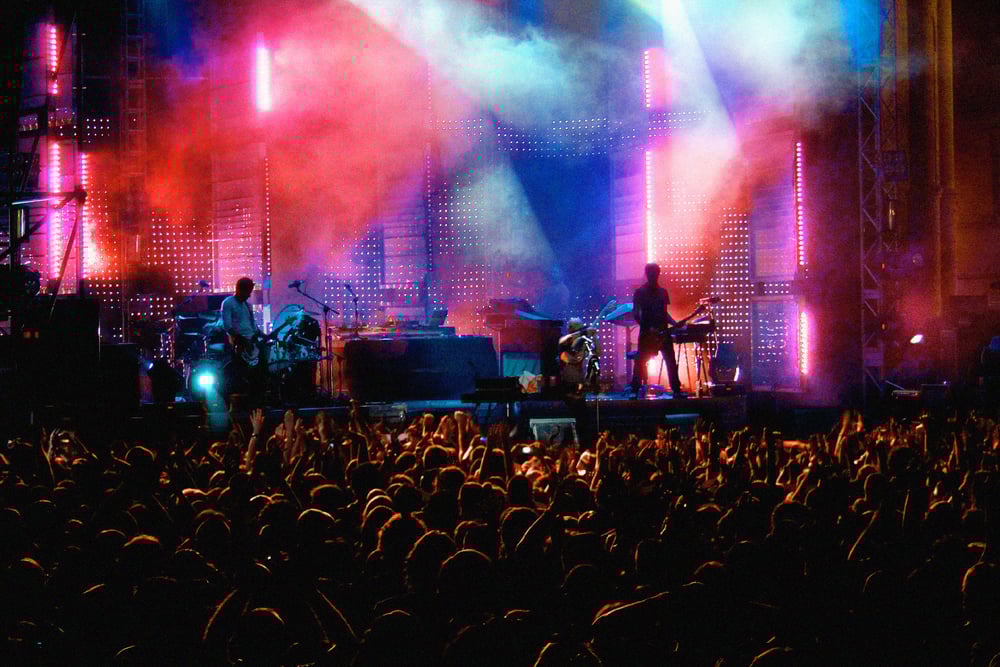
Few thought live shows could survive the screen era. Yet bodies pack fields, drawn by rhythm more than comfort.
Free gigs on coastlines pull folks in droves – no entry slip needed. Shared sound turns strangers into neighbors for a night.
Whole regions later recall those nights like old dreams. Today’s tools make it possible to have sharper audio, huge displays, moving lights – things earlier times never saw.
Still, people keep coming together, drawn by rhythm, joy, loud songs echoing across fields. Big events where thousands stand shoulder to shoulder under open skies won’t fade anytime soon.
More from Go2Tutors!

- The Romanov Crown Jewels and Their Tragic Fate
- 13 Historical Mysteries That Science Still Can’t Solve
- Famous Hoaxes That Fooled the World for Years
- 15 Child Stars with Tragic Adult Lives
- 16 Famous Jewelry Pieces in History
Like Go2Tutors’s content? Follow us on MSN.



