Famous Landmarks Then and Now
The world’s most recognizable places have been standing for decades, sometimes even centuries. They’ve watched empires rise and fall, survived wars, weathered storms, and witnessed millions of visitors come and go.
But these landmarks haven’t stayed frozen in time. Let’s take a walk through history and see how some of the planet’s most famous spots have transformed over the years.
The Eiffel Tower

When Gustave Eiffel’s iron lattice tower first pierced the Paris skyline in 1889, Parisians hated it. Critics called it an eyesore and demanded it be torn down after the World’s Fair ended.
The structure was only supposed to stand for 20 years, but its usefulness as a radio transmission tower saved it from demolition. Today, this once-despised monument welcomes about seven million visitors annually and has become the ultimate symbol of France itself.
The Statue of Liberty

Lady Liberty didn’t always sport that distinctive green patina we all recognize today. When France gifted the statue to America in 1886, she gleamed with the bright copper color of a new penny.
The green coating developed gradually over about 30 years as the copper oxidized in the salty harbor air. Some people wanted to restore the original copper shine in the 1980s, but officials decided the green had become too iconic to change.
The Great Wall of China

This massive fortification has crumbled significantly since its construction over various dynasties. Large sections have disappeared entirely, victims of erosion, theft of building materials, and simple neglect.
The parts tourists visit today, particularly near Beijing, were heavily reconstructed in the 1950s and later decades. Many remote sections still lie in ruins, slowly being reclaimed by the mountains they once protected.
Times Square

A century ago, Times Square was actually called Longacre Square and served as the center of New York’s carriage industry. The area transformed after The New York Times moved its headquarters there in 1904, bringing with it the famous New Year’s Eve orb drop tradition.
What was once dominated by theaters and relatively modest electric signs has evolved into a blinding canyon of digital billboards and tourist shops. The square was even pedestrianized in 2009, closing it to most vehicle traffic.
The Leaning Tower of Pisa
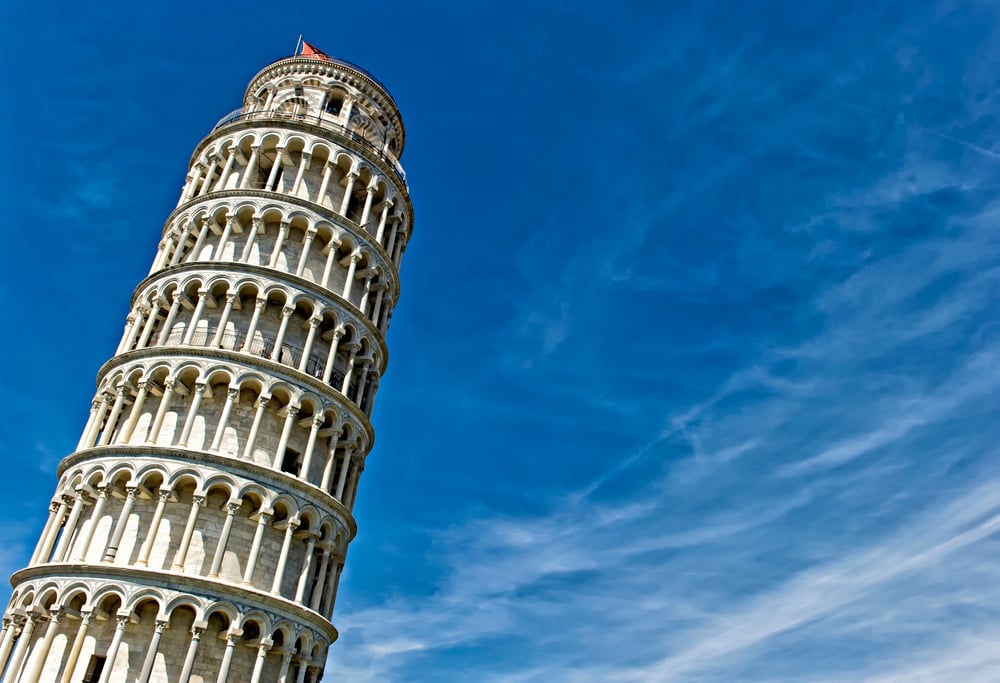
This famous tower has actually been straightened a bit, though it still leans plenty. Engineers worked from 1990 to 2001 to reduce the tilt by about 17 inches, ensuring the 800-year-old bell tower wouldn’t topple over.
Before the intervention, the tower was leaning so severely that it had to be closed to visitors for over a decade. The structure now leans at about the same angle it did in 1838, which means it should remain stable for at least another 200 years.
Mount Rushmore

The four presidential faces carved into South Dakota’s Black Hills look pretty much the same as when they were completed in 1941, but the surrounding area tells a different story. What was once a remote mountain accessed by rough roads now features a sprawling visitor center, museum, and parking facilities.
The monument sits on land considered sacred by the Lakota Sioux, and a competing memorial to Crazy Horse has been under construction on a nearby mountain since 1948. That project, when finished, will dwarf Rushmore in size.
The Colosseum

Rome’s ancient amphitheater has lost about two-thirds of its original structure over the past 2,000 years. Earthquakes damaged it severely, and for centuries, people treated the Colosseum as a convenient quarry, hauling away its stones to build churches and palaces across Rome.
The arena floor that once hosted gladiator fights has completely disappeared, revealing the underground passages where fighters and animals waited. Modern restoration efforts have been ongoing since the 1990s, trying to preserve what remains of this crumbling giant.
Niagara Falls

The falls themselves look similar to old photographs, but the experience of visiting them has changed dramatically. In the early 1900s, the area around Niagara was an industrial zone with factories and power plants cluttering the views.
Today, the Canadian side features a tourist strip that resembles a smaller Las Vegas, complete with casinos and wax museums. The actual water flow is now controlled and reduced at night so hydroelectric plants can generate power, meaning the thundering falls you see during the day are partly turned off after dark.
Machu Picchu

This Incan citadel remained hidden from the outside world until American historian Hiram Bingham brought it to international attention in 1911. Back then, the ruins were covered in thick vegetation and local families were actually living among the ancient structures.
Today, the site receives about 1.5 million visitors per year, which has caused significant wear on the stone pathways and structures. Peru now limits daily visitors and requires them to follow specific routes to protect the 600-year-old ruins from further damage.
The Sphinx

Napoleon’s soldiers didn’t actually shoot off the Sphinx’s nose during target practice, despite the popular legend. The nose was already missing when they arrived, likely destroyed centuries earlier by religious iconoclasts.
What has changed is the amount of the Sphinx buried in sand over the millennia. The monument has been excavated and re-excavated multiple times, most recently in the 1920s and 1930s.
Modern Cairo has also crept much closer to the Giza plateau, replacing the desert isolation the Sphinx once enjoyed.
Golden Gate Bridge

San Francisco’s famous orange bridge wasn’t supposed to be orange at all. The distinctive ‘International Orange’ color was originally just the primer coat, but the consulting architect liked it so much that it became permanent.
When the bridge opened in 1937, it was the longest suspension bridge in the world and charged a 50-cent toll. Today, it costs over eight dollars to cross, and the bridge requires constant maintenance, including a never-ending paint job that starts over as soon as workers finish.
Stonehenge
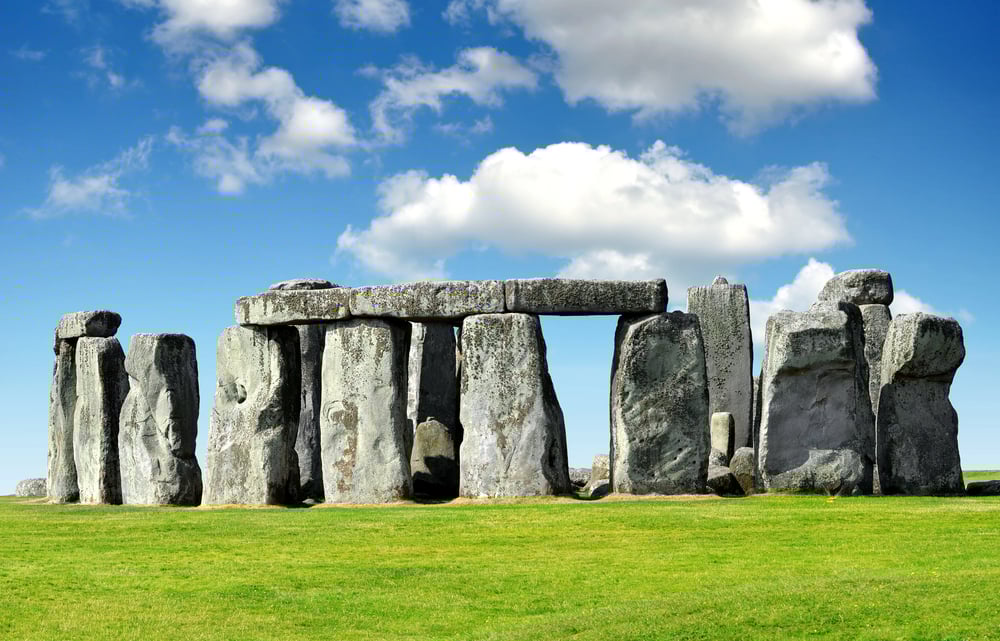
The mysterious stone circle has been reconstructed more than most people realize. Many of the massive stones had fallen over the centuries, and between 1901 and 1964, about half the monument was re-erected and set in concrete.
Victorian-era visitors could walk right up and touch the stones, even picnic among them. Now, visitors must stay behind ropes about 30 feet away, though special access tours are available.
The surrounding landscape has also been restored, with a major road removed and the visitor center relocated to restore views of the monument.
Christ the Redeemer

Rio de Janeiro’s famous statue has needed multiple facelifts since its completion in 1931. Lightning strikes the 125-foot figure several times each year, requiring regular repairs to the soapstone exterior.
The statue originally had no internal elevator, forcing maintenance workers to climb hundreds of steps inside the structure. An elevator and escalators were added in 2003, making repairs easier and allowing limited tourist access to the interior.
Big Ben
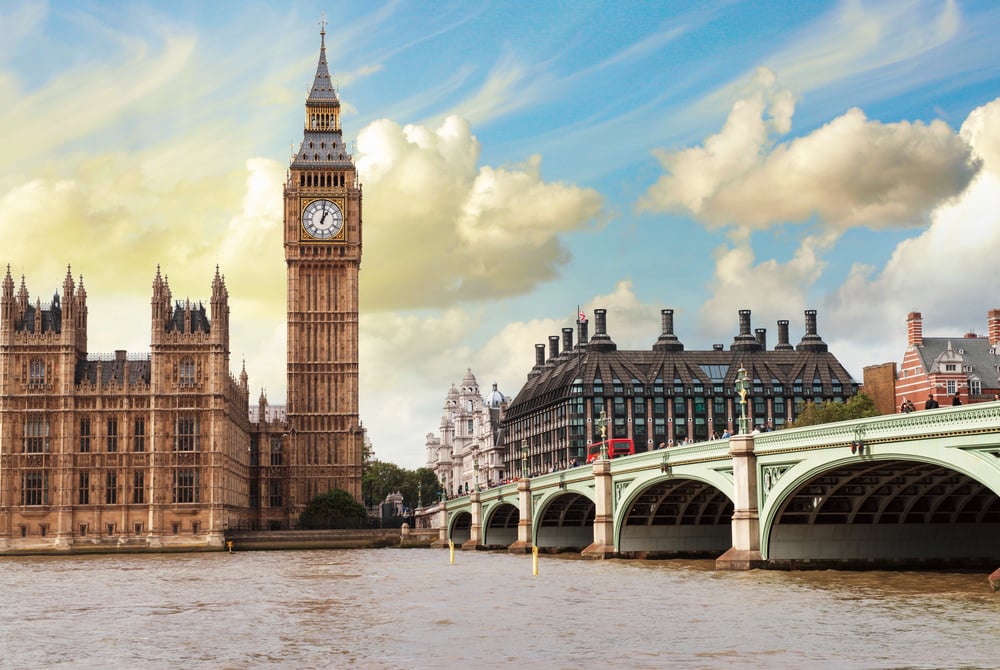
The famous clock tower, officially named Elizabeth Tower, has undergone extensive restoration work that began in 2017 and lasted several years. During this time, the usually bright golden clock faces were covered in scaffolding and the bells fell silent except for special occasions.
The tower had started leaning slightly, though nowhere near as dramatically as Pisa’s tower. Workers also discovered that the tower’s interior was in worse shape than expected, with asbestos, broken glass, and years of bird droppings creating hazardous conditions.
The Parthenon

This ancient Greek temple has survived remarkably well considering it’s nearly 2,500 years old, though it’s been through some rough patches. The building served as a church, then a mosque, and was even used as a gunpowder storage facility during a war in 1687 when an explosion blew out its center.
In the early 1800s, British diplomat Lord Elgin removed many of the best sculptures and shipped them to London, where they remain controversial to this day. Greece has been working on restoration since 1975, carefully dismantling and rebuilding sections using original techniques.
The Hollywood Sign

Those giant white letters overlooking Los Angeles originally spelled out ‘Hollywoodland’ and advertised a housing development in 1923. The sign was only supposed to last about a year and a half, but it became so iconic that it stayed up.
By the 1970s, the letters were falling apart, with the ‘H’ completely collapsed and others leaning dangerously. A fundraising campaign featuring celebrities ‘adopting’ letters paid for a complete rebuild in 1978, when ‘land’ was dropped to create the nine-letter version we know today.
The Liberty Bell

Philadelphia’s famous cracked bell has actually been moved around quite a bit over the years. The bell originally hung in the Pennsylvania State House, now called Independence Hall, and rang to summon lawmakers.
The crack appeared sometime in the early 1800s and worsened over time until the bell could no longer ring. It spent decades on display in Independence Hall before being moved to its own pavilion in 1976, then to an even larger center in 2003 where visitors can view it against the backdrop of Independence Hall.
Tower Bridge
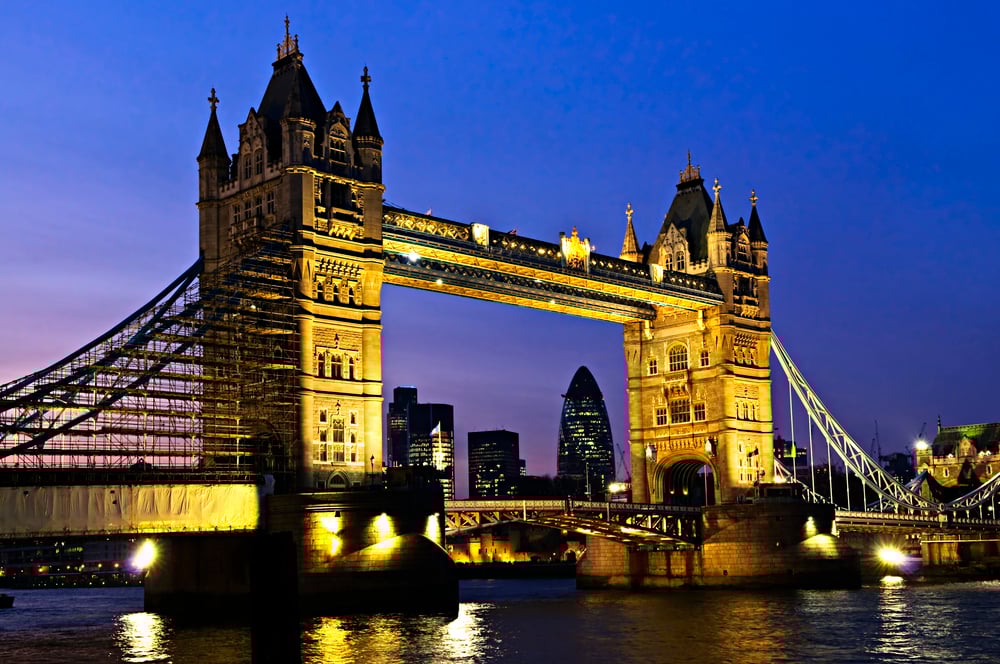
It wasn’t until 1894 that Tower Bridge finished rising above the Thames, younger than many assume. Most mix it up with the duller span nearby, yet its true age surprises.
Chocolate brown coated its frame at first – nothing like the bright blue and white now tied to postcards. A shift came in 1977 when celebrations for the Queen’s twenty-five years prompted a fresh coat.
Up top, pathways linked the towers, once shut due to theft and rough sleepers finding shelter there. After years idle, they returned in 1982 as part gallery, part lookout, with slabs of glass underfoot showing cars crawling beneath.
The Washington Monument

A long time passed before America finished honoring its first leader – thirty six years, actually. Work halted completely when war split the nation.
Once building started again in 1876, workers discovered they could not get matching stone from the original Maryland source. From roughly 150 feet upward, the material shows a subtle shift in hue.
That difference remains clear today as a noticeable band circling the tall structure. A tremor in 2011 left marks on the monument, forcing it to shut down for three full years while fixes were made.
Over time, elevators inside have changed more than once thanks to newer designs becoming available.
Right now, here is how things look

Still standing through decades, these places link past times with today’s shifting demands. One got reconstructed after damage, another crumbled slowly, some just faded under sun and rain.
Crowds keep coming anyway, minds lighting up at what they see, though everything nearby looks nothing like before.
More from Go2Tutors!

- The Romanov Crown Jewels and Their Tragic Fate
- 13 Historical Mysteries That Science Still Can’t Solve
- Famous Hoaxes That Fooled the World for Years
- 15 Child Stars with Tragic Adult Lives
- 16 Famous Jewelry Pieces in History
Like Go2Tutors’s content? Follow us on MSN.