Famous Last Words That Became Legendary
There is a certain charm to a person’s final words.
They are that brief instant when life and eternity meet and language turns into a legacy.
They can occasionally be purposeful and profound.
They can be inadvertent, darkly comical, or excruciatingly simple.
However, what they reveal about the speaker’s character, worldview, and era is what really makes them famous.
Even in the face of death, people continue to look for meaning.
A few closing statements endure beyond the lives of the people themselves and have an impact for centuries.
Examine in greater detail six famous farewells that transformed from dying breaths to timeless echoes.
Leonardo da Vinci – ‘I have offended God and mankind because my work did not reach the quality it should have.’

The quintessential Renaissance genius, Leonardo da Vinci was a painter, scientist, engineer, and philosopher who appeared to be able to do anything.
However, those who were present at his deathbed in 1519 reported that he left the world with a sense of inadequacy regarding his own abilities.
“I have offended God and mankind because my work did not reach the quality it should have,” he says in his final words.
It is a confession of failure that exposes the never-ending self-doubt that frequently lurks behind perfectionism.
This statement is more than a lament.
It’s a glimpse into Leonardo’s relentless standards.
He left dozens of unfinished projects behind, including paintings that would later be celebrated as masterpieces.
His obsession with anatomy, flight, and perspective was driven by a hunger to understand the divine logic behind creation itself.
That he considered his life’s work insufficient only highlights the enormity of his ambition.
Centuries later, those words resonate with artists, scientists, and dreamers who recognize the same feeling.
No matter how much one achieves, there’s always more to learn and another frontier to chase.
Leonardo’s humility, spoken in his final moments, feels like the ultimate act of genius.
It acknowledges that mastery is never complete, only pursued.
Marie Antoinette – ‘Pardon me, sir, I did not do it on purpose.’

Few historical figures have been as misunderstood or as mythologized as Marie Antoinette.
Vilified as the symbol of royal excess during the French Revolution, she was caricatured as frivolous and out of touch.
Yet when the blade was literally inches away, her last words were not of anger, denial, or fear.
After stepping on her executioner’s foot, she turned to him and said, ‘Pardon me, sir, I did not do it on purpose.’
The sheer civility of the moment is astonishing.
Surrounded by jeering crowds, stripped of her crown and family, she still clung to manners.
It was a small act of grace in the face of humiliation.
It was a reminder that dignity doesn’t always come from power but from composure.
For historians, her apology humanizes a woman long reduced to a symbol.
For the public, it transformed into a haunting reflection of fate.
The queen who was accused of callous indifference met death with empathy.
Even her enemies, in later years, found something tragic and disarming in that final gesture.
Her words turned defiance into quiet elegance.
They softened history’s judgment and ensured her place not just as a monarch who fell but as a human being who met death with extraordinary poise.
Oscar Wilde – ‘Either that wallpaper goes, or I do.’

The glitzy London salons where Oscar Wilde once enthralled high society were a far cry from his final days in a budget hotel in Paris.
His wealth and reputation were ruined after he was imprisoned for “gross indecency,” but his wit was unwavering.
Surrounded by peeling wallpaper and unpaid bills, he reportedly said, “Either that wallpaper goes, or I do,” as he lay dying in 1900.
He fulfilled his end of the agreement hours later.
The line is now inextricably linked to Wilde’s legacy, whether it is apocryphal or not.
It encapsulates his essence.
Defiance in tragedy, humor in despair, and elegance in ruin.
Wilde made satire out of suffering, even in death.
He refuses to let the world have the last laugh in his final remark.
It comes across as reclamation rather than resignation.
The irony is that Wilde’s writings, including his comedies, epigrams, and The Picture of Dorian Gray, would endure beyond the lives of all his detractors.
His final words served as the ideal conclusion to a life that was all performance.
They reverberate in literature as well as in all artists who use humor to fortify their souls.
Wilde’s farewell serves as a reminder that humor can be braver than any somber speech when it is used with honesty.
Julius Caesar – ‘Et tu, Brute?’

Few moments in history have been dramatized more than the assassination of Julius Caesar.
Few phrases have carried as much betrayal.
According to legend, as he was surrounded and stabbed by Roman senators in 44 BC, Caesar recognized his friend and protégé Marcus Junius Brutus among his attackers and uttered, ‘Et tu, Brute?’ — ‘You too, Brutus?’
While scholars still debate whether Caesar actually said those words, the line has transcended historical accuracy.
Thanks to Shakespeare’s Julius Caesar, it became one of literature’s most enduring expressions of betrayal.
Caesar’s supposed final words captured the moment when friendship and loyalty collapsed under ambition.
It was when power turned allies into assassins.
The phrase endures because it speaks to a universal experience.
It is the shock of being wounded not by enemies, but by friends.
In three short words, Caesar’s humanity eclipsed his empire.
He ceased to be a conqueror and became a man betrayed.
The great general was undone not by armies but by trust misplaced.
Even today, ‘Et tu, Brute?’ lingers as shorthand for ultimate betrayal.
It is a reminder that the sharpest knives often come from the hands we hold closest.
Steve Jobs – ‘Oh wow. Oh wow. Oh wow.’

Steve Jobs, who spent his life pushing the limits of innovation, approached death with the same sense of wonder that defined his work.
According to his sister Mona Simpson, his final words — repeated three times before he died in 2011 — were ‘Oh wow. Oh wow. Oh wow.’
No one knows exactly what he saw or felt in that moment, but the simplicity of those words says everything about the man who spoke them.
Jobs was known for his precision, his perfectionism, and his visionary sense of design.
To hear him respond to death not with fear or philosophy but awe feels fitting.
It’s as if, after a lifetime of creating technology meant to inspire curiosity, he found himself inspired one last time by whatever lay beyond.
His family described the tone as peaceful, almost delighted.
It was not disbelief but discovery.
In a career that reshaped how the world connects, Jobs’s final words became the ultimate expression of wonder.
They remind us that curiosity — that relentless hunger to see what’s next — is perhaps the purest form of faith.
Karl Marx – ‘Last words are for fools who haven’t said enough.’
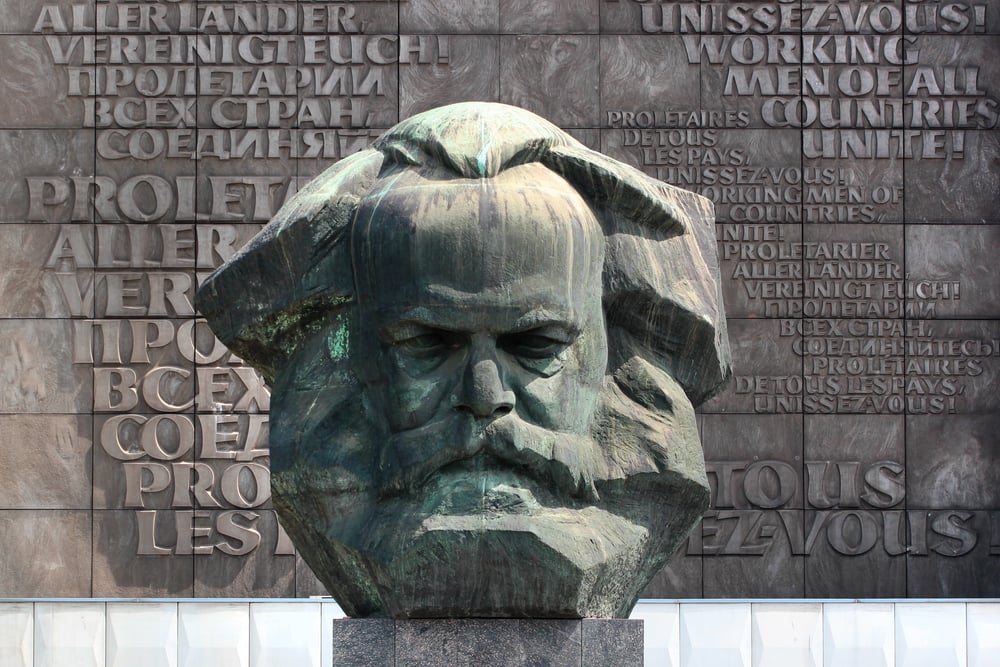
Karl Marx, one of the most influential thinkers in modern history, refused to participate in the ritual of final words.
When asked if he wanted to say something before dying in 1883, he reportedly snapped, ‘Last words are for fools who haven’t said enough.’
It was a fitting end for a man whose life was built on dismantling illusions.
Marx had spent decades writing about revolution, capitalism, and human struggle.
He had no interest in condensing all that into one poetic flourish.
His bluntness reflected his disdain for sentimentality.
It also reflected his belief that ideas should stand on their own.
There’s irony in how his refusal to have last words became one of the most quoted last words in history.
That irony feels appropriate.
Marx’s rejection of finality mirrors his philosophy itself.
History is never finished, and progress is always in motion.
Even in dismissing the idea of closure, he left a statement that still provokes reflection.
It’s not eloquence that makes his last words powerful.
It’s the clarity of conviction that some lives simply don’t need an ending line.
Why It Still Matters

Because they transform the private act of dying into a shared moment of truth, last words enthrall us.
They show how people deal with the unknown with grace, defiance, humor, wonder, or regret.
Leonardo’s modesty serves as a reminder that even genius has self-doubt.
Marie Antoinette’s apology demonstrates that honor can endure shame.
Jobs’s amazement celebrates curiosity.
Caesar’s suffering reveals the frailty of power.
Wilde’s humor ridicules hopelessness.
Marx’s silence upholds principle over output.
When combined, they create an oddly lovely mosaic of what it means to be human in the end.
Final words are more about what lives on after death than they are about death itself.
While some people create empires or write books, others leave behind a single sentence that endures beyond both.
More from Go2Tutors!

- The Romanov Crown Jewels and Their Tragic Fate
- 13 Historical Mysteries That Science Still Can’t Solve
- Famous Hoaxes That Fooled the World for Years
- 15 Child Stars with Tragic Adult Lives
- 16 Famous Jewelry Pieces in History
Like Go2Tutors’s content? Follow us on MSN.