Famous Musicians Who Play More Than One Instrument
Most musicians spend years mastering a single instrument.
Then there are those rare talents who look at one instrument and think, ‘Sure, but what about five more?’ These multi-instrumentalists aren’t just dabbling — they’re genuinely proficient across a staggering range of sounds, often playing nearly everything on their own albums.
It’s the kind of skill that seems almost unfair, like they’re hoarding all the musical ability for themselves.
What sets these artists apart isn’t just technical prowess.
Playing multiple instruments opens up creative possibilities that would be impossible otherwise.
When you can hear a bass line in your head and immediately lay it down yourself, or switch from drums to piano mid-session, the entire creative process transforms.
There’s no translation needed, no explaining your vision to someone else.
The music flows directly from imagination to recording.
Let’s take a closer look at some of the most accomplished multi-instrumentalists in music history and what makes their abilities so remarkable.
Prince

If there’s a Mount Rushmore of multi-instrumentalists, Prince carved his own face onto it at age 19.
When he recorded his debut album ‘For You’ in 1977, he didn’t just play most of the instruments — he played all 27 of them.
Every single one.
The album credits read like an instrument store inventory: electric guitar, acoustic guitar, multiple types of bass, various keyboards and synthesizers, drums, percussion instruments from bongos to orchestral bells, even wind chimes and finger snaps.
This wasn’t a gimmick.
Prince actually knew what he was doing with each instrument, approaching them with genuine skill rather than just competence.
The album took six months to complete and cost over $170,000, three times the original budget, because Prince obsessively perfected each part.
He layered 46 vocal lines on the opening track alone.
By the time he finished, he was physically exhausted, later describing himself as a ‘wreck.’
Throughout his career, Prince continued this one-man-band approach.
He pioneered the Minneapolis Sound by using synthesizers to replace traditional horn sections, creating that distinctive funky, electronic edge that defined much of 1980s pop.
His mastery extended beyond the studio too — he was equally commanding with any instrument on stage, whether delivering blistering guitar solos or laying down intricate keyboard work.
Dave Grohl

Being the drummer for Nirvana might seem like enough for one lifetime.
Dave Grohl had other plans.
After Kurt Cobain’s death in 1994, Grohl retreated into music as therapy, booking time at Robert Lang Studios in Seattle.
Over the course of just six days, he recorded 15 songs, playing every instrument himself — drums, guitar, bass, and handling all vocals.
That became the self-titled Foo Fighters debut album, released in 1995.
Grohl recorded most tracks in single takes, running from room to room in the studio, still sweating from the drum kit as he picked up a guitar.
One song, ‘This Is A Call,’ was tracked in just 45 minutes.
The intensity shows in the final product, which has a raw, kinetic energy that perfectly captured Grohl’s emotional state.
What makes Grohl’s multi-instrumental ability particularly impressive is how effortless he makes it look.
He’s transitioned seamlessly from being one of rock’s most powerful drummers to a compelling frontman and guitarist.
Even now, he’ll jump back behind the kit for Foo Fighters tracks, as he did for the entire 2023 album ‘But Here We Are’ following the death of drummer Taylor Hawkins.
He also recorded all drum tracks on the band’s 1995 debut by himself, creating that signature Foo Fighters sound from scratch.
Paul McCartney
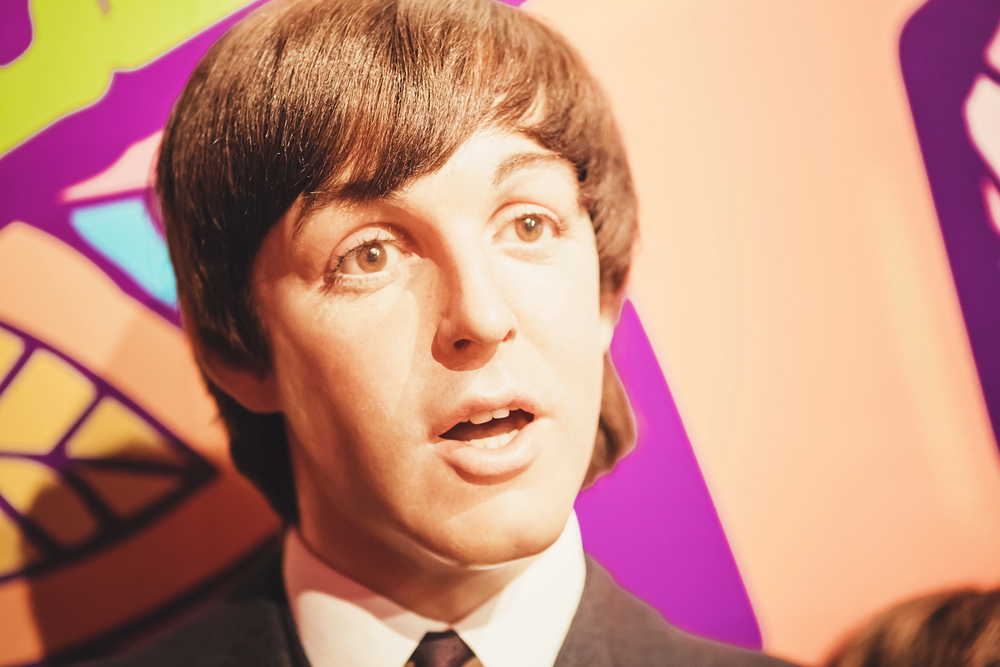
The Beatles’ bassist is one of those musicians who seems incapable of encountering an instrument he can’t play.
McCartney’s versatility shows up throughout the Beatles’ catalog — he played piano on ‘Let It Be,’ lead guitar on ‘Taxman,’ and even drums on several tracks when Ringo wasn’t available.
His 1970 solo album ‘McCartney’ showcased this ability in full force.
The credits list him on vocals, acoustic guitar, electric guitar, bass guitar, drums, piano, organ, percussion, wine glasses, Mellotron, and effects.
Wine glasses.
That’s the kind of detail-oriented creativity that defines true multi-instrumentalists — seeing musical possibility in everything.
Even into his 80s, McCartney remains remarkably versatile.
His ability to switch between instruments has given him extraordinary compositional freedom throughout his career.
When you can play everything, you can hear the entire arrangement in your head and bring it to life exactly as imagined.
Stevie Wonder

Wonder’s musicianship is almost supernatural.
Blind since shortly after birth, he developed an extraordinary ear for music and taught himself piano, drums, bass, and harmonica, among other instruments.
By age 13, he was already a signed Motown artist, displaying abilities that left much older musicians stunned.
His work in the 1970s remains some of the most innovative in popular music.
Albums like ‘Innervisions’ and ‘Songs in the Key of Life’ feature Wonder playing nearly all instruments, pioneering the use of synthesizers in R&B and soul music.
He didn’t just play instruments — he pushed their boundaries, exploring new sounds and textures that would influence generations of musicians.
What’s remarkable about Wonder is how his multi-instrumental ability serves his songwriting.
He thinks like a complete band, crafting arrangements where every element supports the emotional core of the song.
His harmonica work alone would be enough to cement his legacy, but it’s just one color in his extensive palette.
Beck

Beck Hansen emerged from Los Angeles in the early 1990s with an experimental sound that confused and delighted listeners in equal measure.
Part of what made his music so distinctive was his ability to play over a dozen instruments, creating genre-blurring tracks that incorporated elements of folk, hip-hop, rock, and electronic music.
His instrument list reads like a world music catalog: guitar, drums, sitar, banjo, glockenspiel, and more.
Beck approaches each instrument with curiosity rather than just technical proficiency, interested in the unique sounds and textures they can provide.
That exploratory mindset shows up in his albums, which refuse to be pinned down to any single genre.
The versatility has kept Beck relevant across decades.
He can deliver sparse, acoustic folk on one album and intricate electronic production on the next, largely because he’s comfortable creating in any sonic landscape.
When an artist can play that many instruments, they’re never locked into a single sound.
Sufjan Stevens
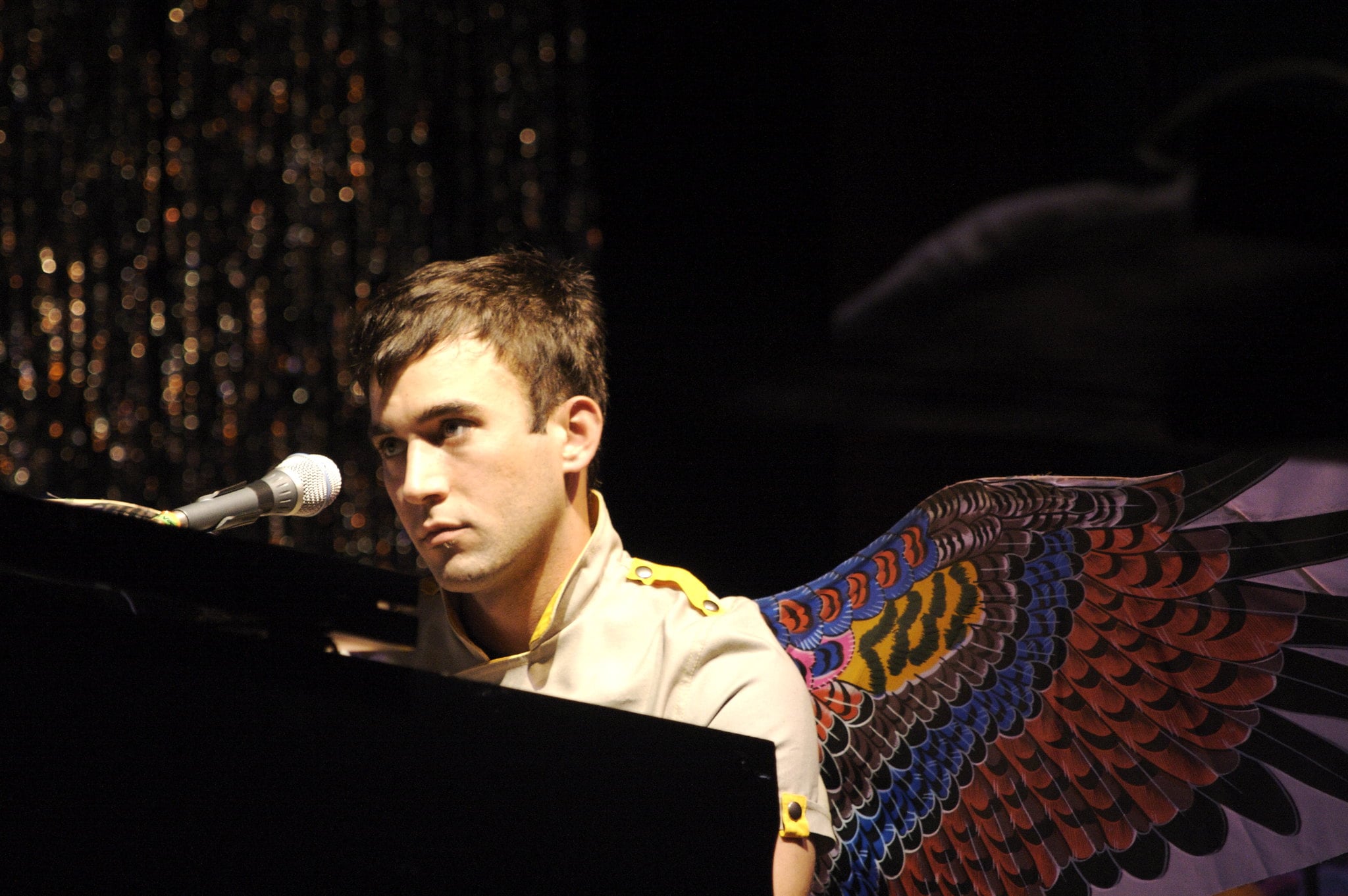
Stevens might be the most classically ambitious multi-instrumentalist on this list.
His albums frequently credit him with 20 or more instruments, spanning strings, woodwinds, brass, percussion, and everything in between.
The liner notes for his album ‘Michigan’ list him on guitar, bass, banjo, piano, drums, xylophone, vibraphone, English horn, and various other instruments.
Including something wonderfully called ‘dramatic cymbal swells.’
Stevens’ approach to multi-instrumentalism is almost orchestral.
He layers instruments to create lush, complex arrangements that sound like entire ensembles but often feature just him, overdubbed dozens of times.
His music has that grand, cinematic quality precisely because he’s thinking like a composer-arranger, not just a songwriter.
The breadth of his abilities allows Stevens to create deeply textured soundscapes.
When you listen to his work, you’re hearing one person’s singular vision executed across an entire orchestra’s worth of instruments.
PJ Harvey
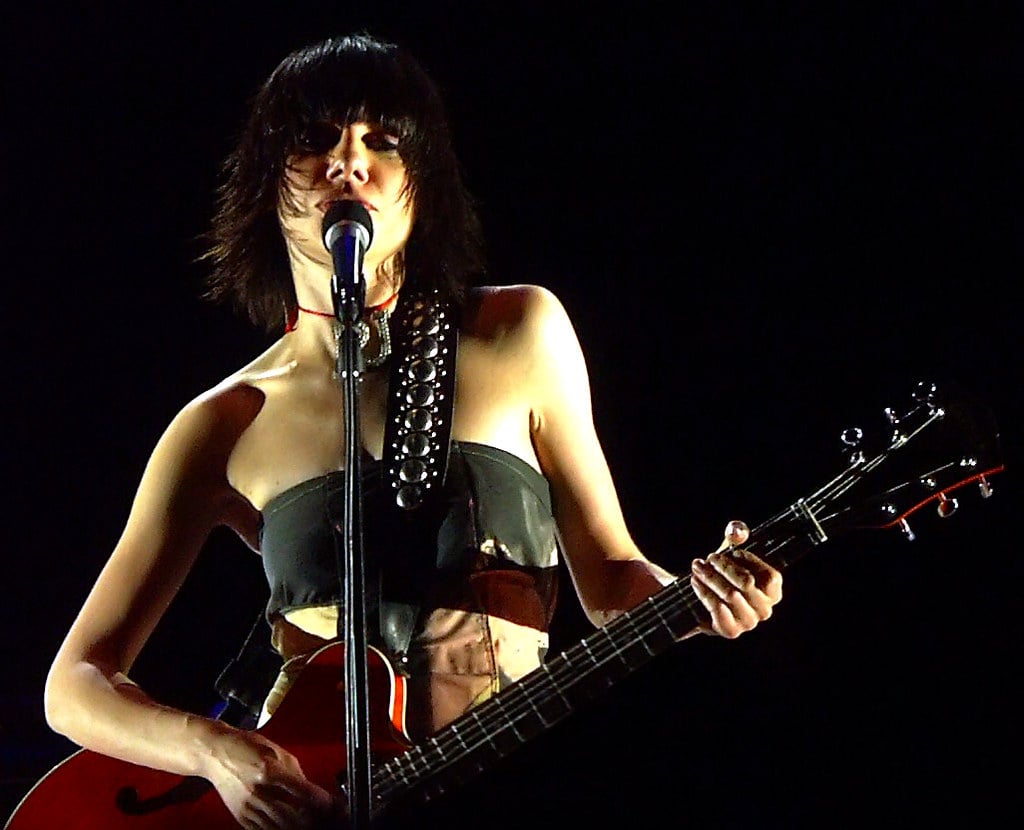
Polly Jean Harvey’s instrument list could fill a music store inventory sheet.
She’s proficient on guitar, saxophone, piano, keyboards, violin, cello, percussion, harmonica, harp, and autoharp, among others.
That versatility has made her one of alternative rock’s most distinctive voices.
What’s impressive about Harvey isn’t just the number of instruments she plays but how she uses them.
Her music shifts between raw rock aggression and delicate, experimental sounds, with Harvey selecting instruments that serve each song’s emotional needs.
She doesn’t play saxophone because she can — she plays it because that particular song demands that particular texture.
Her influence extends beyond her own work.
She’s inspired everyone from the Go-Go’s to the Red Hot Chili Peppers, who cite her as a major influence.
When rock icons look up to you, you’re clearly doing something right.
Trent Reznor

The mind behind Nine Inch Nails has pushed multi-instrumentalism into industrial and electronic territories.
Reznor plays more than 25 instruments, including cello, pan flute, vibraphone, synthesizer, and double bass.
He’s also possibly the only famous musician who plays a swarmatron — a ribbon synthesizer that can play eight different oscillators simultaneously.
Reznor’s approach combines traditional instrumental skill with cutting-edge technology.
He treats the studio itself as an instrument, layering sounds and textures to create Nine Inch Nails’ signature dense, aggressive soundscapes.
His work on film soundtracks, particularly ‘The Social Network,’ showcases how his multi-instrumental abilities translate beyond rock music.
What makes Reznor fascinating is his willingness to experiment.
He’s constantly seeking new instruments and new sounds, refusing to rest on what he already knows.
That restless creativity has kept Nine Inch Nails relevant for over three decades.
Brian Jones

The Rolling Stones’ founding guitarist doesn’t always get the recognition he deserves, partly because his time with the band was cut tragically short when he died at 27 in 1969.
But Jones was one of rock’s first true multi-instrumentalists, incorporating everything from harmonica and slide guitar to sitar, Mellotron, and Appalachian dulcimer into the Stones’ sound.
Jones was particularly interested in exotic instruments from other cultures.
He introduced the sitar to ‘Paint It Black,’ giving the song its distinctive Eastern flavor.
His willingness to experiment with unfamiliar instruments helped expand what rock music could sound like during the 1960s.
By the time of his death, Jones had played a remarkable variety of instruments on Stones recordings.
His exploratory spirit paved the way for later multi-instrumentalists to incorporate global sounds into Western pop and rock.
Why It Matters
These musicians represent something beyond technical skill.
They embody a particular kind of creative freedom — the ability to hear something in their head and immediately bring it into reality without intermediaries.
When you can play everything yourself, there’s no compromise, no translation.
The music emerges fully formed.
Multi-instrumentalists also tend to think differently about songwriting and arrangement.
They hear music more completely, understanding how each element interacts because they’ve played each part themselves.
That holistic perspective often results in richer, more cohesive recordings.
But perhaps most importantly, these artists remind us that mastery isn’t about limitation.
You don’t have to choose between guitar and piano, drums and bass.
Some people can do it all, and in doing so, they expand what’s possible for everyone else.
That’s a legacy that resonates far beyond any single instrument.
More from Go2Tutors!

- The Romanov Crown Jewels and Their Tragic Fate
- 17 Halloween Costumes Once Considered Taboo
- Famous Hoaxes That Fooled the World for Years
- 15 Child Stars with Tragic Adult Lives
- 16 Famous Jewelry Pieces in History
Like Go2Tutors’s content? Follow us on MSN.