Famous Scientists And Their Ideas
Some people look at the world and ask questions nobody else thought to ask. They spend years testing, failing, and testing again until they find answers that change how everyone understands reality.
The scientists who made the biggest impacts didn’t always get recognition during their lifetimes. Some faced ridicule.
Others had their work stolen or dismissed. But their ideas survived and shaped the modern world.
Isaac Newton: The Apple and Much More

Newton figured out that the same force pulling an apple to the ground also keeps the Moon orbiting Earth. Gravity works everywhere, following mathematical rules you can predict and measure.
He published these ideas in 1687, along with three laws of motion that still describe how objects move. But Newton did more than explain falling objects.
He invented calculus (though Leibniz invented it independently around the same time). He built the first reflecting telescope.
He studied light and discovered that white light contains all colors. The man had range.
He also spent considerable time on alchemy and biblical chronology, which shows that even brilliant scientists can pursue dead ends.
Albert Einstein: Rethinking Space and Time
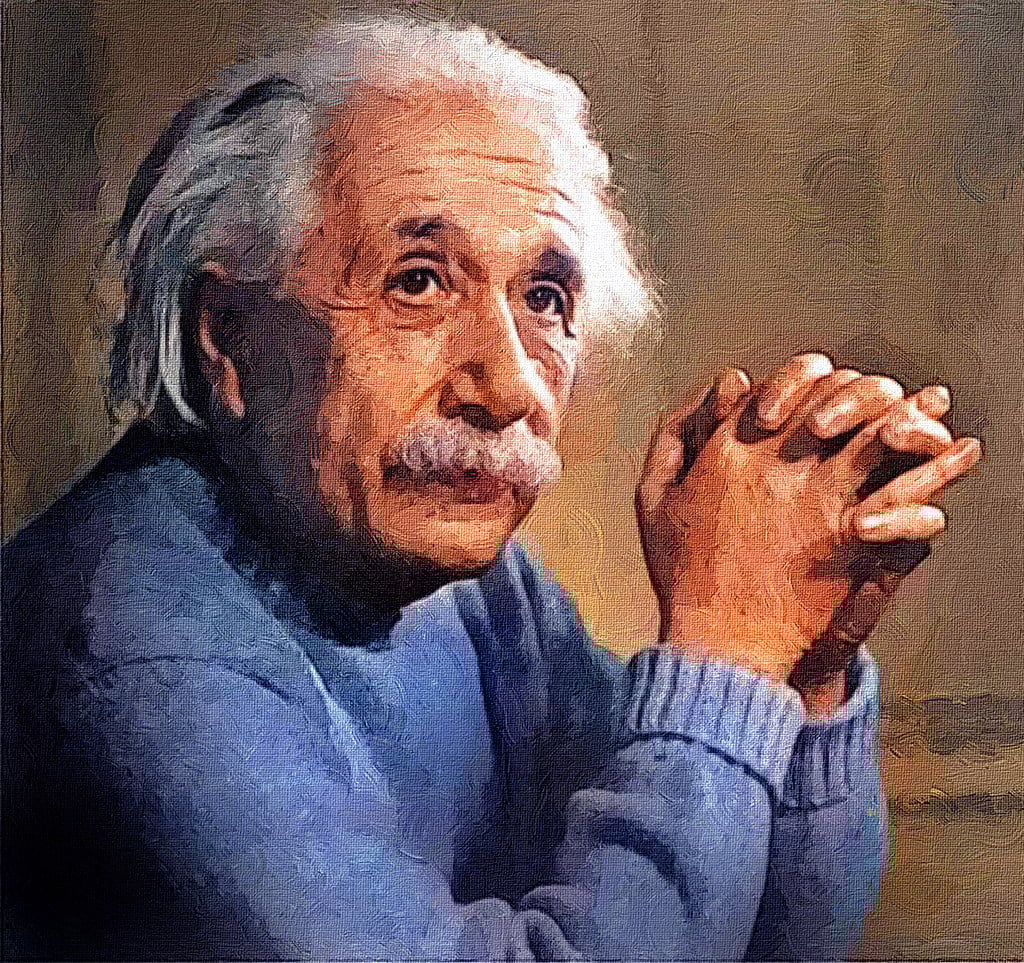
Einstein’s special relativity theory says that time and space aren’t absolute. They change depending on how fast you’re moving.
Travel close to the speed of light and time slows down for you compared to someone standing still. Your ruler would also get shorter from that person’s perspective.
His general relativity theory went further. Gravity isn’t a force pulling objects together—it’s the curving of spacetime caused by mass.
Earth orbits the Sun because the Sun’s mass warps the fabric of space around it. These ideas sound bizarre, but GPS satellites need relativity corrections to work accurately.
Einstein also gave us E=mc², showing that mass and energy are interchangeable. Nuclear power and nuclear weapons both prove that equation is correct.
Marie Curie: Pioneer of Radioactivity
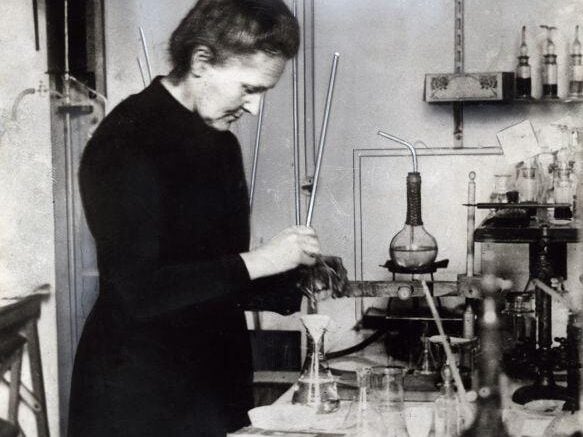
Curie discovered two elements—polonium and radium—and coined the term “radioactivity” to describe what these elements do. She developed techniques to isolate radioactive isotopes and studied their properties.
This work earned her two Nobel Prizes in different fields: physics and chemistry. She conducted her research in a shed with a leaky roof, stirring vats of pitchblende to extract tiny amounts of radium.
The work eventually killed her. She died from aplastic anemia caused by radiation exposure. Scientists didn’t understand the dangers back then. Curie carried test tubes of radioactive material in her pockets.
Her papers from the 1890s are still too radioactive to handle safely.
Charles Darwin: Evolution Through Natural Selection

Darwin noticed that finches on different Galápagos Islands had different beak shapes suited to their food sources. He realized that species aren’t fixed—they change over time.
Individuals with traits that help them survive and reproduce pass those traits to offspring. Over many generations, this process creates new species.
The idea wasn’t completely original. Other naturalists had suggested evolution. But Darwin provided the mechanism: natural selection.
He spent twenty years gathering evidence before publishing “On the Origin of Species” in 1859. The book sold out on its first day despite being dense scientific writing.
Darwin knew the religious controversy it would spark, which partly explains why he waited so long to publish.
Galileo Galilei: Turning Telescopes Skyward
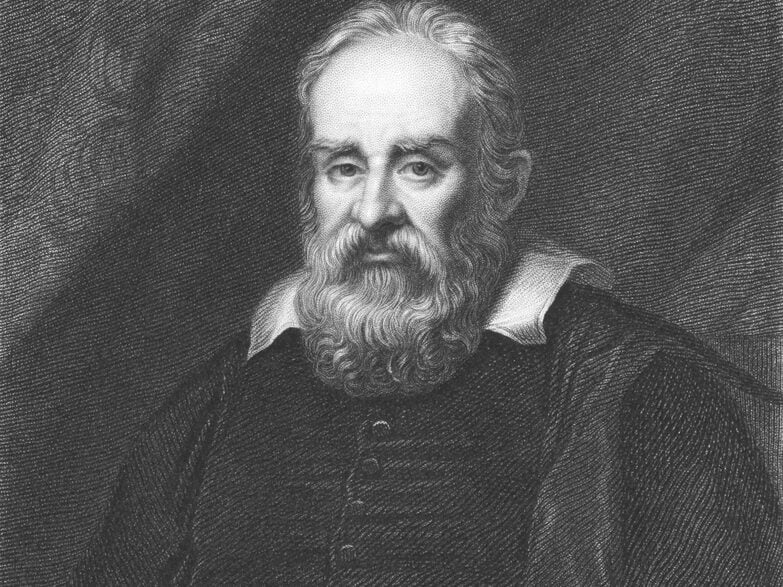
Galileo didn’t invent the telescope, but he improved it and pointed it at the sky. What he saw challenged everything people believed about the universe.
Jupiter had moons orbiting it. Venus showed phases like the Moon. The Milky Way consisted of countless individual stars.
These observations supported the Copernican model—Earth orbits the Sun, not the other way around. The Catholic Church forced Galileo to recant this claim and placed him under house arrest for the rest of his life.
But the evidence didn’t disappear. Galileo also studied motion and falling objects, developing ideas that Newton would later build upon.
Nikola Tesla: Imagining the Future of Electricity

Tesla envisioned a world powered by alternating current electricity. Thomas Edison promoted direct current, leading to the famous “War of Currents.”
Tesla’s AC system won because it could transmit power over long distances more efficiently. The electrical grid still uses AC today.
Tesla held around three hundred patents. He developed the Tesla coil, contributed to radio technology, and experimented with wireless power transmission.
He also claimed to have invented a death ray and to receive signals from Mars, which damaged his credibility. By the end of his life, Tesla was feeding pigeons in New York parks and living in hotels he couldn’t afford.
Recognition came mostly after his death.
Louis Pasteur: Tiny Organisms With Big Effects

Pasteur proved that microorganisms cause fermentation and disease. Before him, people believed in spontaneous generation—the idea that life could arise from non-living matter.
Pasteur’s experiments with curved-neck flasks showed that bacteria come from other bacteria, not from thin air. He developed pasteurization to kill bacteria in milk and wine. He created vaccines for rabies and anthrax.
His germ theory of disease transformed medicine and public health. Doctors started washing their hands and sterilizing instruments.
Sewage systems improved. Life expectancy increased significantly.
Rosalind Franklin: The Hidden Figure Behind DNA

Franklin’s X-ray crystallography work produced Photo 51, the image that revealed DNA’s double helix structure. James Watson and Maurice Wilkins saw this photo without her permission.
Watson and Francis Crick used her data to build their DNA model, publishing their findings in 1953. Franklin died of ovarian cancer in 1958, possibly caused by radiation exposure from her research.
Watson, Crick, and Wilkins received the Nobel Prize in 1962. The Nobel isn’t awarded posthumously, so Franklin couldn’t receive recognition.
Watson later made dismissive comments about her contribution, though the historical record shows her work was essential. Only in recent decades has she received proper credit.
Stephen Hawking: Dark Abyss Aren’t Completely Black

Hawking showed that the dark abyss emits radiation, now called Hawking radiation. This discovery connected quantum mechanics with general relativity, two theories that normally don’t play well together.
It also meant the dark abyss can eventually evaporate. He did this work despite having ALS, a disease that gradually paralyzed his entire body.
By his thirties, he could only communicate through a speech synthesizer. He continued researching and publishing for decades.
His book “A Brief History of Time” became a bestseller, though many people who bought it never finished reading it. Hawking made cosmology accessible to general audiences while advancing theoretical physics.
Alan Turing: Machines That Think

Turing asked whether machines could think. He developed the Turing Test—if a machine can convince you it’s human through conversation, does it matter whether it’s actually thinking?
His work laid the foundation for computer science and artificial intelligence. During World War II, Turing helped break the German Enigma code.
His code-breaking work saved countless lives and shortened the war. The British government thanked him by prosecuting him for being gay.
He accepted chemical castration as an alternative to prison. Two years later, he died from cyanide poisoning, likely by his own hand.
The British government apologized posthumously in 2009.
Jane Goodall: Chimpanzees Have Personalities

Goodall went to Tanzania in 1960 to study chimpanzees in the wild. Scientists expected her to fail. She had no formal training and no university degree.
But she made discoveries that transformed primatology. She observed chimpanzees making and using tools—something scientists believed only humans did.
She documented their complex social structures, their capacity for violence, and their individual personalities. She gave the chimps names instead of numbers, which violated scientific conventions but recognized their individuality.
Goodall proved you could study animals with empathy and still produce rigorous science.
Richard Feynman: Making Quantum Mechanics Visual

Feynman developed a way to visualize quantum mechanics using diagrams. Feynman diagrams show how particles interact, turning abstract math into pictures you can understand.
They’ve become essential tools in particle physics. He contributed to quantum electrodynamics, explaining how light and matter interact.
He worked on the Manhattan Project during World War II. Later, he served on the commission investigating the Challenger space shuttle disaster and demonstrated how cold temperatures affected the O-rings.
Feynman also played bongo drums, picked locks, and explained physics in ways that made it exciting. His lectures are still popular today.
Rachel Carson: The Silent Spring Warning

Carson’s book “Silent Spring” warned that pesticides like DDT were poisoning the environment and killing birds. Chemical companies attacked her viciously. They questioned her credentials and called her hysterical.
But her science was solid. The book sparked the modern environmental movement. It led to the creation of the Environmental Protection Agency and the ban on DDT in the United States.
Carson died of breast cancer two years after publication, but her work changed how people think about chemicals and ecology. She showed that human actions have long-term environmental consequences.
Patterns in Discovery
Scientists arrived from varied nations, explored separate fields, yet existed across distinct times. Still, trends show up.
A number battled resistance from powerful institutions. Some found their efforts taken or downplayed by others.
A few watched their research twisted into something they’d never wanted. Curiosity tied them together – curiosity tough enough to push through roadblocks.
Instead of copying others, they questioned more deeply. Old stuff? They saw it differently.
A few learned in schools. Most figured things out alone.
Stubborn effort counted most – and guts to question the usual answers. Not only did their thoughts move science ahead, but also shifted how much we believe we can understand.
More from Go2Tutors!

- The Romanov Crown Jewels and Their Tragic Fate
- 13 Historical Mysteries That Science Still Can’t Solve
- Famous Hoaxes That Fooled the World for Years
- 15 Child Stars with Tragic Adult Lives
- 16 Famous Jewelry Pieces in History
Like Go2Tutors’s content? Follow us on MSN.