Famous Shipwrecks to Dive
There’s something about a sunken ship that pulls at people. Maybe it’s the history frozen in place — cargo still in the hold, personal effects scattered on the seafloor, machinery rusted into shapes that almost look intentional.
Or maybe it’s that the ocean does something to a wreck over time, turning it into its own kind of reef. Either way, wreck diving has a pull unlike almost any other form of the sport.
These are some of the most remarkable shipwrecks in the world — and the stories that make each one worth the trip.
SS Thistlegorm — Red Sea, Egypt
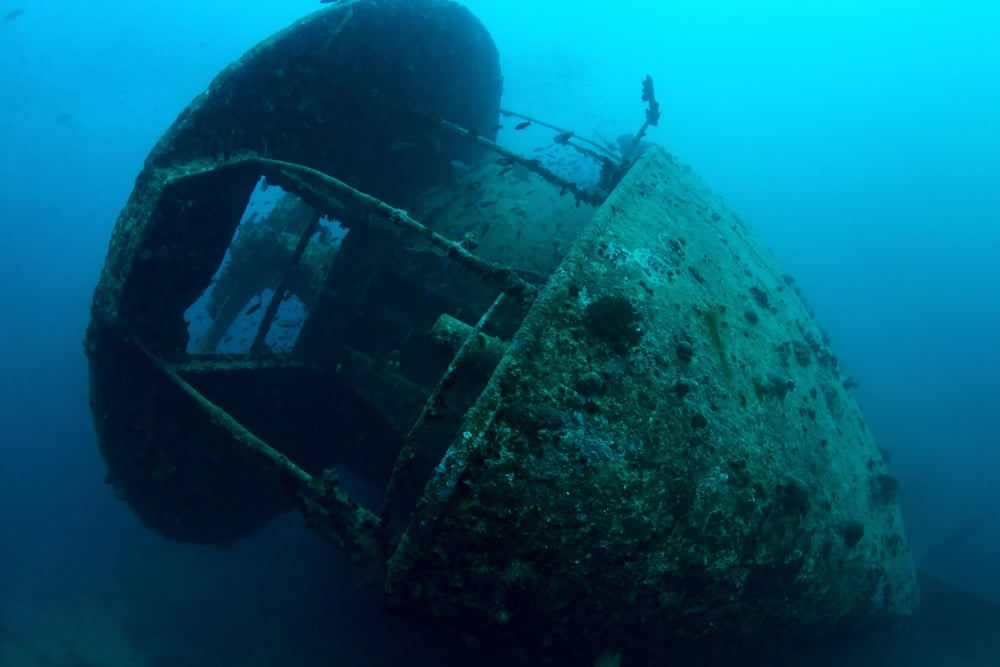
The Thistlegorm is probably the most famous wreck dive on the planet, and it earns that reputation. A British merchant vessel sunk by German bombers in 1941, it went down with its cargo largely intact.
That cargo happens to include motorcycles, trucks, rifles, and railway locomotives. Yes, locomotives.
At 30 metres, the holds sit open for exploration, and the sheer scale of what’s inside takes most divers more than one visit to absorb. The ship was actually rediscovered by Jacques Cousteau in the 1950s, then largely forgotten again until the 1990s, which means the site stayed pristine longer than it should have.
It’s busy now, but for good reason.
HMHS Britannic — Aegean Sea, Greece
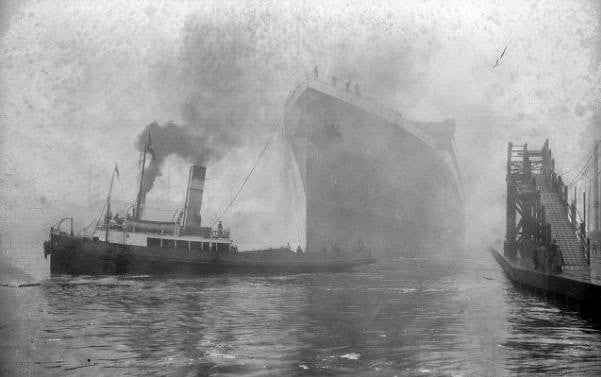
The Britannic was the Titanic’s younger sibling — and in many ways the more interesting wreck. It sank in 1916 while serving as a hospital ship during World War I, struck by either a mine or torpedo in the Aegean.
At 269 metres long, it’s one of the largest accessible wrecks in the world. The diving here is technical — it sits at around 120 metres — but the condition is remarkable.
The hull is largely intact, and the sheer size makes it feel less like a shipwreck and more like an underwater building. Recreational divers won’t reach it, but for technical divers it’s a genuine bucket-list site.
SS Yongala — Queensland, Australia
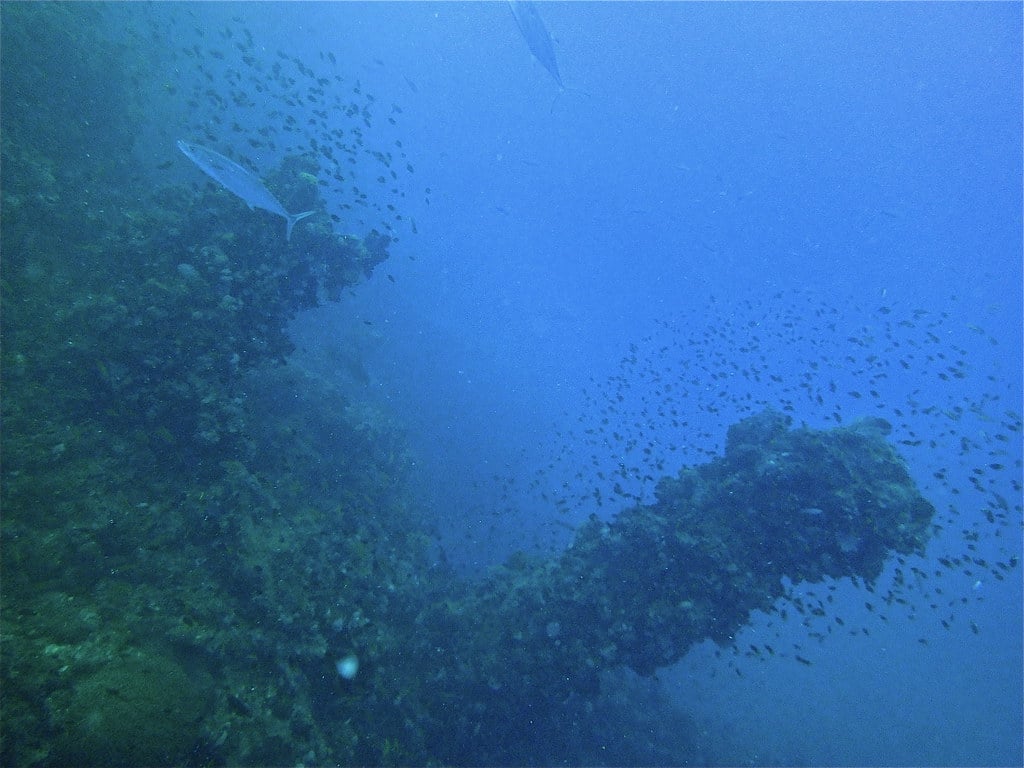
The Yongala sank during a cyclone in 1911 with 122 people on board. For nearly 50 years, no one knew where it was.
Today it sits at around 28 metres off the coast of Queensland and is widely considered one of the best wreck dives in the world — not just for the wreck itself, but for the marine life that has colonized it. Giant grouper, bull sharks, sea snakes, manta rays, and enormous schools of fish have made the ship their home.
The visibility can be variable, but on a clear day the Yongala is simply stunning. Note that you need to explore it with a licensed operator, as the site is protected under Australian heritage law.
Truk Lagoon — Micronesia
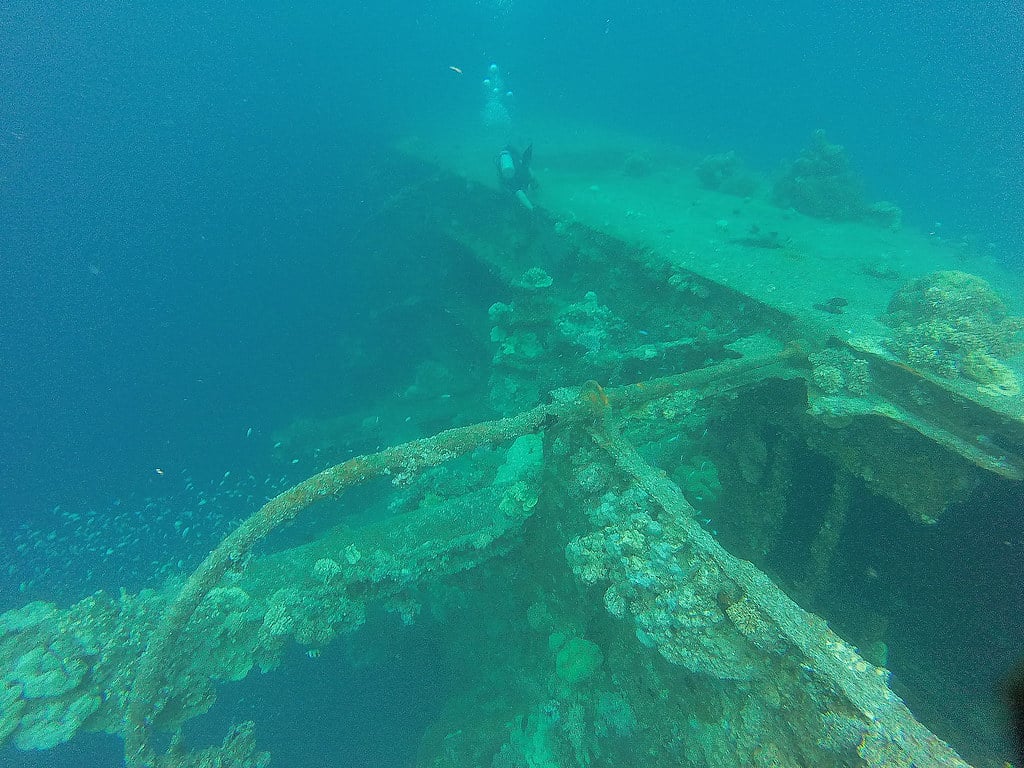
Truk Lagoon isn’t a single wreck — it’s a fleet. In February 1944, American forces carried out Operation Hailstone, sinking over 40 Japanese ships in a matter of days. The lagoon became an accidental museum. Destroyers, cargo ships, a submarine, and dozens of aircraft now rest across the lagoon floor.
Some wrecks are covered in soft corals and sponges. Others still have their cargo: trucks, tanks, fighter planes, and in a few cases, human remains.
Exploring the lagoon takes days to do properly, and most serious wreck divers return more than once. The Fujikawa Maru is a standout — its holds contain aircraft engines and propellers, while its upper deck is draped in black coral.
RMS Rhone — British Virgin Islands
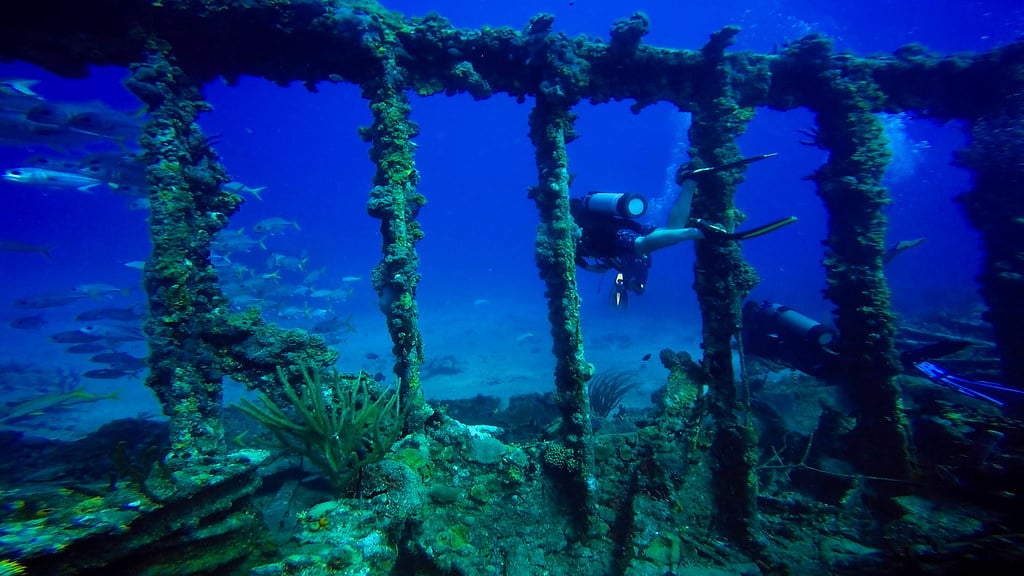
The Rhone sank in 1867 during a hurricane, breaking in two on the rocks off Salt Island. Both sections are diveable, and the depth ranges from about 8 metres at the bow section to around 24 at the stern.
That range makes it accessible to divers of almost any level, which is part of why it’s so popular. The wreck appeared in the 1977 film The Deep, which brought it broader attention.
The marine life here is excellent — moray eels, lobsters, hawksbill turtles, and large barracuda are all regulars. The clarity of the water in the BVI makes it an easy and enjoyable dive even for those newer to wreck diving.
USAT Liberty — Bali, Indonesia
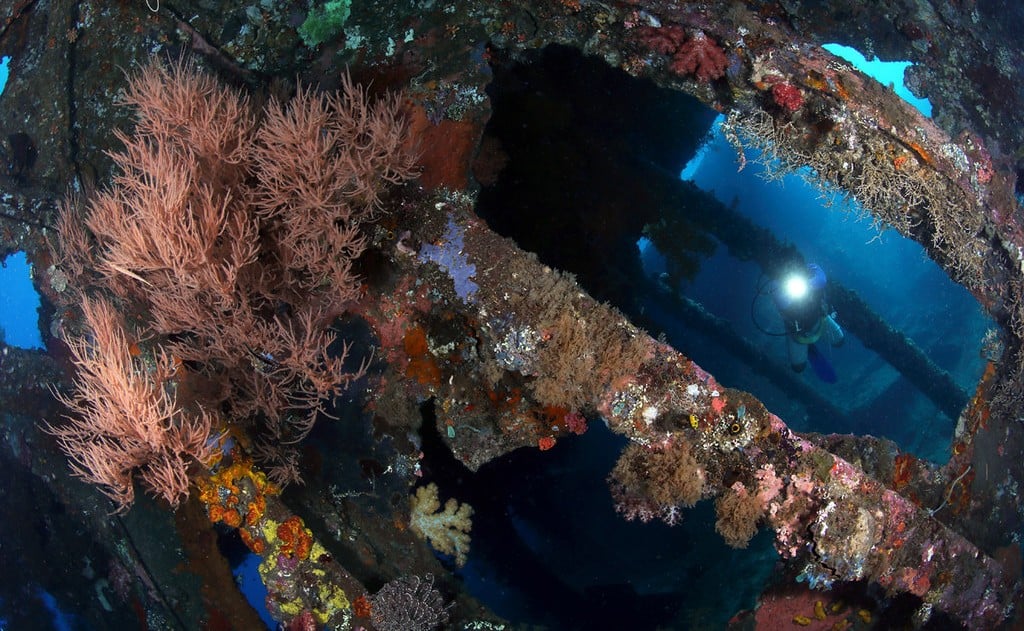
The Liberty sits right off the beach at Tulamben, making it one of the most accessible wreck dives anywhere. A torpedo hit it in 1942, and it was beached for use as salvage before a volcanic eruption in 1963 pushed it back into the water.
It now sits in 3 to 29 metres of water, running parallel to shore. The shallowness and visibility make it perfect for all skill levels, including snorkelers.
But the real draw is the biodiversity — pygmy seahorses, ribbon eels, bumphead parrotfish, and regular appearances by white-tip reef sharks. Early morning dives before the crowds arrive are particularly good.
MV Zenobia — Cyprus
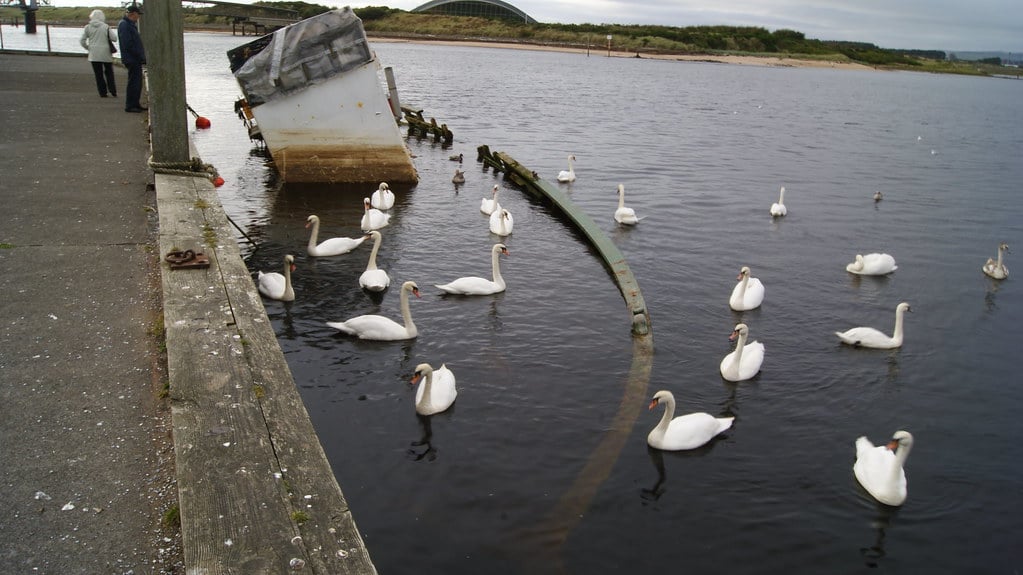
The Zenobia sank in 1980 on her maiden voyage, reportedly due to a computer fault that caused her to take on water. She went down just outside Larnaca harbour and rested on her side at around 42 metres.
She’s one of Europe’s top wreck dives. The ship is a roll-on roll-off ferry, which means her cargo decks are full of trucks — 104 of them — that still sit loaded as if waiting to be driven off.
Penetration diving here is possible for qualified divers, and the resident population of large fish, including enormous grouper, makes the site feel alive. Three different dives can be planned at this one wreck, each focusing on different sections.
SS President Coolidge — Vanuatu
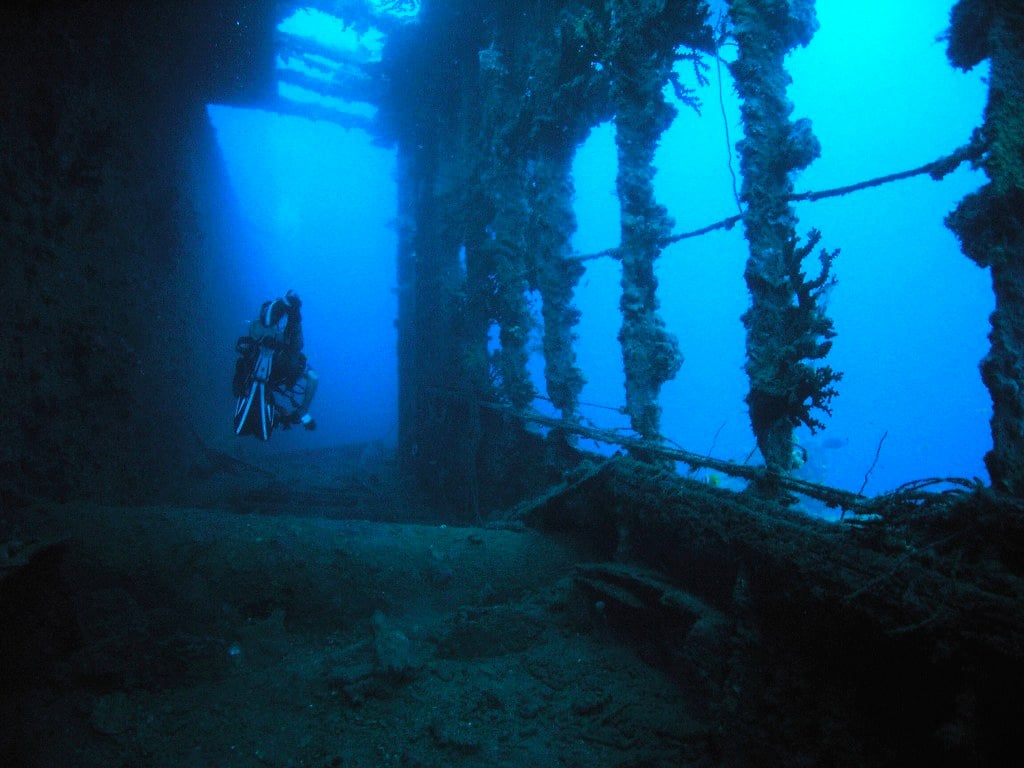
President Coolidge started life as a luxury ocean liner and ended it as a troopship that hit two American mines in 1942 while trying to enter the harbour at Espiritu Santo. Most of the troops survived by swimming ashore, but the ship sank.
At nearly 200 metres long and resting in 20 to 70 metres of water, the Coolidge is both accessible and vast. The interior is famous for a ceramic sculpture known as “The Lady,” a decorative piece still mounted in what was the First Class lounge.
Chandeliers, china, jeeps, and anti-aircraft guns are among the many features that make this one of the most varied wreck dives in the world.
Scapa Flow — Scotland
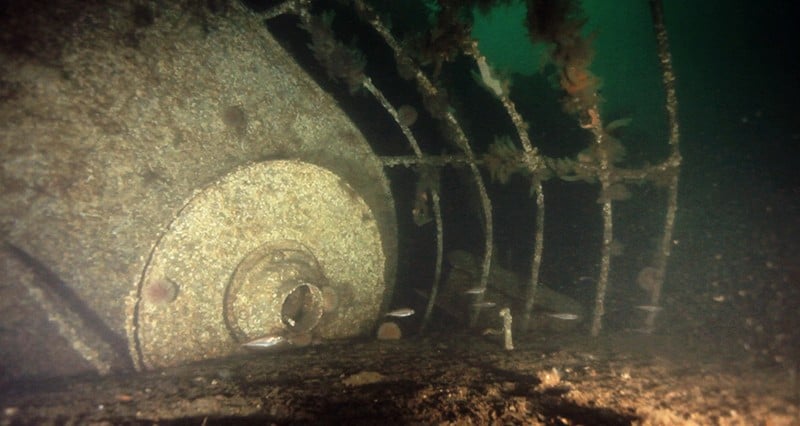
Scapa Flow is a natural harbour in Orkney where the German High Seas Fleet was interned after World War I. In 1919, to prevent the ships from falling into Allied hands, German Admiral Ludwig von Reuter ordered the fleet scuttled.
It was the largest act of deliberate warship sinking in history. Several of the battleships and cruisers are still diveable today, sitting in relatively shallow, cold water.
The visibility can be challenging, and the water temperature is bracing, but the scale of these warships is something else entirely. The Kronprinz Wilhelm, the Markgraf, and the Köln are among the most popular dives.
Scapa Flow also contains British warships sunk in both world wars, adding to the historical complexity of the site.
SMS Cormoran — Guam
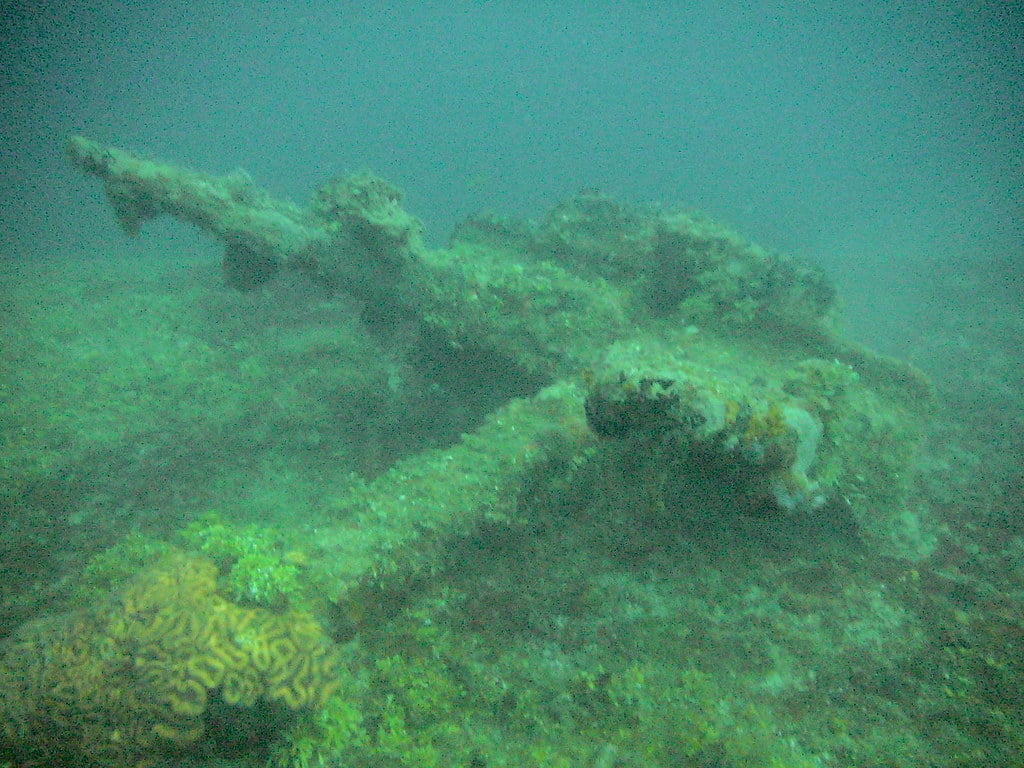
The Cormoran was a German auxiliary cruiser interned in Guam’s Apra Harbour after WWI. When America entered the war in 1917, the German crew sank her rather than let her be captured — making her the first enemy vessel sunk by American forces in WWI.
She now rests overlapping with a WWII Japanese cargo ship, the Tokai Maru. Divers can experience two ships from two different world wars in a single dive.
The site sits at about 40 metres, and the two hulls rest together in an arrangement that doesn’t exist anywhere else in the world.
SS Umbria — Sudan
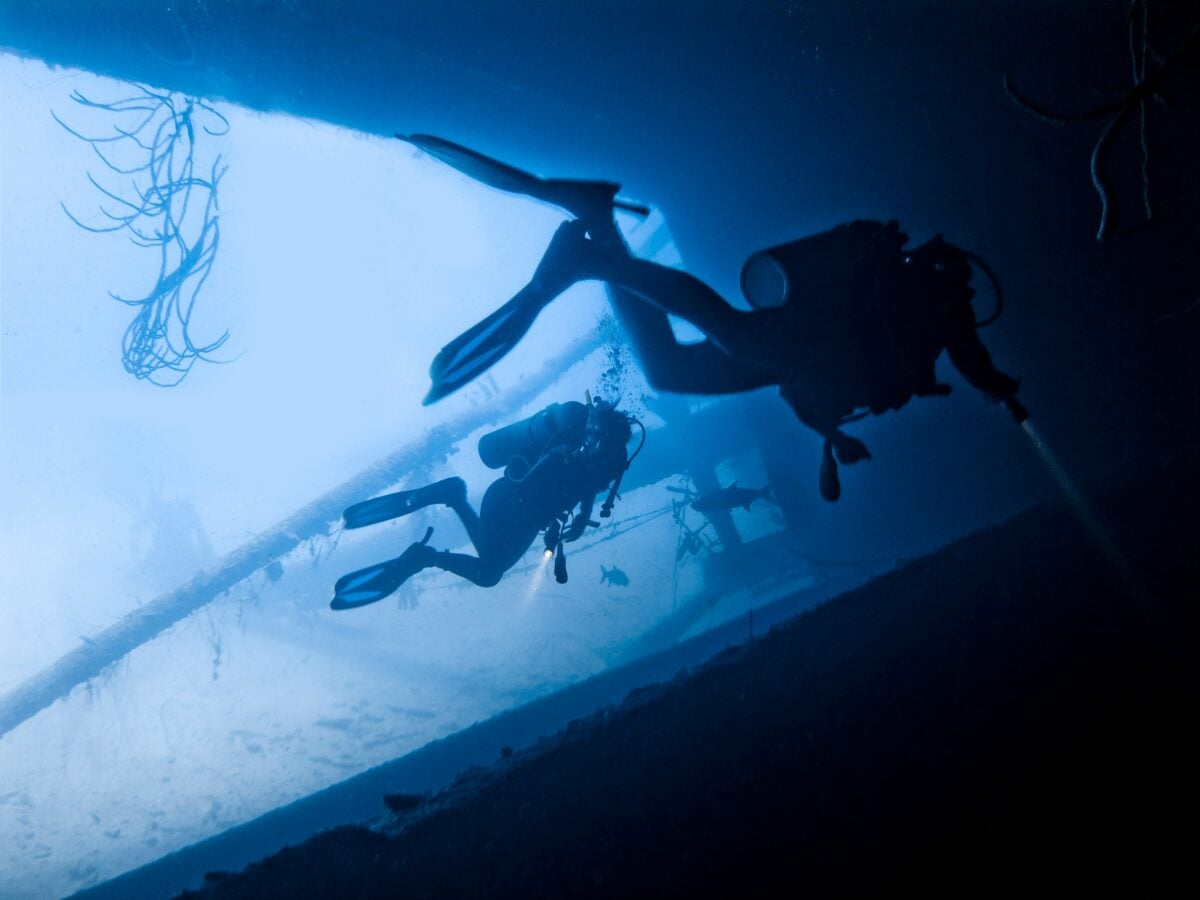
Off the coast near Port Sudan, the Umbria rests deep in the Red Sea, often named among Africa’s top dive spots. A cargo vessel built in Italy, she was seized early in World War II hauling freight that raised eyebrows – roughly 360,000 shells and explosives packed tight below deck.
Faced with capture by British forces, her commander chose to sink her on purpose. Inside the wreck today, those weapons remain, sitting untouched, clearly seen within the open hull.
They have stayed whole through decades underwater. Down near a coral drop-off, the wreckage rests at depths ranging from 7 to 36 meters.
Because of how clear the Red Sea water is, everything looks sharp and vivid. Despite sinking back in 1940, the vessel remains surprisingly intact.
The Bianca C in Grenada
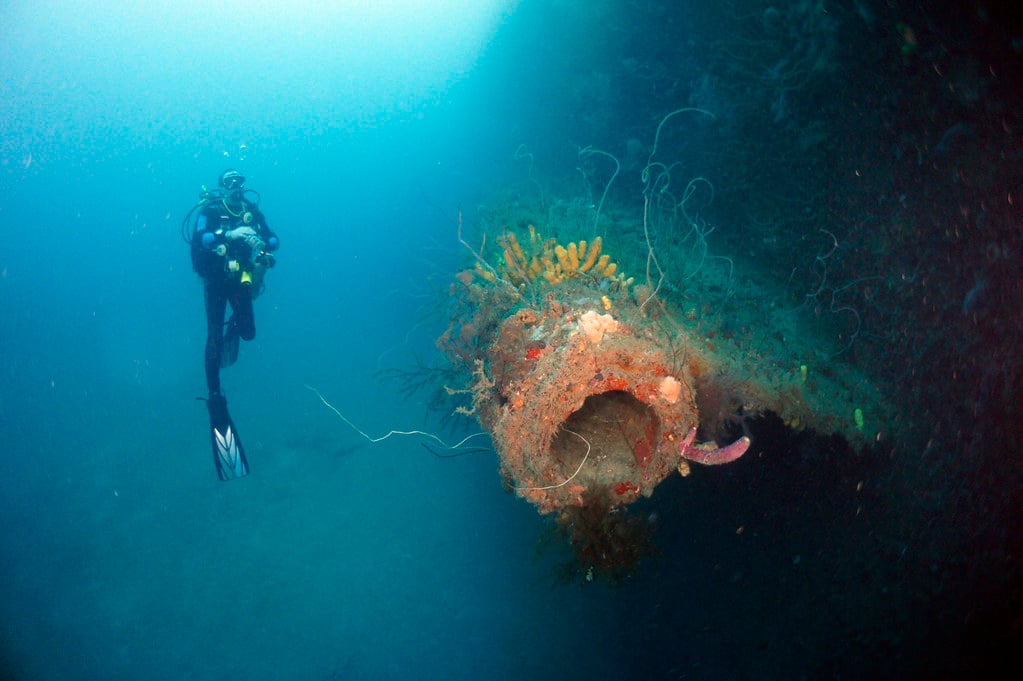
A blaze broke out on the Bianca C, an Italian passenger ship, back in 1961 while it sat moored near Grenada – later called the Titanic of the Caribbean. Locals jumped into action; because of their work, everyone onboard made it safely ashore.
A stone marker now stands on the island to remember those who helped. Though tugged away from shore afterward, the vessel dropped beneath waves at about fifty meters deep.
Stretching 184 meters, this sunken hull rests among the biggest underwater ruins across the region. Floating too far down for most divers to reach entirely, she draws plenty of visitors just the same.
Down there, giant shadows often glide past – manta rays weaving through clouds of barracuda.
SS Thistlegorm was only the beginning
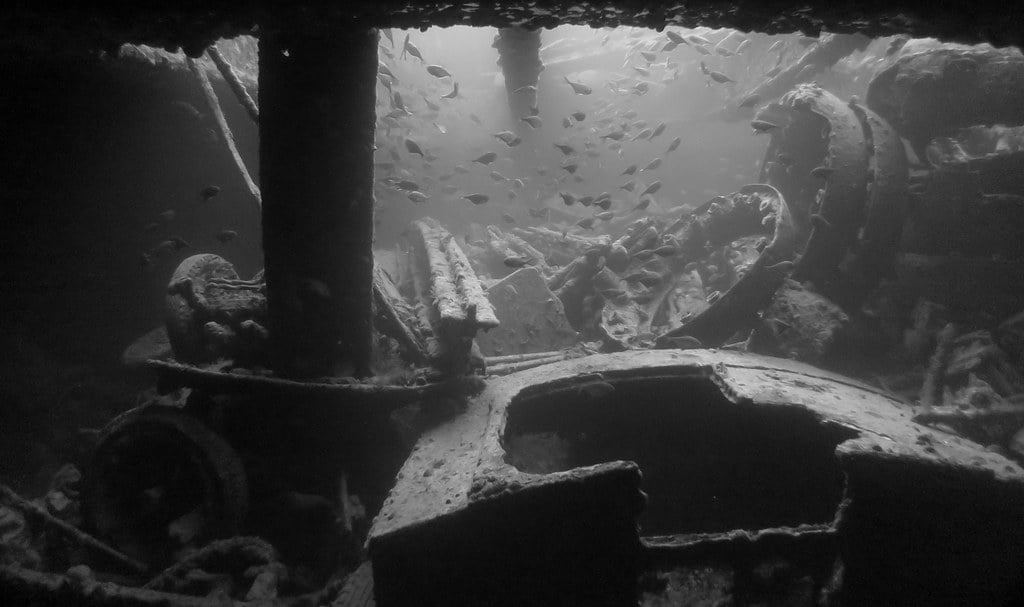
Down in the silence of wreck diving, time slows. Sunken ships? They’re frozen moments.
Picture a cargo hold stacked with motorcycles, rusting together like old secrets. Imagine trucks meant for battlefields – war long finished by the time they sank.
Belongings remain too: combs, letters, boots – all whispering personal histories. These wrecks stretch back over one hundred years.
You’ll find them scattered everywhere – from tropical reefs to icy Scottish tides. Warm ones sit under bright skies, close at hand.
Cold spots demand skill, thick gear, body hardening, plans that hold through delays. Something ties them together: it’s that hush when you drop toward a sunken ship, first sight of its form gliding out of the deep haze, suddenly seeing how this thing used to matter, full of motion and aim, only to land here – frozen, soundless, reshaped slow by years.
More from Go2Tutors!

- The Romanov Crown Jewels and Their Tragic Fate
- 13 Historical Mysteries That Science Still Can’t Solve
- Famous Hoaxes That Fooled the World for Years
- 15 Child Stars with Tragic Adult Lives
- 16 Famous Jewelry Pieces in History
Like Go2Tutors’s content? Follow us on MSN.