Famous Songs With Lyrics That Don’t Make Sense
We’ve all been there, singing along to a massive hit when suddenly you stop mid-chorus and think, wait, what did I just say? The music industry is packed with songs that became cultural phenomena despite having lyrics that make absolutely zero sense. Sometimes the words are pure gibberish, sometimes they’re grammatically incorrect, and sometimes they’re just random thoughts strung together with no connection whatsoever.
The truth is that catchy melodies and infectious beats can carry a song to the top of the charts regardless of whether the lyrics make any logical sense. From intentional nonsense designed to confuse critics to accidental word salad that somehow became iconic, these songs prove that sometimes it’s better to just feel the music than try to understand what’s being said.
Here is a list of 13 famous songs with lyrics that don’t make sense.
I Am The Walrus
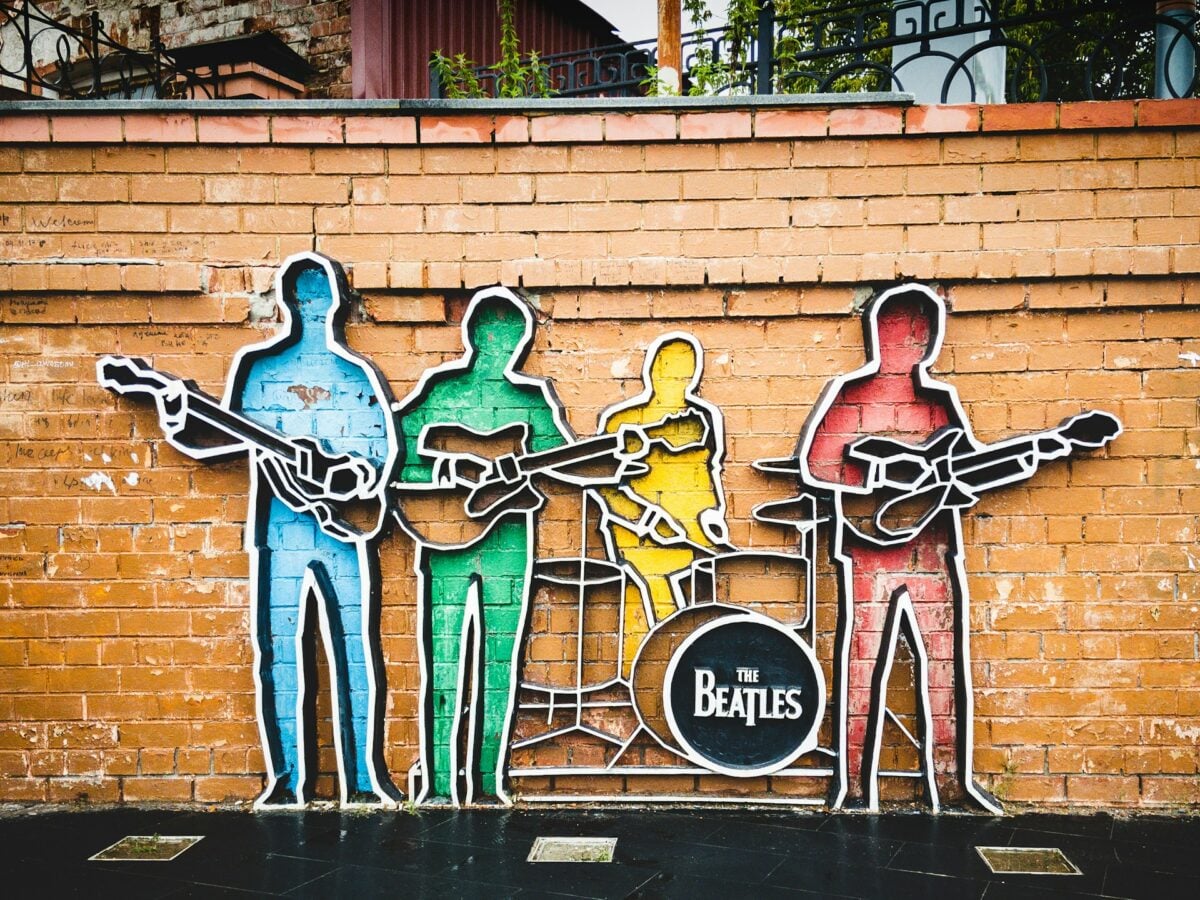
The Beatles created this psychedelic masterpiece specifically to mess with people’s heads. John Lennon was fed up with critics obsessively analyzing every Beatles lyric for hidden meanings, so he decided to write something that was intentionally impossible to interpret.
The song references Lewis Carroll’s The Walrus and the Carpenter, throws in random images of eggmen and semolina pilchards, and ends with the famous nonsense phrase that sounds vaguely profound but means absolutely nothing. The chant at the end is actually from a BBC radio recording of King Lear, making the final section deliberately absurd rather than accidentally so.
Lennon later admitted he wrote it on acid and was amused by fans desperately trying to find deep meaning in what was essentially creative gibberish, and the irony is that by trying to avoid analysis, he created one of the most analyzed songs in music history.
Loser

Beck’s breakthrough hit was recorded in 1992 and released in 1993 on Bong Load Records before being re-released in 1994 by DGC. The song emerged from his experience playing tiny clubs and coffee shops as essentially a parody of rich and famous people talking about the world’s difficulties.
The famous chorus phrase was actually inspired by Mexican-American slang rather than random improvisation. Beck himself has said the lyrics aren’t meant to be analyzed because the song isn’t that deep, admitting it mainly refers to how bad he is at rapping.
Lines about chimpanzees, butane in veins, plastic eyeballs, and beefcake pantyhose create a stream of consciousness that sounds like someone channel surfing through fever dreams, and despite or perhaps because of its nonsensical nature, the track became an anthem for Generation X.
Like Go2Tutors’s content? Follow us on MSN.
Summer Girls

LFO’s hit from 1999 is basically a three-minute nostalgia dump of random 1980s and 1990s pop culture references with absolutely no connection to each other. Lead vocalist Rich Cronin admitted he wrote the lyrics as a joke and never expected them to become a legitimate pop hit, later confirming in VH1 interviews in 2009 that many of the lines were freestyle filler lyrics he never expected to keep.
One moment the song mentions Abercrombie & Fitch, then suddenly Chinese food makes the singer sick, followed by references to Michael J. Fox, Cherry Coke, and William Shakespeare all thrown together for no apparent reason. The song perfectly captures that late 1990s era when pop culture references were beginning to replace actual storytelling in mainstream music.
Its randomness feels almost like an early version of internet meme culture set to a catchy beat, proving that sometimes making absolutely no sense is the secret to creating a memorable summer anthem.
Break Free

Ariana Grande’s venture into electronic dance music released in July 2014 drew more attention for its grammatically incorrect lyrics than anything else. Produced by Zedd and Max Martin, the pre-chorus features lines about only wanting to die alive and never by the hands of a broken heart that had English teachers everywhere cringing.
Grande later admitted in a Time magazine interview that the lyrics weren’t her choice and appeared at the insistence of producer Max Martin, the same industry executive responsible for other grammatically questionable hits. The incorrect phrasing was intentional for rhythm rather than accident.
Despite the linguistic liberties, or maybe because of them, the track became one of her biggest hits and helped establish her presence in the EDM genre.
MacArthur Park

This epic ballad released in 1968 features some of the most baffling metaphors ever committed to vinyl. The famous image of a cake left out in the rain has confused listeners for decades, along with references to striped pairs of pants, parks melting in the dark, and recipes that will never be found again.
Songwriter Jimmy Webb later explained that the cake metaphor actually symbolized a lost love affair rather than literal nonsense, though that explanation hasn’t made the lyrics any clearer. Richard Harris delivered the lyrics with theatrical intensity that somehow made the puzzling metaphors even more pronounced.
Despite its completely baffling narrative, the song became a hit multiple times over several decades, and Donna Summer’s 1978 disco version hit number one on the Billboard Hot 100, proving that even changing musical styles couldn’t make these lyrics any more comprehensible.
Like Go2Tutors’s content? Follow us on MSN.
Blue

Eiffel 65’s techno-pop anthem released in October 1998 in Europe and January 1999 in the United States took over the world with its infectious beat and repetitive chorus. The official lyric is listed as da ba dee da ba di, though the phrase has been misheard in dozens of different ways over the years.
Beyond the famous hook, the verses describe a man who lives in a blue world surrounded by blue objects, has a blue house with blue windows, drives a blue Corvette, and even has a blue girlfriend. The band has stated that the lyrics are meant to be fun and lighthearted without any deep significance, though some fans insist on interpreting it as a metaphor for isolation or depression.
The song’s enduring appeal lies entirely in its simplicity and hypnotic rhythm rather than any meaningful message.
Champagne Supernova

Oasis released this anthem in 1996, written by Noel Gallagher, who later joked in interviews that the lyrics were about nothing in particular. The song asks where people were while they were getting high, questions how many special people change, and wonders about slowly walking down various halls.
None of these questions connect to each other or lead anywhere meaningful. The band has acknowledged that the track is essentially about getting so intoxicated that nothing makes sense, so it’s oddly appropriate that the lyrics themselves don’t make sense either.
The infectious melody and easy-to-memorize chorus mean that fans get so lost in the singalong that they forget to think about what they’re actually saying. It’s relatively poetic in its way, creating a vibe that feels meaningful despite having absolutely no logical cohesion.
Tutti Frutti

Little Richard’s groundbreaking rock and roll hit from 1955 featured lyrics that were intentionally changed to get around censorship. The original draft lyric was explicit and would never have made it onto radio, so songwriter Dorothy LaBostrie cleaned it up for commercial release.
The result was a collection of sounds that mean absolutely nothing but feel absolutely right when shouted at full volume. The famous gibberish phrase originated from Richard’s vocal warm-ups and became iconic precisely because it captured the raw energy and rebellion of early rock and roll without needing to mean anything specific.
Sometimes the most revolutionary thing you can do is prove that meaning is overrated when the music makes you want to move.
Like Go2Tutors’s content? Follow us on MSN.
Who Let The Dogs Out

The eternal unanswered question of early 2000s pop culture remains one of music’s greatest mysteries. Originally written by Anslem Douglas in 1998 as a Trinidadian soca song titled Doggie, the Baha Men version became an inescapable anthem at sporting events.
The intended meaning was actually calling out men who disrespect women at parties rather than being about literal dogs, but something clearly got lost in translation for international audiences. The Baha Men never provided a definitive explanation that stuck with the general public, and after decades of hearing it at every baseball game and birthday party, we’ve collectively decided we don’t actually care what it means.
The power of a catchy hook can overcome just about any lyrical confusion.
Whales Tails

Cocteau Twins showcased incredible musical ability on this dreamy track from their 1986 album Victorialand, but Elizabeth Fraser’s vocals present a unique challenge. Fraser admitted that she created the lyrics by going through books and dictionaries written in languages she doesn’t understand and pulling out words randomly.
Her lyric method is called glossolalia, using invented or foreign words for emotional sound rather than meaning. The instrumentation creates a dreamlike atmosphere where the voice becomes another instrument rather than a vessel for storytelling.
Fraser’s approach proved that sometimes the emotional tone of how words are sung matters more than what those words actually mean, influencing countless dream pop and shoegaze artists who followed.
Mmm Mmm Mmm Mmm

Crash Test Dummies released this track in 1993 and it peaked at number four on the Billboard Hot 100, creating one of the most recognizable hooks of 1990s alternative rock using nothing but humming. Brad Roberts’ distinctive baritone voice turns simple sounds into an earworm that burrows deep into your brain.
The verses tell three completely unconnected stories about children with various problems, with Roberts saying the stories were loosely inspired by real childhood memories rather than random fiction. The song never provides resolution or explains how these narratives relate to each other.
The mysterious humming chorus seems to suggest some profound connection between the stories, but that connection is deliberately never revealed, making the song both frustrating and fascinating as listeners are left to impose their own meaning.
Like Go2Tutors’s content? Follow us on MSN.
Around The World

Daft Punk released this dance track in 1997 and took minimalism to its logical extreme by repeating the title phrase 144 times throughout the song with virtually no variation or additional context. There’s no story, no character development, no metaphor, and no hidden meaning whatsoever.
The French electronic duo proved that in dance music, lyrics are essentially optional as long as the beat keeps people moving. Michel Gondry’s music video visualizes each repetition as a different motion, emphasizing rhythmic structure over meaning.
The repetition becomes almost meditative, turning two simple words into a mantra that somehow feels right when you’re on a dance floor at three in the morning. Sometimes the best lyrics are the ones that get out of the way and let the music do all the talking.
Hook

Blues Traveler released this track in 1994 and it peaked at number 23 on the Billboard Hot 100, creating a scathing commentary on formulaic pop music by writing a song that openly admits it makes no sense. The opening lines literally state that it doesn’t matter what the singer says as long as he sings with inflection that makes you feel he’s conveying some inner truth.
Throughout the track, nonsensical lines appear specifically to prove that listeners will accept anything if it’s delivered with enough confidence and wrapped in a catchy melody. The song offers a critique of insincere pop music while ironically becoming a hit pop song itself from the platinum-selling album Four.
It’s the ultimate meta-commentary on the music industry, proving its own point by succeeding despite being transparently meaningless.
When Words Don’t Matter

These songs prove that melody and emotion often matter more than meaning. Whether the nonsense was deliberate artistry, happy accident, or thinly veiled satire, they show how sound alone can connect people.
From intentional confusion designed to frustrate critics to freestyle filler that accidentally became iconic, these tracks remind us that music doesn’t always have to make sense to make an impact. Sometimes the best songs are the ones that make you feel something even when they’re not actually saying anything at all.
More from Go2Tutors!

- 16 Historical Figures Who Were Nothing Like You Think
- 12 Things Sold in the 80s That Are Now Illegal
- 15 VHS Tapes That Could Be Worth Thousands
- 17 Historical “What Ifs” That Would Have Changed Everything
- 18 TV Shows That Vanished Without a Finale
Like Go2Tutors’s content? Follow us on MSN.