Fastest Cars from the Pre-War Era
Speed meant something different in the 1920s and 1930s. When most people still rode horses to market and paved roads were a luxury, the cars that pushed past 100 miles per hour felt like science fiction.
Engineers worked with rudimentary tools, no computers, and often no wind tunnels. Yet they built machines that would make your heart race.
The pre-war era produced some of the most beautiful and fastest automobiles ever created. These weren’t just fast—they were works of art that happened to go really, really fast.
Mercedes-Benz W125

The W125 dominated Grand Prix racing in 1937, and for good reason. Its supercharged 5.6-liter straight-eight engine produced around 646 horsepower.
That’s impressive even by modern standards, but in 1937 it was absolutely bonkers. Rudolf Caracciola piloted one to a speed record of 268 mph on a German autobahn in 1938.
Think about that for a moment—268 mph on public roads with 1930s tire technology and virtually no safety equipment. The man had nerves of steel.
The W125 weighed just over 1,600 pounds despite its massive engine. Mercedes built the chassis from oval tubes, keeping weight down while maintaining rigidity.
The silver paint that earned these cars their “Silver Arrows” nickname came from a last-minute decision to strip off the white paint to meet weight regulations.
Auto Union Type C

While Mercedes dominated headlines, Auto Union created something equally impressive. The Type C featured a mid-mounted V16 engine that produced 520 horsepower in its later iterations.
This was radical thinking for the era—most race cars still placed the engine up front. Ferdinand Porsche designed the Auto Union racers.
Yes, that Porsche. He understood that weight distribution mattered, so he placed the driver ahead of the engine.
This created handling characteristics that terrified many drivers but rewarded those brave enough to master it. Bernd Rosemeyer became synonymous with the Type C.
He won race after race, often in terrible weather conditions that sent other drivers spinning off course. His aggressive driving style matched the car’s demanding nature perfectly. Tragically, he died attempting a land speed record in 1938 when his Type C caught a crosswind at over 260 mph.
Bugatti Type 57

Ettore Bugatti built the Type 57 for wealthy enthusiasts who wanted speed and elegance in equal measure. The standard models were quick, but the 57SC supercharged variant was properly fast.
It topped out around 130 mph, which made it one of the fastest road cars you could buy in 1937. Jean Bugatti, Ettore’s son, designed the Atlantic coupe body style.
Only four were made, and each one cost a fortune. The swooping fenders, dramatic dorsal seam, and low stance made it look fast even when standing still.
Modern collectors pay tens of millions for these cars when they come up for sale. The Type 57G Tank raced at Le Mans, winning the 24-hour endurance race in 1937 and 1939.
Its enclosed cockpit and streamlined body were ahead of their time. Where other manufacturers built open-wheel racers, Bugatti created something that looked like it belonged in the future.
Duesenberg SJ

American engineering took a different approach to speed. The Duesenberg SJ used a supercharged 6.9-liter straight-eight that made 320 horsepower.
That might sound modest compared to the German racers, but remember—this was a road car you could drive to dinner. Gary Cooper owned one. Clark Gable drove one.
The Duesenberg became the car of Hollywood royalty because it delivered both prestige and performance. Top speed hovered around 140 mph in the short-wheelbase models, making it the fastest American car of its time.
The build quality matched the performance. Each engine took six months to assemble.
Workers hand-fitted every component. The company offered custom coachwork through the finest body builders in America.
You didn’t just buy a Duesenberg—you commissioned one.
Bluebird K3

Malcolm Campbell obsessed over speed records. His Bluebird K3 pushed the land speed record to 146.16 mph in 1924, then kept evolving.
Each iteration grew more powerful and more streamlined. The later versions used aircraft engines.
Napier Lion engines delivered massive power in a compact package. Campbell’s team mounted these beasts in increasingly aerodynamic bodies, chasing speed on beaches and salt flats across the globe.
Campbell broke the land speed record nine times between 1924 and 1935. Each achievement pushed automotive engineering forward.
His work with streamlining influenced race car design for decades to come.
Alfa Romeo 8C 2900B
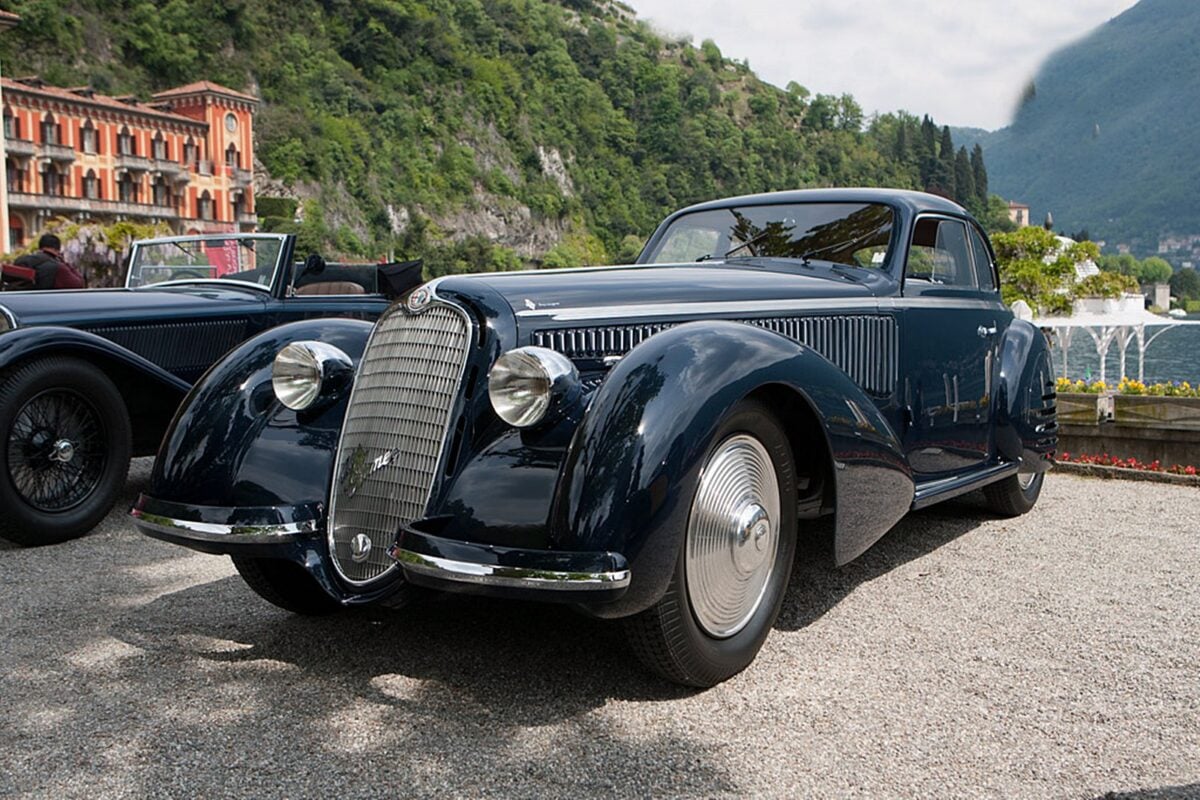
Alfa Romeo built the 8C 2900B for both racing and road use. Its supercharged straight-eight engine produced 220 horsepower, enough to push the car past 120 mph.
But speed was only part of the story. The independent suspension was years ahead of its time.
While other manufacturers still used solid axles, Alfa Romeo developed a system that kept all four wheels planted through corners. This made the 8C incredibly fast on winding roads and racing circuits.
Carrozzeria Touring created some of the most stunning bodies ever fitted to a sports car. Their “Superleggera” construction method used small-diameter tubes covered in thin aluminum panels.
This kept weight down while allowing for flowing, organic shapes. Several 8C 2900s won at Mille Miglia, proving that beauty and speed could coexist.
Bentley Speed Six

W.O. Bentley believed in the philosophy of “win on Sunday, sell on Monday.” His Speed Six dominated Le Mans in 1929 and 1930.
The 6.5-liter straight-six produced 180-200 horsepower depending on specification. Top speed reached about 120 mph.
These cars were massive and heavy by modern standards. But they were also incredibly robust.
Bentley built them to withstand the punishment of 24-hour races, and that durability made them excellent road cars. You could drive a Speed Six hard all day without worrying about mechanical failures.
The “Bentley Boys” made these cars famous. This group of wealthy racers and enthusiasts drove their Speed Sixes hard on both road and track.
Their adventures became legendary, cementing Bentley’s reputation for building cars that were both fast and unbreakable.
Golden Arrow

Henry Segrave commissioned the Golden Arrow specifically to break the land speed record. The massive Napier Lion engine produced 925 horsepower.
The streamlined body looked like a wingless aircraft lying on its side. In March 1929, Segrave piloted the Golden Arrow to 231.44 mph on Daytona Beach.
This was a new world record, and it stood for two years. The car made only one run at speed, as Segrave retired from land speed racing after this achievement.
The engineering was remarkable for its time. The body used advanced streamlining principles.
The chassis had to withstand tremendous stress. Everything had to work perfectly for just a few minutes at full speed.
That kind of specialized engineering pushed the boundaries of what was possible.
Talbot-Lago T150C

The French manufacturer Talbot-Lago combined elegance with performance. The T150C SS featured a 4.0-liter straight-six with overhead valves and hemispherical combustion chambers.
This advanced design produced 140 horsepower in standard form, with competition versions making significantly more. Top speed reached about 110 mph in road trim.
That made it plenty quick for the time, especially given its handling prowess. The independent front suspension helped it corner better than many competitors.
Anthony Lago transformed the company in the mid-1930s, focusing on sporting models. His cars competed successfully at Le Mans and in sports car races across Europe.
Several featured drop-dead gorgeous bodywork by Figoni et Falaschi, making them as desirable to collectors today as they were to buyers then.
Auburn 851 Speedster

The Auburn 851 Speedster came with a guarantee: it would top 100 mph. Each car included a dash plaque signed by legendary driver Ab Jenkins, certifying that this specific vehicle had achieved over 100 mph during testing.
That guarantee sold cars. The supercharged straight-eight made 150 horsepower.
More importantly, Gordon Buehrig designed a body that captured everyone’s attention. The boat-tail rear end, swept fenders, and external exhaust pipes created an instantly recognizable silhouette.
At roughly $2,000, the Auburn 851 Speedster cost half what a Duesenberg did. This made serious performance accessible to more buyers.
You got style, speed, and that all-important 100 mph guarantee. No wonder they remain sought-after collectibles.
Delahaye 135
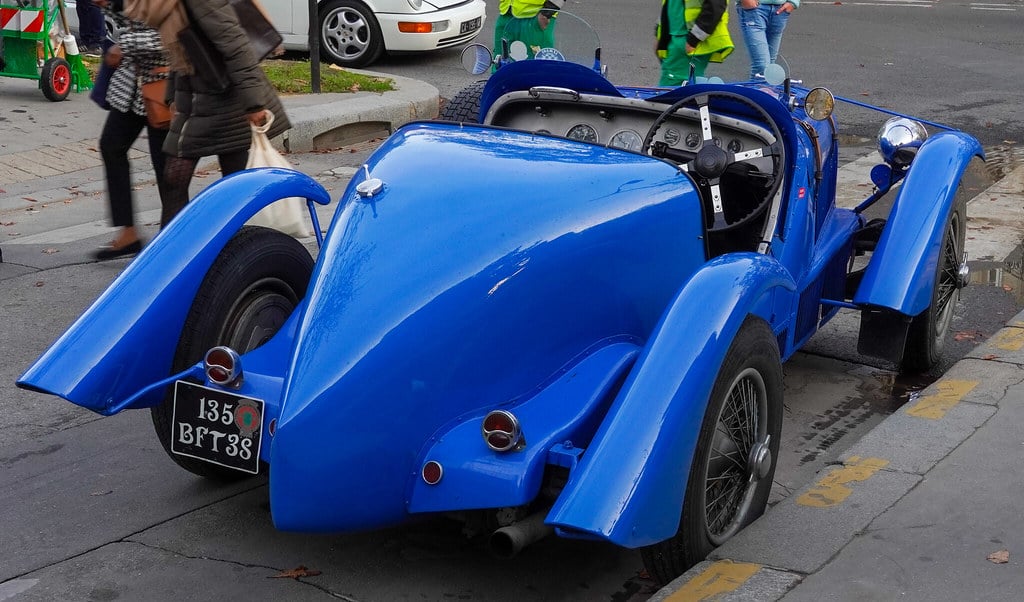
Delahaye transformed from a manufacturer of reliable but boring cars into a performance brand in the mid-1930s. The 135 Competition model featured a 3.6-liter inline-six that produced up to 160 horsepower with triple carburetors.
Top speed approached 115 mph in competition trim. But the Delahaye’s real strength was its handling.
The chassis used independent front suspension and a well-sorted rear end. This made it a formidable competitor on winding road courses.
The 135 won races across Europe, including a stunning victory at the 1938 Monte Carlo Rally. French coachbuilders created spectacular bodies for the chassis.
Companies like Figoni et Falaschi, Chapron, and Saoutchik produced some of the most beautiful automobiles ever made on Delahaye 135 running gear.
Mercedes-Benz 540K

Not every fast pre-war car was built solely for racing. The Mercedes-Benz 540K offered luxury and performance in one striking package.
Its supercharged 5.4-liter straight-eight produced 180 horsepower, pushing the heavy car to about 110 mph. The 540K featured a two-stage throttle system.
Press it partway down and you get normal power for cruising. Push it to the floor and you engage the supercharger with a distinctive mechanical whine.
Suddenly, you had serious acceleration. These cars were expensive when new and remain so today.
The Special Roadster versions featured swooping fenders, long hoods, and dramatic proportions. They were built for movie stars, industrialists, and royalty.
Driving one made a statement about your success and taste.
Railton Special

A burst of speed came from John Cobb’s Railton Special, shattering expectations right before the war began. Not just powerful but relentless, its twin Napier Lion engines roared with roughly 2,500 horses under the hood.
Shaped unlike anything on wheels, the car wore curves borrowed from planes – then added something sharp, almost alive. Into the desert dust it roared, Cobb pushing the Railton Special past 369.70 mph in ’47, though gears had been turning long before war broke out.
Taming such force wasn’t just loud – it demanded balance, grip, a cockpit that didn’t shake apart. Speed like that meant solving riddles under pressure, one broken part away from disaster.
Each system had to bend without breaking, working together even when pushed beyond reason. Speed dreams took shape in steel when the Railton Special roared to life.
Power beyond reason, velocity that blurred vision, risk at every turn – this machine had it all. Not just raw force but brains behind the build mattered just as much.
Courage like Cobb’s found its match in those who designed the beast.
When Fast Meant Moving Forward

Faster than promises, these cars arrived when velocity meant something raw, unfiltered. Not guided by algorithms, builders took risks just to see what might happen.
Back then, records were broken by instinct, not simulations. Machines rattled, smoked, often failed – yet somehow felt alive.
Even now, their hunger for forward motion lingers in the air. Look closely.
That smooth shape on today’s sports car? It echoes the flow of those early racers. Not only did they reshape how vehicles looked, but also how they handled the road beneath.
Instead of rigid axles, they introduced suspensions that moved separately – changing comfort and control forever. Forced induction started there too, pushing more air into engines long before it became common.
These ideas didn’t fade – they settled deep into car engineering. Even now, when you spot a high-performance machine roaring past, its roots twist back to those thunderous machines built before war reshaped the world.
Folks like them show how new ideas can grow without endless money or ideal setups. Often enough, what matters is seeing clearly, pushing hard, even if the ride feels too quick and the stopping power seems unsure.
Step by shaky step, those first brave ones carved names nobody forgets.
More from Go2Tutors!

- The Romanov Crown Jewels and Their Tragic Fate
- 13 Historical Mysteries That Science Still Can’t Solve
- Famous Hoaxes That Fooled the World for Years
- 15 Child Stars with Tragic Adult Lives
- 16 Famous Jewelry Pieces in History
Like Go2Tutors’s content? Follow us on MSN.