Fastest Trains in the World
Watching a high-speed train blur past at 300 kilometers per hour changes how you think about distance. Cities that once felt worlds apart suddenly become neighbors.
The technology exists now to eat breakfast in one country and lunch in another, not by plane, but by rail. Speed records keep falling as nations compete to build faster networks.
What started as a race between a few countries has spread across continents. These trains don’t just move fast—they redefine what’s possible when you combine engineering precision with political will.
The Shanghai Maglev Holds the Commercial Speed Record

The Shanghai Maglev reaches 431 kilometers per hour on its daily runs between Pudong Airport and the city. It uses magnetic levitation instead of wheels, which means the train literally floats above the track.
The ride feels smooth because there’s no friction, no rattling, no traditional contact between train and rail. You can board this train and reach the airport in just over seven minutes.
The acceleration pushes you back in your seat like a plane taking off. German and Chinese engineers built this system together, proving the technology works at scale.
China’s CR400 Fuxing Dominates Long-Distance Routes

The Fuxing trains operate at 350 kilometers per hour across thousands of kilometers of track. These trains connect Beijing with Shanghai, Guangzhou, and dozens of other cities.
The network keeps expanding, with new routes opening every year. Chinese engineers designed every component domestically.
The trains run in all weather conditions, from the frozen northeast to the humid south. Passengers barely notice the speed until they glance outside and see the landscape racing past.
Japan’s Shinkansen Started It All

The Tokaido Shinkansen opened in 1964 and changed everything. It proved that high-speed rail could work as a business.
Today’s Shinkansen trains reach 320 kilometers per hour, and the network extends across most of Japan. The trains leave on time, measured in seconds not minutes.
Cleaning crews have seven minutes to prepare each train between runs. They turn every seat, vacuum every floor, and restock supplies with choreographed efficiency.
The system maintains this precision despite running hundreds of trains daily. Japan’s newer Nozomi services cut the Tokyo-Osaka journey to two and a half hours.
The ride stays smooth even through tunnels and curves. Engineers built the tracks to minimize noise and vibration in residential areas.
France’s TGV Broke 570 Kilometers Per Hour

The TGV holds the world speed record for conventional rail at 574.8 kilometers per hour, set in 2007. Regular commercial services run at 320 kilometers per hour, connecting Paris with Lyon, Marseille, and beyond.
French engineers pioneered many high-speed rail technologies still used worldwide. The articulated design, where cars share bogies, improves stability at speed.
The overhead power delivery system influences train designs across Europe. The TGV network extends into neighboring countries.
You can board in Paris and step off in Barcelona, Brussels, or Amsterdam. The trains cross borders without stopping, making European travel seamless.
Spain’s AVE Covers the Most Ground
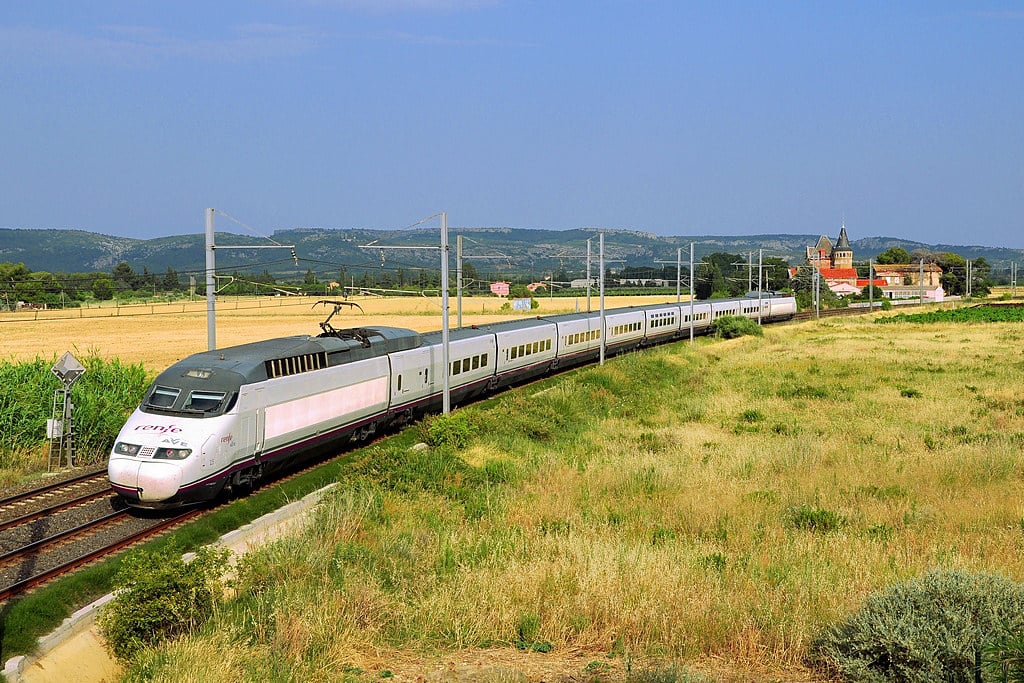
Spain built more high-speed rail in less time than any other European country. The AVE network now exceeds 3,000 kilometers, second only to China.
Trains run at 310 kilometers per hour on the newest routes. The Madrid-Barcelona line cuts through mountains and across plains.
Travel time dropped from six hours to under three. Spain’s success came from standardizing track gauge and building dedicated high-speed corridors.
AVE trains reach smaller cities too, not just major hubs. This democratic approach means people in Valladolid or Alicante access the same speed as those in Madrid.
The network keeps growing despite economic challenges.
Germany’s ICE Navigates Complex Routes

The ICE trains reach 300 kilometers per hour but face geographic constraints. Germany’s dense population and varied terrain make building dedicated high-speed lines difficult.
Many ICE routes share tracks with freight and regional trains. The trains tilt through curves, maintaining speed where geography forces the track to bend.
This technology keeps journey times competitive without requiring completely straight routes. The ICE connects German cities with Austria, Switzerland, and the Netherlands.
German engineering shows in the details—quiet interiors, stable rides, and reliable service in harsh winter conditions. The trains run through the Alps and across flat northern plains with equal competence.
Italy’s Frecciarossa Speeds Through History

Italy’s high-speed trains reach 300 kilometers per hour while passing ancient Roman ruins and Renaissance cities. The name Frecciarossa means “red arrow,” and these trains cut travel times dramatically across the country.
Rome to Milan takes just three hours. The trains run on dedicated tracks between major cities, then merge with conventional lines to reach smaller towns.
This flexibility lets high-speed rail serve more destinations without requiring entirely new infrastructure everywhere. Italian operators compete on the same tracks.
Two companies offer high-speed service, driving improvements in comfort and pricing. Competition in rail remains rare globally, making Italy’s approach distinctive.
The Eurostar Links Three Countries Underground

The Eurostar reaches 300 kilometers per hour through the Channel Tunnel, connecting London with Paris and Brussels. The tunnel runs 50 meters below the seabed for 37 kilometers.
Trains cross this underwater section in about 20 minutes. Security requirements slow boarding compared to domestic trains.
Passengers clear customs before departing, not upon arrival. Despite this, the journey still beats flying for city-center to city-center travel.
The service started in 1994 and transformed cross-channel travel. What once required a ferry or plane now happens by train.
Business travelers make day trips that would have seemed absurd a generation ago.
South Korea’s KTX Mirrors Japan’s Success

South Korea’s KTX trains reach 305 kilometers per hour, connecting Seoul with Busan in under three hours. The system borrowed technology from France initially but now incorporates domestic innovations.
The trains run frequently throughout the day. Seoul’s Gangnam district connects directly to resort towns and provincial cities.
South Korea’s compact size means high-speed rail works exceptionally well—most destinations sit within a few hours of the capital. Korean engineers adapted the technology for local conditions, including mountain tunnels and varying weather.
The network keeps expanding to serve more secondary cities.
Taiwan’s High-Speed Rail Serves a Small Island

Taiwan built a high-speed line running 345 kilometers down the west coast. Trains reach 300 kilometers per hour, cutting the island-long journey to about two hours.
The system opened in 2007 and handles over 60 million passengers yearly. The track runs through earthquake zones, requiring special engineering for stability and safety.
Sensors detect seismic activity and slow trains automatically. This feature proved its worth during several significant earthquakes.
Taiwan’s success shows that high-speed rail works even for small nations. The population density and linear geography create ideal conditions.
The investment paid off faster than predicted.
America’s Acela Shows What’s Possible

The Acela reaches 240 kilometers per hour on limited sections between Boston and Washington. Most of the route runs slower because of curves, old infrastructure, and shared tracks with freight trains.
The Northeast Corridor carries the most rail passengers in America despite these limitations. Amtrak keeps working on improvements, straightening curves and upgrading signals.
New trains ordered will run faster once track improvements finish. American rail faces unique challenges—freight railroads own most tracks, and population density outside the Northeast remains too low to justify high-speed rail economically.
The Acela succeeds where conditions favor it, but the model hasn’t spread to other regions yet.
Saudi Arabia’s Haramain Serves Pilgrims

The Haramain high-speed rail connects Mecca and Medina, two of Islam’s holiest cities. Trains reach 300 kilometers per hour across the desert, cutting travel time to under three hours.
The system opened in 2018 and serves millions of pilgrims annually. Saudi Arabia contracted Spanish companies to build and operate the line initially.
The trains handle extreme heat and sandstorms. Stations incorporate Islamic architecture with modern facilities.
This project shows how high-speed rail adapts to specific needs. The concentrated demand during religious seasons makes the economics work despite the harsh environment.
The line now extends to Jeddah, serving the country’s major western cities.
Morocco’s Al Boraq Leads Africa

Africa’s debut high-speed rail links Tangier to Casablanca, hitting speeds of 320 kph. Launched in 2018, Al Boraq runs on tech from France – tweaked for Morocco’s landscape.
Travel time? A little past two hours.
Though it rolls fast, the ride feels steady, smooth. Starting strong down south, Morocco poured resources into trains, believing they’d boost growth.
Reaching beaches and towns alike, riders include residents along with visitors enjoying easier trips. Stretching beyond current stops, future lines aim toward eastern and southern regions.
Success isn’t always where you expect. Morocco showed change is possible, not through wealth but will.
Commitment shaped the tracks – both political and financial – that made speed real on African ground.
Speed Keeps Climbing

Speed records rise as Japanese engineers trial maglev units hitting 603 km/h. Moving beyond limits, China prepares rail systems aimed at 400 km/h for regular travel.
Performance climbs steadily – new models glide quicker, hush noise levels, sip less power. Faster trains? Rivalry pushes progress.
Nations trade insights, yet hold back key edges. Standards crawl into place – still, tracks everywhere link up quicker than before.
A fresh wave of nations steps into the rail revolution. While India races ahead with bullet train corridors, Thai authorities map routes aimed straight at Chinese borders.
European tracks stretch further each year, weaving cities tighter. Speed records fall often now, turning long journeys into quick hops.
More from Go2Tutors!

- The Romanov Crown Jewels and Their Tragic Fate
- 13 Historical Mysteries That Science Still Can’t Solve
- Famous Hoaxes That Fooled the World for Years
- 15 Child Stars with Tragic Adult Lives
- 16 Famous Jewelry Pieces in History
Like Go2Tutors’s content? Follow us