First Cars Ever Built by Brands We Drive Today
Every car company started somewhere. Before the sleek sedans and powerful SUVs filling our driveways today, these brands built their first vehicles—often crude, experimental machines that barely resembled modern cars. Some of those early attempts were brilliant.
Others were absolute disasters. But each one set a manufacturer on the path to becoming a household name.
Ford: The Quadricycle That Started It All

Henry Ford built his first vehicle in 1896, and calling it a car feels generous. The Quadricycle looked like someone strapped a motor to a bicycle frame and added two more wheels.
It had a two-cylinder engine producing four horsepower, a tiller for steering instead of a wheel, and no reverse gear. Ford had to knock down part of his workshop wall just to get the thing outside.
The whole contraption weighed 500 pounds and could reach 20 miles per hour. Ford sold it for $200 to fund his next project, then bought it back years later as a historical artifact.
That first clunky experiment led to the Model T, which changed transportation forever.
Mercedes-Benz: When Two Rivals Became One
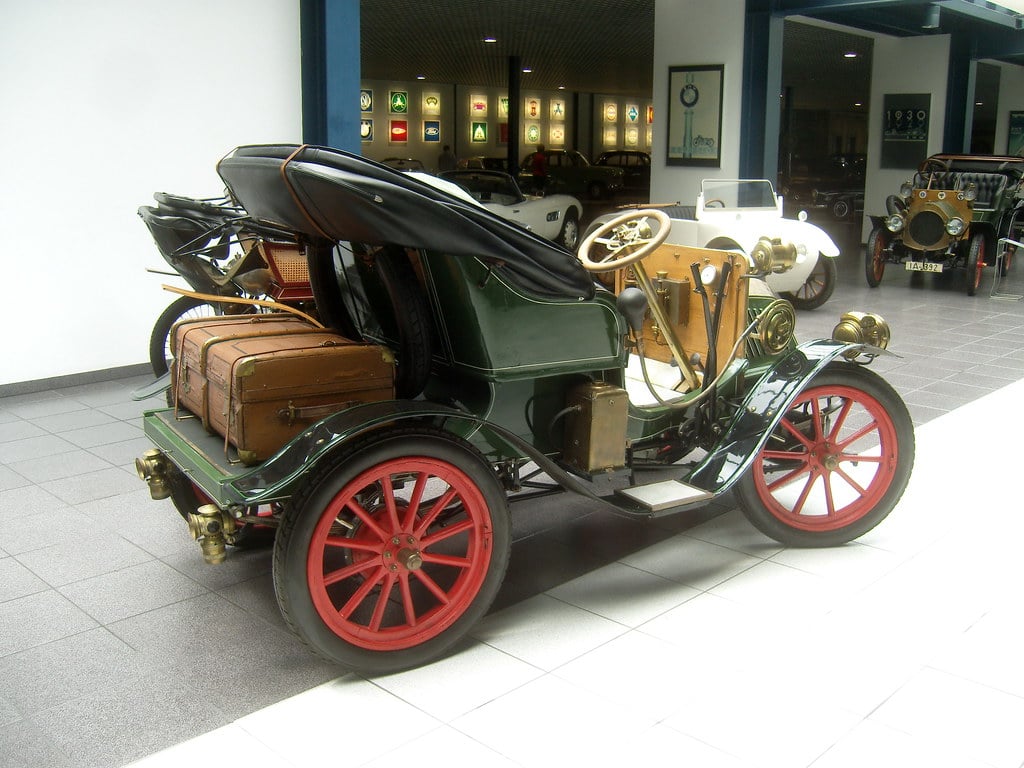
The story here gets complicated because Mercedes and Benz were separate companies when they built their first cars. Karl Benz created the Benz Patent-Motorwagen in 1885, widely considered the world’s first true automobile.
It had three wheels, a single-cylinder engine, and a top speed of 10 miles per hour. Gottlieb Daimler and Wilhelm Maybach built their first car in 1886—a motorized carriage with a 1.5-horsepower engine.
Both companies competed for decades before merging in 1926 to form Mercedes-Benz. The rivalry that created two pioneering automobiles eventually became the partnership that defined luxury cars.
Chevrolet: Racing Roots and a Bold Beginning

Louis Chevrolet and William Durant founded their company in 1911, and the first Chevy rolled out that same year. The Series C Classic Six was nothing like the affordable cars Chevy became famous for.
It was a large, luxurious vehicle with a six-cylinder engine, priced at $2,150—serious money back then. The Classic Six targeted wealthy buyers who wanted something fancier than a Ford.
It worked. Chevy sold thousands of them and established the brand as a real competitor.
Durant used that success to eventually regain control of General Motors, which he had lost years earlier.
Volkswagen: The People’s Car That Wasn’t
Ferdinand Porsche designed the first Volkswagen Beetle in the 1930s under orders from Adolf Hitler, who wanted an affordable car for German families. The early prototypes rolled out in 1938, but World War II halted civilian production.
The factory built military vehicles instead. After the war, British forces supervised the factory and restarted Beetle production.
The car that was supposed to motorize Nazi Germany became one of the most beloved vehicles in history, selling over 21 million units. Sometimes the worst beginnings lead to the best outcomes.
Toyota: From Looms to Automobiles

Kiichiro Toyoda founded Toyota Motor Corporation in 1937 after his family made their fortune manufacturing automatic looms. The company’s first passenger car, the Toyota AA, launched that same year.
It borrowed heavily from American designs, particularly the Chrysler Airflow and Chevrolet. The AA had a 3.4-liter six-cylinder engine and looked undeniably American.
Toyota only built 1,404 of them before shifting focus to trucks, which the military needed more. That early passenger car experiment taught Toyota valuable lessons about manufacturing quality that would pay off decades later.
Honda: A Motorcycle Company Takes a Risk

Honda made motorcycles for years before attempting cars. The company released its first automobile, the T360 mini pickup truck, in 1963.
A few months later came the S500 sports car—a tiny, lightweight roadster with a 531cc four-cylinder engine that could rev to 9,500 RPM. The S500 showed Honda’s motorcycle engineering expertise.
It had a chain-driven rear end and sounded more like a bike than a car. Honda only built about 1,300 of them, but the S500 proved the company could compete in the automotive market.
BMW: Planes First, Cars Second

BMW started as an aircraft engine manufacturer during World War I. After the war, the Treaty of Versailles banned Germany from building plane engines, so BMW switched to motorcycles and eventually cars.
Their first car, the BMW 3/15, arrived in 1927. Technically, the 3/15 was a licensed copy of the British Austin Seven.
BMW didn’t design it—they just built it under agreement. The car had a 743cc four-cylinder engine and could barely reach 50 miles per hour.
Not impressive, but it gave BMW the foothold they needed in the automotive industry.
Nissan: Multiple Names, One Company
Nissan’s history gets messy because the company changed names several times. In 1914, they were called Kaishinsha Motor Car Works when they built the DAT car.
The name stood for the initials of the three company investors. The first DAT was tiny, with a two-cylinder engine producing 10 horsepower.
It looked like a miniature American car and performed about as well as you’d expect from 10 horses. The company eventually became Datsun, then Nissan, but that first little DAT started everything.
Porsche: The Sports Car That Defined a Legend

Ferdinand Porsche designed Volkswagens for Hitler, but after the war, his son Ferry created the first Porsche. The 356 debuted in 1948, built mostly from Volkswagen parts.
It had a rear-mounted, air-cooled flat-four engine borrowed from the Beetle. Only 52 of the original 356s were hand-built in Austria before production moved to Germany.
That first car weighed just 1,300 pounds and could reach 84 miles per hour. The 356 established Porsche’s reputation for building driver-focused sports cars that prioritized handling over raw power.
Mazda: Cork and Cars

Mazda started as a cork manufacturing company in 1920. They built their first vehicle, a motorcycle-based three-wheeled truck called the Mazda-Go, in 1931.
The company didn’t produce a passenger car until 1960. The R360 Coupe was Mazda’s first real car—a tiny two-door with a 356cc V-twin engine producing 16 horsepower.
It looked like a toy but seated four people somehow. Mazda sold 23,000 of them in the first year, proving Japanese customers wanted small, affordable transportation more than size or speed.
Hyundai: Building on Borrowed Technology

Hyundai built ships and construction equipment before entering the car business in 1967. Their first car, the Cortina, was just a Ford vehicle assembled in Korea under license.
Hyundai didn’t design it or even modify it much. The first truly Hyundai car came in 1975—the Pony.
British designers helped create it, and Mitsubishi provided the engine and transmission. The Pony was basic transportation with no frills, but it was affordable and reliable enough to establish Hyundai as a real automaker.
Kia: Three Wheels Before Four

Kia manufactured bicycle parts and steel tubing before building their first vehicle in 1944—a bicycle. They moved to motorcycles, then three-wheeled trucks in 1952.
The company didn’t build a car until 1974. The Kia Brisa was their first passenger car, powered by a Mazda engine.
Kia only built about 72,000 of them before the South Korean government shut down the program, forcing Kia to focus on light trucks instead. The company didn’t get another shot at passenger cars until the 1980s.
Audi: Four Rings, One History
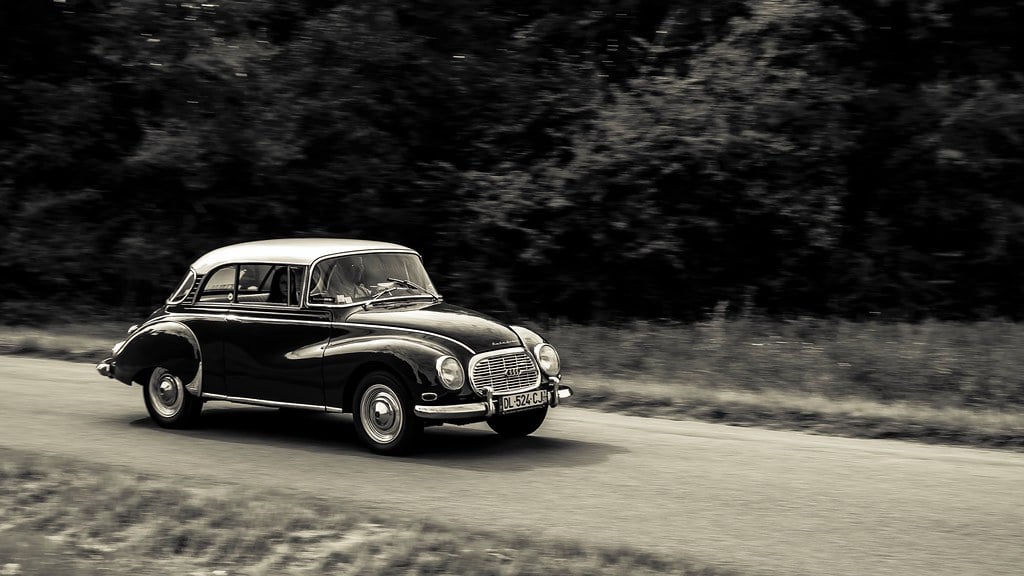
August Horch founded Horch automobile company in 1899, but left in 1909 to start a new company. Since he couldn’t use his own name again, he translated it to Latin—Horch means “hear” in German, and Audi means “hear” in Latin.
The first Audi car, the Audi Type A, launched in 1910 with a 2.6-liter four-cylinder engine. It was solid and well-engineered, but the company struggled financially.
Audi eventually merged with three other manufacturers in 1932, creating the four-ring logo that still represents the brand.
Tesla: Software Before Hardware
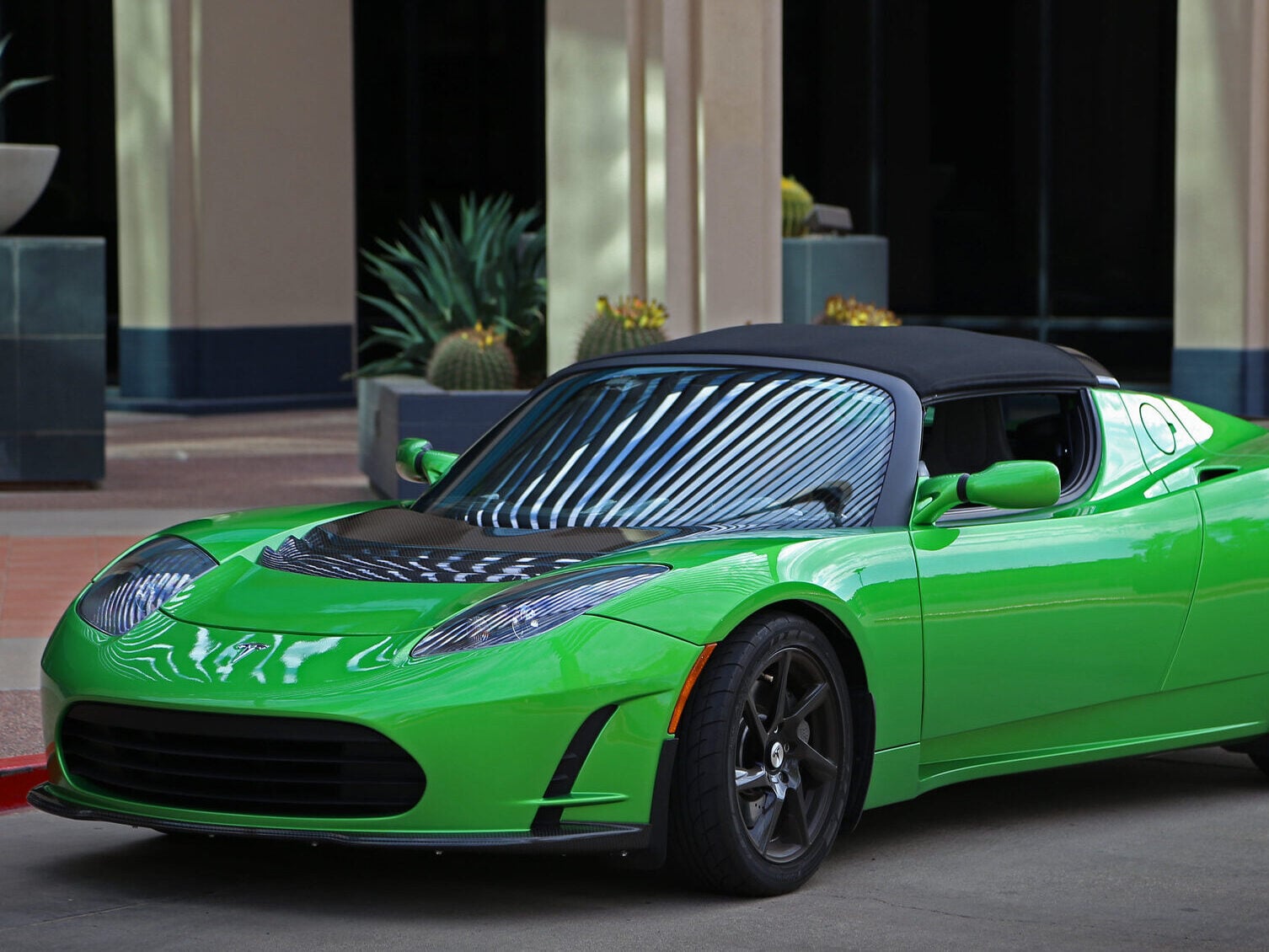
Tesla started in 2003, making them babies compared to other automakers. Their first car, the Roadster, launched in 2008.
Unlike every other company on this list, Tesla didn’t build combustion engines—they went straight to electric. The Roadster used a Lotus Elise body with a battery pack and electric motor squeezed inside.
It could go 245 miles on a charge and accelerate from zero to 60 in under four seconds. Tesla only built about 2,450 of them, but the Roadster proved electric cars could be fast and desirable, not just practical.
Volvo: Safety From Day One
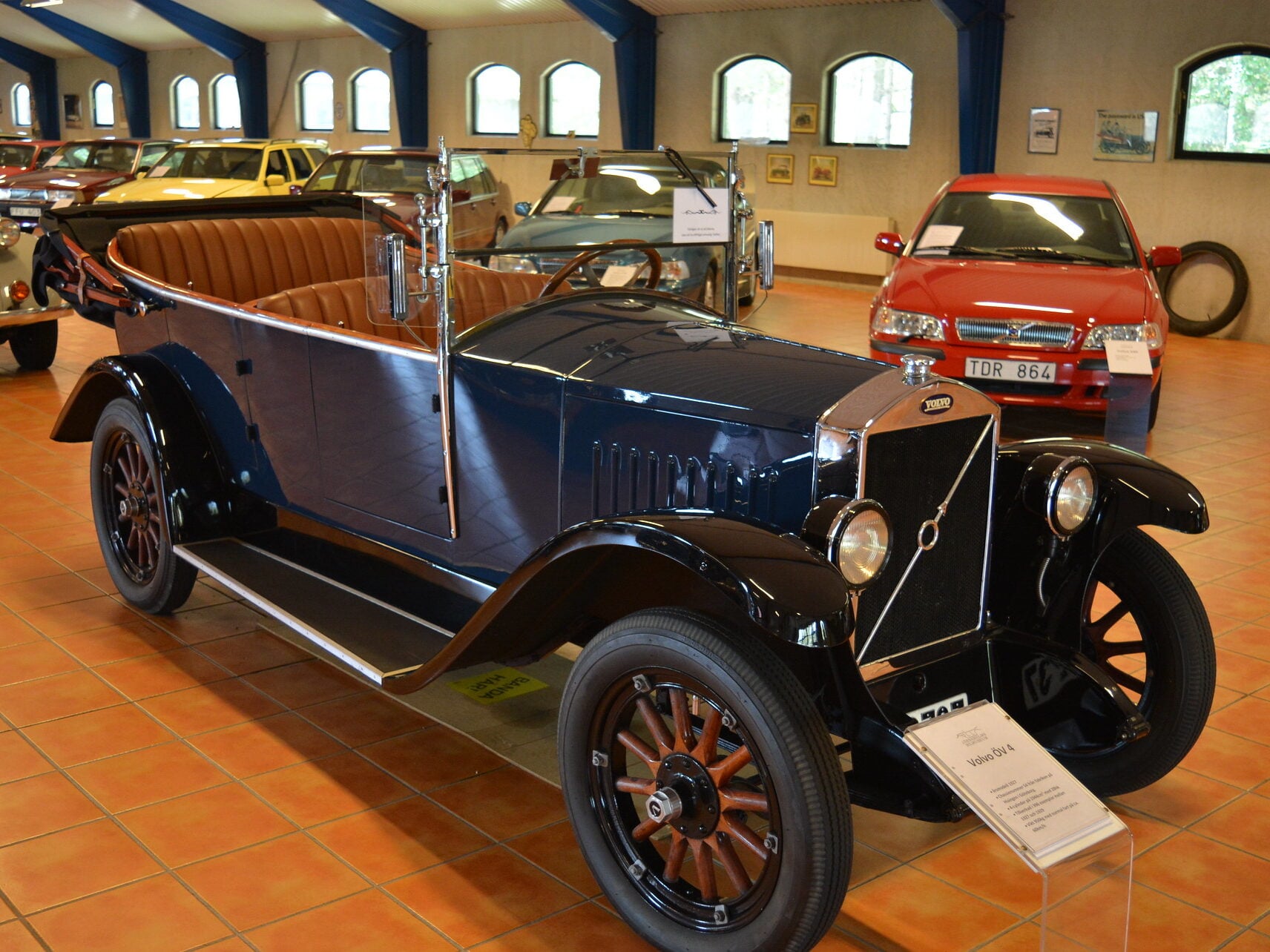
A small open vehicle appeared from Volvo in 1927, called the ÖV 4. That title simply described its shape and engine size – nothing more, nothing flashy.
Under the hood sat a 1.9-liter motor with four cylinders inside. Speed topped out at 56 mph, modest by any standard.
Just a few hundred ÖV 4 models ever rolled out – many didn’t last long since rust ate through thin metal frames. Yet inside that stumble, lessons took root; stronger materials began shaping new designs.
Because of those shaky beginnings, better shields around drivers slowly emerged. Tough breaks like these quietly guided Volvo into what later defined them.
Where It Began

From those earliest models, it’s clear just how much car making has changed. Many of the first vehicles moved at a crawl, shook apart easily, and felt rough to ride in.
Breakdowns happened every few miles, repairs never seemed to end. Yet every company studied what went wrong, then built something better.
Survival came down to paying attention – what drivers wanted shaped how things were built. Luxury first, then a shift toward cost made sense for some. Basic rides appeared early on.
Over time, comfort crept in. Changes didn’t always follow a plan; a handful shifted directions more than once.
Out of nowhere came those shaky early models, kicking it all off. Because one stubborn inventor tinkered endlessly, today’s cars exist – packed with smart brakes, lean motors, tight cabins.
Failure didn’t stop them; instead, each stumble pushed familiar names forward. A single bolt tightened long ago still echoes under every hood now.
Someone’s messy prototype became the quiet root of what rolls past your window daily. Even sleek designs today carry whispers of oil-stained trial runs from another era.
Trust wasn’t handed out – it was welded slowly through years of breakdowns and fixes. Back then, progress meant dust, noise, and never walking away.
Now smooth rides owe debt to jolting test laps nobody watched. One garage experiment sparked chains of change no blueprint could predict.
Every hum of an engine ties back to silent moments when nothing worked at all.
More from Go2Tutors!

- The Romanov Crown Jewels and Their Tragic Fate
- 13 Historical Mysteries That Science Still Can’t Solve
- Famous Hoaxes That Fooled the World for Years
- 15 Child Stars with Tragic Adult Lives
- 16 Famous Jewelry Pieces in History
Like Go2Tutors’s content? Follow us on MSN.