Forgotten Inventions Ahead of Their Time
History is littered with brilliant ideas that arrived too early for their own good.
Some were buried by economic constraints, others by technological limitations, and a few simply because the world wasn’t ready to understand what they were looking at.
These inventions didn’t fail because they were flawed.
They failed because they were too ambitious, too expensive, or too far removed from what people could wrap their heads around at the time.
Decades or even centuries later, we’re still rediscovering what these pioneers figured out long before anyone else.
Here’s a closer look at some of the most fascinating inventions that tried to change the world before the world was ready to change.
The Antikythera Mechanism
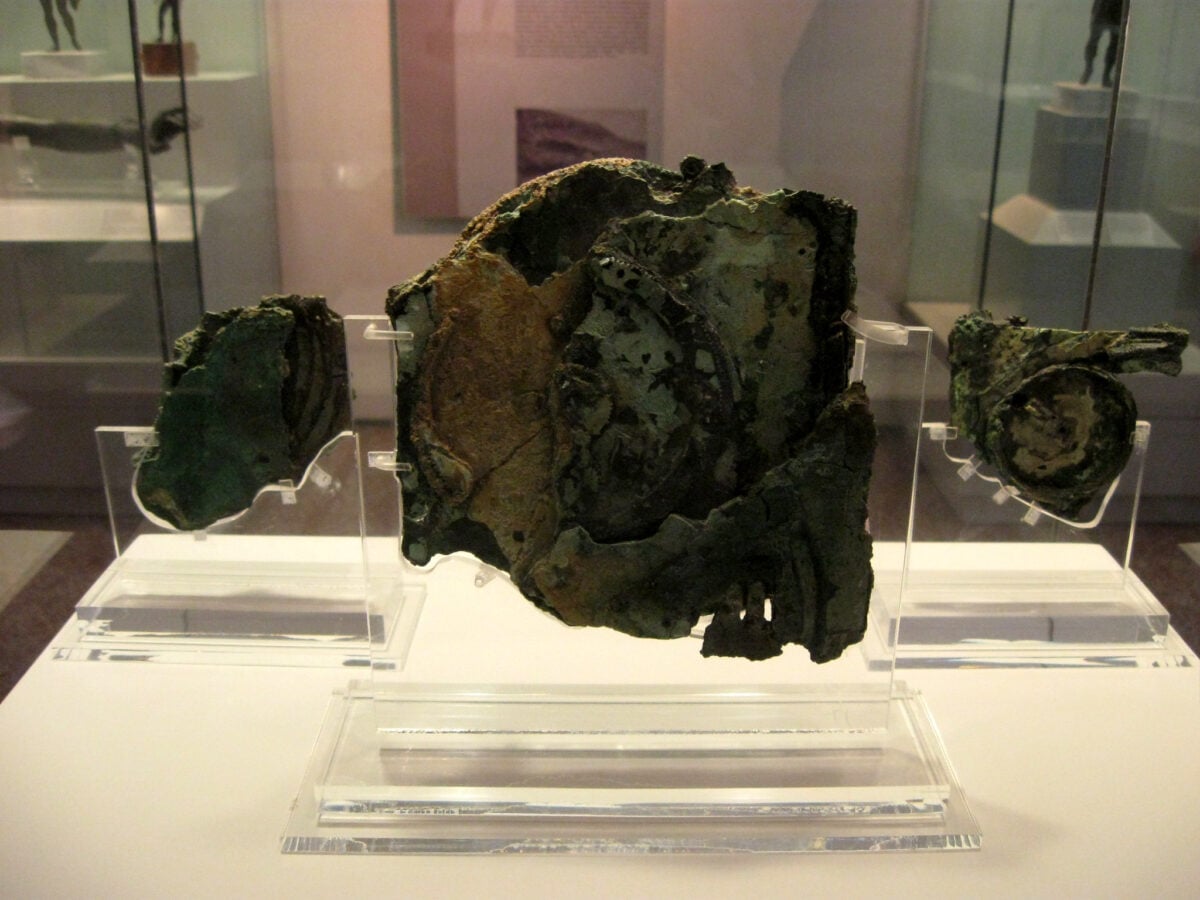
Found in a shipwreck off the Greek island of Antikythera in 1901, this bronze device looked like a corroded lump of nothing special.
It took decades before researchers realized what they were looking at: an ancient Greek computer built around 100 BCE.
The mechanism used a complex system of interlocking gears to predict astronomical positions and eclipses years in advance.
It could track the movements of the sun, moon, and planets with remarkable accuracy.
The level of engineering sophistication wouldn’t be matched again for over a thousand years.
The device had at least 30 bronze gears working in harmony, a feat that medieval clockmakers would have struggled to replicate.
Its creator understood mathematics, astronomy, and mechanical engineering in ways that wouldn’t resurface until the Renaissance.
Then it disappeared from history, its knowledge apparently dying with its makers.
Nothing even close to this complexity appears again until the 14th century astronomical clocks of Europe.
That’s a 1,400-year gap where humanity apparently forgot how to build intricate gear mechanisms.
The Antikythera Mechanism stands as proof that technological progress isn’t always a straight line forward.
Greek Fire

The Byzantine Empire had a secret weapon that terrified its enemies for centuries: a liquid that burned on water and couldn’t be extinguished by conventional means.
First used in 672 CE during a naval battle, Greek Fire gave the Byzantines a decisive military advantage.
Ships would launch this flaming substance through bronze tubes, turning enemy fleets into floating infernos.
Water made it burn harder, not weaker.
The formula was so closely guarded that even today, we don’t know exactly what it contained.
Most historians think it involved petroleum, quicklime, and sulfur, but the precise mixture died with the empire.
Only the imperial family and a handful of trusted chemists knew the recipe, passed down through generations under threat of execution for anyone who revealed it.
When Constantinople fell in 1453, the secret went with it.
Modern militaries eventually developed napalm and other incendiary weapons, but Greek Fire represented something remarkable for its era: a chemical weapon that gave a declining empire centuries of naval superiority.
The Byzantines understood operational security in a way that wouldn’t become standard military practice for another thousand years.
The Starlite Mystery

In 1990, a British hairdresser named Maurice Ward appeared on television with a substance that seemed impossible.
He called it Starlite, and it could withstand direct blowtouch flames that would normally vaporize most materials.
In demonstrations, he coated eggs with the stuff and blasted them with heat intense enough to melt metal.
The eggs stayed raw inside.
He painted it on his hand and held it against flames without injury.
NASA tested it. The U.S. military tested it.
Everyone wanted it.
Ward claimed it could revolutionize everything from firefighting gear to spacecraft heat shields.
The material was lightweight, easy to apply, and incredibly effective at stopping heat transfer.
It could protect against temperatures exceeding 10,000 degrees Celsius.
But Ward refused to reveal the formula or sell his invention unless he got terms he considered acceptable.
He died in 2011, and the secret died with him.
His family claims to have the formula but hasn’t brought it to market.
Scientists have since developed similar heat-resistant materials, but the original Starlite remains one of modern history’s most frustrating ‘what ifs.’
A hairdresser might have solved problems that aerospace engineers had struggled with for decades, and the solution is sitting in a drawer somewhere.
Wardenclyffe Tower
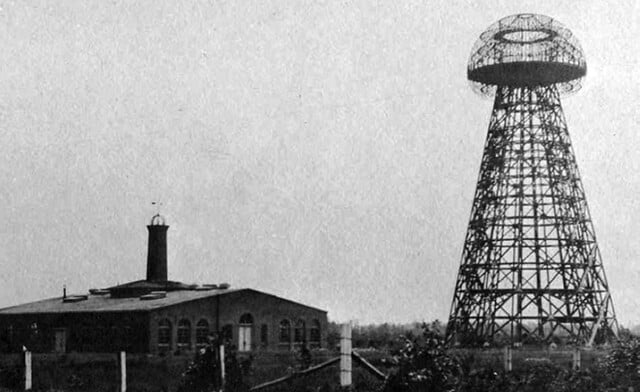
Nikola Tesla had a vision: free wireless electricity for everyone.
In 1901, he began construction on a massive tower in New York designed to transmit electrical power through the air, no wires required.
The Wardenclyffe Tower stood 187 feet tall, built on top of tunnels that extended 120 feet underground.
Tesla believed he could tap into the Earth’s natural electrical resonance and broadcast power across vast distances.
His financier, J.P. Morgan, initially backed the project thinking it was for wireless telegraphy.
When Tesla revealed his true ambitions, the money dried up.
Morgan reportedly asked how he could meter and charge for electricity that anyone could pluck from the air.
The tower was never completed as Tesla intended.
It stood incomplete for years before being demolished in 1917.
Modern wireless charging exists, but it works over distances measured in inches, not miles.
Some researchers think Tesla was onto something with his ideas about resonant inductive coupling, but the physics of broadcasting significant power wirelessly remains problematic.
The tower represented a dream that technology still hasn’t quite achieved: abundant, wireless energy available to anyone who wants it.
Tesla died in relative poverty while the world moved on to wired electrical grids.
Hero’s Aeolipile
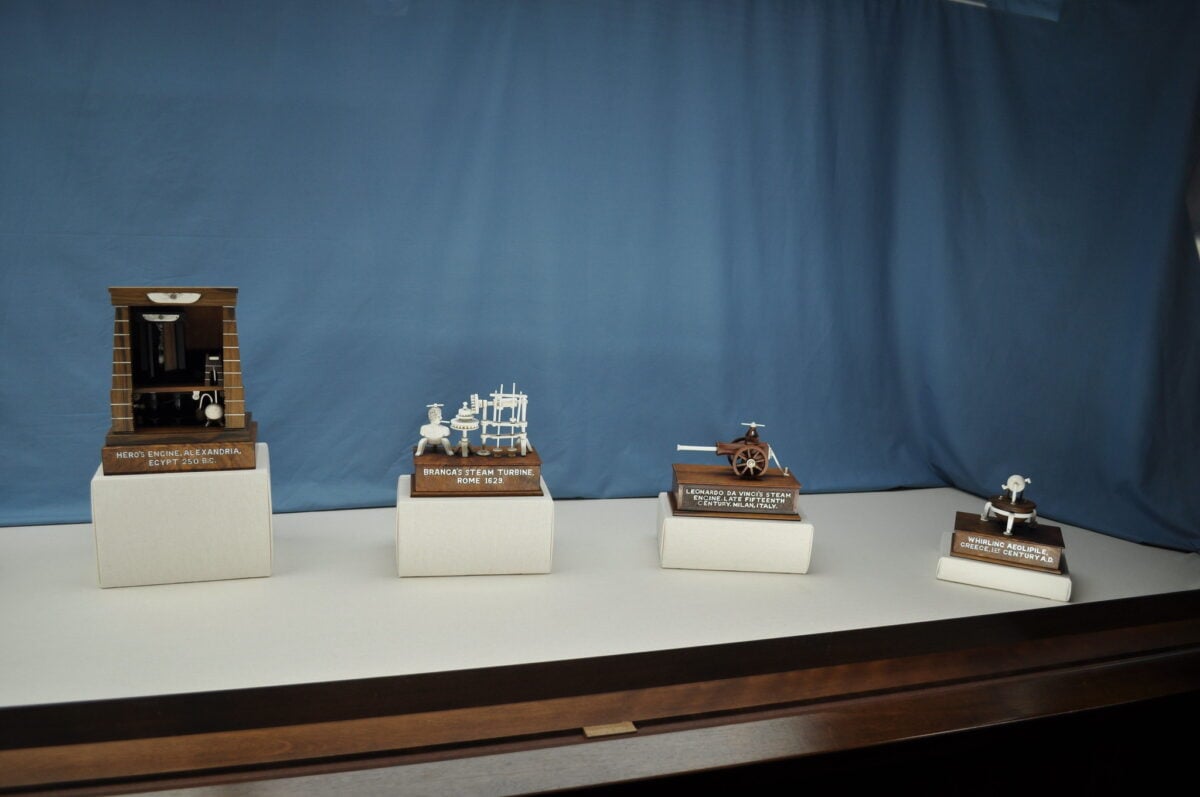
Around 50 CE, a Greek engineer named Hero of Alexandria built a device that spun using nothing but steam power.
The aeolipile consisted of a hollow sphere mounted on a pair of tubes that fed steam into it.
Jets on opposite sides of the sphere directed the steam outward, causing the whole thing to spin rapidly.
It was, in essence, a primitive steam engine appearing nearly 1,700 years before the Industrial Revolution.
Hero also invented automatic doors for temples, coin-operated vending machines for holy water, and programmable automata.
His work demonstrated a sophisticated understanding of pneumatics, hydraulics, and basic engineering principles.
Yet none of these inventions transformed ancient society the way the steam engine would later transform the modern world.
The Romans had the metallurgical knowledge and manufacturing capability to build steam engines.
They had the mathematical knowledge.
They just didn’t have the economic incentive. Slave labor was cheap and abundant.
The ancient economy didn’t value labor-saving devices the way industrial societies would.
Hero’s inventions remained clever curiosities, party tricks for wealthy patrons, rather than tools that reshaped civilization.
The Telharmonium
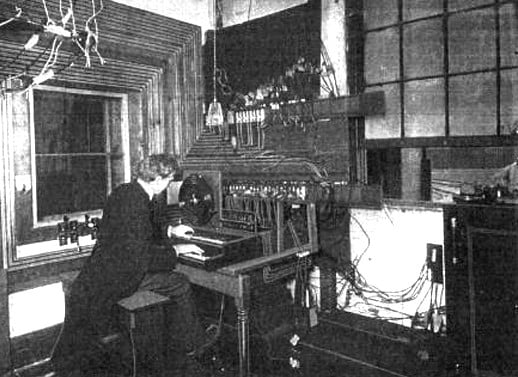
In 1897, Thaddeus Cahill invented an electronic musical instrument that weighed 200 tons and required railroad cars to transport.
The Telharmonium could synthesize sounds electronically and transmit music over telephone lines to subscribers.
It was essentially a massive electronic organ that generated tones using rotating tone wheels and telephone receivers.
People could hear electronic music piped directly into their homes or businesses.
Cahill built three versions between 1897 and 1914, each one more ambitious than the last.
The Mark III Telharmonium required an entire building to house it and consumed enough electricity to power a small neighborhood.
Concerts were held in cities like New York, with music transmitted to hotels, restaurants, and private subscribers.
Critics praised its unique sound, something no acoustic instrument could replicate.
But the technology was too expensive and cumbersome.
The Telharmonium interfered with telephone conversations, causing complaints from telephone companies.
The power consumption made it economically impractical.
When radios became popular in the 1920s, offering free music to anyone with a receiver, Cahill’s subscription model couldn’t compete.
The instruments were eventually scrapped for parts.
Decades later, the Hammond organ and Moog synthesizer would make electronic music practical using similar principles in much smaller packages.
Mechanical Television
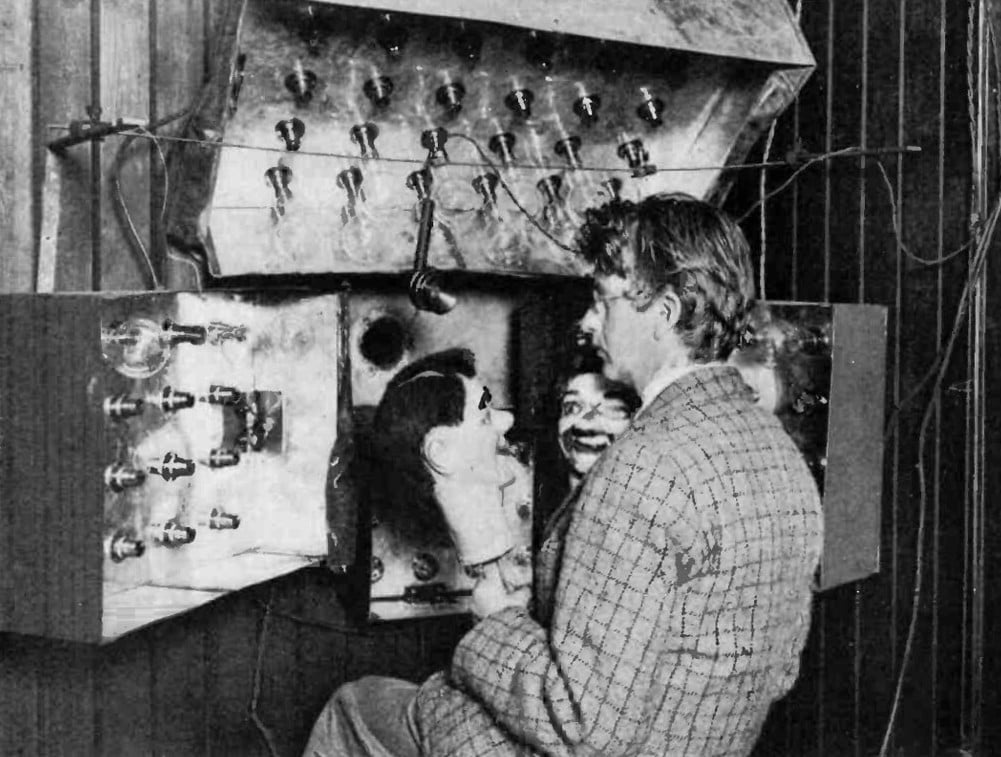
Before electronic television took over, inventors experimented with mechanical systems that used spinning disks with pits to scan and recreate images.
John Logie Baird demonstrated mechanical television in the 1920s, achieving the first live television transmission.
His system could transmit recognizable human faces across distances, a genuine technical achievement for the era.
Mechanical television systems went into commercial production in several countries.
The BBC began regular mechanical television broadcasts in 1929.
The images were crude by modern standards, often just 30 lines of resolution displayed on screens a few inches across.
The spinning disks were noisy, prone to mechanical failure, and couldn’t scale up to produce larger, clearer images.
Electronic television, using cathode ray tubes, proved vastly superior.
By the late 1930s, mechanical systems were obsolete.
Baird himself eventually switched to electronic television development.
The mechanical approach wasn’t wrong; it was just a dead end, a technological path that couldn’t evolve fast enough to compete.
Yet without those early mechanical systems proving that television was possible, the investment in electronic systems might have come later.
Damascus Steel

Medieval swordsmiths in Damascus produced blades with a distinctive watery pattern and legendary sharpness.
These swords could reportedly cut through European swords and remained sharp far longer than contemporary weapons.
The steel’s unique properties came from carbon nanotubes and carbide nanowires within the metal structure, something researchers didn’t discover until the early 2000s using electron microscopes.
The swordsmiths didn’t understand metallurgy at the nanoscale level.
They didn’t need to.
Through centuries of trial and error, they developed forging techniques that produced these nanostructures without knowing why the process worked.
The steel likely came from specific ore sources in India that contained the right trace elements and impurities to enable this structure when properly forged.
By 1750, the production of true Damascus steel ceased.
The ore sources were exhausted, or the trade routes that supplied them were disrupted.
The exact forging techniques were trade secrets that died with the craftsmen.
Modern metallurgists have recreated similar patterns and properties, but whether they’ve truly duplicated the original Damascus steel remains debated.
Medieval smiths achieved at a craft level what modern materials science accomplishes with electron microscopes and controlled laboratory conditions.
Why They Still Matter

These inventions remind us that progress isn’t inevitable or linear.
Brilliant ideas can appear, get ignored, and vanish for centuries before similar concepts resurface.
The Antikythera Mechanism proves ancient Greeks had engineering capabilities that medieval Europe couldn’t match.
Starlite suggests that formal education isn’t always necessary for breakthrough innovation.
Tesla’s tower shows that even genius has to answer to economics and practicality.
Each of these inventions failed not because they were poorly conceived but because they arrived at the wrong moment.
They needed supporting technologies that didn’t exist yet, or economic conditions that wouldn’t emerge for decades, or social structures ready to adopt them.
Some eventually got their moment through reinvention.
Others disappeared entirely, their potential unrealized.
The forgotten inventions scattered throughout history aren’t failures.
They’re evidence that humanity has always had dreamers willing to build things the world isn’t ready for.
Sometimes being ahead of your time means you’re simply early.
Other times it means you’re standing at a dead end, watching the world take a different path entirely.
Either way, these inventors pushed boundaries and expanded what seemed possible, even if recognition came too late or not at all.
More from Go2Tutors!

- The Romanov Crown Jewels and Their Tragic Fate
- 13 Historical Mysteries That Science Still Can’t Solve
- Famous Hoaxes That Fooled the World for Years
- 15 Child Stars with Tragic Adult Lives
- 16 Famous Jewelry Pieces in History
Like Go2Tutors’s content? Follow us on MSN.