Forgotten Rules From the Early Days of Sports
Sports today look polished and professional, with clear rulebooks that cover every possible situation. But things weren’t always so organized.
Back when various sports were just getting started, the rules were often strange, confusing, or downright bizarre compared to what we know now. Some of these early regulations would make modern fans scratch their heads in disbelief.
Baseball pitchers threw underhand only

In the earliest days of baseball during the 1840s and 1850s, pitchers had to throw underhand to batters. The pitcher’s job wasn’t to strike anyone out but to simply put it in play so fielders could make outs.
Overhand pitching was actually illegal and considered unsportsmanlike.
Basketball players couldn’t dribble at first

When Dr. James Naismith invented basketball in 1891, dribbling wasn’t part of the game. Players had to pass to move up the court because the rules stated that whoever caught it had to stop moving immediately.
Games looked more like hot potato than modern basketball. Dribbling only became legal a few years later, and even then, players could only bounce once before having to pass or shoot.
Football allowed players to punch forward

Early American football in the 1870s and 1880s permitted players to punch forward with their fists. This technique, called batting, let players advance without actually carrying it.
Picture watching a game where guys were literally punching downfield like they were in a boxing match. The rule eventually disappeared as throwing and running became the preferred methods.
Hockey had no forward passing

Original hockey rules from the late 1800s forbade players from passing the puck forward to teammates. Everyone had to either carry it themselves or pass backward or sideways.
Games moved slower than rush hour traffic compared to today because teams couldn’t execute the fast breaks and stretch passes that make modern hockey exciting. Forward passing didn’t become legal in all zones until 1929, and that single change completely transformed how it was played.
Cricket batsmen didn’t wear protective gear

Early cricket players in the 1700s and 1800s faced rock-hard projectiles traveling at high speeds without any padding or helmets. They just stood there with a wooden bat and their regular clothes, hoping nothing would hit them anywhere important.
Leg pads didn’t become common until the mid-1800s, and helmets weren’t widely used until the 1970s. Players regularly suffered broken bones and serious injuries, but complaining about it would’ve gotten you labeled as soft.
Soccer allowed players to catch with hands

In the 1860s, when soccer was still called association football and just getting organized, players could catch with their hands under certain circumstances. Different schools and clubs had their own versions of the rules, and some allowed fair catches similar to rugby.
It took years of debate and rule standardization before handling became illegal for everyone except the goalkeeper. This confusion actually led to the split between soccer and rugby as separate sports.
Tennis didn’t always use the weird scoring we have now

Early tennis in the 1500s and 1600s used completely different scoring systems depending on where you played. Some versions counted like 1, 2, 3, 4, while others used systems based on clock faces that nobody really understood.
The strange 15, 30, 40 system we use today came from France, but it took centuries to become standard everywhere. Before that, players and spectators spent half the match arguing about what the score actually was.
Golf clubs could be any ridiculous shape

When golf was getting organized in Scotland during the 1800s, players could use clubs made in any shape or size they wanted. Some golfers showed up with clubs that had heads as big as frying pans or shafts bent at angles that defied physics.
There were no regulations about grooves, materials, or dimensions whatsoever. The ruling bodies eventually had to step in and create equipment standards because the competition was turning into a contest of who could build the most absurd club.
Boxing rounds lasted until someone hit the ground

Bare-knuckle boxing matches in the early 1800s didn’t have three-minute rounds like modern boxing. A round ended only when one fighter got knocked down or fell to the ground, and then both got 30 seconds to rest before starting another round.
Matches could last for hours with dozens upon dozens of rounds. Some fights had over 70 rounds because both boxers kept getting up after being knocked down, which sounds absolutely exhausting.
Track runners stayed in lanes for entire races

When organized track and field began in the 1860s and 1870s, runners in longer races had to stay in their assigned lanes for the entire distance. This made races extremely difficult because the outside lanes meant running much farther than the inside lanes on a curved track.
Runners couldn’t break for the inside rail until rule changes in the early 1900s allowed it. Getting stuck in lane eight was basically a guarantee that you’d lose, no matter how fast you were.
Volleyball had unlimited hits per side

The original volleyball rules from 1895 allowed players to hit as many times as they wanted on their side of the net. Teams could pass back and forth dozens of times before sending it over, making rallies drag on forever.
Games must have been incredibly boring to watch. The rule limiting teams to three hits per side didn’t come until later, which finally gave the sport some actual pace and excitement.
Swimmers could use whatever stroke they felt like

Early competitive swimming in the mid-1800s didn’t have separate events for different strokes. Swimmers could use whatever technique they wanted to get from one end of the pool to the other, and judges didn’t care one bit.
Most people used variations of breaststroke because nobody had really figured out other efficient strokes yet. The crawl stroke, which we now call freestyle, wasn’t introduced to competitive swimming until the early 1900s and was initially mocked as looking too frantic and undignified.
Rugby players could trip opponents on purpose

In the rough early days of rugby during the 1870s and 1880s, players could deliberately trip opponents who were running. Sticking out a foot to send someone tumbling face-first into the mud was a completely legal defensive tactic.
The game was already brutal with hard tackles and scrums, so adding intentional tripping made it even more dangerous. Rugby eventually banned tripping as the sport tried to reduce the hospital visits and become more respectable.
Race cars had to carry two people

When automobile racing started in the early 1900s, race cars had to carry two people: a driver and a mechanic. The mechanic’s job was to fix problems during the race, pump fuel, and even lean out of the car on turns to help with balance.
Some mechanics got thrown from cars during crashes or high-speed turns, which was about as dangerous as it sounds. The rule requiring mechanics lasted until the 1920s, when improved car reliability finally made them unnecessary.
Lacrosse games had hundreds of players

Native American lacrosse games in the 1600s and 1700s sometimes involved hundreds of players on each team spread across fields that stretched for miles. Early organized lacrosse in the 1800s still hadn’t settled on a specific number of players, with teams ranging from a dozen to several dozen per side.
The field size and player count varied wildly until standardization in the late 1800s reduced teams to ten players each. Those massive early games must have looked more like wars than sporting events.
Cyclists could grab onto moving vehicles

During the early years of bicycle racing in the late 1800s, riders could legally grab onto wagons, cars, or even trains to get pulled along and save energy. This practice, called motor-pacing, was considered a clever tactic rather than cheating.
Can you imagine seeing a cyclist holding onto a steam train to win a race today? Race organizers eventually banned it in most events because it gave unfair advantages to riders who could arrange for vehicles to help them.
Fencing continued until someone got cut
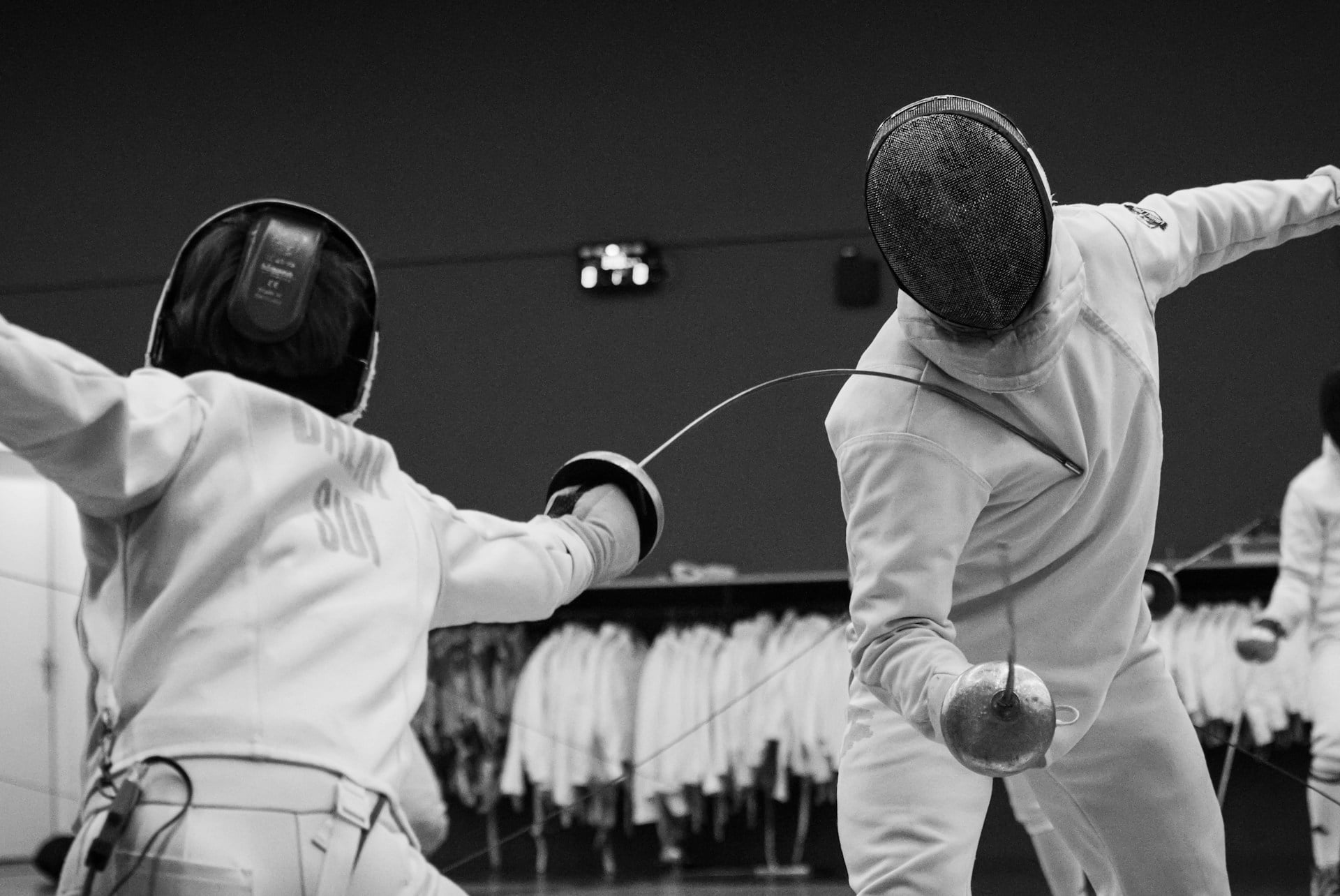
Historical fencing competitions in the 1700s and early 1800s often continued until one participant actually cut or stabbed their opponent hard enough to draw visible marks. Protective gear was minimal, and participants accepted that injuries were just part of proving you knew how to handle a sword.
The sport gradually moved toward a points system and better safety equipment as it transitioned from actual combat training to something people could do without needing medical attention afterward. Modern fencing with electronic scoring would be completely unrecognizable to those early participants.
How messy beginnings created today’s games

Those strange early rules show just how much trial and error went into creating the sports we love. Every weird regulation that got dropped or changed helped push sports toward being faster, safer, and more fun to watch.
The athletes who competed under those old rules had to deal with constant changes and confusion, unlike today’s players who benefit from rulebooks that actually make sense. Sports will probably keep evolving, but at least we can be grateful that tripping opponents and punching footballs are officially off the table now.
More from Go2Tutors!

- The Romanov Crown Jewels and Their Tragic Fate
- 13 Historical Mysteries That Science Still Can’t Solve
- Famous Hoaxes That Fooled the World for Years
- 15 Child Stars with Tragic Adult Lives
- 16 Famous Jewelry Pieces in History
Like Go2Tutors’s content? Follow us on MSN.



