Fruits That Smell Terrible But Taste Good
Your nose isn’t always the best judge of what tastes good. Some of the world’s most delicious fruits announce themselves with smells that make people cross the street or hold their breath.
The disconnect between aroma and flavor can be so extreme that newcomers refuse to even try them, missing out on genuinely remarkable eating experiences. But once you get past that initial assault on your olfactory system, these fruits deliver flavors that keep people coming back despite the smell.
Durian

The king of stinky fruits lives up to its reputation. Durian’s smell has been compared to raw sewage, rotting onions, and gym socks left in a locker for months.
Some hotels and public transportation systems in Southeast Asia ban it entirely. The spiky exterior warns you what’s coming, but nothing really prepares you for that first whiff.
The taste tells a completely different story. Creamy custard meets rich almonds with hints of caramel and cheese.
The texture feels like eating velvet. People who grow up eating durian describe it as the finest fruit on earth, and once you push through the smell barrier, you start to understand why.
The custardy flesh almost melts on your tongue, and the complex sweetness builds with each bite.
Jackfruit

Jackfruit gives off a smell that some describe as a cross between overripe pineapple and dirty feet. The massive fruits can weigh up to 80 pounds, and when one is cut open in a market, the smell spreads quickly.
That combination of fermenting fruit and something decidedly funky makes a strong first impression. But the flavor surprises people.
The ripe fruit tastes like a tropical fruit salad concentrated into one package, with notes of pineapple, mango, and banana all competing for attention. The texture varies throughout the fruit, from firm and slightly chewy to soft and stringy.
Young jackfruit works as a meat substitute because of its texture, but the ripe fruit is purely about that intense, sweet tropical flavor.
Noni

Noni fruit smells like cheese that went bad months ago. The odor intensifies as the fruit ripens, going from merely unpleasant to genuinely offensive.
Market vendors keep it separate from other products because customers complain. The lumpy, potato-like appearance doesn’t help its case.
The taste is bitter and sharp at first, then settles into something earthy and slightly sweet. You won’t confuse it with candy, but it’s far more palatable than the smell suggests.
Pacific Islanders have eaten it for centuries, often mixing it with other foods or drinking it as juice. The flavor grows on you faster than you’d expect, especially when you understand what you’re getting into.
Ginkgo Nuts

These aren’t technically fruits, but the flesh surrounding the ginkgo seed smells horrible enough to earn a spot on this list. The outer coating releases butyric acid as it breaks down, producing an odor identical to rancid butter mixed with vomit.
Cities with ginkgo trees deal with this smell every fall when the fruits drop. Once you remove that awful outer layer and roast the nuts inside, you get a delicate, slightly sweet flavor with a texture somewhere between a chestnut and a firm tofu.
East Asian cuisine features them in soups, stir-fries, and desserts. The flavor is subtle and pleasant, making the hassle of dealing with the smelly exterior worthwhile for those who know what they’re doing.
Papaya

Some papayas smell fine, but others give off an odor that reminds people of vomit or sweaty feet. The smell comes from certain enzymes in the fruit, and it varies based on ripeness and variety.
The musky undertone puts off many first-time buyers who encounter a particularly pungent specimen. The taste is sweet, tropical, and smooth.
Ripe papaya has a buttery texture and a flavor that combines melon and mango with something uniquely its own. The sweetness balances well with lime juice, and the flesh practically dissolves in your mouth.
Once you get past any initial smell concerns, papaya becomes an easy breakfast favorite.
Ackee
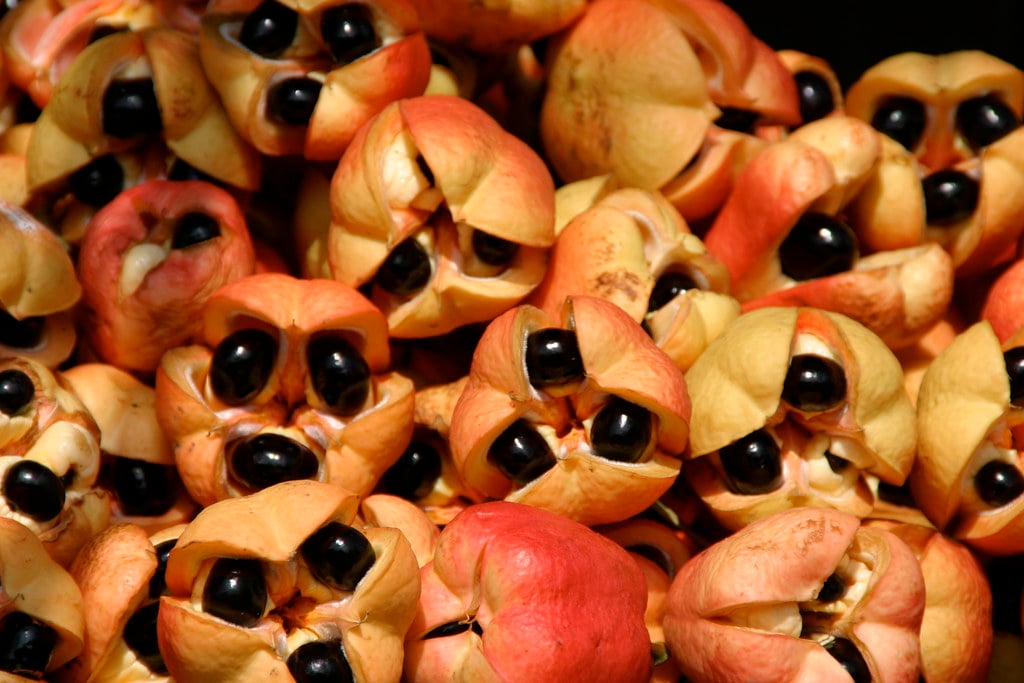
Jamaica’s national fruit smells faintly unpleasant when raw, with a subtle chemical or soapy odor that makes it unappealing to the uninitiated. The smell isn’t as aggressive as durian or noni, but it’s distinct enough to make newcomers hesitate.
The unusual appearance of the ripe fruit, which splits open to reveal black seeds surrounded by yellow flesh, adds to the intimidation factor. Cooked ackee transforms completely.
The flavor is mild, creamy, and slightly nutty, often compared to scrambled eggs in both taste and texture. When prepared properly with saltfish, onions, and peppers, it creates one of the Caribbean’s most celebrated dishes.
The subtle flavor works as a canvas for spices and other ingredients while maintaining its own character.
Stinky Tofu (Fermented Bean Curd with Fruit)

This stretches the definition of fruit-based foods, but fermented preparations often incorporate fruit elements. The fermentation process creates a smell that stops people in their tracks, combining notes of garbage, sewage, and decay.
Night markets across Taiwan clear out spaces around stinky tofu vendors because the smell spreads so effectively. The taste is savory, complex, and deeply satisfying.
The fermentation creates layers of umami flavor that work brilliantly with the crispy exterior and soft interior. Those who get past the smell often become devoted fans, seeking out the most pungent versions they can find.
The contrast between the aggressive odor and the genuinely delicious taste makes this one of the most extreme examples on the list.
Vieux Boulogne Melon

Certain melons, particularly when overripe, develop a smell reminiscent of ammonia or spoiled cheese. The fermentation process that occurs naturally in very ripe melons creates compounds similar to those in aged cheese.
The smell intensifies in enclosed spaces, making it hard to keep these melons in the refrigerator without everything else taking on the odor. The flavor at this stage is intensely sweet, almost honey-like, with a complexity that mild melons lack.
The flesh becomes softer and more aromatic in a pleasant way despite the off-putting exterior smell. Some cultures specifically seek out melons at this stage of ripeness, valuing the concentrated sugars and developed flavor over the more neutral taste of less ripe fruit.
Salak (Snake Fruit)

The scaly brown skin of salak fruit gives off a faintly musty, sour smell when you first peel it. The odor isn’t overwhelming, but it’s distinct and unexpected for a fruit.
Combined with the reptilian appearance of the skin, it creates a double barrier for people trying it for the first time. Inside, the flesh tastes crisp and sweet with notes of apple, pineapple, and a slight tanginess.
The texture is unique, being both crunchy and slightly dry. Each fruit contains several segments, and the flavor varies slightly between them.
The refreshing taste and satisfying crunch make salak a popular snack across Indonesia, where people barely notice the mild exterior smell anymore.
Breadfruit

Raw breadfruit has a subtle but noticeable stale odor, somewhat like old bread mixed with grass clippings. The smell isn’t powerful enough to clear a room, but it’s present enough to give people pause.
The name comes partly from the bread-like smell that develops during cooking, but the raw version offers a less appealing preview. Cooked breadfruit transforms into something entirely different.
Roasted or boiled, it develops a potato-like flavor with nutty undertones and a creamy texture. The starchiness makes it filling and versatile, working well in both savory and sweet preparations.
Island communities throughout the Pacific and Caribbean rely on it as a staple food, and once you taste it properly prepared, the mild raw smell becomes completely irrelevant.
Soursop

Soursop’s smell divides people sharply. Some find it pleasantly fruity, while others detect a sour, fermented odor with hints of turpentine.
The ripe fruit’s smell intensifies, and those in the “it smells bad” camp find the odor increasingly off-putting as the fruit gets softer. The taste is sweet and tangy, like pineapple mixed with strawberry and citrus, with a creamy texture that feels luxurious.
The flavor is distinctive enough that you can’t compare it directly to any other fruit. Soursop juice and ice cream have become popular ways to enjoy the flavor without dealing with the whole fruit, but eating it fresh gives you the full complexity of that sweet-sour taste.
Mamey Sapote

The brown, rough skin of mamey sapote sometimes gives off an earthy, almost dirty smell when you first cut into it. The odor isn’t terrible, but it’s unexpected for a fruit and can make people second-guess their purchase.
The fibrous outer layer seems more vegetable than fruit. The orange-red flesh inside tastes like sweet potato mixed with pumpkin, peach, and honey.
The creamy texture is smooth and dense, making it perfect for milkshakes and ice cream. The flavor is rich without being overwhelming, and the natural sweetness means you rarely need to add sugar.
The mild outer smell vanishes from memory once you taste the flesh.
Horned Melon (Kiwano)

When very ripe, horned melons develop a cucumber-like smell with undertones of overripe banana. The odor isn’t offensive exactly, but it’s strong enough to notice and unusual enough to make people wonder if something’s wrong with the fruit.
The spiky orange exterior already makes it look alien, and the smell doesn’t help. The green, jelly-like interior tastes like a mix of cucumber, lime, and banana, with a refreshing tartness.
The texture is unique, with the gel surrounding edible seeds that crunch pleasantly. You can eat it straight from the shell with a spoon, and the flavor is cooling and light.
The taste works beautifully in drinks and fruit salads, making the strange smell a small price to pay.
The Space Between Smell and Flavor

Food is never just about one sense. Your expectations shape the entire experience before you take the first bite.
These fruits challenge the assumption that good smells predict good flavors, teaching you to trust your taste buds over your nose. The world becomes more interesting when you’re willing to be surprised, when you can separate initial reactions from actual experience.
The best flavors sometimes hide behind the worst first impressions. You miss them entirely if you let smell make all your decisions.
These fruits prove that delicious food doesn’t always announce itself the way you expect.
More from Go2Tutors!

- The Romanov Crown Jewels and Their Tragic Fate
- 13 Historical Mysteries That Science Still Can’t Solve
- Famous Hoaxes That Fooled the World for Years
- 15 Child Stars with Tragic Adult Lives
- 16 Famous Jewelry Pieces in History
Like Go2Tutors’s content? Follow us on MSN.



