Fun Trivia To Get Ready For Valentine’s Day
Valentine’s Day has been around for centuries, and it’s packed with surprising stories that most people have never heard. From ancient Roman festivals to modern chocolate traditions, this holiday has evolved in ways that might make you see those heart-shaped candies a little differently.
Whether you’re planning a romantic evening or just curious about why we celebrate love on February 14th, these facts will give you plenty to talk about. Ready to become the most interesting person at your Valentine’s Day dinner? Let’s jump into some trivia that’ll make this holiday feel brand new.
The holiday started with a pretty wild Roman festival

Long before Valentine’s Day became about roses and chocolates, Romans celebrated Lupercalia in mid-February. This festival honored fertility and included some pretty strange rituals that would definitely raise eyebrows today.
Men would sacrifice animals and then run through the streets hitting people with strips of hide, which Romans believed would make women more fertile. The Christian church eventually replaced this pagan celebration with St. Valentine’s Day, creating something far more romantic and a whole lot less chaotic.
Nobody knows which Valentine the day actually honors

There were at least three different Saint Valentines recognized by the Catholic Church, and they all died on February 14th. One was a priest in Rome, another was a bishop in Terni, and there might have been a third in Africa.
The stories about these men have gotten so mixed up over time that historians can’t say for sure which one inspired the holiday. Some legends claim one of them secretly married couples when the emperor banned marriage for young men, but that story might just be romantic fiction.
Chaucer basically invented romantic Valentine’s Day

The poet Geoffrey Chaucer wrote a poem in 1382 called ‘Parliament of Fowls’ that connected Valentine’s Day with romantic love for the first time in recorded history. Before this poem, there was no real link between St. Valentine’s feast day and romance.
Chaucer wrote about birds choosing their mates on ‘St. Valentine’s Day,’ and this idea caught on like wildfire across Europe. Within a century, people were exchanging love notes and gifts every February 14th.
The oldest known valentine still exists
A valentine from 1415 is sitting in the British Library right now, and it’s basically a love poem. Charles, Duke of Orleans, wrote it to his wife while he was locked up in the Tower of London after being captured at the Battle of Agincourt.
The poor guy was stuck in prison for years, but he kept writing love poems to keep their connection alive. This valentine proves that even 600 years ago, people were trying to express their feelings on February 14th.
Americans buy an absurd amount of flowers for this one day
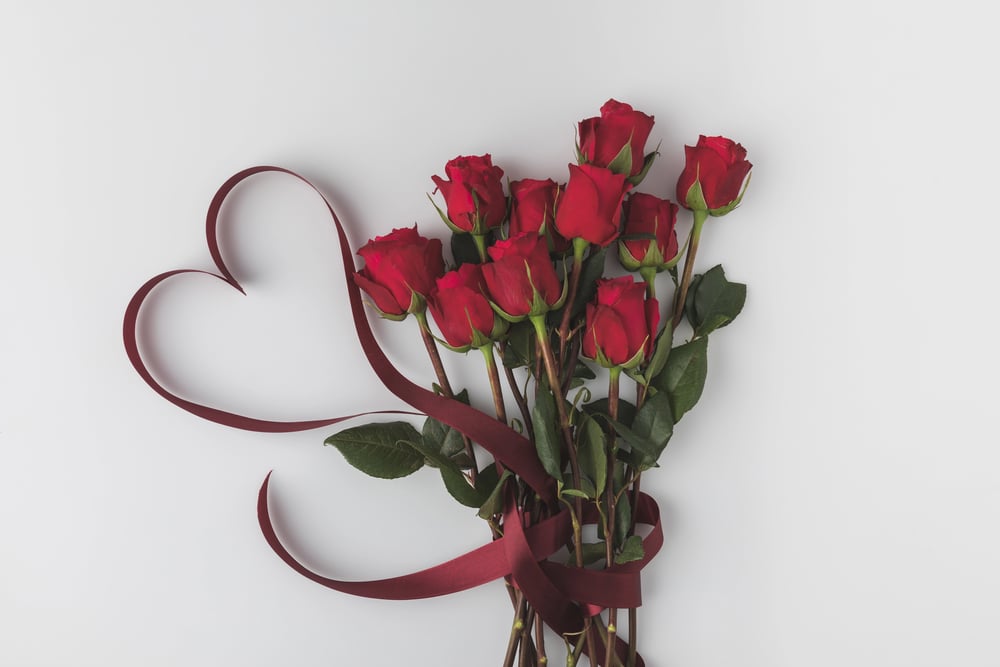
People in the United States purchase over 250 million roses every Valentine’s Day, which works out to about one rose for every person in the country. Red roses dominate the market because they’ve symbolized deep love since ancient Greek and Roman times.
Flower shops make about a third of their annual revenue just in the week leading up to February 14th. The price of roses can triple during this period because demand goes through the roof.
Chocolate only became a Valentine’s tradition recently

Richard Cadbury figured out that fancy boxes could sell more chocolates back in 1861, and he started packaging them in heart-shaped containers decorated with roses and cupids. Before this clever marketing move, people mainly gave handwritten notes and flowers.
Cadbury’s idea turned chocolate into the go-to Valentine’s gift almost overnight. Today, Americans spend over two billion dollars on Valentine’s Day candy, with chocolate making up most of those sales.
Conversation hearts have been around since the Civil War

Those little chalky candies with messages printed on them first appeared in 1866, created by a Boston pharmacist named Oliver Chase. He invented a machine that could press words into candy lozenges, which was pretty high-tech for the time.
The candies originally had longer messages like ‘Please send a lock of your hair by return mail,’ but they eventually got shortened to fit modern attention spans. About eight billion conversation hearts get produced every year, even though many people think they taste like flavored chalk.
Japan celebrates Valentine’s Day backwards

In Japan, women give chocolates to men on February 14th instead of the other way around. This tradition started in the 1950s when chocolate companies ran advertising campaigns targeting women.
Men get their chance to return the favor exactly one month later on March 14th, which is called White Day. Japanese women also give ‘obligation chocolates’ to their coworkers and bosses, which has created a whole different level of Valentine’s Day stress.
Wearing your heart on your sleeve is literally from Valentine’s Day

This common phrase comes from a medieval Valentine’s tradition where young people would draw names to see who their valentine would be for the week. They’d wear the name pinned to their sleeves so everyone could see who they were paired with.
The practice turned into a saying that means showing your emotions openly. It’s wild how a silly party game from centuries ago became part of everyday language.
Teachers receive more valentines than anyone else

Kids send about one billion valentines to their teachers every February, making educators the most popular valentine recipients by far. This tradition of classroom valentines started in the 1700s when schools used the holiday to teach children about kindness and friendship.
Most elementary schools still do valentine exchanges where every kid brings cards for their entire class. Teachers end up with boxes full of cards covered in cartoon characters and candy hearts.
The heart symbol doesn’t actually look like a real heart

The iconic heart shape used for Valentine’s Day looks nothing like the organ pumping blood through your body. Some historians think it might have come from the shape of ivy leaves, which represented fidelity in ancient Greece.
Others believe it could be based on the silhouette of a woman’s body or even the seed of a now-extinct plant used in ancient medicine. Whatever the origin, this simplified shape became the universal symbol for love and emotion.
Single people spend the most money on Valentine’s Day
Surveys show that single people actually spend more on Valentine’s Day than people in relationships do. They’re buying gifts for friends, family members, pets, and sometimes themselves.
The average single person drops about 100 dollars on Valentine’s Day purchases, while people in relationships spend around 80 dollars. This trend has created a whole market for ‘Galentine’s Day’ and other celebrations that focus on friendship instead of romance.
Pet owners are getting in on the action

About 27 percent of people buy Valentine’s Day gifts for their pets now, spending around 700 million dollars on treats, toys, and accessories. Pet stores stock up on heart-shaped dog treats and fancy cat toys every February.
Some people throw Valentine’s parties for their dogs or arrange playdates with other pet owners. The pet valentine trend keeps growing every year as more people consider their animals part of the family.
The tradition of sending cards nearly died out

Valentine’s Day cards were super popular in the Victorian era, but the tradition almost disappeared in the mid-1900s. Hallmark and other greeting card companies launched major campaigns in the 1940s to revive the custom.
They succeeded beyond expectations, and now Americans exchange about 145 million Valentine’s Day cards every year. That makes it the second-biggest card-giving holiday after Christmas.
Some countries ban Valentine’s Day celebrations

Several countries have actually made Valentine’s Day illegal or heavily discouraged because they consider it too Western or immoral. Saudi Arabia banned the holiday for years, and Pakistan has debated banning it multiple times.
Some religious groups argue that the holiday promotes values that conflict with their beliefs. These bans usually include prohibiting the sale of Valentine’s Day cards, flowers, and gifts, though people often celebrate privately anyway.
The first valentine candy boxes were meant to be saved

Those decorative boxes that chocolates come in weren’t designed to be thrown away after the candy was gone. Victorian-era people reused these ornate containers to store love letters, dried flowers, and other sentimental items.
Some people built entire collections of candy boxes that they displayed in their homes. The boxes themselves were considered just as valuable as the chocolates inside, which is why antique Valentine’s candy boxes can sell for hundreds of dollars today.
Red is the traditional color for a specific reason

Passion has long lived in the shade of crimson, reaching back to eras when symbols spoke louder than words. Venus, Rome’s emblem of affection, wore red like a whisper – soft at first, yet echoing across centuries.
This hue doesn’t wait its turn; it leaps into sight faster than others, pulling focus without asking permission. Nearly seven out of ten bouquets bought for lovers come dressed in red petals, quiet proof of an old habit still thriving. Tradition leans on color just as much as memory.
More Wedding Proposals Happen on Valentine’s Day

A wave of six million pairs say yes around Valentine’s Day, turning it into the top date for popping the question. Right before that, jewelry shops notice a sharp climb in purchases during late winter as folks gear up.
Places to eat and sleep lift costs sharply on the fourteenth, betting guests will spend more for a romantic scene. Even so, certain love counselors point out such timing might seem expected or make saying yes feel forced.
From ancient festivals to modern love
A festival once rooted in odd Roman customs now moves millions through wallets everywhere. Changes creep in quietly – think friendship circles getting nods, animals unwrapping tiny presents.
Letters scrawled long ago under candlelight set the stage for today’s wide web of gestures. Instead of just lovers swapping sweets, pals trade jokes on paper, dogs get dressed up, parents hear thank-yous aloud. Centuries fold into moments each February when small acts echo old rhythms of connection.
More from Go2Tutors!

- The Romanov Crown Jewels and Their Tragic Fate
- 13 Historical Mysteries That Science Still Can’t Solve
- Famous Hoaxes That Fooled the World for Years
- 15 Child Stars with Tragic Adult Lives
- 16 Famous Jewelry Pieces in History
Like Go2Tutors’s content? Follow us on MSN.



