Ghost Towns With Populations Under 10
America’s landscape holds thousands of ghost towns, each one a reminder of boom-and-bust cycles that shaped the nation. Mining camps emptied when ore ran dry.
Railroad towns withered when tracks were rerouted. Some places just couldn’t hold on when the world moved forward.
But among these abandoned settlements, a handful of towns defy easy categorization. They’re not quite dead, yet they’re far from alive.
These are the places where you can count the entire population on one hand, where a single person might serve as mayor, bartender, and librarian all at once. They exist in that strange space between ghost town and living community, clinging to incorporation despite having fewer residents than most dinner parties.
Here is a list of ghost towns with populations under 10.
Monowi, Nebraska
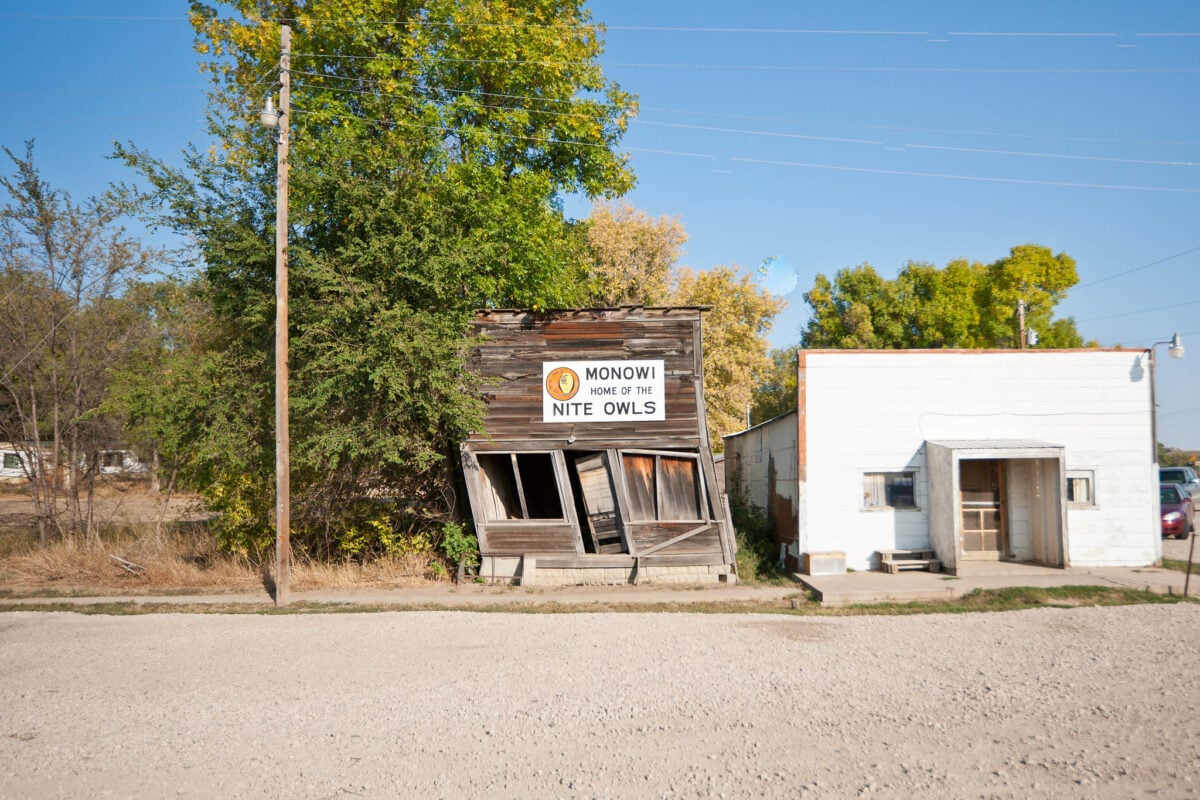
Elsie Eiler stands alone as the sole resident of Monowi, Nebraska, making it the smallest incorporated village in the United States. At 91 years old, she serves as mayor, bartender, librarian, and sole taxpayer.
The village was platted in 1902 following the extension of the railroad to the area and reached its peak population of approximately 150 people in the 1930s. Her husband Rudy died in 2004, leaving Elsie as the town’s only inhabitant.
She runs the Monowi Tavern six days a week, serving burgers and hot dogs to travelers who stop by out of curiosity or convenience. She’s also the librarian at Rudy’s Library, which houses 5,000 titles and works on the honor system.
As mayor, she pays herself taxes to keep the three streetlights functioning. The 2020 census technically listed two residents due to privacy adjustments in census data, but Elsie confirmed she remains the town’s only actual resident.
Centralia, Pennsylvania
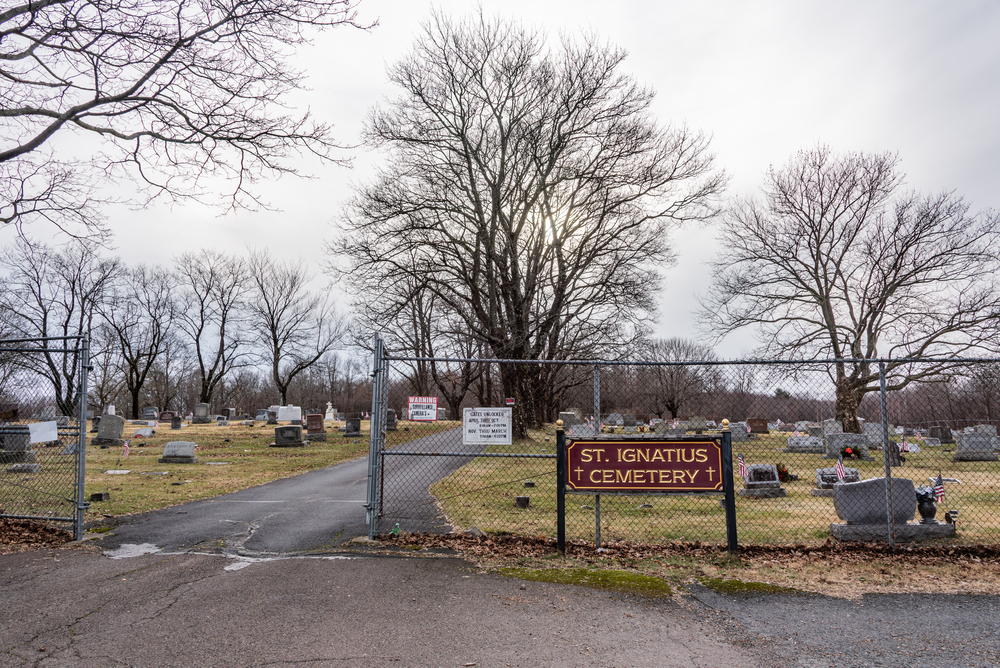
Centralia’s population declined from 1,000 in 1980 to five residents in 2020 because a coal mine fire has been burning beneath the borough since 1962. The underground fire started in May 1962, likely from burning trash in an abandoned strip mine pit, and has continued to burn through the coal seams beneath the town for over 60 years.
The Commonwealth of Pennsylvania claimed all properties in the borough under eminent domain in 1992, and Centralia’s ZIP code was revoked by the Postal Service in 2002. Toxic gases like carbon monoxide forced most residents to relocate.
In 2013, state and local officials reached an agreement with the then seven remaining residents allowing them to live out their lives there, after which the rights of their properties will be taken through eminent domain. Route 61, once a main thoroughfare, now sits abandoned with cracks in the pavement releasing steam from the fire below.
Thurmond, West Virginia
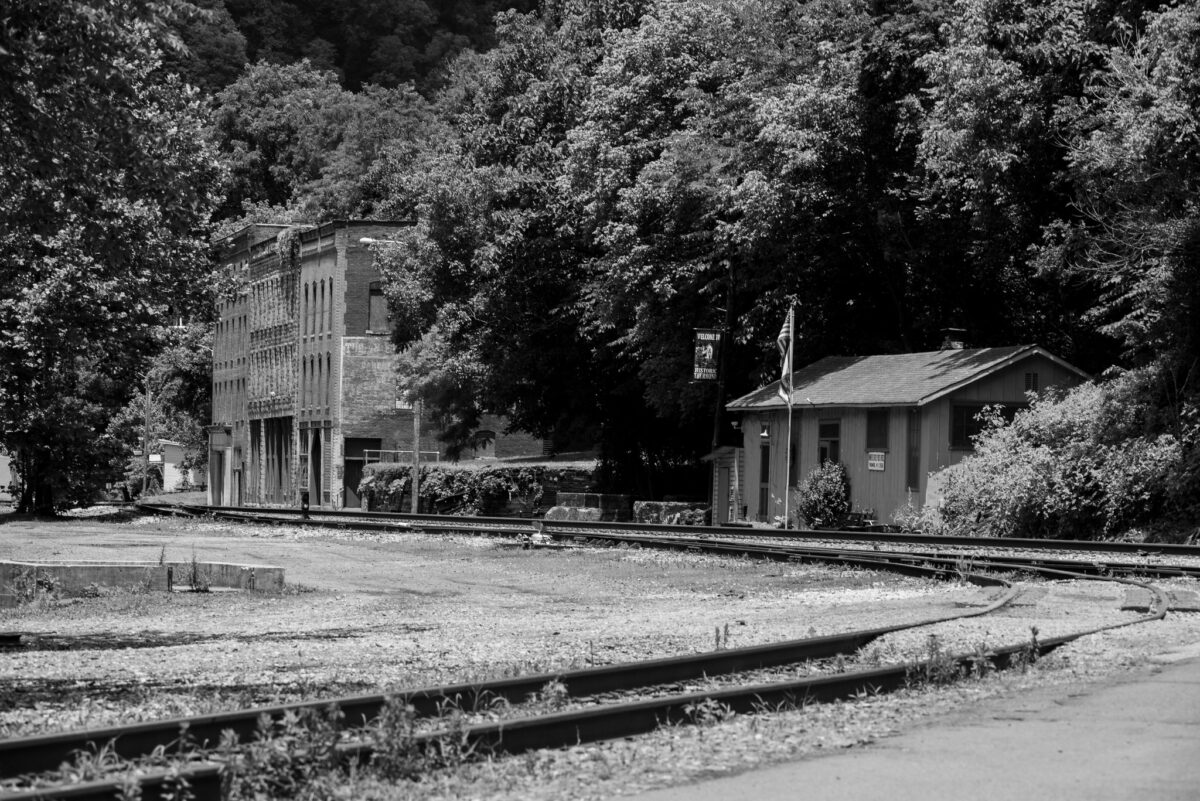
According to the 2010 census, five people resided in Thurmond, though more recent data shows the population at two. The town once had a population of several hundred, which dwindled as locomotives changed from steam to diesel in the 1950s.
Diesel engines could travel much longer distances without stopping for coal and water refilling. The railroad depot is now a visitor center for New River Gorge National Park and Preserve.
The town’s level land is almost entirely consumed by railroad operations. Two hotels were in the town during its heyday, including the 100-room Dun Glen, which opened in 1901 and became a nationally known resort before burning down in 1930.
The Dun Glen became notorious for hosting what was claimed to be the world’s longest-lasting poker game at 14 years.
Gross, Nebraska
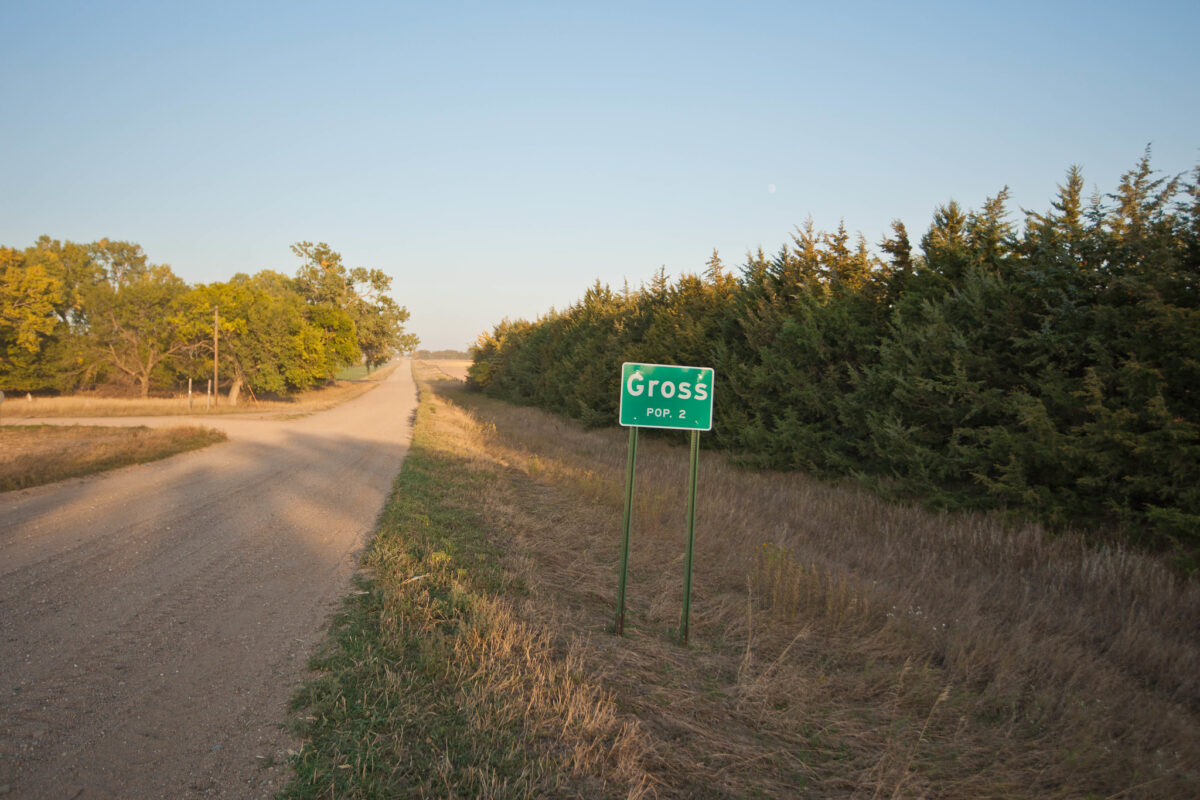
Mary and Michael Finnegan are the only two residents of Gross, Nebraska. They run the Nebrask Inn, a bar and restaurant that draws people from surrounding areas.
Coffee still costs a nickel, and anyone who curses has to glue a dollar to the wall. In its heyday, Gross was home to more than 600 people, but when railways and highways were built, they skipped right over Gross.
Mary serves as clerk and treasurer while Michael handles his duties as mayor and maintains the gravel streets. On Friday nights they serve Indian Tacos and homemade pies, and on Saturday nights prime rib is the special.
The town gained national attention in 2018 when Ancestry.com helped the Finnegans organize a Thanksgiving reunion that briefly swelled the population to 20.
Lost Springs, Wyoming
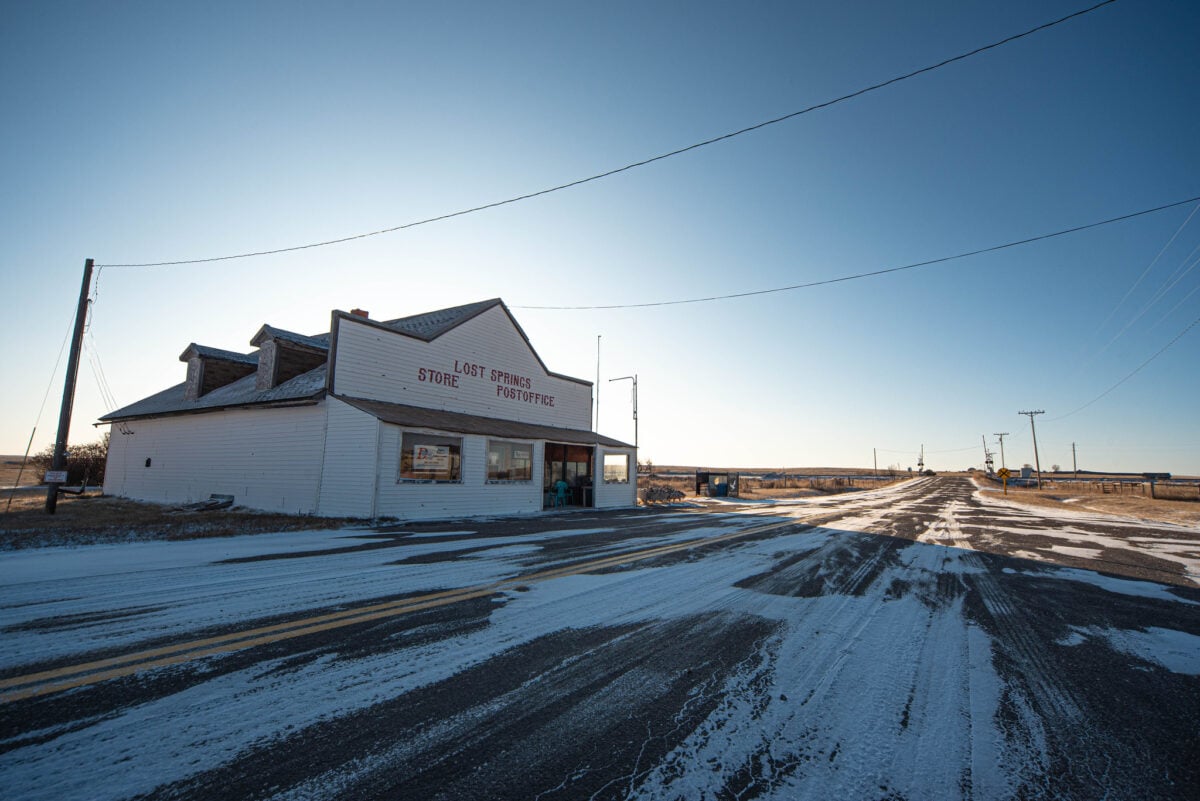
Lost Springs has a population of four people who reside in the town, working at the local tavern and general store. The town sits along an old wagon route and maintains its status as an incorporated town with a mayor and town council despite its tiny size.
It has a historical marker showing the town’s population as one, which was never accurate, and the marker is awaiting an upgrade. The town’s lone road features a bar, a wagon, a store, and a few outhouses.
Lost Springs is the least populated town in Wyoming. Visitors stop for a break during cross-country road trips and to experience the peaceful atmosphere of an almost-abandoned town surrounded by vast Wyoming scenery.
Buford, Wyoming
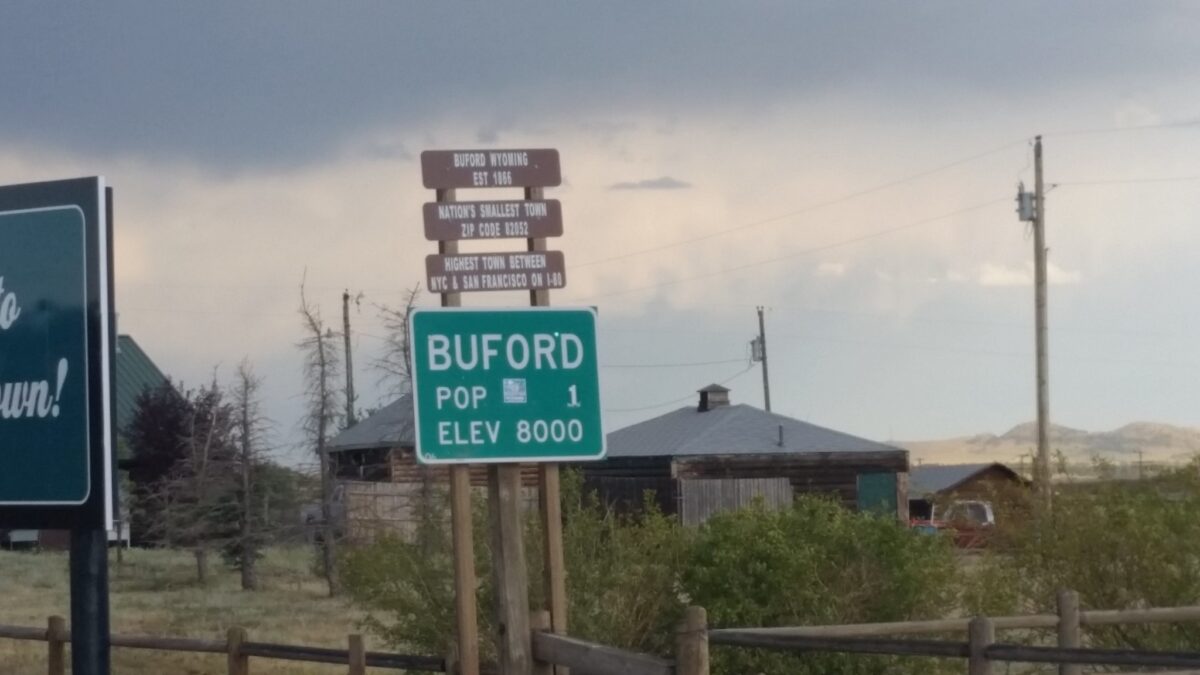
Buford’s last resident, who had been the lone resident for nearly two decades, left in 2012, and as of the 2020 census, the population is zero. The town once boasted a population of 2,001 during its time as a military outpost during the construction of the Transcontinental Railroad.
The town was put up for auction on April 5, 2012, with the highest bid of $900,000 made by two Vietnamese businessmen. One of them, Pham Dinh Nguyen, sold Vietnamese PhinDeli brand coffee in the convenience store and rebranded the site as PhinDeli Town Buford.
Buford is located in the Laramie Mountains between Laramie and Cheyenne on Interstate 80, at the highest point along the entire transcontinental Interstate 80 at 8,000 feet elevation. The gas station continues to operate, though no one lives in the town permanently.
Carbonate, Colorado
On November 4, 2014, property owners of Carbonate voted to reactivate the town government despite the population being zero since the 1890 census, making it the smallest town in Colorado. The town has summer visitors but no permanent residents, making it the only active incorporated municipality in Colorado with no permanent population.
Carbonate sits at an elevation of nearly 11,000 feet above timberline on solid limestone in the Flat Top Mountains north of Glenwood Springs. When Garfield County was formed in 1883, Carbonate became the county seat by default since it had the only substantial population, but the winters were so severe that access was seasonal.
After just four months, the county records were moved to Glenwood Springs. The handful of remaining cabins stand as silent witnesses to a brief mining boom.
McMullen, Alabama
McMullen has a population of only nine people, ranking close to the smallest town in America. This tiny municipality is in Pickens County in western Alabama, near the Mississippi border, outside the larger town of Aliceville.
It consists of just a few streets and small homes. The population dropped from 10 in 2014 to nine.
The town remains incorporated despite its minimal population. Most residents know each other personally, and the community maintains its quiet, rural character.
McMullen represents the type of Deep South settlement that once thrived on agriculture but gradually lost population as economic opportunities shifted elsewhere.
Bettles, Alaska
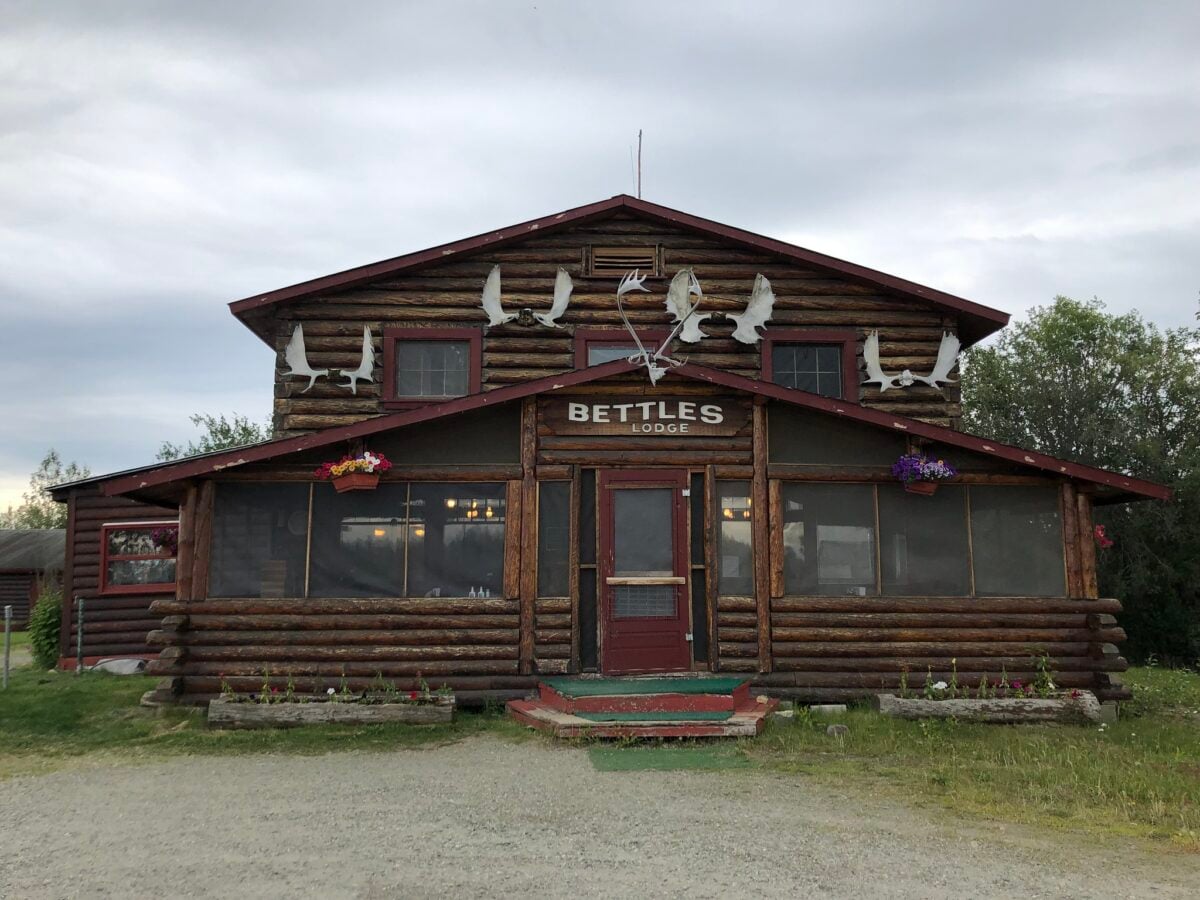
Bettles has just 12 residents and is located on the Koyukuk River. This gold rush town is close to both Gates of the Arctic National Park and Kobuk National Preserve and has a park visitor center and a tiny airport with small planes that take travelers over Gates of the Arctic.
Bettles is off the road system for most of the year and only accessible by plane, although an ice road is sometimes built for access in the winter. The town exists primarily to serve as a gateway for wilderness adventures.
What it lacks in human population, it makes up for in stunning scenery and access to some of Alaska’s most remote wilderness areas. Temperatures can drop to extreme lows in winter, and the midnight sun brings near-constant daylight in summer.
Oak Hill, Alabama
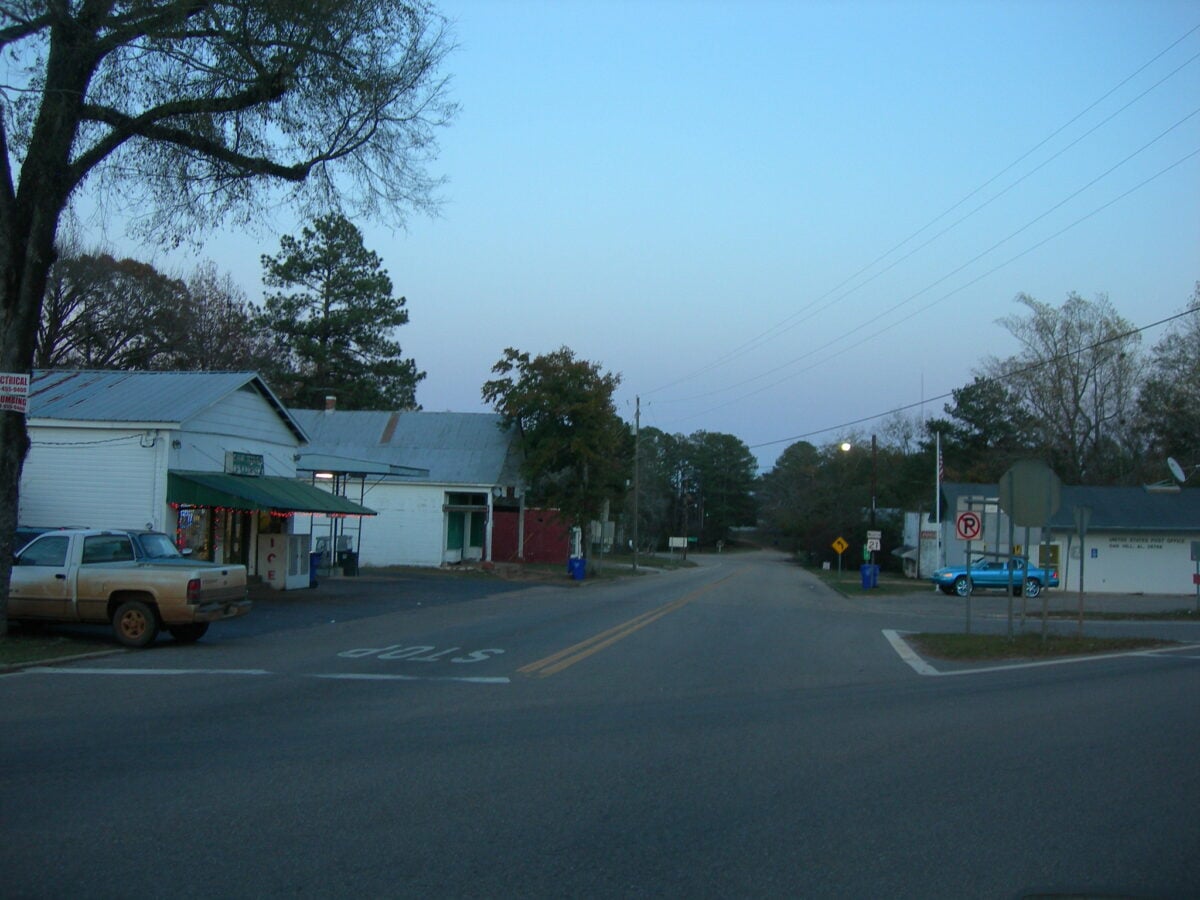
Oak Hill is a small town located in Wilcox County and is the state’s smallest incorporated town, with a population of only 13 residents in 2024. Founded in the early 1800s, Oak Hill maintains its incorporation despite having fewer residents than a large family gathering.
The town sits in rural Alabama where time seems to move slower. Most of the remaining residents have deep roots in the area, with family ties stretching back generations.
Like many small Southern towns, Oak Hill has seen its population decline as younger generations moved to cities for work and education. What remains is a tight-knit community where everyone knows everyone, and the sense of history runs deep through the quiet streets.
Where Time Stands Still
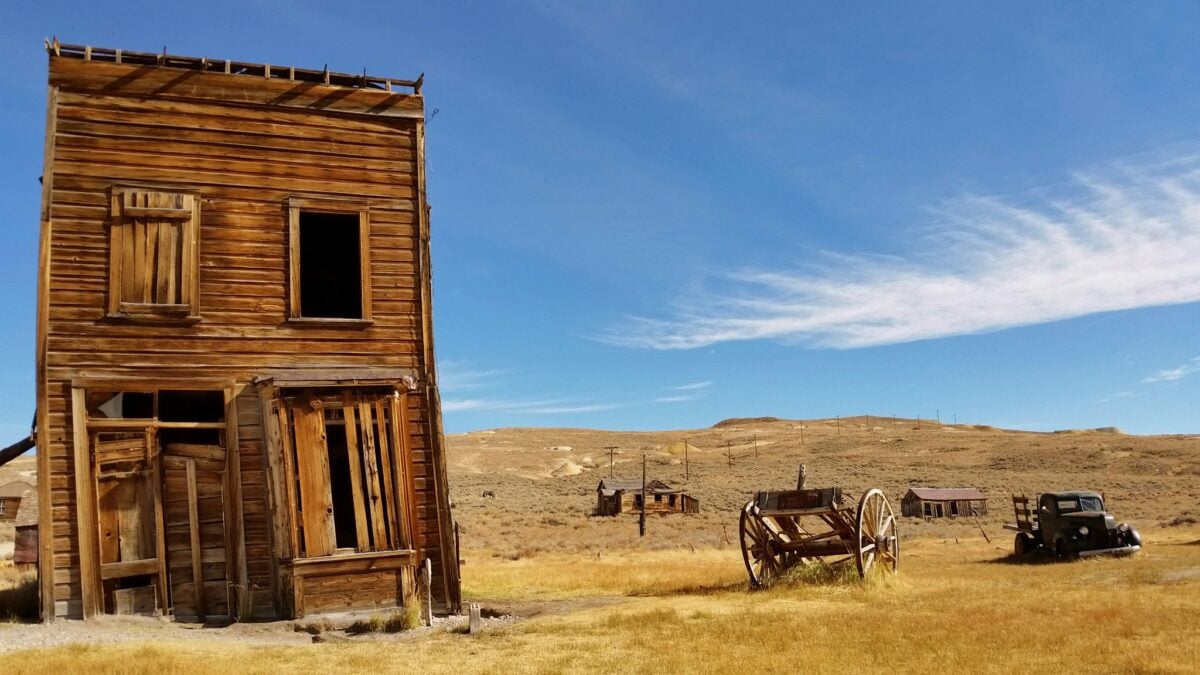
These towns exist in a peculiar state of suspended animation. They’re legally incorporated, with mayors and councils and street maintenance budgets, yet they function more like extended families than municipalities.
Some survive on tourism, drawing curious travelers who want to say they visited America’s smallest towns. Others persist simply because the last few residents refuse to abandon the place they call home.
The reasons for their decline follow familiar patterns across American history. Railroads changed routes. Mines played out.
Highways bypassed them. Young people left for cities.
What makes these places remarkable isn’t how they declined but that they still exist at all. In an age when even mid-sized towns struggle to survive, these tiny communities hang on through stubbornness, love of place, or simple inertia.
They remind us that home means something beyond population counts and economic viability. Sometimes a place matters because someone decided it should, and that can be enough to keep a town alive, even if barely.
More from Go2Tutors!

- The Romanov Crown Jewels and Their Tragic Fate
- 13 Historical Mysteries That Science Still Can’t Solve
- Famous Hoaxes That Fooled the World for Years
- 15 Child Stars with Tragic Adult Lives
- 16 Famous Jewelry Pieces in History
Like Go2Tutors’s content? Follow us on MSN.