Historic Forts With Incredible Defenses
Some structures exist to impress. Others exist to hold.
The great defensive forts of history were built with a single purpose — to stop an enemy from getting through — and the ingenuity poured into achieving that purpose produced some of the most extraordinary architecture ever created. Moats and drawbridges are only the beginning.
The more you look into how these places were actually designed and defended, the more you realise that military engineers were solving incredibly complex problems centuries before anyone had a word for engineering.
Mehrangarh Fort, India

Perched on a sheer rock face 122 metres above the city of Jodhpur, Mehrangarh is one of the largest forts in India and one of the most naturally defended structures anywhere in the world. The cliff beneath it wasn’t chosen arbitrarily — it made direct assault essentially impossible on three sides.
Attackers had to approach from the one viable approach path, which was lined with gates designed to funnel them into progressively more lethal positions. Seven gates lead into the fort in sequence, each angled so that any force trying to batter through one would be exposed to fire from the walls above.
The gates themselves still bear cannonball marks from past sieges, kept visible on purpose as a record of attempts that failed.
Château Gaillard, France

Richard I of England built Château Gaillard in just two years — an extraordinary pace for the late twelfth century — because he needed it quickly. The fortress sat above the Seine valley and controlled access between Normandy and the rest of France, and Richard understood that whoever held it held the region.
The design reflected everything he had learned from crusader fortifications in the Middle East: concentric walls, an inner keep positioned to remain defensible even if the outer walls fell, and a dry moat cut directly into the rock. When Philip II of France finally took it after an eight-month siege, he did so partly through the sewage system — a method of entry that Richard, for all his military foresight, had apparently not fully accounted for.
Masada, Israel
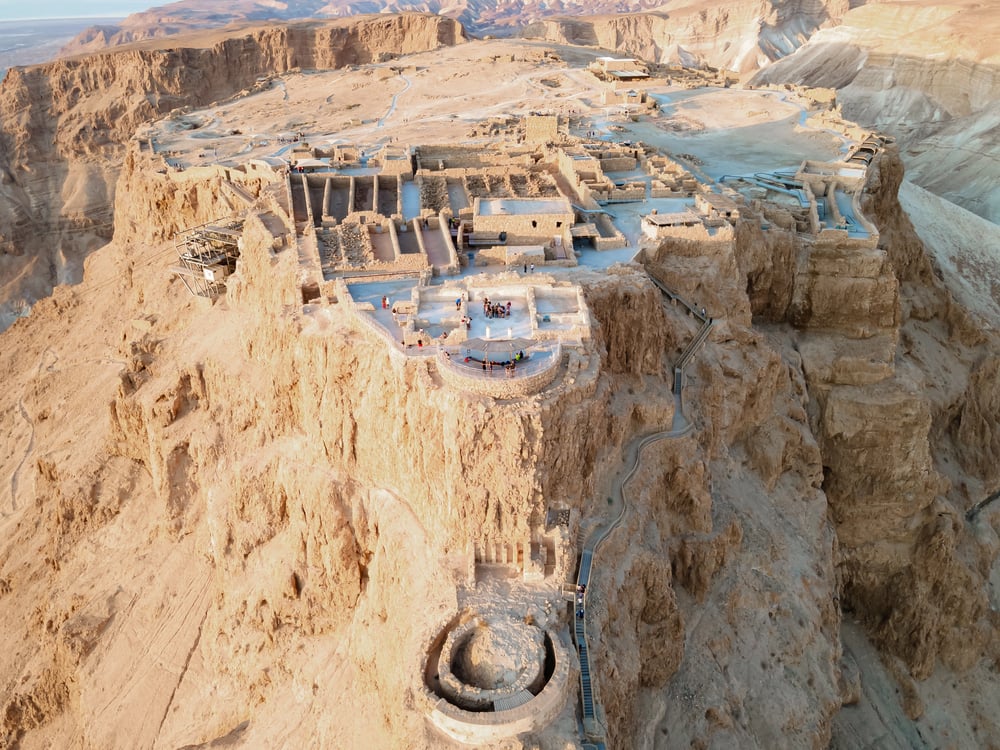
Masada sits on an isolated plateau in the Judean Desert, surrounded on all sides by near-vertical drops of several hundred metres. Herod the Great fortified it in the first century BC as a refuge of last resort, and the design reflected exactly that purpose: two palaces, enormous water cisterns carved into the rock capable of holding millions of litres, storehouses with enough food to last years.
When Roman forces besieged it in 73 AD, they couldn’t attack from below without suicidal losses. Instead they built a ramp — an enormous earthwork assault ramp that took months to construct and eventually gave them access to the walls.
The siege became one of the most studied examples of patient, methodical military engineering overcoming a near-impregnable natural position.
Fort Bourtange, Netherlands

From the air, Fort Bourtange looks like a five-pointed star drawn with perfect precision into the Dutch landscape. This shape wasn’t decorative — it was the answer to a specific tactical problem.
Traditional round or square fortifications created dead zones at the corners where attackers could work in relative safety. The star design eliminated those blind spots entirely.
Every point of the star could be defended by fire from the adjacent points, meaning there was no approach to the walls that wasn’t covered from multiple angles simultaneously. Built in the late sixteenth century during the Dutch revolt against Spanish rule, the fort controlled the only road through an otherwise impassable bog — a geographical chokepoint that made it strategically indispensable for over two centuries.
The Walls of Constantinople
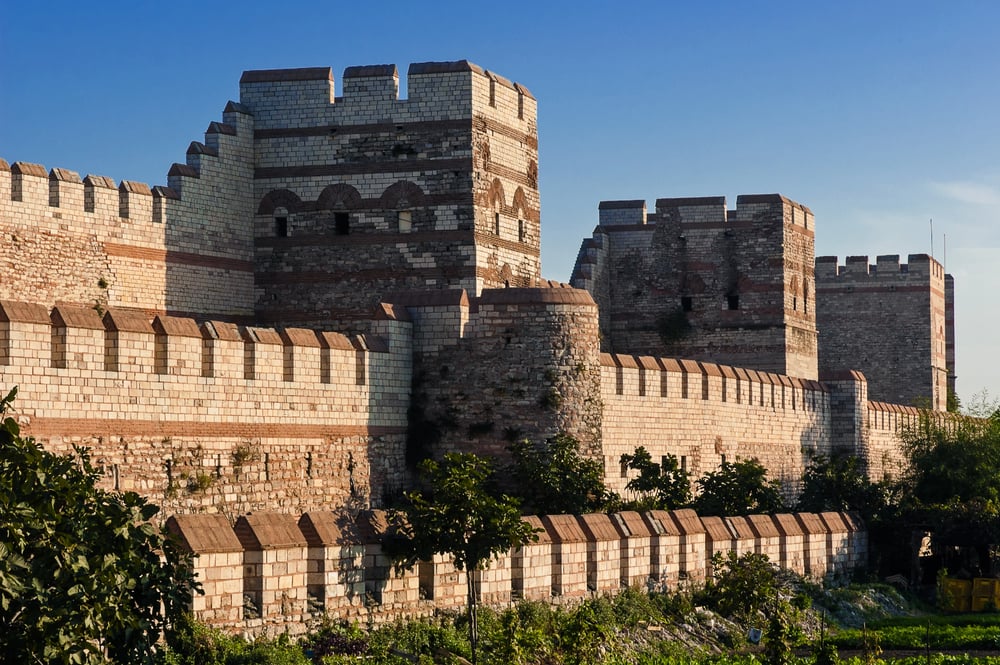
For over a thousand years, the Theodosian Walls of Constantinople held off sieges that, by any reasonable calculation, should have succeeded. Built in the fifth century, they consisted of an inner wall over twelve metres high, an outer wall, a broad terrace, another lower wall, and finally a moat.
Any attacker who breached the outer defenses found themselves in a killing ground between walls, exposed to fire from multiple levels above. The walls repelled Arab, Bulgarian, and Viking assaults across the centuries.
They finally fell in 1453 not to any weakness in their design but to Ottoman cannon fire of a scale and power that no fortification of that era was built to withstand.
Krak des Chevaliers, Syria
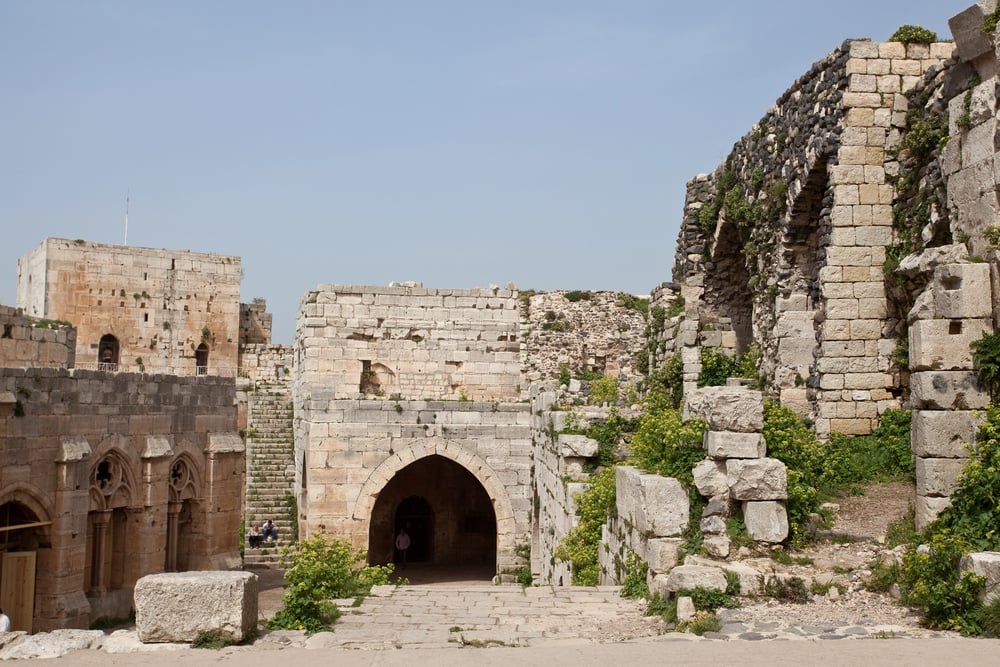
Built by the Knights Hospitaller in the twelfth century and expanded repeatedly over the following decades, Krak des Chevaliers is considered one of the best preserved and most thoughtfully designed crusader castles ever constructed. The concentric layout gave defenders multiple independent lines of resistance.
The inner walls were built on a slope so that the towers projected outward, allowing defenders to fire along the base of the walls rather than only straight out. Water was stored in a cistern large enough to sustain a garrison for years.
The approach to the main gate curved deliberately, preventing attackers from building up momentum or using battering rams effectively. Lawrence of Arabia, who visited the site in 1909, called it the best preserved and most wholly admirable castle in the world.
Sigiriya, Sri Lanka

Sigiriya isn’t a fort in the conventional sense, but as a defensive position it belongs in any serious conversation about extreme military thinking. King Kashyapa built his palace on top of a massive granite monolith in the fifth century AD — a column of rock rising 180 metres from the surrounding jungle floor.
The only access was through a series of gates, galleries, and staircases cut into the rock face itself, including a famous entrance through the mouth of a carved lion. The position was essentially unassailable without cooperation from the defenders.
Whether Kashyapa chose it out of genuine fear or theatrical ambition is still debated, but the defensive logic was undeniable.
Fort Jefferson, United States
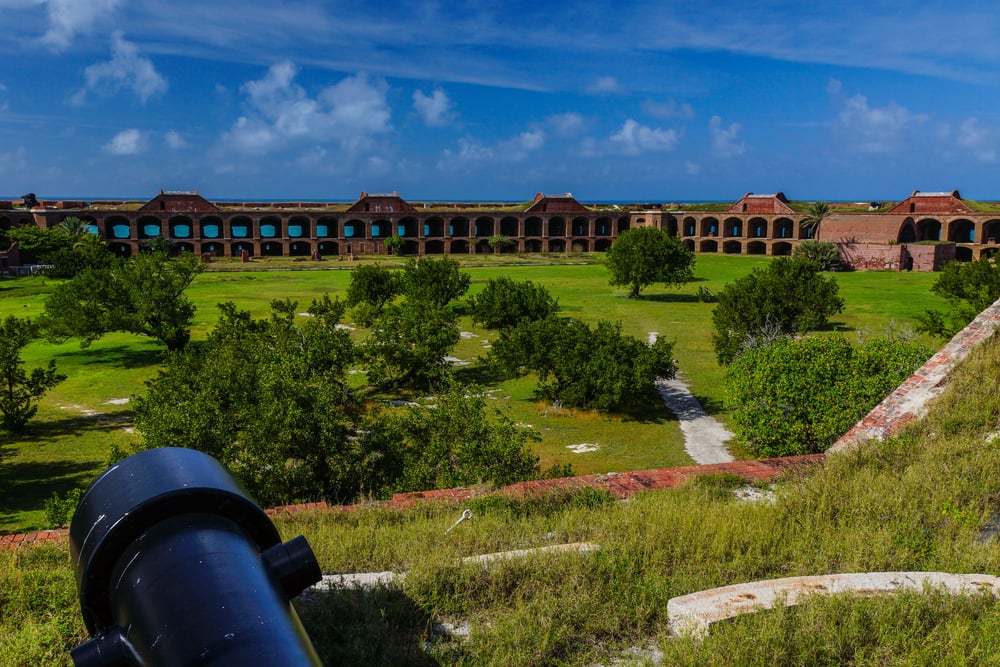
Fort Jefferson sits on a tiny island sixty miles off the coast of Florida, surrounded by open water on all sides and accessible only by boat or floatplane. Construction began in 1846 and continued for thirty years without the fort ever being finished.
The design called for over sixteen million bricks arranged across three tiers of gun emplacements capable of mounting over 400 cannon. At full armament, it would have been able to destroy any wooden warship of its era before that ship came within range to respond effectively.
The fort was never attacked. The isolation that made it so defensible also made supplying it enormously difficult, and the arrival of rifled artillery during the Civil War rendered its thick walls less effective than their builders had anticipated.
Alhambra, Spain
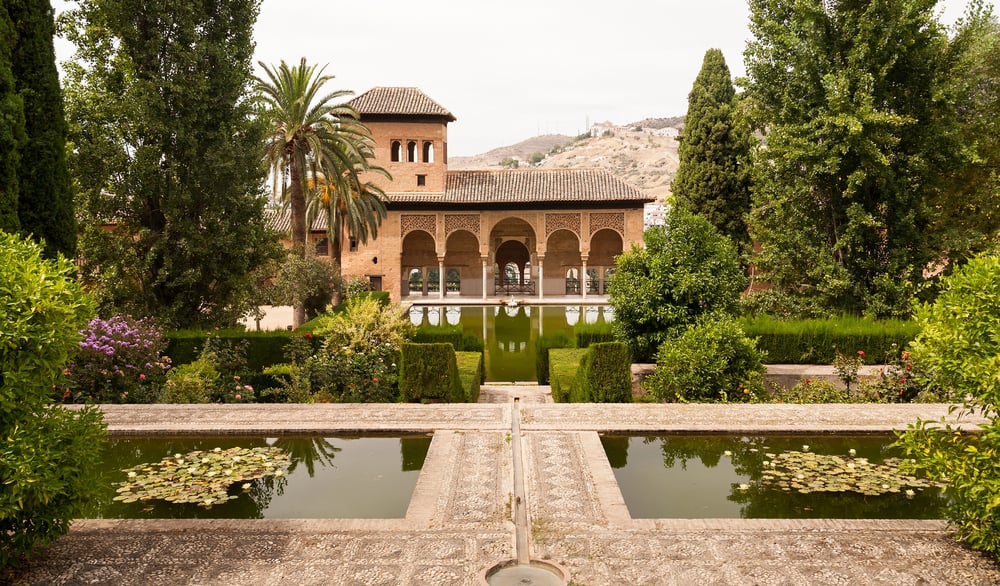
The Alhambra in Granada is better known today as a palace complex than as a fortress, but its defensive design was serious and sophisticated. The entire hilltop was enclosed by walls over two kilometres long, studded with towers positioned to provide overlapping fields of fire.
The main approach was through a sequence of gates arranged so that each one opened onto a courtyard rather than a straight path forward, forcing any attacker to stop, reorient, and expose themselves to fire from above at every stage. Water was brought to the complex through a sophisticated canal system that also fed the gardens — a defensive and logistical achievement that kept the fortress self-sufficient during extended sieges.
Brimstone Hill Fortress, St Kitts

Built over a century by enslaved Africans using local volcanic stone, Brimstone Hill Fortress climbs the side of an extinct volcano on the Caribbean island of St Kitts. The position gave its defenders commanding views across the sea in all directions, with the natural slope of the hill providing additional protection against artillery.
The citadel at the summit was designed so that even if the lower fortifications fell, the garrison could retreat uphill and continue fighting from a progressively stronger position. The fort withstood a siege by French forces in 1782 for a month before surrendering — not because its defenses failed but because the garrison ran out of relief options.
It was returned to British control the following year under treaty.
Golconda Fort, India

Golconda’s most celebrated defensive feature is its acoustic warning system. Clapping your hands at the main gate produces a sound that can be heard clearly at the top of the fort, nearly a kilometre away.
This wasn’t accidental — the gates, corridors, and dome structures were engineered to carry sound upward through the complex. Any approach to the gate would alert sentries at the summit before attackers were anywhere near the walls.
Golconda also had an elaborate water supply system that carried water to the highest points of the fort through a series of clay pipes and Persian wheels, ensuring the garrison could survive an extended siege without thirst becoming a vulnerability.
Eltz Castle, Germany

Eltz Castle has stood in the Moselle valley for over 850 years without ever being taken by force. Part of this is circumstance — it avoided several conflicts through negotiation — but part of it is the position. The castle sits on a narrow rock spur almost completely surrounded by a river bend, with only a thin neck of land connecting it to the surrounding hills.
Attackers approaching across that neck had no cover and no room to manoeuvre. The castle’s towers were built tall enough to command all approaches, and the complex arrangement of buildings within the walls created a confusing internal structure that would have been disorienting for any attacker who managed to get inside.
The same families have owned it continuously since the twelfth century.
Rhodes Old Town Walls, Greece

The Knights of St John spent nearly two centuries fortifying the city of Rhodes, and the result was one of the most sophisticated defensive systems in the medieval Mediterranean. The walls were built wide at the base — some sections nearly twelve metres thick — specifically to absorb cannon fire, a forward-thinking design update that anticipated the artillery age before it fully arrived.
A dry moat up to thirty metres wide ran along the landward side, and the distance between the outer moat and the inner wall was calculated to prevent any cannon positioned outside the moat from reaching the walls directly. When the Ottomans finally took the city in 1522 after a six-month siege, they did so through attrition and overwhelming numbers rather than any failure of the fortifications themselves.
Naarden, Netherlands

Like Bourtange, Naarden is a star fort — but it takes the concept even further. The perfectly preserved fortifications surrounding the small Dutch town form two concentric star shapes, one inside the other, creating a system where every possible approach to the town was covered by multiple overlapping defensive positions.
Built in the seventeenth century, the outer ring consists of six pointed bastions connected by long earthen ramparts. The moat that surrounds the entire system is deliberately wide, slowing any advance and keeping attackers exposed for longer.
Naarden is unusual because so little has changed: the earthworks, water features, and bastions remain almost exactly as they were built, making it one of the clearest surviving examples of star fort design anywhere in Europe.
What Stone and Strategy Built Together

Something shows up when you study these spots as a group. Thick walls alone didn’t make the top defenses through time.
What worked was structure – parts stacked, tied together, built by people who knew exactly how attackers plan and shift. Those builders thought like losers first, wondering how one stage might last until the next step kicks in.
A few of those strongholds stayed unbroken. Falling came some, yes, through tools never imagined by those who made them.
Yet each one forced attackers to spend far more than they wanted – so much that a few turned whole battles just by being too costly to break.
More from Go2Tutors!

- The Romanov Crown Jewels and Their Tragic Fate
- 13 Historical Mysteries That Science Still Can’t Solve
- Famous Hoaxes That Fooled the World for Years
- 15 Child Stars with Tragic Adult Lives
- 16 Famous Jewelry Pieces in History
Like Go2Tutors’s content? Follow us on MSN.