Historic Hotels With Legendary Guests
The world’s grandest hotels aren’t just places to sleep. They’re living museums where history played out in ornate lobbies and lavish suites, where presidents made decisions, artists found inspiration, and celebrities escaped the public eye.
These establishments witnessed everything from wartime drama to Hollywood romance, their walls absorbing stories that shaped culture itself. Walking through these hotels today feels like stepping into a time machine.
Here is a list of historic hotels where legendary guests left their mark on history.
Waldorf Astoria New York

The Waldorf Astoria has hosted every U.S. president since Herbert Hoover first checked in during 1931, making it America’s unofficial diplomatic headquarters. Composer Cole Porter lived in The Towers for three decades until his death in 1964, writing iconic songs on a Steinway piano that now sits in the lobby.
Frank Sinatra and his wife Barbara later moved into Porter’s former suite, paying $1 million annually, and even etched their initials into the shower doors.
The Plaza Hotel

Alfred Gwynne Vanderbilt strode through The Plaza’s doors as its first guest in 1907, setting the tone for a century of celebrity visits. The Beatles stayed there during their first U.S. tour in 1964, writing the song ‘Michelle’ while holed up in an entire wing they had to themselves.
Truman Capote’s legendary gathering in 1966 brought Frank Sinatra, Norman Mailer, and Andy Warhol to what many consider the party of the century.
Hotel del Coronado
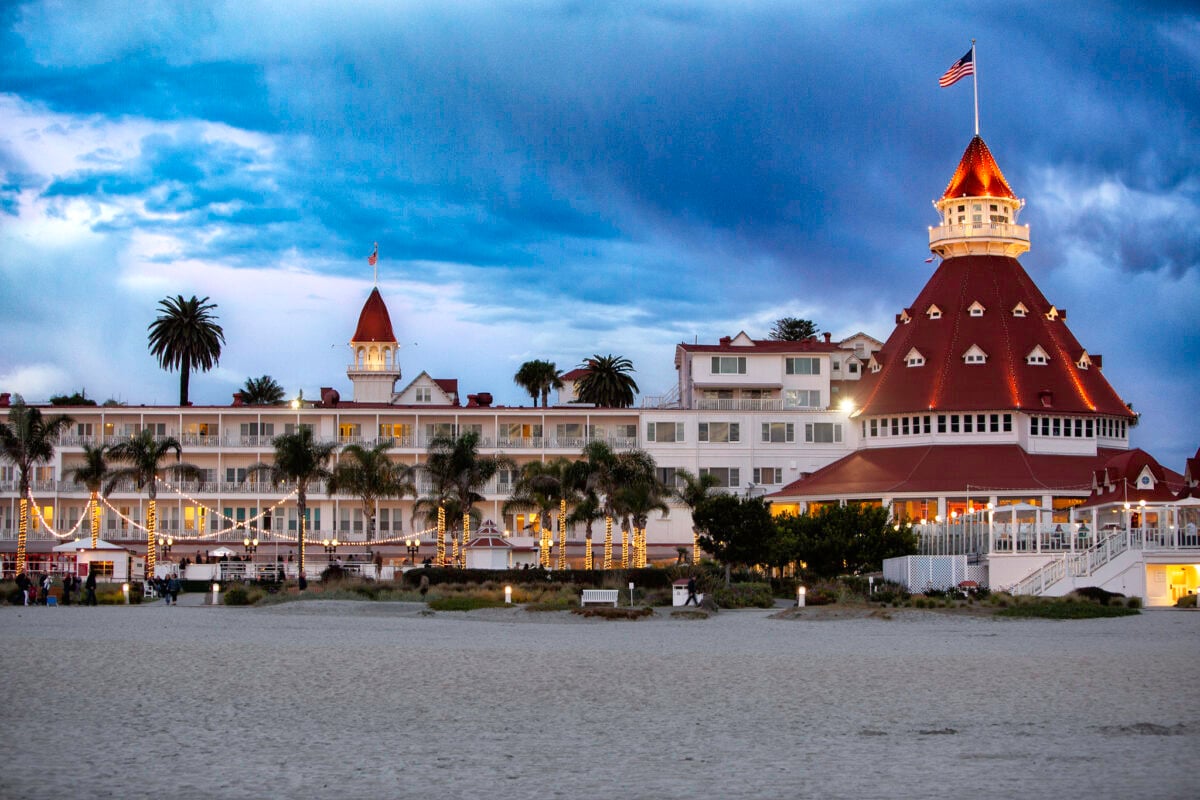
L. Frank Baum wrote three books in his Oz series while staying at this beachfront resort, which opened in 1888 as the world’s largest resort hotel. The Del has welcomed 12 presidents over the years, along with Prince Edward and Wallis Simpson during their controversial romance.
This Victorian masterpiece near San Diego remains the second largest wooden structure in the United States.
The Savoy London

The Savoy became London’s first luxury hotel when it opened in 1889, pioneering innovations like electricity and hot water in every room. Claude Monet stayed here multiple times while painting his famous views of Waterloo Bridge and the Houses of Parliament from his suite.
Charlie Chaplin, Frank Sinatra, Marilyn Monroe, and the Marx Brothers all graced its hallways, drawn by service standards that revolutionized the hospitality industry.
Raffles Hotel Singapore

This colonial landmark opened in 1887 and quickly became the place where literary giants like Somerset Maugham and Rudyard Kipling found inspiration for their works. Elizabeth Taylor, Ava Gardner, and Charlie Chaplin stayed in suites that now bear their names.
The hotel even has its own historian on staff, and visitors still flock to the Long Bar where the Singapore Sling was invented in 1915.
Beverly Hills Hotel

The ‘Pink Palace’ opened in 1912 when Beverly Hills was just a Los Angeles suburb, providing a place for people scouting land parcels. Charlie Chaplin and Marilyn Monroe made it their Hollywood hideaway during the Golden Age, while modern celebrities like the Kardashians continue the tradition.
The famous cursive sign was designed by Paul Revere Williams, one of the few prominent Black architects in early Los Angeles.
Chateau Marmont
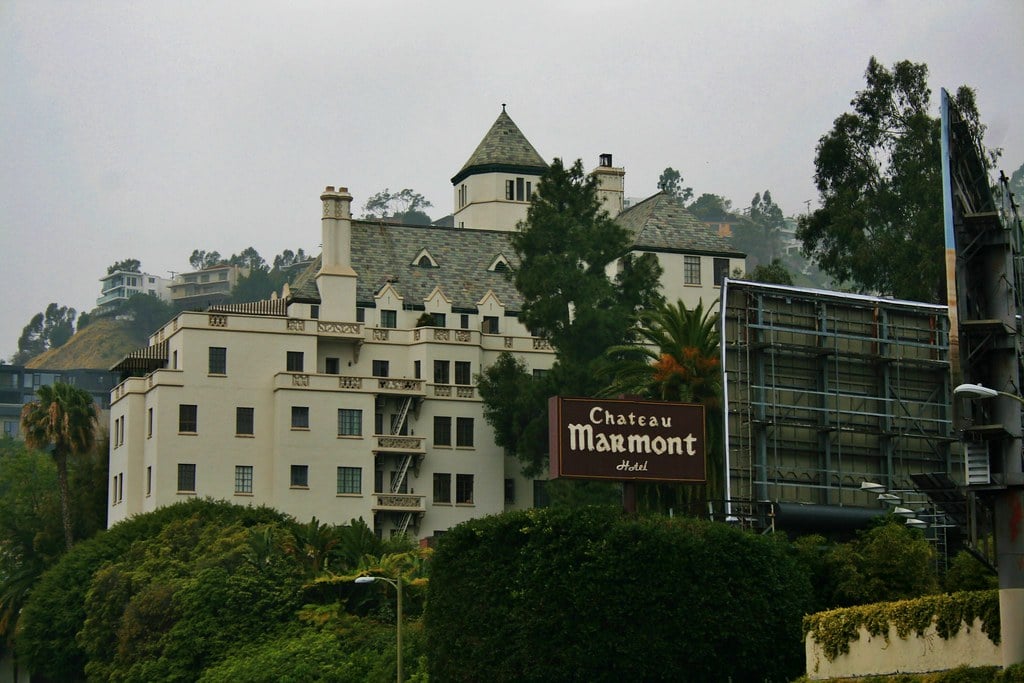
Perched on the Sunset Strip since 1929, this French château-inspired hotel became Hollywood’s discreet playground where stars could misbehave without scrutiny. Jean Harlow rented two units in 1933, occupying them separately from her third husband while entertaining Clark Gable.
Billy Wilder stayed in three different accommodations during his early Hollywood days, including a stint in a closet-sized room that had six toilets.
The Broadmoor
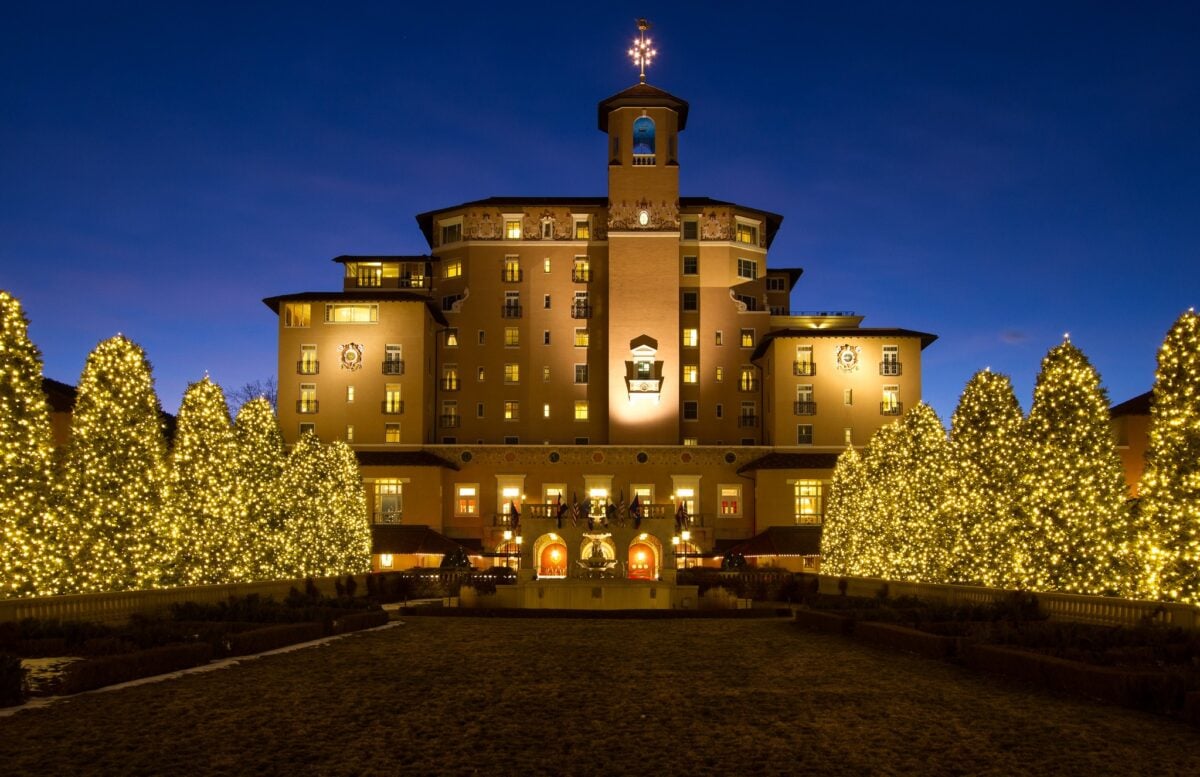
This Italian Renaissance-style resort at the foot of Colorado’s Rocky Mountains has hosted guests since 1918. Truman Capote and Harper Lee stayed here in 1963 while researching the book ‘In Cold Blood’, and Capote returned numerous times throughout his life.
President George W. Bush used the property in 2003 as a meeting place to discuss the NATO alliance with leaders from seven countries.
Ritz Paris

The iconic Ritz opened in 1898 and became home to Coco Chanel, who lived in a suite for decades. F. Scott Fitzgerald was a regular visitor, along with Ernest Hemingway, who famously frequented the bar that now bears his name.
The hotel reopened in 2016 after a three-year renovation that preserved its Empire-style interiors while adding modern touches like heated floors and retractable roofs.
Biltmore Hotel

This 1926 Mediterranean Revival landmark in Coral Gables features a 93-foot tower modeled after the Cathedral of Seville in Spain. Ginger Rogers stayed here, as did Al Capone, whose 13th-floor suite is supposedly haunted.
The grandiose estate overlooks an 18-pit golf course and showcases gorgeous arches, courtyards, and vaulted ceilings that transport visitors back to the Gilded Age.
The Breakers

This jaw-dropping Palm Beach resort was established in 1896 and rebuilt 30 years later to reflect grand 15th and 16th century Italian villas. A lengthy driveway leads to a Florentine fountain, while inside, a 200-foot lobby topped with ornate ceiling frescoes welcomes guests.
The property reinvests $25 million annually just to maintain its historic architecture and spans half a mile of private beachfront.
The Drake

British royalty has chosen this Chicago lakefront hotel since 1924, with Princess Diana and Winston Churchill among its notable guests. Queen Marie of Romania also stayed at The Drake, which earned placement on the National Register of Historic Places by 1981.
The hotel was the first in Chicago to offer color televisions and air conditioning in all 535 guest rooms.
Grand Hotel
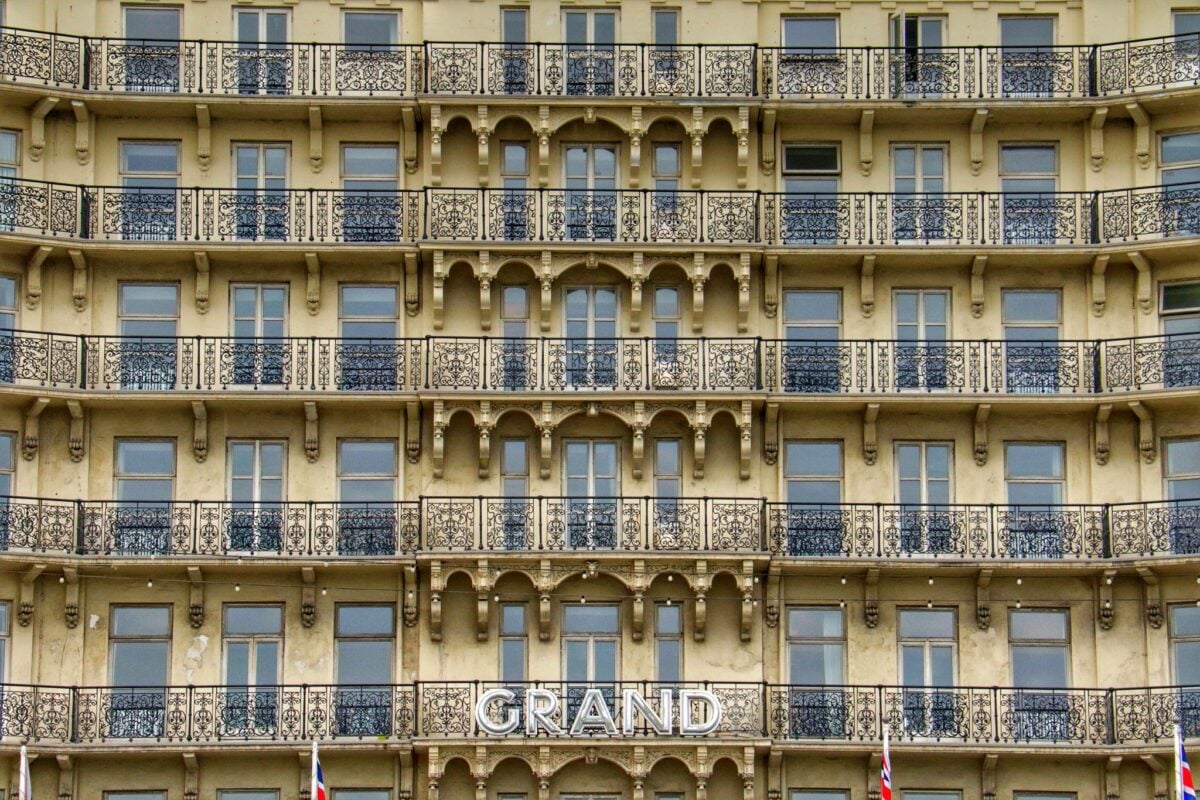
This massive white painted hotel on Michigan’s Mackinac Island has welcomed guests since 1887 from its perch overlooking the Straits of Mackinac. The car-free island means visitors arrive by horse-drawn carriage, adding old-world charm to the experience.
The hotel’s iconic 660-foot front porch remains the longest in the world, where generations have gathered to watch the water.
Copacabana Palace

Inspired by the Negresco Hotel in Nice, this Art Deco beauty opened on Rio de Janeiro’s beachfront in 1923. Albert Einstein, Frank Lloyd Wright, and the Princes of England numbered among its first guests.
The white marble façade became synonymous with Copacabana Beach glamour, and the building was declared a National Historic Heritage Site in 1989.
King David Jerusalem

This 1920s hotel has hosted some of history’s most significant figures, including Winston Churchill, Nelson Mandela, and Barack Obama. The Jerusalem Suite on the sixth floor offers unbeatable views of the Western Wall and the Dome of the Rock across 155 square meters of luxury space.
Special security measures built into the suite accommodate visiting heads of state and dignitaries.
The Carlyle

This Art Deco gem in New York has been home to presidents and performers since opening in the 1930s. The Café Carlyle has hosted legendary talent like Woody Allen, who performed there regularly for years.
President John F. Kennedy stayed so frequently that the hotel became known as the ‘New York White House’, and his favorite rocking chair still resides in the Presidential Suite.
Where History Still Checks In

These hotels prove that luxury and history make powerful partners. They’ve survived economic depressions, world wars, and changing tastes by evolving while staying true to their original grandeur.
The same lobbies where Hemingway sipped drinks and presidents made policy decisions now welcome modern travelers seeking a connection to that storied past. What started as places for the elite to rest their heads became cultural landmarks that shaped the very definition of hospitality.
More from Go2Tutors!

- The Romanov Crown Jewels and Their Tragic Fate
- 13 Historical Mysteries That Science Still Can’t Solve
- Famous Hoaxes That Fooled the World for Years
- 15 Child Stars with Tragic Adult Lives
- 16 Famous Jewelry Pieces in History
Like Go2Tutors’s content? Follow us on MSN.



