Historic Restaurants That Shaped Cuisine
Food is more than sustenance — it’s a story told through generations, and some restaurants have become the storytellers that shaped how we eat.
Before the rise of celebrity chefs or Instagram-worthy plates, a few pioneering establishments defined eras, inspired entire culinary movements, and changed the very meaning of dining out.
These were the places where art met appetite, where eating became an act of culture and expression rather than survival.
Here’s a closer look at six historic restaurants whose legacies can still be tasted in kitchens and menus around the world.
Delmonico’s – New York, United States (1837)

Delmonico’s was America’s first true restaurant — not a tavern, not a boarding house, but an elegant dining room that dared to bring European sophistication to the rough-and-tumble streets of 19th-century New York.
When Swiss brothers John and Peter Delmonico opened their doors in 1837, they introduced something the country had never seen: private tables, printed menus, and a wine list featuring imported vintages.
The restaurant even had its own farm in Brooklyn to ensure the quality of its ingredients — a concept so far ahead of its time that today’s “farm-to-table” movement seems like its echo.
Delmonico’s was where America learned to dine with style.
The restaurant became synonymous with innovation, claiming credit for several iconic dishes: Eggs Benedict, Lobster Newberg, and the Delmonico steak — all of which set benchmarks for luxury dining.
It also became a cultural hub where politicians, financiers, and writers gathered to discuss the future of the young nation over oysters and Bordeaux.
The staff, trained in European service, treated dining as theater.
The restaurant’s influence reached far beyond New York, shaping the fine-dining model that spread across America.
Even as decades passed and the city evolved, Delmonico’s endured, closing and reopening through wars and economic downturns.
Its name became shorthand for sophistication — proof that an American restaurant could rival the elegance of Paris or London.
Every white-linen dining room that followed owes a quiet debt to the Delmonico brothers.
Lhardy – Madrid, Spain (1839)
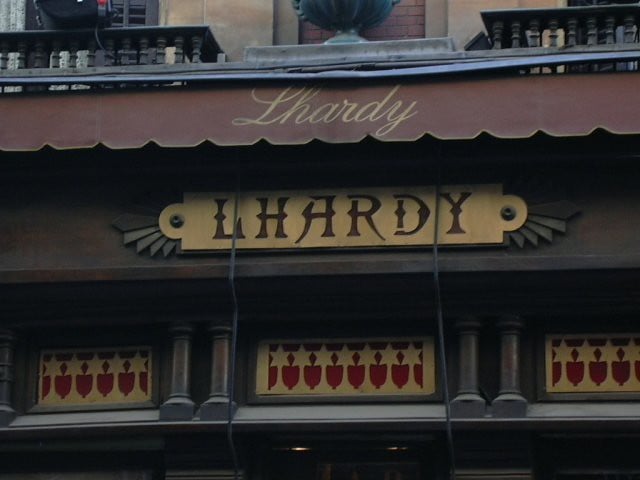
Two years after Delmonico’s transformed New York, a French chef named Emilio Huguenin brought similar refinement to Spain.
His restaurant, Lhardy, opened in Madrid in 1839, and immediately redefined Spanish dining culture.
Before Lhardy, meals were hearty but rustic, served in taverns without much ceremony.
Huguenin introduced something entirely different — haute cuisine with structure, polish, and an air of ceremony that Madrid had never experienced.
At Lhardy, dining was an event.
Guests entered through mirrored doors and were greeted by silver urns filled with consommé, served in delicate china cups.
Waiters in starched uniforms presented multi-course meals, each dish announced with quiet precision.
The restaurant’s blend of French cooking technique and Spanish ingredients created a new culinary language that shaped Madrid’s elite dining scene for generations.
Lhardy became the meeting place of poets, politicians, and aristocrats.
Prime ministers lunched there, writers drafted manifestos in its dining rooms, and artists debated modernism over its famous cocido madrileño.
The restaurant helped Spain transition from its traditional stews and roasts to refined European gastronomy — without ever losing its cultural roots.
Nearly two centuries later, Lhardy still stands in the same spot on Carrera de San Jerónimo, its mirrored walls and chandeliers preserved like a time capsule.
To step inside is to see the birth of Spanish fine dining still flickering beneath the surface of every polished table.
Antoine’s – New Orleans, United States (1840)

In New Orleans, food isn’t just eaten — it’s celebrated.
And no place embodies that spirit more completely than Antoine’s, founded in 1840 by French immigrant Antoine Alciatore.
Blending French technique with local ingredients, Antoine’s laid the foundation for Creole cuisine, that uniquely New Orleans fusion of African, Caribbean, French, and Spanish flavors.
Antoine’s introduced dishes that would become culinary icons, none more famous than Oysters Rockefeller, created in 1899 by Antoine’s son Jules.
The rich, herb-laden dish symbolized the restaurant’s philosophy: indulgence without apology.
But its legacy went beyond recipes.
Antoine’s was among the first American restaurants to maintain family ownership across multiple generations, passing down both tradition and innovation.
The restaurant’s twelve dining rooms — each themed and dripping with character — became as legendary as its food.
The “Mystery Room,” for instance, was once a Prohibition-era speakeasy where patrons could enjoy brandy disguised as coffee.
From presidents to playwrights, Antoine’s has hosted nearly every kind of guest imaginable, becoming an institution where Southern hospitality meets old-world grandeur.
Even today, its crisp linen, French-speaking waiters, and storied menu preserve a link to another era.
To dine there isn’t merely to eat Creole cuisine; it’s to taste the birth of American gastronomy itself.
Maxim’s – Paris, France (1893)

In the glittering Belle Époque of late 19th-century Paris, Maxim’s wasn’t just a restaurant — it was a stage.
Opened in 1893 by Maxime Gaillard, a former waiter with ambition, it began as a modest bistro but soon evolved into the city’s most glamorous dining room.
Its art nouveau design — gilded mirrors, floral stained glass, and curved mahogany walls — became synonymous with decadence.
The restaurant attracted everyone from Sarah Bernhardt to Marcel Proust, and its clientele helped make it a social phenomenon as much as a culinary one.
Maxim’s refined the concept of the modern fine-dining restaurant.
Its menu celebrated classic French dishes like foie gras, sole Véronique, and canard à la presse — a theatrical dish involving a duck pressed tableside to extract juices for sauce.
Under chef Eugène Cornuché, service became performance, with waiters and sommeliers moving in carefully choreographed precision.
The dining room’s buzz was as important as its flavors, setting the template for the grand restaurants of the 20th century.
Through wars, ownership changes, and changing tastes, Maxim’s endured, its name synonymous with glamour.
The restaurant even influenced fashion and design — Yves Saint Laurent and Pierre Cardin were known patrons — and appeared in films from Gigi to Midnight in Paris.
Maxim’s didn’t just feed people; it defined the idea of dining as art, a philosophy that still echoes through every Michelin-starred dining room in the world.
Rules – London, England (1798)

Rules is more than London’s oldest restaurant — it’s a living chapter of British history.
Established in 1798 by Thomas Rule as a simple oyster bar, it quickly became a favorite of playwrights, politicians, and royalty.
Unlike many of its European contemporaries that embraced French influence, Rules doubled down on Englishness.
It celebrated game from the countryside, roasts that filled the room with aroma, and puddings rich enough to last through a London winter.
Inside, time seems to stand still.
The walls are lined with paintings of fox hunts and framed autographs of literary giants like Charles Dickens and Graham Greene.
The menu remains unapologetically traditional: roast pheasant, steak and kidney pudding, and treacle pastry — dishes that might have vanished from modern menus if not for Rules’ stubborn devotion to authenticity.
Even its game birds come from the restaurant’s own estate in the north of England, a rarity that underscores its dedication to heritage.
Rules influenced not only British cuisine but the preservation of national identity through food.
When trends shifted toward modernism and minimalism, it remained steadfast, proving that culinary nostalgia can be its own art form.
Its presence is a quiet rebellion against the notion that progress requires abandoning the past.
Spago – Los Angeles, United States (1982)

When Wolfgang Puck opened Spago on Sunset Boulevard in 1982, fine dining was formal, predictable, and dominated by French menus.
Puck changed everything.
He tore down the barriers between haute cuisine and casual dining, replacing tuxedoed waiters with an open kitchen, shared plates, and the buzz of creative energy.
His concept of “California cuisine” emphasized fresh, local ingredients and bold, multicultural flavors — a radical idea at the time.
Spago’s signature smoked salmon pizza became an instant classic, blending luxury ingredients with playful presentation.
It captured what Puck believed dining should be: fun, social, and unpretentious.
The restaurant quickly became a celebrity hotspot, where movie stars and moguls mingled at the same tables, transforming chefs into cultural figures.
More importantly, Spago sparked a culinary revolution that reshaped global dining.
It inspired generations of chefs to embrace creativity, seasonality, and personality in their food.
The open-kitchen format, now common worldwide, was pioneered there.
The modern farm-to-table and fusion movements owe much to Puck’s pioneering spirit.
In many ways, Spago didn’t just redefine American fine dining — it democratized it, proving that innovation could be served with a smile.
Why It Still Matters

These restaurants are more than historical landmarks; they are milestones in humanity’s relationship with food.
Delmonico’s gave America its culinary confidence.
Lhardy taught Spain to dine with refinement.
Antoine’s captured the soul of a city through flavor.
Maxim’s immortalized glamour in gold and glass.
Rules preserved authenticity while the world modernized, and Spago reinvented dining for the age of creativity.
Each restaurant represents a turning point — moments when dining evolved from sustenance to expression.
Their legacies endure in every tasting menu, every modern kitchen, and every dish that tells a story.
Food, like history, is always rewriting itself — but these places remind us where it began.
More from Go2Tutors!

- The Romanov Crown Jewels and Their Tragic Fate
- 13 Historical Mysteries That Science Still Can’t Solve
- Famous Hoaxes That Fooled the World for Years
- 15 Child Stars with Tragic Adult Lives
- 16 Famous Jewelry Pieces in History
Like Go2Tutors’s content? Follow us on MSN.