Cool Animals That Live in the Tundras
The tundra is one of the harshest places on earth. Temperatures drop to minus 50 degrees Celsius in winter, the ground is frozen solid for most of the year, and food is scarce for months at a time.
And yet, an extraordinary range of animals have not just survived here — they’ve built entire lives in it. The adaptations these creatures have developed are remarkable, and the more you learn about how they actually function in extreme cold, the harder it becomes to call any of them ordinary.
Arctic Fox

The Arctic fox is among the most highly adapted terrestrial animals in the world. Its dense, multilayered fur can insulate it from temperatures as low as minus 70 degrees Celsius, and unlike many other mammals, it will not start shaking from cold until temperatures fall below minus 53.
Its fur also changes seasonally, turning a bright white in winter for camouflage in the snow, and during the summer, the fur becomes a mixture of brown and grey to be in harmony with the tundra ground. Moreover, Arctic foxes are clever and versatile animals that scavenge for food.
They stalk polar bears along the ice and eat the scraps from the bear’s kills, and in the summer time, they hide food by burying it in the frozen ground which serves as a natural freezer.
Musk Ox

The musk ox looks like something out of the Pleistocene, which makes sense — it essentially is. These animals survived the last ice age and have changed very little since.
Their outer coat consists of long, coarse guard hairs that hang nearly to the ground, underneath which is a wool called qiviut that is among the softest and warmest natural fibers known. When threatened by wolves, musk oxen form a defensive ring with their horns facing outward and calves protected in the center — a formation so effective that their main modern threat isn’t predators but the unpredictable freeze-thaw cycles that lock food sources under layers of ice.
Snowy Owl
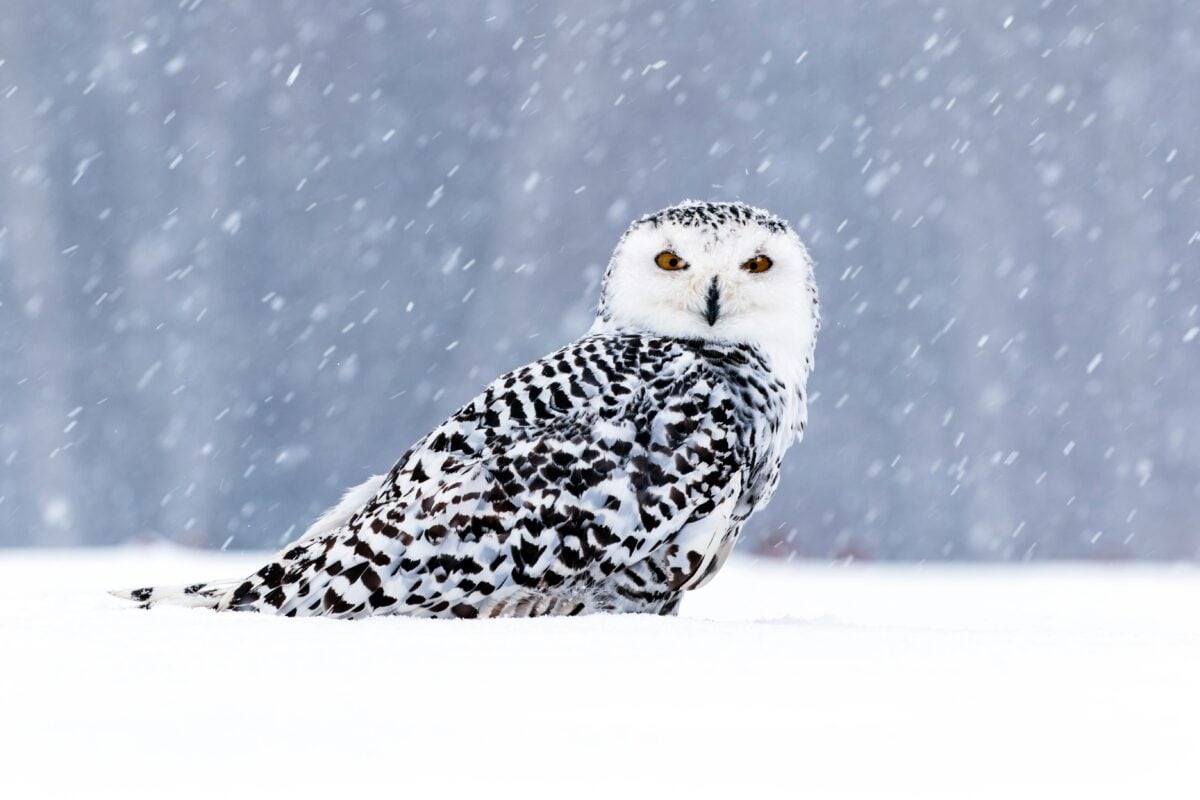
Snowy owls are built for the tundra in ways that other owls aren’t. Their feathers extend down to cover their talons, providing insulation that most raptors lack, and their white plumage allows them to hunt almost invisibly against snow.
Unlike most owls, snowy owls are active during the day, which makes sense given that the Arctic summer brings near-constant daylight. Their main prey is lemmings — a single adult snowy owl can eat over 1,600 lemmings in a year.
When lemming populations crash, snowy owls irrupt southward in large numbers, which is why people in the northern United States and Canada occasionally spot them in winter.
Caribou
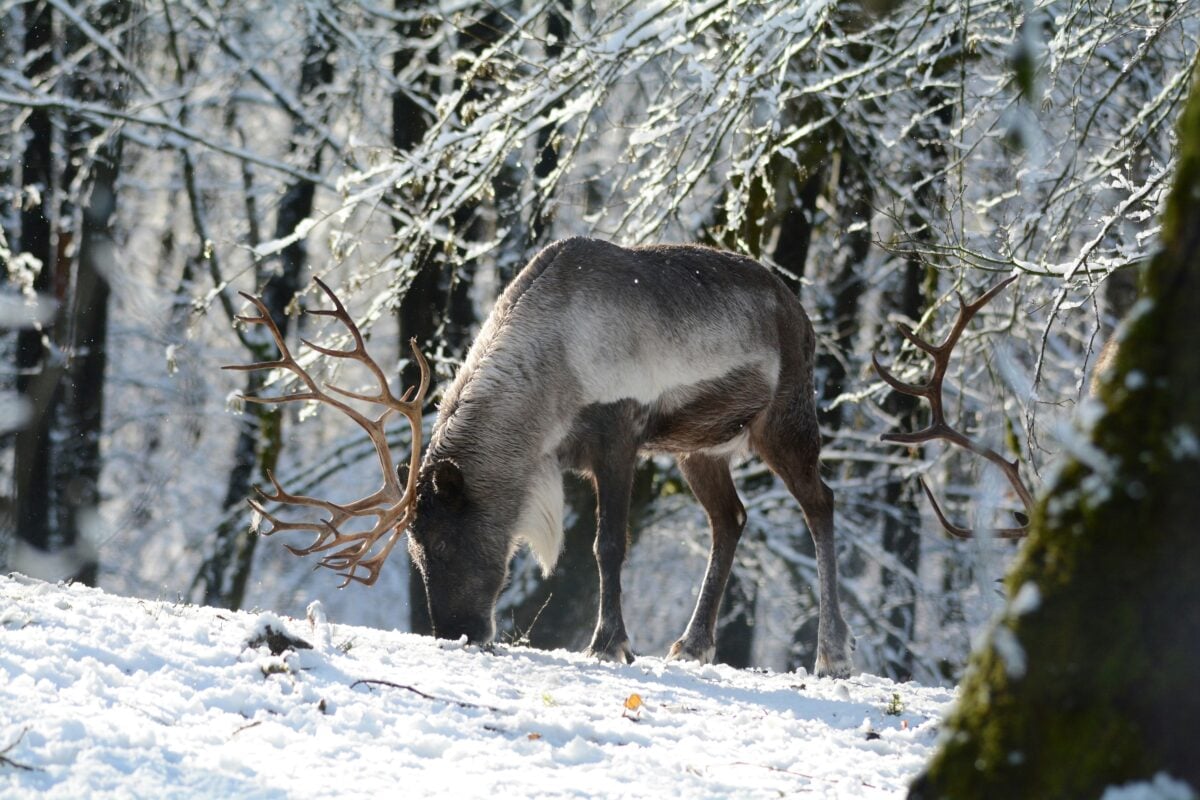
Caribou — called reindeer in Europe — migrate further than any other land mammal on earth. Some herds travel over 4,800 kilometers annually between their winter and summer ranges.
Their hooves are uniquely adapted for the tundra: broad and concave in summer for soft ground, shrinking and hardening in winter to provide traction on ice. Both male and female caribou grow antlers, which is unusual among deer species.
Their noses are specially designed to warm the air before it reaches their lungs, preventing internal heat loss with every breath in temperatures that would disable most other animals.
Wolverine

The wolverine has a reputation that its size doesn’t immediately justify — it weighs between 10 and 25 kilograms, roughly the size of a medium dog. But its strength relative to its body size is extraordinary, and it has been documented driving grizzly bears and wolves away from carcasses.
Wolverines cover enormous distances in search of food, sometimes traveling over 40 kilometers in a single day across deep snow. Their feet are disproportionately large, functioning essentially as snowshoes.
They are also one of the few predators capable of detecting prey buried under meters of snow, which they excavate with their powerful claws.
Polar Bear

Polar bears are the largest land predators on earth, and their relationship with cold water is unlike that of almost any other land mammal. Their fur is not white — each hair shaft is actually transparent and hollow, and the coloring comes from light reflection.
Their skin underneath is black. They can swim continuously for days across open Arctic water, propelled by their enormous forepaws, and their fat layer — up to 11 centimeters thick — provides insulation that allows them to function in water just above freezing.
They are classified as marine mammals, despite spending time on land, because their survival depends entirely on the sea ice.
Arctic Hare
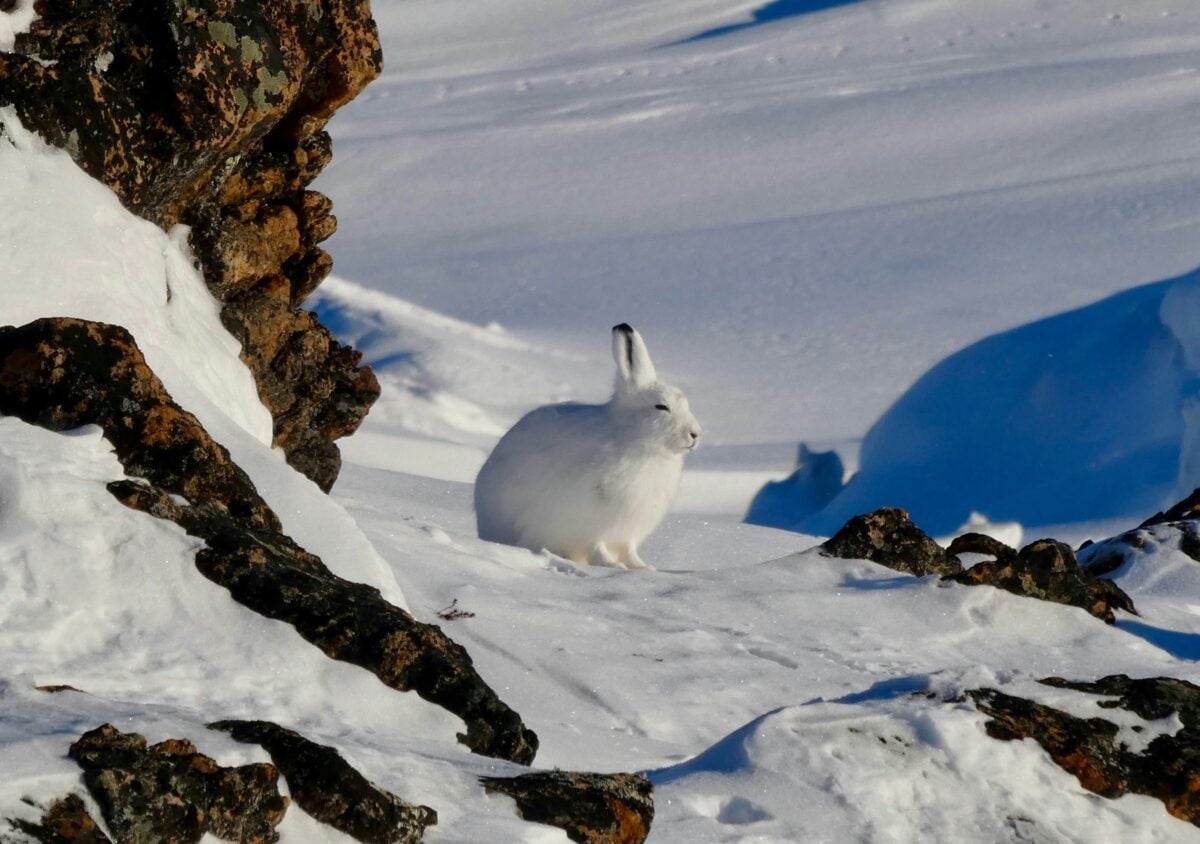
Arctic hares are surprisingly large compared to the rabbits most people are familiar with — they can weigh up to 5 kilograms and stand notably tall on their hind legs. In the high Arctic, they don’t burrow, because the permafrost makes digging impractical.
Instead, they huddle in groups of dozens or even hundreds of animals to conserve heat. Their white winter fur is so effective as camouflage that experienced wildlife photographers describe them as nearly impossible to spot against fresh snow until they move.
In summer, some populations turn partially grey, while others in the far north remain white year-round.
Peregrine Falcon

Peregrine falcons breed across the tundra in summer, taking advantage of the explosion of bird life that follows the thaw. They nest on cliff ledges and high rocky outcroppings, where their eggs are safe from most ground predators.
The peregrine’s hunting technique — a high-speed dive called a stoop — can reach speeds over 320 kilometers per hour, making it the fastest animal on earth in a dive. They’re capable of catching birds mid-flight with precision that still puzzles physicists studying how their eyes and nervous systems process speed.
Their tundra populations represent some of the healthiest remaining breeding groups globally.
Lemming
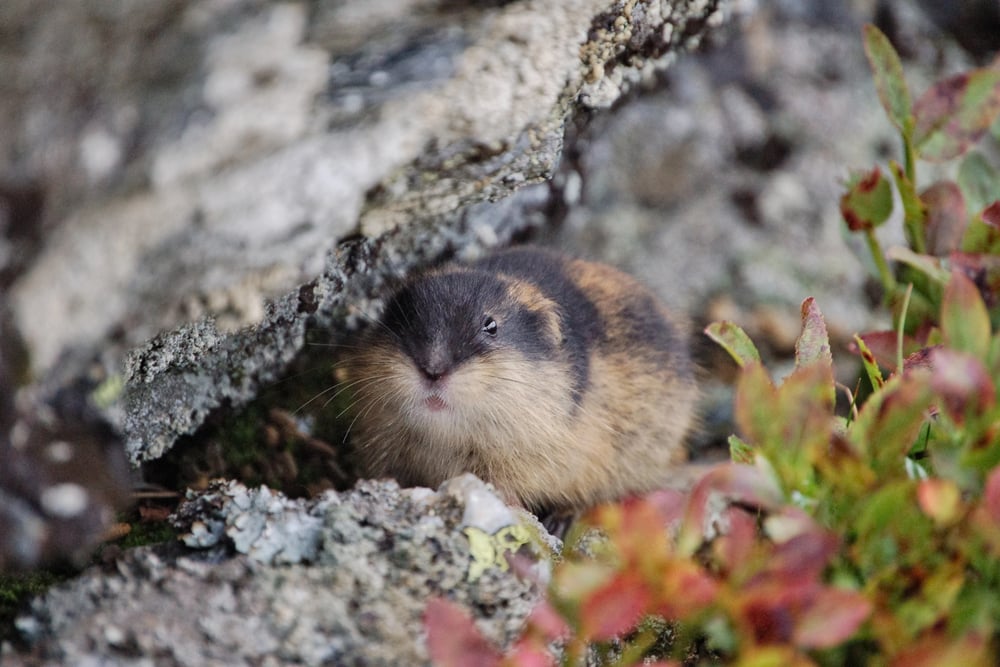
Lemmings might be the most misunderstood animal in the tundra. The myth that they stampede off cliffs in mass suicides is completely false — it was fabricated for a 1958 nature documentary using staged footage. What lemmings actually do is experience dramatic population booms and crashes roughly every three to five years, which drives many of the tundra’s predator-prey dynamics.
Arctic foxes, snowy owls, and other predators time their own breeding cycles to lemming population peaks. Lemmings remain active under the snow all winter, creating tunnel systems through the subnivean layer where temperatures stay relatively stable compared to the brutal air above.
Dall Sheep

Dall sheep live in the mountainous tundra regions of Alaska and northwestern Canada, navigating steep rocky terrain with hooves that have hard outer edges for grip and soft inner pads for traction. Their horns — which never shed, unlike antlers — grow continuously throughout their lives and can be used to estimate age by counting the annual growth rings.
Males compete for breeding rights through dramatic head-on collisions that produce impacts equivalent to a car hitting a wall at 45 kilometers per hour. Their thick skulls and specialized cranial architecture absorb the force in ways that researchers studying concussion prevention have found genuinely instructive.
Bearded Seal
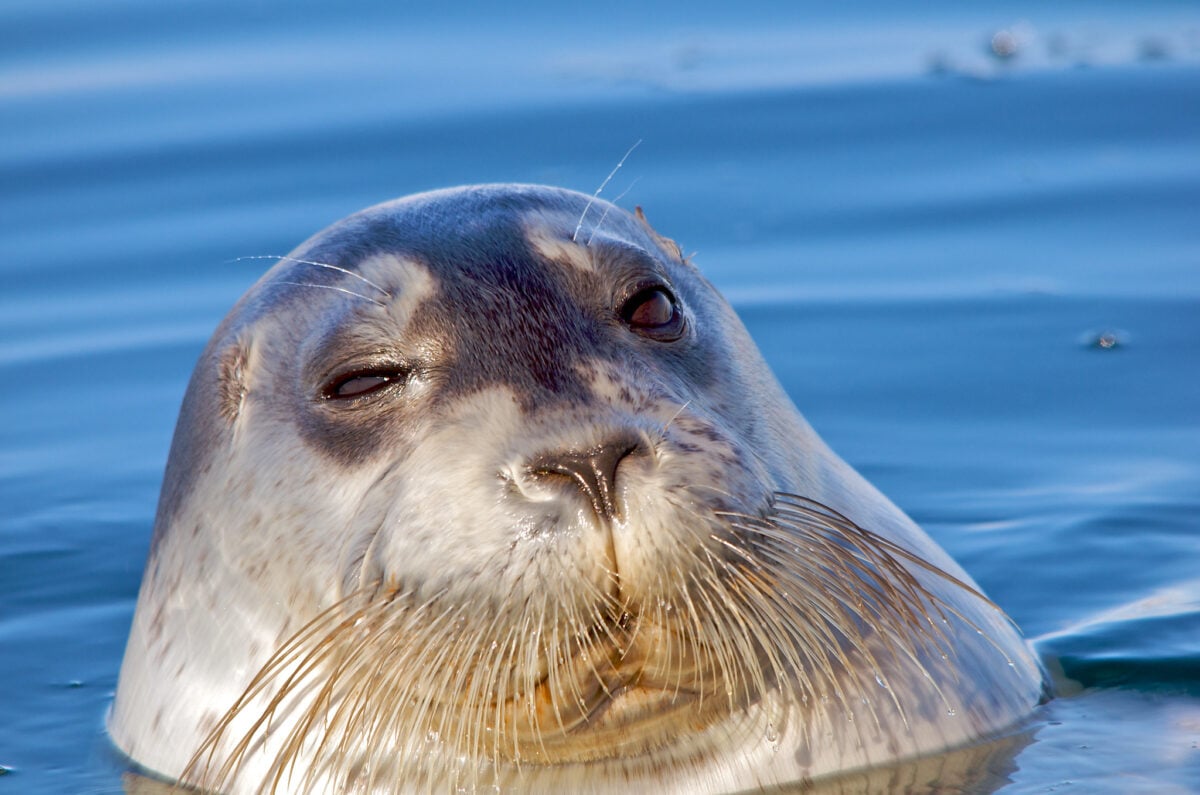
Bearded seals live along Arctic coastlines and sea ice, and their name comes from the prominent white whiskers that serve a real purpose — they’re sensitive enough to detect shellfish and crustaceans beneath the seafloor. These seals are important prey for polar bears and a critical food source for Indigenous Arctic communities.
Males produce a haunting, extended trill during breeding season that carries for kilometers under water. The sound is so distinctive and far-reaching that submarines have reportedly detected it on acoustic equipment.
They maintain breathing pits in ice by scraping with their claws, and pups can swim within hours of birth.
Ptarmigan

Snow holds warmth better than people think. That matters because the ptarmigan digs into it when temperatures drop, creating a hidden space where the air stays far warmer than outside.
This bird does not leave the tundra during winter like others do; instead, it remains through every harsh month. Feathers shift color as seasons turn – summer brings brown tones, then mottled patterns appear before full white covers arrive with frosty stretches.
When icy winds blow, feathers sprout along their toes, wrapping each foot in soft layers that grip snow without slipping. They eat what they can find beneath frozen surfaces, using sharp eyesight and steady patience.
Cold alone cannot push them out – it lacks the power against such stubborn resilience. Few birds manage life up north all twelve months, but these do, simply by adapting quietly.
Arctic Ground Squirrel

Only one thing distinguishes the Arctic ground squirrel, during the deep sleep, its body cools down below zero. Very few warm, blooded animals are capable of doing this; however these rodents allow their internal temperature to drop to approximately 3 degrees.
Their heartbeat slows down to the extent that even strangers can hardly hear it, one heartbeat every minute. This hibernation phase covers almost the entire year, and they become much thinner come springtime.
When they disappear underground, they fill their tunnels with dried vegetation and add fat as if it was an outer layer of their body. The researchers who are studying how these animals physiologically change during hibernation have designated it as one of the most extreme slowdowns observed in a mammal.
Where Cold Becomes Ordinary

The New Normal Life in frozen regions is not merely about survival from cold. Deep within these creatures, it is a part of their very existence, a heritage that goes back to the time when humans hadn’t started to recognize seasons.
Their identity is not helping ice time after time, changing according to it is. When you first see, nature looks unclothed.
But when you get closer, you will see the small fibres that link everything, almost inaudible but very powerful. Invisible creatures to the majority are the ones that can change their shape to a level that only a few can match.
Such transformations did not come about suddenly, the host could have been shaped only through the passage of time, very slowly and evenly.
More from Go2Tutors!

- The Romanov Crown Jewels and Their Tragic Fate
- 13 Historical Mysteries That Science Still Can’t Solve
- Famous Hoaxes That Fooled the World for Years
- 15 Child Stars with Tragic Adult Lives
- 16 Famous Jewelry Pieces in History
Like Go2Tutors’s content? Follow us on MSN.