Interesting facts about driverless cars
Driverless cars have captured our imagination for decades, promising a future where vehicles navigate roads without human intervention. These autonomous marvels represent one of the most significant technological leaps in transportation history, combining artificial intelligence, advanced sensors, and sophisticated software to revolutionize how we travel.
From their surprising historical origins to mind-blowing modern capabilities, driverless cars are packed with fascinating details that most people never discover. Here are interesting facts about these remarkable vehicles that showcase just how incredible this technology really is.
Leonardo da Vinci designed the first self-driving vehicle in 1478

Leonardo da Vinci sketched the concept for a cart that was self-propelled in 1478, designed to travel on a predetermined path without needing to be pushed or pulled. This Renaissance genius essentially invented the world’s first robot centuries before anyone imagined modern computers. His spring-powered cart could move autonomously along preset routes, making it the earliest known concept of what we now call autonomous vehicles.
The first working driverless car drove through New York City in 1925

The first working driverless vehicle was created in 1925 by electrical engineer Francis P. Houdina, who radio-controlled a full-size automobile through the streets of New York with no one behind the wheel. This incredible demonstration happened nearly a century ago, proving that the dream of driverless cars isn’t as new as most people think. Though the car eventually crashed and the project failed, it sparked decades of innovation that led to today’s sophisticated autonomous systems.
General Motors showcased autonomous highways at the 1939 World’s Fair

General Motors introduced the original idea of driverless cars at a 1939 exhibit and made it a reality by 1958, featuring semi-autonomous vehicles using radio control and magnets embedded in the pavement. Their ‘Futurama’ exhibit dazzled visitors with visions of rooftop helipads and interstate highways filled with self-driving cars. This wasn’t just science fiction – GM actually built working prototypes that demonstrated how autonomous vehicles could transform transportation infrastructure.
A Japanese car achieved 20 mph autonomous driving in 1977

The first self-driving car that didn’t rely on rails or wires was designed by Japan’s Tsukuba Mechanical Engineering Laboratory in 1977, equipped with two cameras using analog computer technology and capable of reaching speeds up to 20 miles per hour. This breakthrough proved that cars could navigate using visual recognition rather than requiring special road infrastructure. The achievement laid the groundwork for modern computer vision systems that allow today’s autonomous vehicles to ‘see’ and interpret their surroundings.
Over 1,400 driverless cars are currently being tested in the United States

There are currently more than 1,400 self-driving cars in the U.S. being tested by 80 companies, with 62 of those companies conducting tests in California alone. This massive testing effort represents billions of dollars in investment and countless hours of real-world data collection. Each test vehicle contributes to refining the algorithms and safety systems that will eventually make autonomous driving available to everyone.
Waymo has driven over 20 million autonomous miles
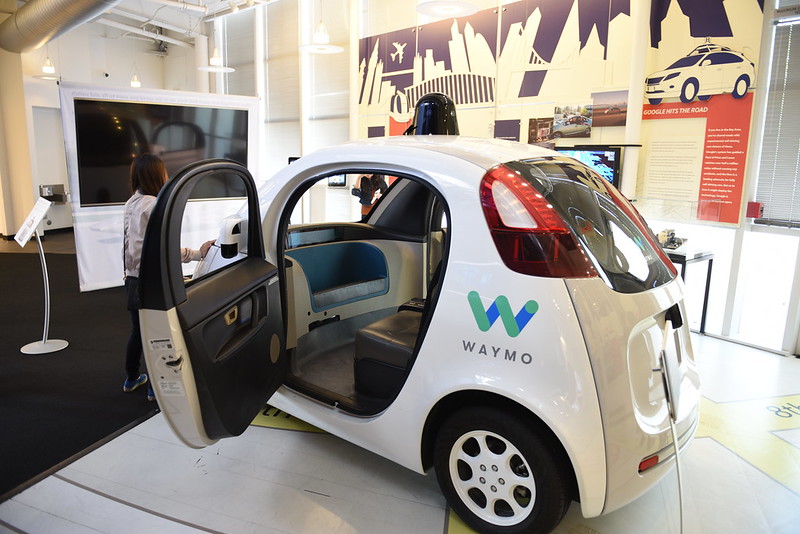
Waymo drove over 20 million miles across 25 U.S. cities, making it the leader in autonomous vehicle testing. That’s equivalent to driving around the Earth’s equator more than 800 times or making 40 round trips to the moon. This enormous dataset helps train artificial intelligence systems to handle virtually every driving scenario imaginable, from busy city intersections to highway merging and everything in between.
Tesla’s Autopilot has logged over 3 billion miles

Over 3 billion miles have been logged using Tesla’s autopilot feature, representing the largest real-world dataset of semi-autonomous driving ever collected. Every mile driven with Autopilot engaged provides valuable information that helps improve the system’s performance and safety. This massive data collection effort gives Tesla insights into how drivers and autonomous systems interact in countless different situations.
China leads the world in driverless car patents

Since 2021, China has led the way in filing driverless car-related patents, with a total of 11,096 patents, followed by the United States with 7,205 patents. This patent race reflects the intense global competition to develop and control autonomous vehicle technology. The country that masters this technology first could dominate the future transportation market worth hundreds of billions of dollars.
Self-driving cars have 2.3 times fewer accidents than human drivers

Waymo’s accident rate is 2.3 times lower than that of human drivers, highlighting the potential for safer roads with autonomous technology. While self-driving cars aren’t perfect, this data suggests they’re already becoming safer than human drivers in many situations. As the technology continues improving, autonomous vehicles could eventually prevent thousands of traffic deaths each year by eliminating human errors like distracted driving and impaired judgment.
A researcher disguised himself as a car seat to study pedestrian reactions
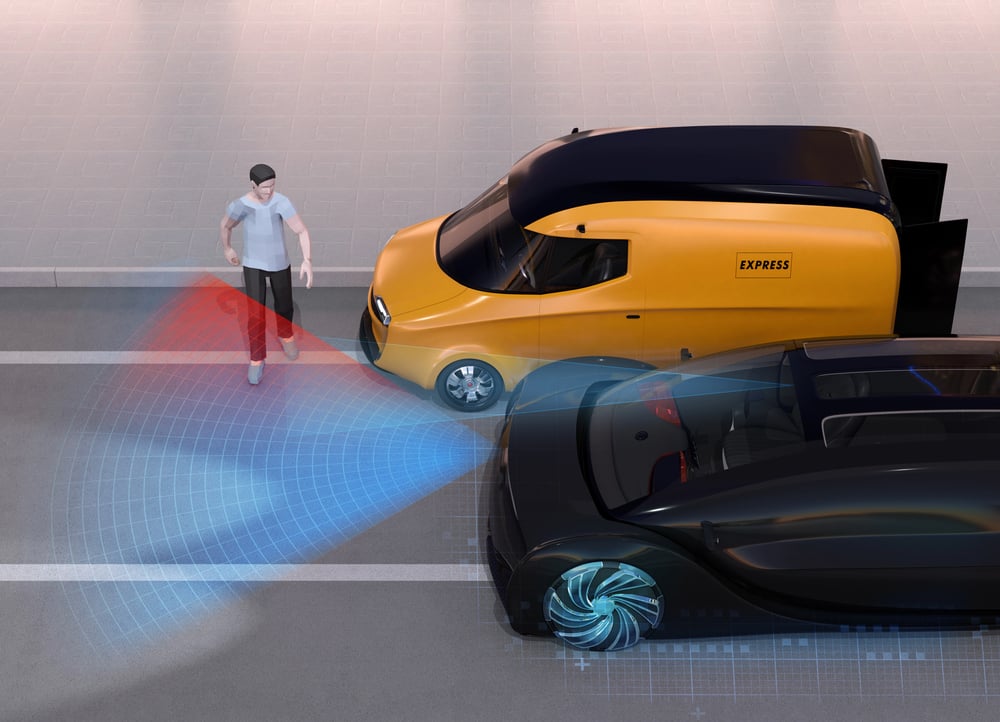
In 2023, David R. Large from the University of Nottingham disguised himself as a car seat to test people’s reactions to driverless cars and explore how pedestrians interact with vehicles when there’s no visible driver. This creative research method revealed how people rely on visual cues and eye contact with drivers when deciding whether to cross streets. The study provides crucial insights for designing autonomous vehicles that can communicate effectively with pedestrians and other road users.
Driverless car sales could reach 58 million units by 2030

Sales of autonomous vehicles are projected to reach an impressive 58 million units by 2030, with significant growth expected throughout the decade. This explosive growth projection reflects how quickly the technology is advancing and gaining consumer acceptance. If these predictions prove accurate, autonomous vehicles could become as common as smartphones within the next decade.
The robotaxi market will be worth $174 billion by 2045

The global robotaxi vehicle market value will reach $174 billion in 2045, growing with a 20-year compound annual growth rate of 37% between 2025 and 2045. This massive market represents a complete transformation of urban transportation, where people might abandon car ownership in favor of summoning autonomous vehicles on demand. Companies like Waymo, Cruise, and Chinese firms are positioning themselves to capture this enormous opportunity.
Most autonomous vehicle crashes happen from behind

A study found that 64.2% of motor vehicle collisions involving autonomous vehicles were rear-end accidents, compared to 28.3% of accidents involving conventional vehicles. This pattern suggests that while autonomous vehicles are getting better at avoiding frontal collisions, other drivers often rear-end them, possibly because the self-driving cars follow traffic rules more precisely than human drivers expect. For fully autonomous vehicles, damage occurred in the rear 54% of the time, indicating similar collision patterns.
Gen Z trusts self-driving cars more than older generations

51% of Gen Z said they’d feel comfortable riding in a self-driving car, the highest of any generation. This generational divide shows how younger people, who grew up with smartphones and advanced technology, are more willing to trust artificial intelligence with their safety. As these digital natives become the primary car-buying demographic, autonomous vehicle adoption could accelerate much faster than current projections suggest.
Automakers are sharing autonomous driving secrets

Most car manufacturers have left their autonomous driving systems open source, allowing other companies to use the information to build their own systems, creating unprecedented cooperation between traditional competitors. This collaboration represents a dramatic shift from the secretive, competitive nature of the automotive industry. By sharing knowledge, companies can advance autonomous driving technology much faster than if each worked in isolation.
Self-driving trucks could eliminate traffic inefficiencies

Drivers spend nearly 7 billion hours stuck in traffic delays annually, but driverless vehicles could eliminate up to 50 minutes daily of these inefficiencies while also saving fuel. Autonomous vehicles can communicate with each other and traffic management systems to optimize routes, maintain steady speeds, and coordinate lane changes. This coordination could transform highways into efficient transportation networks where traffic jams become rare occurrences.
April 2025 set a record for autonomous vehicle crashes

April 2025 set a new record with 95 crashes involving autonomous vehicles, the highest monthly crash count ever recorded. While this might sound alarming, it actually reflects the rapidly increasing number of autonomous vehicles being tested on public roads. As more companies deploy self-driving cars for testing and commercial services, the absolute number of incidents naturally increases, even if the rate per mile driven continues improving.
Autonomous vehicles could revolutionize accessibility

Driverless vehicles could help people with disabilities that prevent them from driving, providing new pathways to employment and a higher quality of life through increased mobility. For millions of people who cannot operate traditional vehicles due to visual impairments, physical disabilities, or medical conditions, autonomous cars represent unprecedented freedom and independence. This technology could eliminate transportation barriers that have limited opportunities for disabled individuals for generations.
The technology uses multiple sensor types to ‘see’
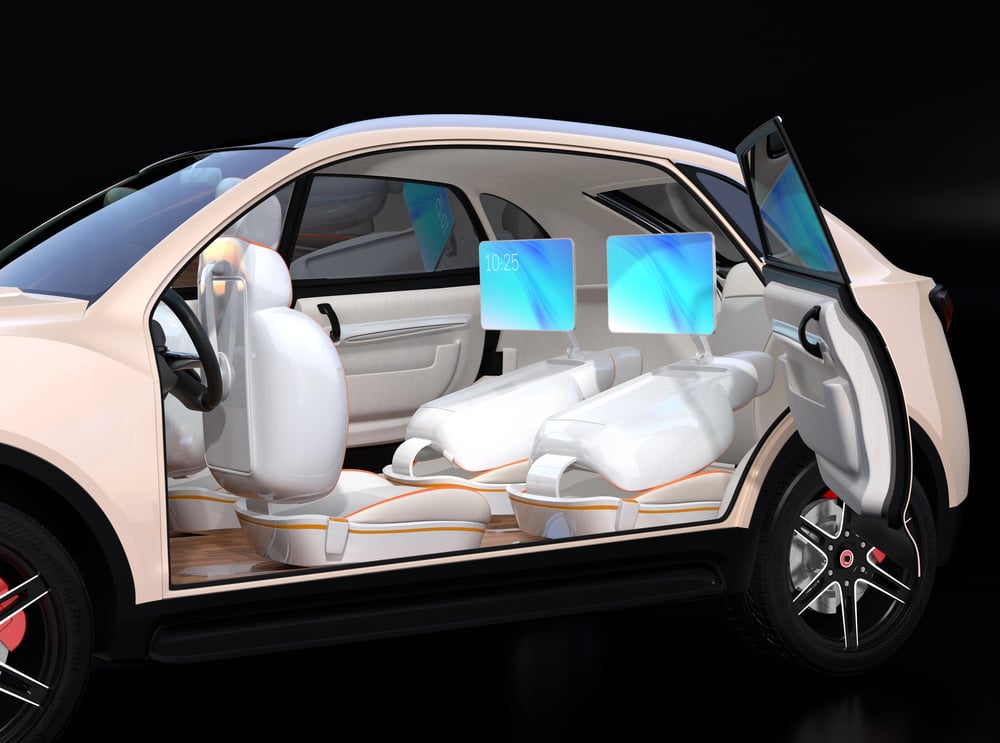
Self-driving cars use many special sensors including cameras, radar, lidar (which uses light), ultrasound, and GPS to ‘see’ their surroundings and build 3D pictures of everything around the car. This sensor fusion approach mimics and exceeds human senses, providing 360-degree awareness that never gets tired or distracted. The combination of different sensor types ensures redundancy – if one system fails, others can maintain safe operation.
Nearly 60% of new cars will have Level 2 autonomy by 2025

In 2025, almost 60 percent of all new cars sold globally will have Level 2 autonomy, which means vehicles can control steering, acceleration, and braking simultaneously while requiring driver supervision. This represents a massive shift toward automated driving features becoming standard rather than luxury options. Level 2 systems serve as stepping stones, helping drivers become comfortable with autonomous technology before fully self-driving cars arrive.
From Concept to Reality

The journey from Leonardo da Vinci’s spring-powered cart to today’s AI-driven autonomous vehicles spans over 500 years of human ingenuity and technological evolution. What started as a Renaissance artist’s mechanical sketch has transformed into a multi-billion-dollar industry that could reshape civilization itself. These remarkable machines represent humanity’s relentless pursuit of safer, more efficient transportation – and we’re just getting started. As millions of autonomous vehicles prepare to hit the roads in the coming decade, we’re witnessing the dawn of a transportation revolution that will make today’s cars seem as antiquated as horse-drawn carriages.
More from Go2Tutors!

- 16 Historical Figures Who Were Nothing Like You Think
- 12 Things Sold in the 80s That Are Now Illegal
- 15 VHS Tapes That Could Be Worth Thousands
- 17 Historical “What Ifs” That Would Have Changed Everything
- 18 TV Shows That Vanished Without a Finale
Like Go2Tutors’s content? Follow us on MSN.