Largest Libraries in the World
Books have always had a way of gathering together. What starts as a shelf becomes a room, then a building, and eventually something so massive that entire city blocks get dedicated to housing the written word.
The biggest libraries on Earth hold tens of millions of items—some dating back centuries, others printed just yesterday. These places aren’t just warehouses for books.
They’re preservation centers, research hubs, and cultural landmarks that attract scholars and curious visitors from everywhere. Walking through their halls means stepping into collections that took generations to build.
The Library of Congress
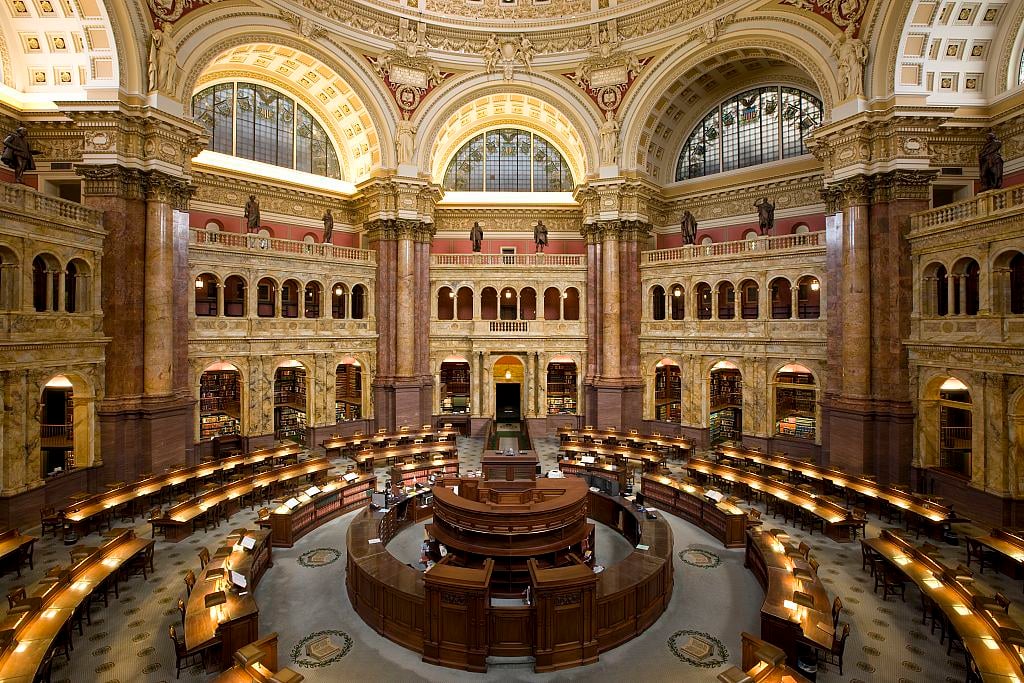
Washington D.C. holds the heavyweight champion of all libraries. The Library of Congress contains over 173 million items spread across three buildings on Capitol Hill.
The collection includes more than 17 million books, but that barely scratches the surface. You’ll find everything from Thomas Jefferson’s personal library to the world’s largest comic book collection.
The maps division alone has over 5.5 million items. There are manuscripts in 470 languages, rare prints, photographs that chronicle American history, and even the contents of Abraham Lincoln’s pockets from the night he was assassinated.
The main reading room sits under a dome decorated with murals and sculptures that make studying there feel like a privilege. Congress created this library in 1800, but a fire destroyed most of the original collection during the War of 1812.
Jefferson sold his personal books to rebuild it, and the library has been growing ever since.
British Library
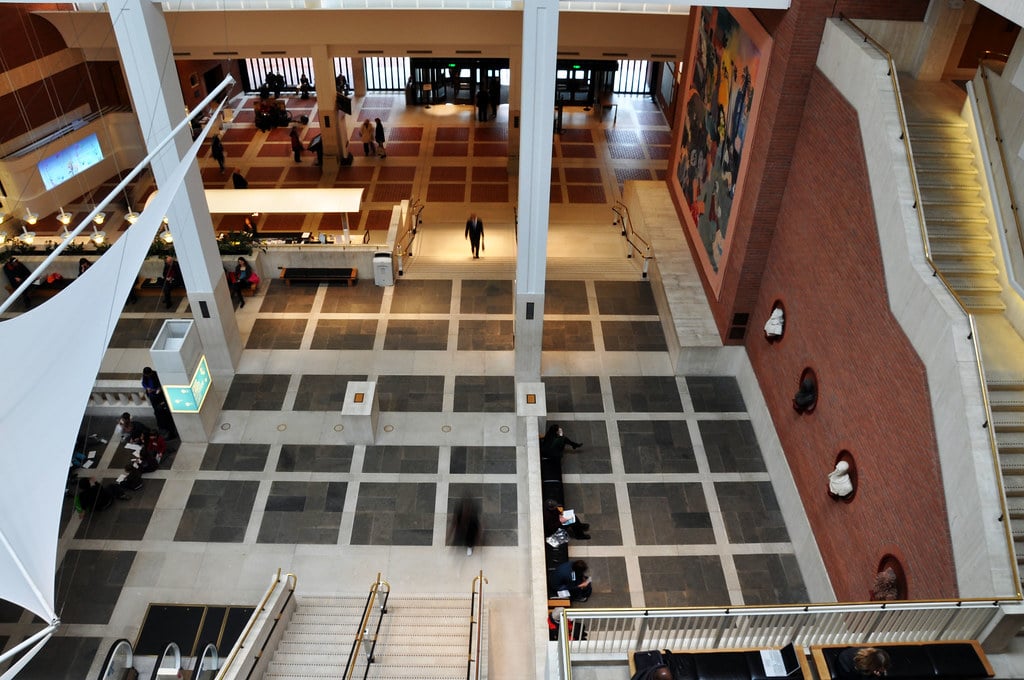
London’s British Library moved to its current location near St. Pancras station in 1997, but the institution itself dates back much further. The collection holds around 170 million items, making it the second largest library in the world.
Every book published in the United Kingdom gets deposited here by law. The same goes for Ireland.
This legal deposit system means the collection grows by three million items every year. Storage became such a problem that the library now keeps many items in a facility in Yorkshire.
The King’s Library sits in a six-story glass tower at the building’s center. This collection belonged to King George III and contains 65,000 printed works. The British Library also holds two copies of the Magna Carta, Leonardo da Vinci’s notebook, and original Beatles lyrics scribbled on scraps of paper.
Library and Archives Canada

Ottawa’s national institution combines the functions of both a library and an archive. The collection includes roughly 54 million items that document Canadian history and culture.
Government records make up a significant portion of the holdings. You can find everything from census data to immigration records to military service files.
The library also preserves Canadian literature, newspapers, maps, and photographs that span the country’s entire history. Some items here exist nowhere else.
Early recordings of Indigenous languages, journals from Arctic expeditions, and documents related to the construction of the Canadian Pacific Railway all live in these archives.
New York Public Library

The main branch on Fifth Avenue, with its famous lion statues Patience and Fortitude, represents just one piece of this massive system. The New York Public Library serves Manhattan, the Bronx, and Staten Island through 92 locations and holds about 55 million items total.
Unlike many national libraries, this one operates as a private, nonprofit organization that’s open to the public. You don’t need to be a researcher or scholar to walk in and use the collections.
The reading rooms have provided free access to information since 1911. The rare book division contains a Gutenberg Bible, a first folio of Shakespeare’s plays, and one of the original copies of the Declaration of Independence.
The map division helped explorers plan expeditions for decades. Even today, researchers use these collections to make new discoveries about old topics.
Russian State Library
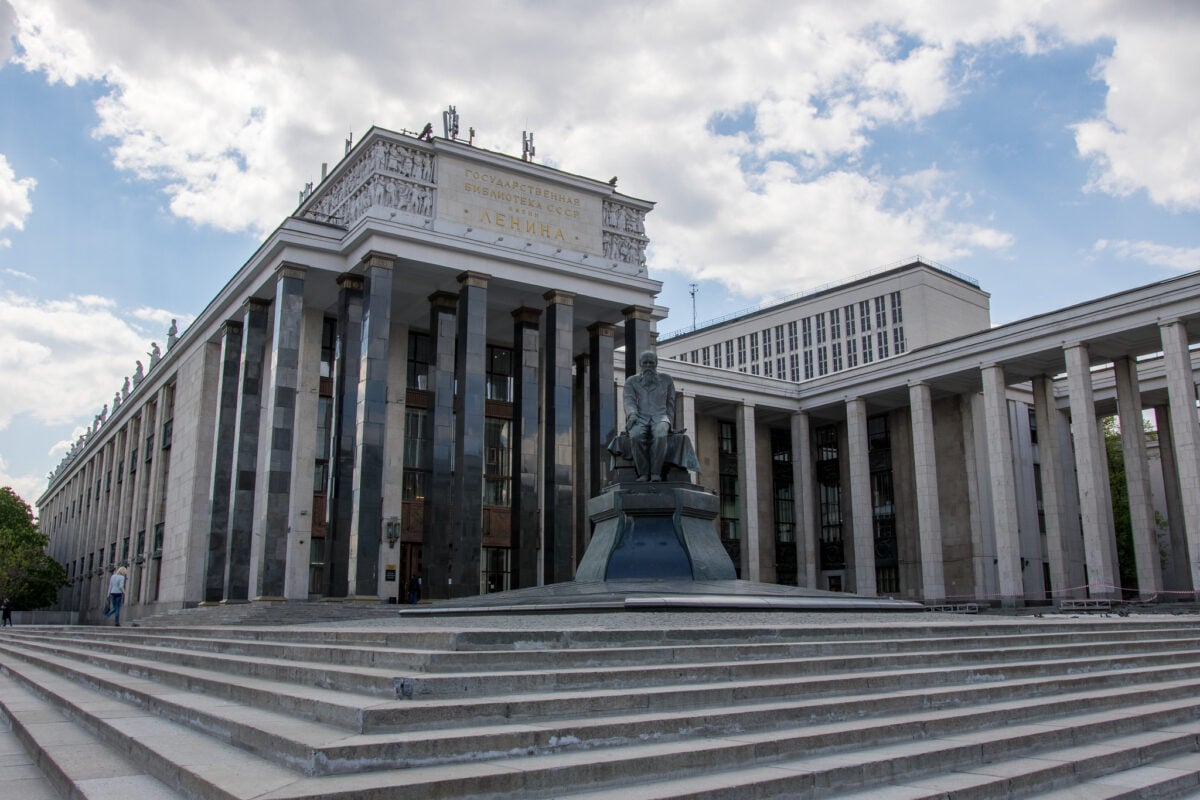
Moscow’s largest library holds around 47 million items in its collection. The building itself sprawls across multiple structures in the center of the city, not far from the Kremlin.
This library receives one copy of every book published in Russia, plus materials in all the languages spoken across the former Soviet Union. The collection includes manuscripts dating back to medieval times, along with modern digital resources.
During World War II, staff members evacuated the most valuable items to keep them safe from German bombing. The library lost its building’s heating system during the siege, but workers continued cataloging materials in freezing temperatures.
That dedication helped preserve countless irreplaceable documents.
National Library of China

Beijing houses the largest library in Asia, with over 41 million items filling its shelves. The collection focuses primarily on Chinese-language materials but includes works from around the world.
Ancient Chinese texts make up one of the library’s most important holdings. Oracle bone inscriptions, Buddhist sutras, and imperial court records give researchers access to thousands of years of history.
Some of these documents exist only here. The library operates branches in other cities and coordinates with local libraries across China.
Recent years have brought major digitization projects that make rare materials available to researchers who can’t travel to Beijing. The digital collection now includes millions of pages of historical texts.
Bibliothèque Nationale de France

Paris spread its national library across multiple sites. The main location at Tolbiac features four glass towers shaped like open books.
The original Richelieu site in central Paris now houses special collections after major renovations. About 40 million items fill these locations.
The collection includes medieval manuscripts, old maps, prints, photographs, and every book published in France since 1537. A copy of every French publication must be deposited here by law.
The French Revolution nearly destroyed this collection. Revolutionary forces seized books from monasteries and noble families, which actually expanded the holdings.
But they also burned materials deemed politically dangerous. The library survived those chaotic years and continued growing through the following centuries.
Royal Danish Library
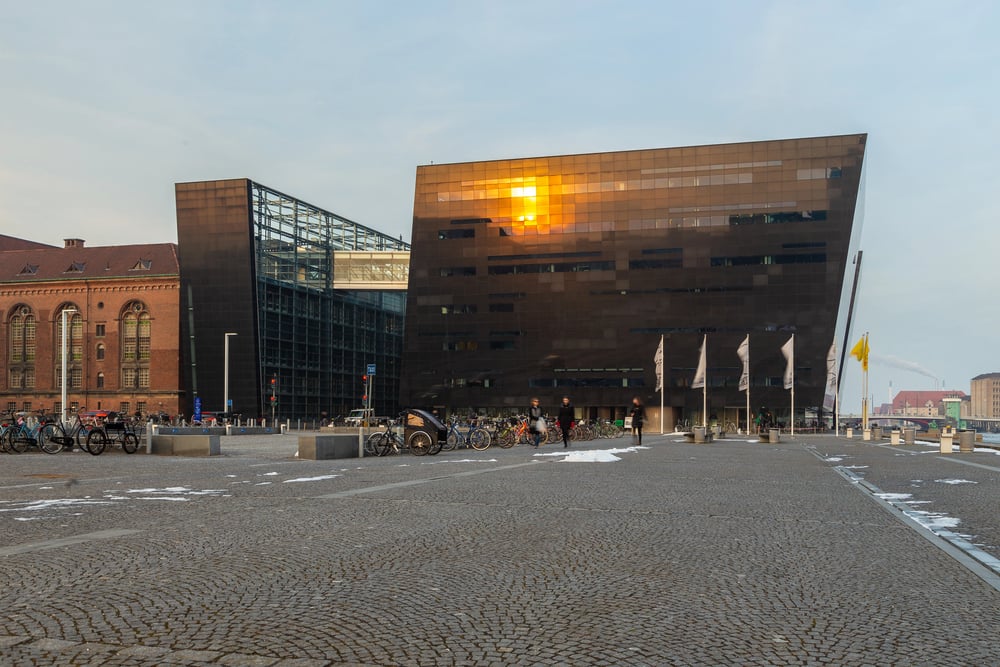
Copenhagen’s “Black Diamond” extension juts out over the harbor, its dark granite and glass facade making it one of the most distinctive library buildings anywhere. The Royal Danish Library holds around 40 million items between its old and new sections.
This collection includes more than just Danish materials. The library preserves manuscripts and printed works from across Scandinavia.
Medieval Icelandic sagas, early Danish newspapers, and modern academic publications all share space here. The library also holds extensive collections related to Greenland and the Faroe Islands.
These materials document languages and cultures that would otherwise lack proper preservation. Researchers studying Arctic history often make their way to Copenhagen for this reason alone.
National Diet Library

Tokyo’s library serves Japan’s parliament while also functioning as the country’s national library. The collection contains about 45 million items spread across two main buildings—one in Tokyo, one in Kyoto.
Every Japanese publication gets deposited here. The library also collects extensively in Chinese and Korean, plus Western-language materials about Japan and Asia more broadly.
After World War II, the library expanded dramatically to include materials the occupation forces brought in. This created one of the world’s best collections for studying mid-20th century East Asian history from multiple perspectives.
Berlin State Library

Berlin split its state library between two locations during the Cold War. The city’s division meant each side maintained its own collection.
Reunification brought them back together, creating a combined collection of roughly 33 million items. The historic building on Unter den Linden reopened after decades of renovation work.
The newer building at Potsdamer Strasse provides modern research facilities. Between them, they hold one of Europe’s most comprehensive collections.
Bach’s manuscripts sit in these archives. So do Beethoven’s notes, Mozart’s letters, and countless other musical treasures.
The music division attracts scholars from around the world who want to study original sources rather than published editions.
National Library of Russia

St. Petersburg’s national library traces its origins back to Catherine the Great. The collection has grown to approximately 37 million items, making it the oldest public library in Russia and one of the largest in the world.
Voltaire’s personal library ended up here after Catherine bought it. The French philosopher’s books, complete with his marginal notes, provide insight into Enlightenment thinking.
The collection also includes major holdings in Greek and Latin classics. The building survived the Siege of Leningrad during World War II, though conditions inside became desperate.
Staff members burned furniture for heat while continuing to catalog materials and serve researchers. Some librarians died at their posts during the 872-day siege.
Library of the Russian Academy of Sciences

Also in St. Petersburg, this library serves Russia’s scientific community. The collection contains about 26 million items, with a heavy emphasis on scientific journals, technical reports, and academic publications.
Peter the Great founded the institution in 1714, making it one of the oldest scientific libraries in continuous operation. The collection grew alongside Russia’s scientific development over three centuries.
The library maintains extensive digital archives now, but the historical materials remain crucial for understanding the evolution of scientific thought. Researchers studying the history of chemistry, physics, or mathematics often find unique sources here that exist nowhere else.
Spanish National Library

Inside a stately neoclassical structure sits Madrid’s national library, home to roughly 33 million pieces. Though Spanish dominates, voices from across Spain echo through its shelves too.
Far beyond borders, artifacts trace stories of heritage and shared memory. Each volume connects not just by language but also through time, place, lived experience.
Every book published in Spain finds its way here, thanks to legal requirements. From Latin America, items arrive too, gathered on purpose to link communities where Spanish is spoken across the ocean.
Folios by Cervantes, charts from Columbus’s time, yet pages lit up by medieval scribes – these sit guarded in tight vaults. Shows open now and then, pulling back curtains so anyone walking in can see what once seemed locked away.
Where Writing Exists
What stands inside those walls isn’t only shelves stacked high. Efforts live there, quiet but steady, meant to hold on to ideas long after voices fade.
Thoughts once spoken, inventions shaped by hands, discoveries born from staring too long at stars – kept not because it’s grand, but because forgetting feels like loss. Time moves forward, yet these places pull backward gently, gathering fragments before they scatter beyond reach.
What counts isn’t just quantity – it’s what grows from it. One million pieces didn’t appear overnight; they arrived through years of gathering, organizing, protecting, while staying open to everyone.
Yet the true weight of such places appears not in ledgers but in ideas sparked, problems untangled, breakthroughs set into motion. It means something, just realizing they’re out there.
Not everyone needs your attention to matter. Wherever they stand, folks keep gathering thoughts, saving pieces of understanding, passing it along.
That quiet effort hints at what lasts when we plan beyond today.
More from Go2Tutors!

- The Romanov Crown Jewels and Their Tragic Fate
- 13 Historical Mysteries That Science Still Can’t Solve
- Famous Hoaxes That Fooled the World for Years
- 15 Child Stars with Tragic Adult Lives
- 16 Famous Jewelry Pieces in History
Like Go2Tutors’s content? Follow us on MSN.



