Legal Terms People Misuse Often
Most people pick up legal vocabulary from TV shows, news headlines, and overheard conversations. The problem is that legal language has very precise meanings — and those meanings often don’t match what most people think they are.
Using the wrong term in the wrong context isn’t just a minor slip. It can lead to real misunderstandings, especially when actual legal situations arise.
Here’s a look at some of the most commonly misused legal terms, and what they actually mean.
“Innocent Until Proven Guilty” Doesn’t Mean What You Think

This phrase gets thrown around constantly, but most people apply it in the wrong places. It’s a legal standard that applies to courts and criminal proceedings.
It means the prosecution must prove guilt — the defendant doesn’t have to prove innocence. It does not mean the public has to withhold personal opinions.
It doesn’t mean employers can’t fire someone accused of wrongdoing. And it certainly doesn’t mean consequences outside a courtroom are unjust.
The presumption of innocence is a courtroom rule, not a general social obligation.
“Illegal” vs. “Unconstitutional”

These two words are not interchangeable, but people swap them all the time. Something is illegal when it violates a statute — a law passed by a legislature.
Something is unconstitutional when it conflicts with the constitution, often meaning the government can’t do it. A private company banning certain speech on its platform is not unconstitutional.
The First Amendment restricts government action, not private businesses. Calling it “unconstitutional” is technically wrong in that context, even if you find the policy unfair.
“Defamation,” “Slander,” and “Libel” Are Not the Same Thing

Defamation is the broad category. Slander is spoken defamation.
Libel is written (or published) defamation. Many people use “slander” to mean any harmful statement, spoken or written, and that’s not accurate.
There’s also an important qualifier: the statement has to be false. Saying something true about someone — even something damaging — is generally not defamation.
The truth is a complete defense.
“Pleading the Fifth” Isn’t Just for Guilty People

The Fifth Amendment protects people from being compelled to testify against themselves. Invoking it doesn’t mean someone is guilty.
People plead the Fifth for all kinds of reasons, including protecting themselves from statements that could be twisted or taken out of context, even if those statements wouldn’t amount to anything criminal.
In a civil context, however, invoking the Fifth can be used against you — a jury is allowed to draw what’s called an adverse inference. It’s more complicated than TV makes it look.
“Entrapment” Is Narrower Than People Assume

Entrapment is when law enforcement induces someone to commit a crime they otherwise wouldn’t have committed. It’s a very specific legal defense.
It does not apply simply because a police officer was involved in a sting operation, or because someone felt pressured by the circumstances. If an officer gives someone the opportunity to commit a crime, and that person goes ahead and does it, that’s generally not entrapment.
The defense requires showing that the criminal intent originated with the government, not the defendant.
“Assault” Does Not Require Physical Contact

In common use, people say “assault” when they mean being hit or physically attacked. But legally, assault is the threat or attempt — the act of making someone reasonably fear imminent harm.
Physical contact is often called battery. So shouting “I’m going to hurt you” while advancing on someone could constitute assault even without a single touch.
This distinction matters a lot when charges are being described or reported.
A “Verbal Contract” Is Still a Real Contract

“We didn’t sign anything, so it’s not a real contract.” People believe this constantly, and it’s wrong. Verbal agreements can absolutely be legally binding contracts, as long as the basic elements are there — offer, acceptance, and consideration (something of value exchanged by both sides).
The problem with verbal contracts isn’t that they’re invalid. It’s that they’re hard to prove.
If a dispute arises, it becomes your word against theirs, which is where things get messy.
“Habeas Corpus” Is Not About Releasing Prisoners

The term gets mentioned in prison drama contexts as some kind of magic phrase to get released. In reality, habeas corpus is a legal tool that allows a prisoner (or their representative) to challenge the legality of their detention before a court.
It’s a check on unlawful imprisonment, not a Get Out of Jail Free card. It forces the government to justify its detention of a person.
The court then decides whether the detention is lawful — it doesn’t automatically mean release.
“Statute of Limitations” Doesn’t Erase What Happened

A statute of limitations sets a deadline for filing a legal claim. Once it runs out, the case typically can’t be brought to court.
But this doesn’t mean the underlying act didn’t happen, wasn’t wrong, or can’t be discussed publicly. It just means the legal system won’t hear it after a certain point.
Many people assume that once the statute of limitations expires, the person is somehow cleared or the claim is proven false. Neither is true.
“Miranda Rights” Don’t Apply to Every Arrest

Most folks think arrests fall apart when cops skip the Miranda speech. Truth? It doesn’t play out like that.
Before questioning someone locked up, officers must deliver those warnings — otherwise any statements made can’t be used later where it counts. The rule kicks in only when both custody and interrogation line up.
Should an arrest happen without any questions asked, there’s no need for a Miranda warning. When someone speaks up on their own, those words may still enter evidence.
What matters is whether talking happened under pressure from officers seeking answers. Protection kicks in only when answers are pulled during official questioning.
Negligence Involves More Than an Error
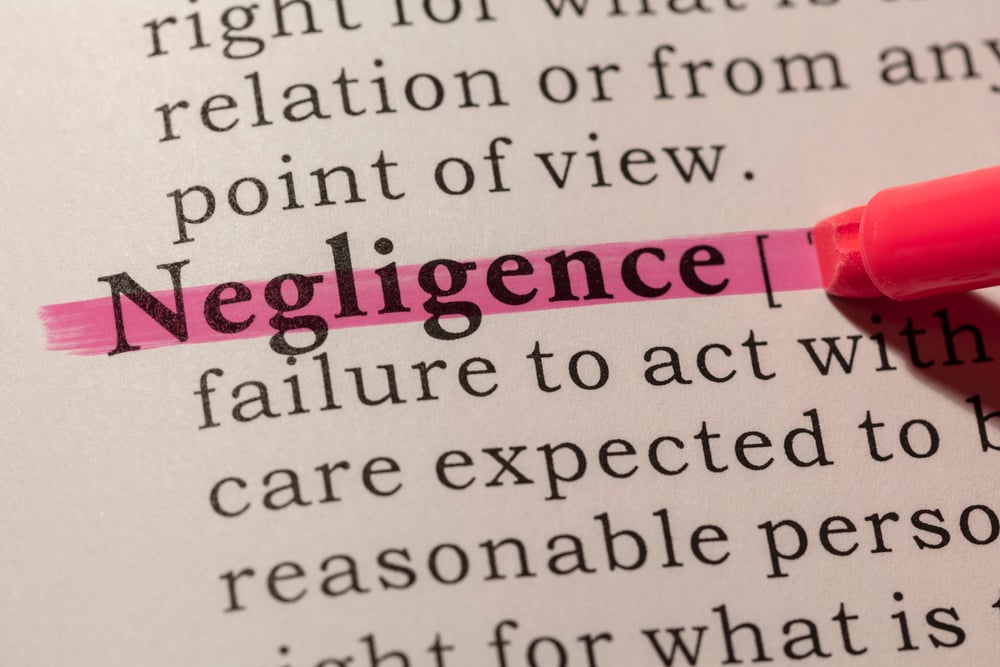
Wrongdoing isn’t just about being sloppy or rude. In court, it means something precise.
A person must first owe responsibility to another – this is step one. When that responsibility gets ignored, the second part kicks in.
That lapse has to directly lead to injury; otherwise, nothing follows. Finally, real losses have to show up because of it all.
Wrong choices by doctors do not always mean they failed their duty. Glancing elsewhere while driving for just a moment might still fall within normal behavior.
What matters is how someone else, facing identical conditions, might have responded instead. Behavior gets examined through the lens of common sense under pressure.
Inalienable Rights Do Not Guarantee Unlimited Permissions

Rights you cannot give away show up in the Declaration of Independence, often quoted during arguments about politics. Though these rights cannot be erased by signing something away, they still exist within boundaries like any other rule.
Just because they stick around does not make them absolute or superior to every competing concern. Still, people treat them as if nothing else matters when citing such powers.
Speaking freely does not let someone shout whatever they want, wherever they want, without facing results. Carrying a weapon is allowed, yet rules can still apply.
One person’s claim meets others’ needs, life keeps adjusting what fits together.
Acquittal Differs from Not Guilty

A closer look shows both outcomes match – misunderstanding points backward. Some claim someone walked free due to a loophole or flawed judgment.
Yet freedom comes when evidence fails to clear that high bar of certainty. This rule shapes how courts operate. The burden rests entirely there.
A verdict of not guilty leaves room for doubt. It simply means proof fell short, nothing more.
The court saw gaps in the case, not a cleared name. Uncertainty stands where certainty might be expected. That absence of evidence gets treated like innocence, yet they are separate things entirely.
Belief in wrongdoing can remain even after freedom is granted.
When Words Carry Meaning

Words shaped the law, slowly, through time, simply because getting it right counts. Picture a fight over a deal, someone accused of a crime, an injustice claimed – each rests on exact meanings.
These terms do more than fill pages. They bind people, shield them, sometimes trap them. Meaning shifts everything.
Not every person must study law. Yet knowing what words truly mean – while admitting “I don’t know” when unsure – helps more than expected.
Using legal terms wrong does not only show lack of knowledge. At a bad time, it might cause actual damage.
More from Go2Tutors!

- The Romanov Crown Jewels and Their Tragic Fate
- 13 Historical Mysteries That Science Still Can’t Solve
- Famous Hoaxes That Fooled the World for Years
- 15 Child Stars with Tragic Adult Lives
- 16 Famous Jewelry Pieces in History
Like Go2Tutors’s content? Follow us on MSN.



