Lesser Known Linguistic Facts
Language shapes how we think, communicate, and connect with one another. Every day, billions of people use words to share ideas, express feelings, and build relationships.
Here are some eye-opening facts about language that might change how you think about communication itself.
Some languages count differently than you think

Many languages around the world don’t use the base-10 counting system that feels so natural to English speakers. The Pirahã people of the Amazon have a counting system that only goes up to two.
After that, they simply use a word that means “many.” This doesn’t make them less intelligent. Their daily life simply doesn’t require precise large numbers.
Russian was the first language spoken in space

When people think about space exploration, they often picture English-speaking astronauts. But Yuri Gagarin spoke Russian when he became the first human in space in 1961.
Russian was the first language to be spoken in outer space, not English as many people believe. Today, astronauts on the International Space Station must learn both English and Russian to communicate with ground control and each other.
Like Go2Tutors’s content? Follow us on MSN.
Papua New Guinea holds the language crown

This small island nation has more languages than any other country on Earth. Over 800 different languages are spoken there, which is about 12% of all the world’s languages.
Many of these languages have only a few hundred speakers. Some villages just a few miles apart might speak completely different languages that share no common words.
The English language keeps growing
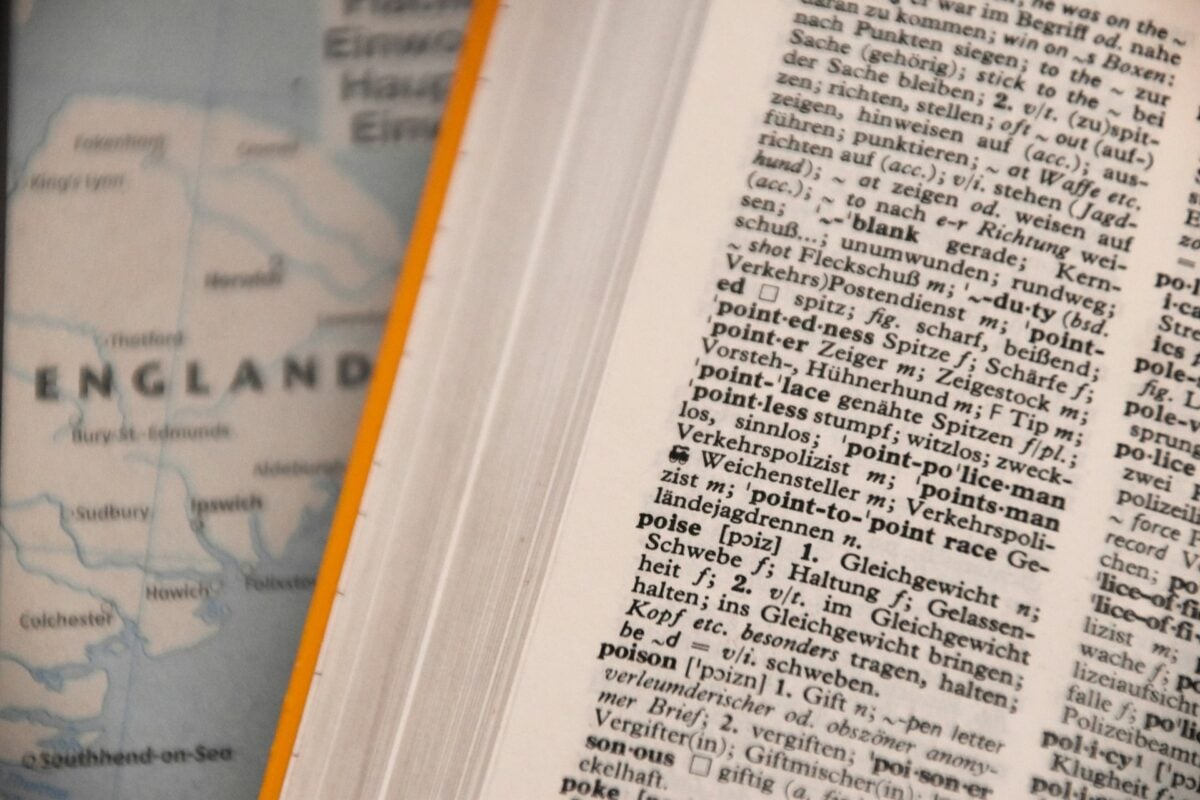
English has more words than most other languages, with estimates ranging from 250,000 to over 1 million words depending on how you count. New words get added regularly through technology, social media, and cultural changes.
Words like “selfie,” “googling,” and “hashtag” didn’t exist 30 years ago but now everyone knows them.
Some sounds don’t exist in certain languages

Japanese speakers often struggle with the English “L” and “R” sounds because their language treats these as the same sound. Meanwhile, English speakers find it nearly impossible to pronounce the clicking sounds found in some African languages like Xhosa.
These aren’t speech problems but simply differences in how languages organize sounds.
Like Go2Tutors’s content? Follow us on MSN.
Your brain handles multiple languages differently

Bilingual people don’t just switch between languages like changing TV channels. Their brains actually work differently, with both languages staying active even when they’re only speaking one.
This constant mental juggling makes bilingual people better at multitasking and problem-solving. They also tend to develop dementia later in life than monolingual people.
Writing systems can be completely different

Most people think writing goes from left to right because that’s how English works. But Arabic and Hebrew go from right to left.
Traditional Chinese goes from top to bottom. Ancient Greek sometimes used “boustrophedon,” which means the text goes left to right on one line, then right to left on the next line, like an ox plowing a field.
Sign languages are full languages too

American Sign Language isn’t just English with hand gestures. It has its own grammar, sentence structure, and even regional accents.
A person from Boston might sign differently from someone in Texas. Different countries have completely different sign languages that aren’t related to their spoken languages.
British Sign Language and American Sign Language are as different as English and Chinese.
Like Go2Tutors’s content? Follow us on MSN.
Some languages have no future tense

Mandarin Chinese doesn’t have a grammatical future tense the way English does. Instead of saying “I will go tomorrow,” Chinese speakers might say something more like “I go tomorrow.”
Linguists debate whether this affects how speakers think about time and planning. Some research suggests speakers of such languages save more money because they think about the future as closer to the present.
Color names develop in a predictable order

Every language has words for black and white. If a language has a third color term, it’s always red.
The fourth and fifth are always green and yellow (though the order varies). Blue comes sixth, then brown, then purple, pink, orange, and gray.
This pattern holds true across completely unrelated languages around the world, suggesting something fundamental about how humans perceive and categorize colors.
The shortest word can be a complete sentence

English holds the record for the shortest complete sentence: “Go!” This single word contains a complete thought with an implied subject (you) and a clear command.The period makes it grammatically complete.
Other languages can also make very short sentences, but English seems to win this particular competition.
Like Go2Tutors’s content? Follow us on MSN.
From ancient roots to modern connections

These linguistic facts show how language continues to evolve and surprise us. Every conversation people have today connects to thousands of years of human communication development.
Languages that seem completely different often share ancient roots, while others develop completely unique solutions to the same communication challenges.
More from Go2Tutors!

- 16 Historical Figures Who Were Nothing Like You Think
- 12 Things Sold in the 80s That Are Now Illegal
- 15 VHS Tapes That Could Be Worth Thousands
- 17 Historical “What Ifs” That Would Have Changed Everything
- 18 TV Shows That Vanished Without a Finale
Like Go2Tutors’s content? Follow us on MSN.