Lesser-Known Members of the Cat Family
When most people think about cats, their minds jump straight to lions, tigers, and the fluffy house cats lounging on their couches. But the cat family is far more diverse than that.
From tiny hunters that weigh less than a bag of sugar to spotted climbers with habits that would surprise you, the world of wild cats is full of species most people have never even heard of.
So let’s dive into the fascinating world of these lesser-known felines and discover what makes each one special.
Pallas’s cat

This small wild cat looks like it’s permanently annoyed with the world. Pallas’s cat, also known as the manul, lives in the grasslands and mountains of Central Asia, where temperatures can drop to brutal lows.
Its thick, fluffy coat makes it look much bigger than it actually is, weighing only about 10 pounds. The flat face and low-set ears give it an expression that’s become internet famous, though these features actually help it stay hidden while hunting small rodents and birds across rocky terrain.
Kodkod

The kodkod holds the title of smallest wild cat in the Americas, living in the forests of Chile and Argentina. This little hunter weighs just 4 to 5 years and stands barely a foot tall.
Despite its tiny size, the kodkod is an excellent climber and spends much of its time in trees, hunting birds and small mammals. Its spotted coat provides perfect camouflage in the dappled forest light, making it incredibly difficult to spot in the wild.
Rusty-spotted cat

India and Sri Lanka are home to what might be the smallest wild cat on Earth. The rusty-spotted cat weighs about 3 pounds when fully grown, roughly the size of a large guinea pig.
These tiny cats have incredible energy and hunt everything from insects to small rodents. Their spotted coat and big eyes make them look like miniature leopards, and they’re surprisingly fierce for their size, taking on prey nearly as large as themselves.
Fishing cat
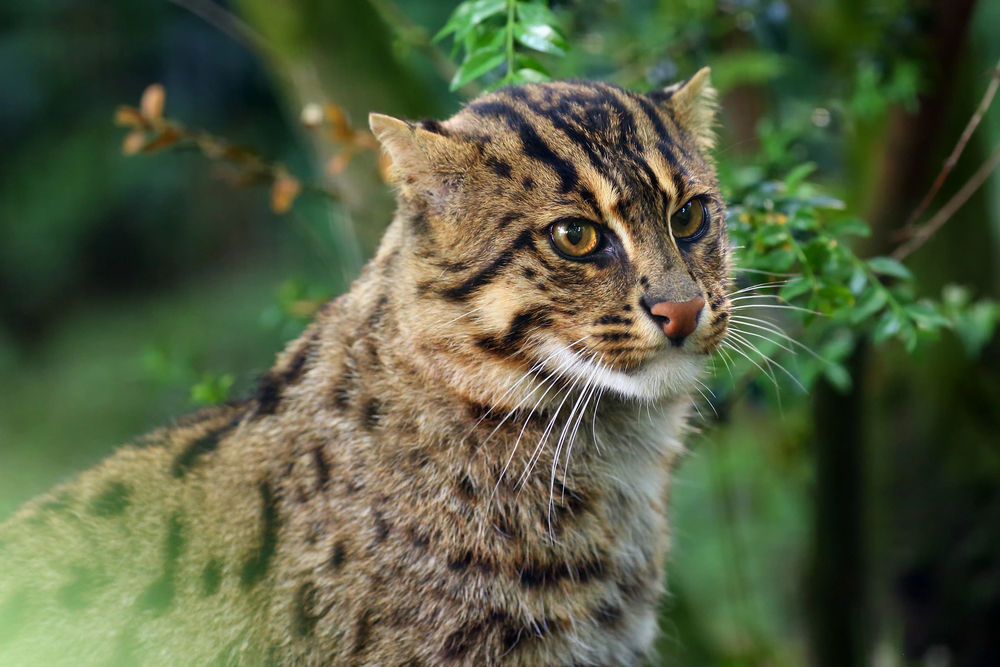
Most cats hate water, but the fishing cat missed that memo entirely. This medium-sized wild cat from South and Southeast Asia has partially webbed paws and dives into rivers and wetlands to catch fish with its paws.
It weighs between 15 and 30 pounds and has a stocky build perfect for its aquatic lifestyle. Fishing cats also eat frogs, crabs, and even small birds, making them one of the most adaptable hunters in their marshy habitats.
Andean mountain cat
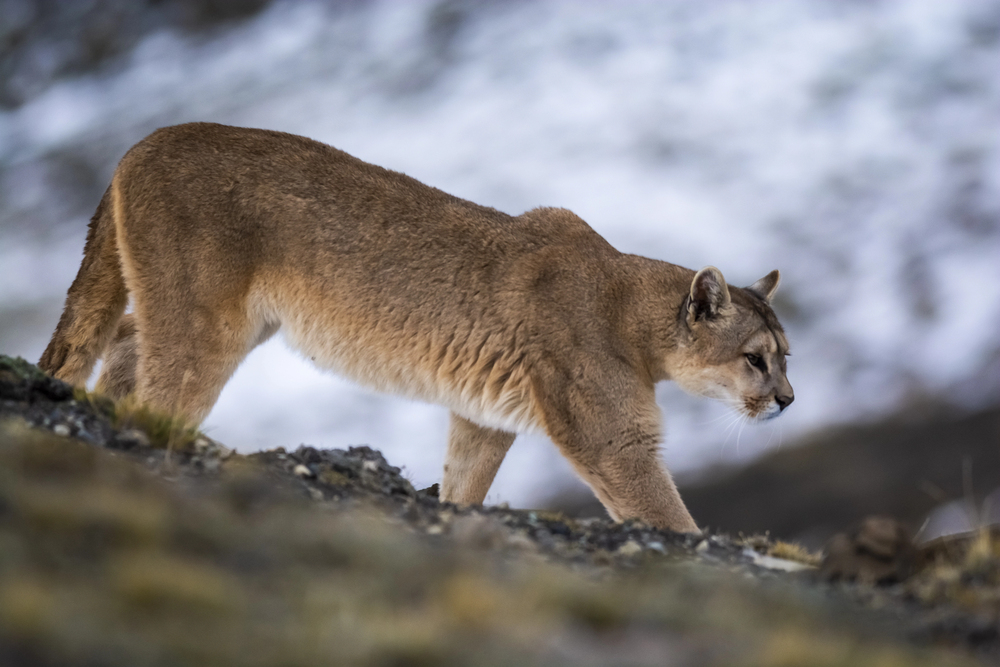
High in the Andes Mountains, where the air is thin and the temperatures are harsh, lives one of the rarest cats on Earth. The Andean mountain cat has been spotted by scientists only a handful of times.
Its thick, silvery-gray coat with dark spots helps it blend into the rocky mountain landscape at elevations above 11,000 feet. This elusive cat hunts chinchillas and mountain viscachas, animals that are just as hard to find as the cat itself.
Flat-headed cat

With a name that perfectly describes its appearance, the flat-headed cat lives in the wetlands and forests of Southeast Asia. Its flattened skull and small, rounded ears make it look different from any other cat species.
This rare feline has an unusual diet that includes fish, frogs, and fruit, making it one of the few cats that regularly eats plants. The flat-headed cat also has partially webbed paws and doesn’t retract its claws completely, adaptations that help it catch slippery prey in muddy water.
Marbled cat

The marbled cat looks like a smaller, more delicate version of the clouded leopard with its beautiful swirling coat pattern. This tree-dwelling cat lives in the forests of Southeast Asia and spends most of its life in the canopy.
Weighing just 4 to 11 pounds, it has an incredibly long tail that helps it balance on thin branches high above the ground. The marbled cat is so rare and secretive that scientists know very little about its behavior in the wild.
African golden cat

Despite its name, this cat doesn’t always have a golden coat. The African golden cat comes in colors ranging from reddish-brown to gray, and some individuals even have spots or stripes.
This medium-sized cat lives in the rainforests of Central and West Africa and is about twice the size of a house cat. Local folklore in some regions considers the African golden cat to bring good fortune, though seeing one in the wild is extremely rare.
Bay cat
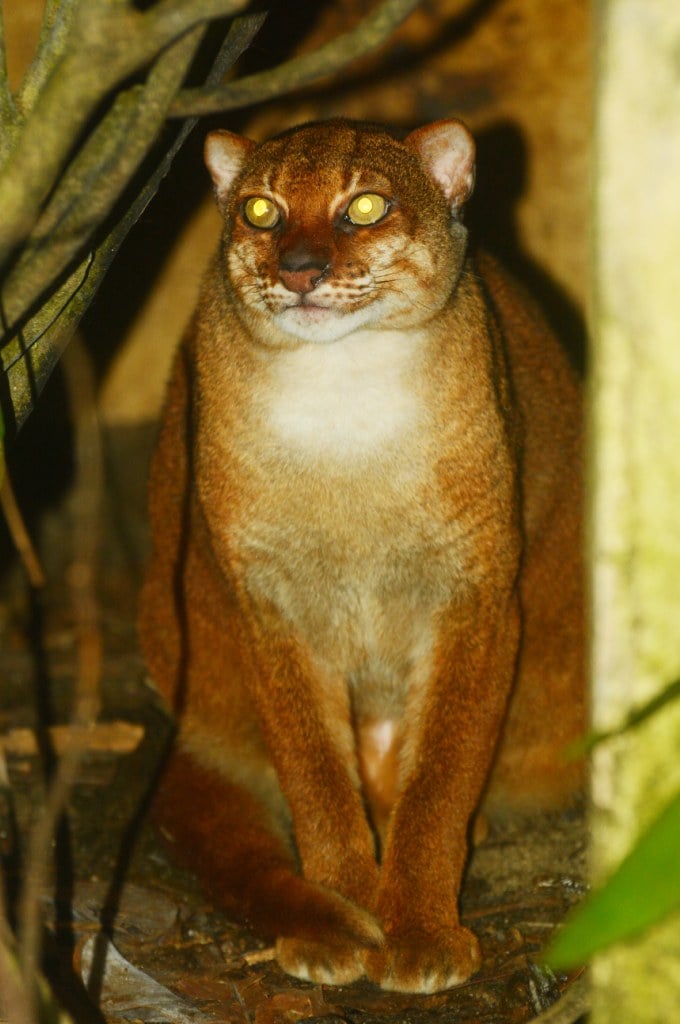
Borneo is home to one of the world’s most mysterious cats. The bay cat was known only from museum specimens for decades before scientists finally photographed a living one in 1998.
This small, reddish-brown cat weighs about 5 to 8 pounds and lives in the dense forests of the island. So little is known about the bay cat that scientists are still trying to understand its basic habits and diet.
Sand cat

The deserts of North Africa and Central Asia seem too harsh for any cat to survive, but the sand cat thrives there. This small cat has fur-covered paws that work like snowshoes on hot sand and protect against burning temperatures.
Sand cats can go for long periods without water, getting moisture from their prey, which includes rodents, lizards, and insects. Their large ears help them detect prey moving underground and also release heat to keep them cool.
Iriomote cat

Found only on the tiny Japanese island of Iriomote, this cat is one of the world’s rarest. Scientists estimate fewer than 250 Iriomote cats exist in the wild.
This cat has a long body, short legs, and a thick tail, making it look somewhat different from other wild cats. It’s an adaptable hunter that eats everything from birds and reptiles to crabs and fish along the island’s streams and beaches.
Jaguarundi

The jaguarundi looks more like a weasel than a cat with its long body, short legs, and small, flattened head. This unusual cat lives from southern Texas through South America and comes in two main color forms: reddish-brown or dark gray.
Unlike most cats, jaguarundis are active during the day and often seen hunting along riverbanks and in grasslands. They chirp and whistle to communicate, sounds that are quite different from typical cat vocalizations.
Oncilla

Also called the little spotted cat, the oncilla is often confused with its close relative, the margay. This small cat lives in the mountains and forests of Central and South America and weighs just 3 to 7 pounds.
Oncillas have beautiful spotted coats and are excellent climbers, though they spend more time on the ground than many other small wild cats. Their populations are declining due to habitat loss, and scientists are working to understand their needs better before it’s too late.
Chinese mountain cat

China’s remote grasslands are home to a cat that most of the world doesn’t know exists. The Chinese mountain cat, also called the Chinese desert cat, lives at high elevations in a limited range.
This cat has thick fur with faint stripes and a distinctive bushy tail with dark rings. It hunts pikas, small rodents, and birds across the harsh landscape where few other predators can survive the extreme conditions.
Guiña

The guiña, sometimes called the kodkod’s buddy, hangs out in cool forests down in Chile and Argentina. It’s tiny – just around 4 or 5 pounds – with fur marked by black dots and smudges.
Instead of sticking to one spot, it moves between trees and earth while chasing rats, small birds, or bugs. Since it might grab a chicken now and then, some people on farms see it as trouble; even so, it helps keep rat numbers in check.
Pampas cat
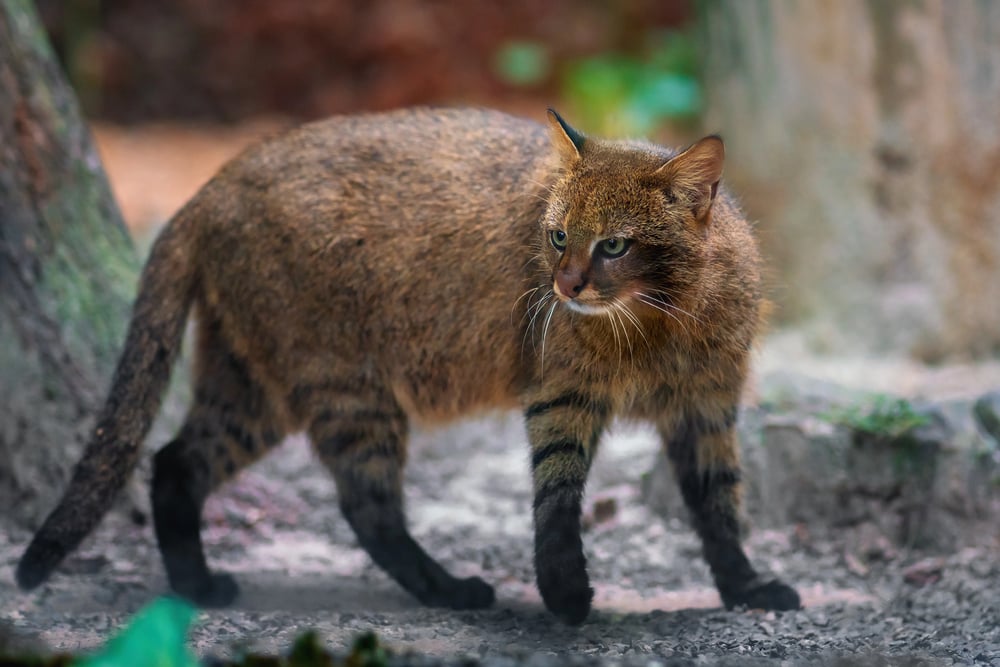
Over open fields in South America moves a feline whose look shifts with location. While some have pale fur, others show warm tones – ranging from tan to rust – with marks like streaks or dots.
Found not just in flat plains but also woodlands or mountain zones, this creature adjusts well. Weighing anywhere from 8 to 16 lbs, it stalks rodents and low-flying birds as prey throughout diverse terrain.
Black-footed cat

Looks can be misleading – this little feline’s got a bite. Native to southern Africa, the small wildcat nails more hunts than big cats like lions or tigers ever do.
Tiny? Sure. It only tips the scales at 2 to 5 pounds.
Still, it takes down around 10 to 14 critters every single night. Dark pads on its paws are what gave it that name.
Its light fur with spots lets it vanish into parched fields while stalking mice, birds, bugs. While others nap, this one’s busy working.
Margay
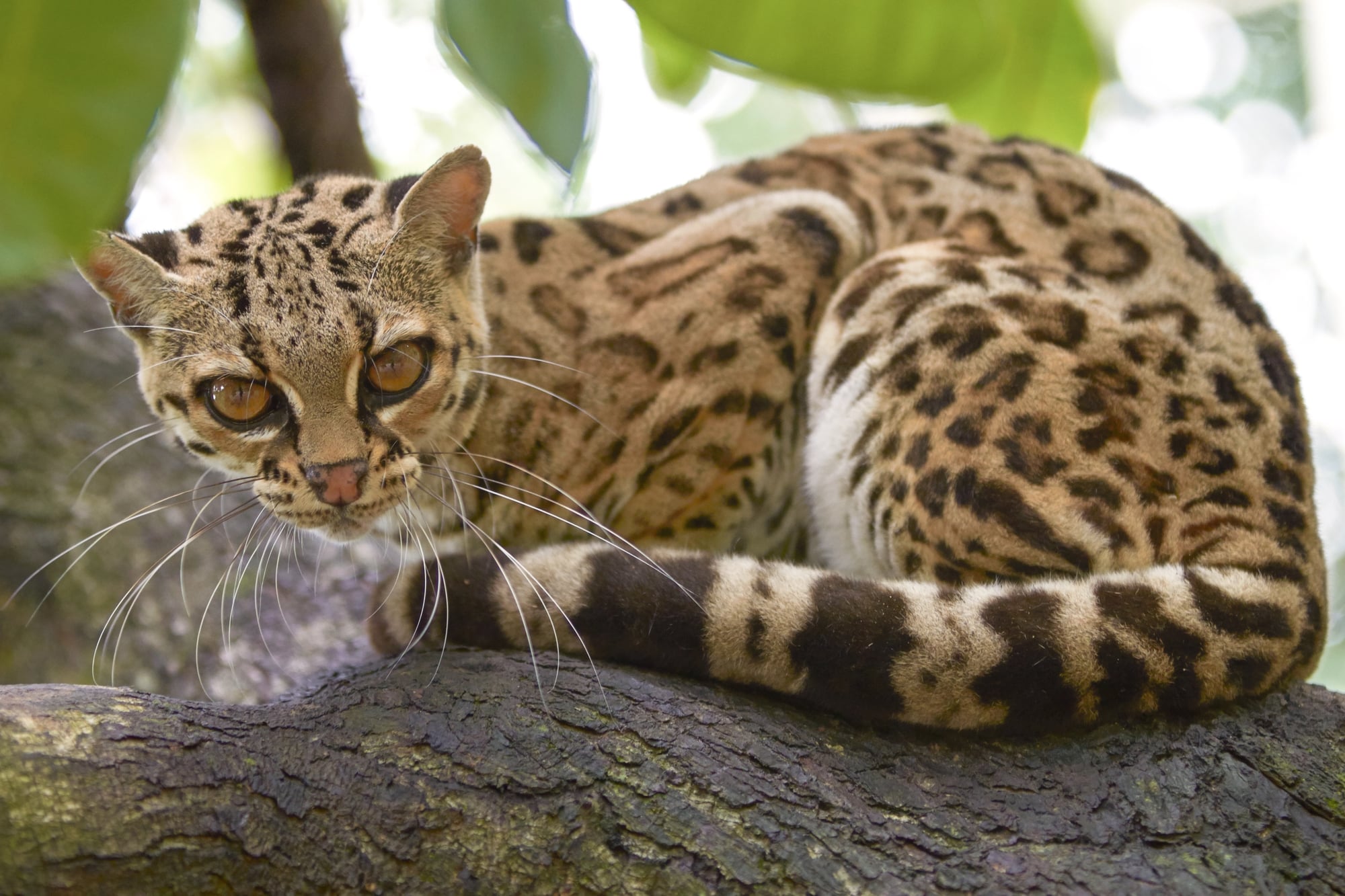
The margay moves like a circus performer, thanks to ankles that twist almost fully backward – so it can scamper down tree trunks nose-first, just like squirrels do. Instead of sticking to the ground, this little wildcat sticks to treetops across Central and South American woodlands.
It’s light, usually tipping the scale anywhere from 6 to 9 pounds, yet clever enough to copy infant monkey cries, tricking grown ones into coming close. Big round eyes give it an edge when chasing prey after dark, cutting through the shadowy jungle glow.
The untamed life out past our fences

These amazing cats show the cat family’s way bigger than what we usually talk about. Some thrive on high mountains, others in scorching deserts or thick jungles – places tough for most hunters to handle.
Housecats steal the spotlight, while tigers and lions rule nature shows; meanwhile, these rare types stick to old-school hunting ways all around the planet. Just knowing they’re out there highlights how much unseen life hides in remote spots no camera ever touches – and that saving wild spaces keeps hidden animals alive, even if nobody sees them.
More from Go2Tutors!

- The Romanov Crown Jewels and Their Tragic Fate
- 13 Historical Mysteries That Science Still Can’t Solve
- Famous Hoaxes That Fooled the World for Years
- 15 Child Stars with Tragic Adult Lives
- 16 Famous Jewelry Pieces in History
Like Go2Tutors’s content? Follow us on MSN.



