Longest Words Ever Used in English
The English language has always been a playground for those who love to push boundaries, and nowhere is this more evident than in the creation of absurdly long words. From scientific terms that stretch across entire lines to playful literary inventions, these linguistic giants showcase humanity’s endless creativity with language. Some emerged from necessity in specialized fields, while others sprang from the minds of writers who simply couldn’t resist a challenge.
Throughout history, various authors, scientists, and even everyday speakers have contributed to this collection of verbal behemoths. Here is a list of the longest words ever documented in English usage.
Pneumonoultramicroscopicsilicovolcanoconiosiss

Clocking in at 45 letters, this monster word refers to a lung disease caused by inhaling very fine silicate or quartz dust, typically from volcanoes. While it appears in some dictionaries, many linguists consider it an artificial creation designed purely to be the longest English word. The term was coined in 1935 by Everett Smith, president of the National Puzzlers’ League, who wanted to create the longest possible medical term.
Hippopotomonstrosesquippedaliophobia

Ironically, this 36-letter word means the fear of long words, making it perhaps the cruelest joke in the English language. Mental health professionals rarely use this term in practice, preferring the shorter ‘sesquipedalophobia’ instead. The word combines elements from Greek and Latin roots, with ‘hippopotamus’ thrown in apparently just to make the whole thing even more ridiculous.
Supercalifragilisticexpialidocious

Made famous by the 1964 film ‘Mary Poppins,’ this 34-letter creation represents what happens when songwriters need something that sounds impressive but means absolutely nothing. The Sherman Brothers, who wrote the song, claimed they invented it during childhood, though similar-sounding words appeared in earlier works. Despite its fictional nature, it earned a place in several dictionaries and remains one of the most recognizable long words in popular culture.
Floccinaucinihilipilification

This 29-letter word describes the action of estimating something as worthless, and it holds the distinction of being one of the longest non-technical words in major dictionaries. It originated in the 18th century at Eton College, where students combined several Latin words meaning ‘nothing’ or ‘worthless’ into this tongue-twisting creation. The word occasionally surfaces in formal writing when authors want to show off their vocabulary.
Antidisestablishmentarianism
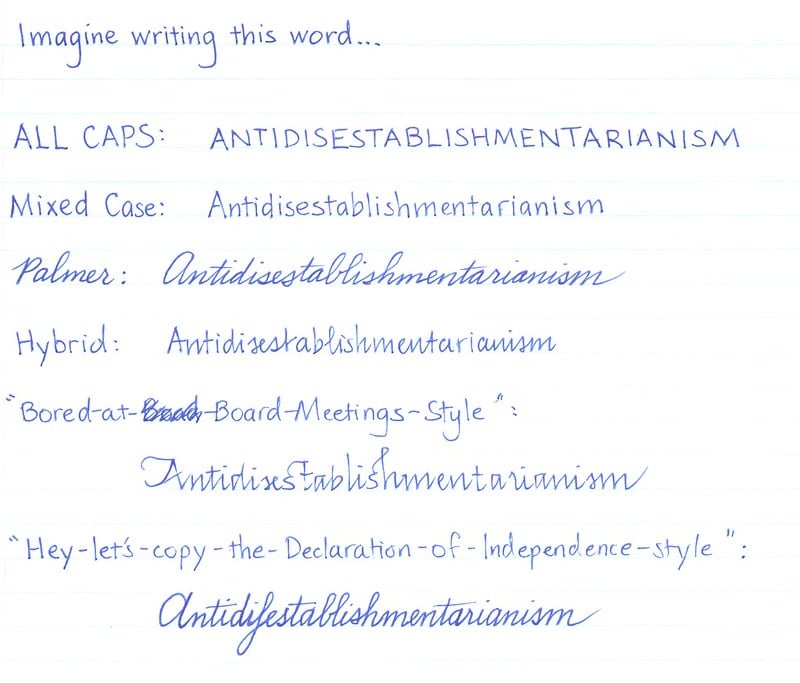
At 28 letters, this political term refers to opposition to the withdrawal of state support from an established church. It gained popularity in 19th-century England during debates about the Church of England’s official status. While the word seems intimidatingly long, it follows logical word-building patterns with prefixes and suffixes stacked onto the root ‘establishment.’
Honorificabilitudinitatibus

This 27-letter Latin word appears in Shakespeare’s ‘Love’s Labour’s Lost,’ making it one of the longest words ever used by the Bard. It roughly translates to ‘the state of being able to achieve honors’ and represents the kind of elaborate language that was fashionable among educated people in Shakespeare’s time. Some scholars believe Shakespeare included it specifically to show off his knowledge of complex Latin constructions.
Thyroparathyroidectomized

Medical terminology often produces impressively long words, and this 25-letter term describes someone who has had their thyroid and parathyroid glands surgically removed. While it might seem like doctors created this word just to confuse patients, it actually serves a precise medical purpose. The length comes from combining multiple Greek and Latin roots that each contribute specific meaning to the overall term.
Otorhinolaryngological

This 22-letter word relates to the medical specialty dealing with ear, nose, and throat conditions. ENT doctors use this term regularly, though they mercifully abbreviate their field to ‘otolaryngology’ in most contexts. The word demonstrates how medical professionals build specialized vocabulary by combining Greek roots that describe exactly which body parts and systems they treat.
Immunoelectrophoresis

Laboratory scientists regularly encounter this 21-letter word, which describes a technique for separating and identifying proteins in biological samples. The process combines two different scientific methods, hence the lengthy name that basically describes ‘using electricity to separate immune-related proteins.’ Research papers frequently use this term, proving that some long words serve essential practical purposes rather than existing purely for show.
Pseudohypoparathyroidism

This 23-letter medical condition involves problems with parathyroid hormone function, specifically when the body doesn’t respond properly to the hormone even though it’s produced normally. The name accurately describes the condition by combining ‘pseudo’ (false), ‘hypo’ (under), ‘parathyroid’ (the gland), and ‘ism’ (condition). Endocrinologists use this term regularly when discussing calcium regulation disorders.
Spectrophotometrically

Analytical chemists use this 22-letter adverb to describe how they measure light absorption in chemical samples. The word combines ‘spectro’ (relating to light spectra), ‘photo’ (light), ‘metric’ (measurement), and the ‘-ally’ ending that turns it into an adverb. Laboratory reports frequently include this term when describing analytical methods and procedures.
Radioimmunoelectrophoresis

This 25-letter technique combines radioactive labeling with the protein separation method mentioned earlier. Nuclear medicine professionals and research scientists use this method to study how different proteins behave in biological systems. The length comes from stacking three different scientific concepts together into one comprehensive term that describes the entire process.
Hepaticocholangiogastrostomy

Surgeons use this 28-letter term to describe a specific type of operation that connects the bile duct system to the stomach. While the word looks intimidating, it logically combines medical terms for liver (‘hepatico’), bile ducts (‘cholangio’), stomach (‘gastro’), and surgical connection (‘stomy’). Medical professionals appreciate having precise terminology that leaves no room for misunderstanding about complex procedures.
Pneumoencephalographically

This 25-letter adverb describes a now-obsolete medical imaging technique that involved replacing spinal fluid with air to get better X-ray images of the brain. The procedure was extremely uncomfortable and has been replaced by much safer methods like CT and MRI scans. The word remains in medical literature as a reminder of how far diagnostic imaging has progressed.
Psychoneuroendocrinology

This 22-letter field of study examines how psychological factors affect the nervous system and hormone production. Researchers in this area investigate connections between stress, brain function, and endocrine disorders. The interdisciplinary nature of the field explains why the name combines psychology, neurology, and endocrinology into one comprehensive term.
Tetraiodophenolphthalein

Chemists know this 23-letter compound as a pH indicator that changes color in different acid-base conditions. The name describes the molecule’s structure by listing its chemical components in order. While chemistry students might grumble about memorizing such terms, the systematic naming helps scientists worldwide understand exactly which compound they’re discussing.
Dichlorodifluoromethane

This 23-letter chemical name refers to a refrigerant compound better known as Freon-12 or CFC-12. Environmental scientists frequently encounter this term when discussing ozone depletion, since this compound was widely used in refrigeration before being phased out due to environmental concerns. The systematic chemical name precisely describes the molecule’s atomic composition.
Words That Stretch Beyond Reason

These linguistic giants remind us that English remains a living, breathing language where creativity knows no bounds. While most of these marathon words serve specific professional purposes, they also represent humanity’s playful relationship with language itself. Whether coined by medieval scholars, modern scientists, or imaginative songwriters, each word tells a story about our endless desire to push the boundaries of communication just a little bit further.
More from Go2Tutors!

- 16 Historical Figures Who Were Nothing Like You Think
- 12 Things Sold in the 80s That Are Now Illegal
- 15 VHS Tapes That Could Be Worth Thousands
- 17 Historical “What Ifs” That Would Have Changed Everything
- 18 TV Shows That Vanished Without a Finale
Like Go2Tutors’s content? Follow us on MSN.