Lost Civilizations That Shaped Modern Society
History tends to remember the winners. You learn about Greece, Rome, and Egypt in school.
But behind those famous names stand older civilizations that invented the foundations of modern life and then vanished from popular memory. They created writing, built the first cities, perfected urban planning, and connected distant cultures through trade.
Their innovations spread across continents and centuries, absorbed by the empires that came after. And because those later empires took the credit, the original creators faded into archaeological footnotes.
These are the civilizations that built the scaffolding of the modern world before stepping off the stage.
The Sumerians

Around 4500 BCE, in the marshlands between the Tigris and Euphrates rivers in present-day Iraq, a people emerged who would invent civilization itself. The Sumerians created the first cities, the first writing system, the first schools, and the first formal legal codes.
When you check the time on your phone, you’re using their base-60 mathematical system—the reason an hour has 60 minutes and a minute has 60 seconds.
They developed cuneiform script by pressing wedge-shaped marks into clay tablets, creating a technology that spread throughout the ancient Near East and remained in use for over 3,000 years. Their astronomical observations laid the groundwork for later Greek and Babylonian science.
Their flood myths appear in modified form in religious texts still read today. The wheel, bronze metallurgy, and large-scale irrigation all trace back to Sumerian ingenuity.
By 2000 BCE, the Sumerians had been absorbed by neighboring cultures. Their language died out.
Their cities crumbled into desert mounds. But everything they built—writing, timekeeping, urban governance, mathematics—passed into the hands of their conquerors and eventually reached you.
The Indus Valley Civilization
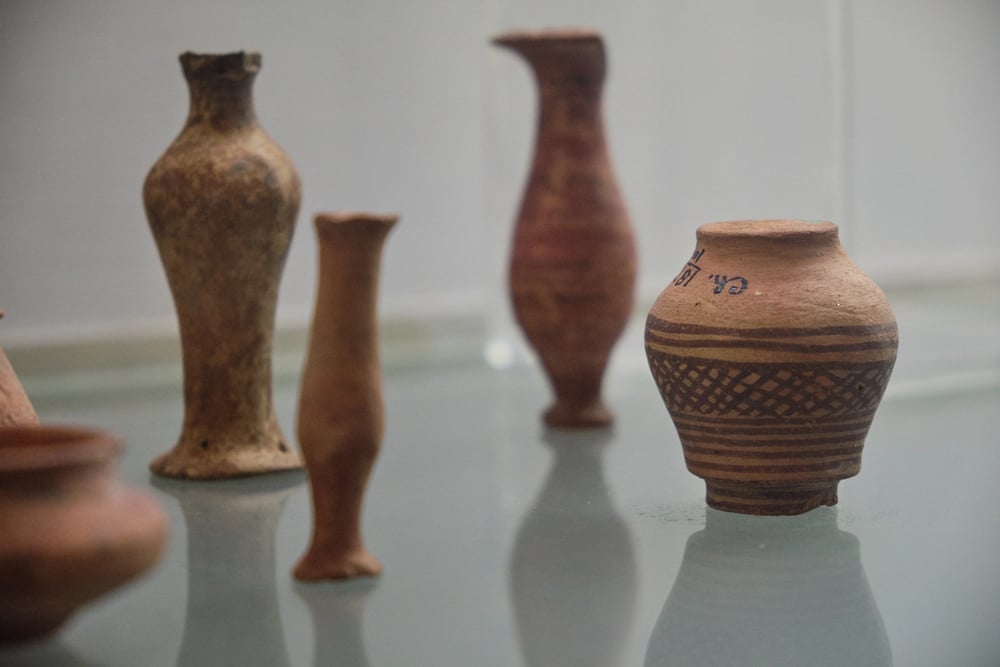
Between 2600 and 1900 BCE, cities in the Indus Valley of present-day Pakistan and northwestern India achieved something that would take other civilizations millennia to match: modern urban planning. The cities of Harappa and Mohenjo-daro featured grid-pattern streets, standardized brick sizes, private bathrooms, and underground sewage systems that ran beneath the streets to central drains.
Every house, regardless of size, is connected to this drainage network. The civilization prioritized public health and sanitation at a level Europe wouldn’t see until the 19th century.
They built covered drains, soak pits to prevent clogging, and inspection points for maintenance. Their standardized weights and measures suggest a sophisticated economy and centralized planning.
The Great Bath at Mohenjo-daro remains one of the earliest public water structures ever discovered.
Then, around 1900 BCE, civilization declined. The cities emptied.
The writing system remains undeciphered to this day. But the principles of urban planning—zoning, sanitation infrastructure, standardized construction—became foundational concepts that resurfaced again and again throughout history.
The Minoans

On the island of Crete, beginning around 2700 BCE, a maritime civilization flourished that would become the foundation of European culture. The Minoans built palatial complexes at Knossos, Phaistos, and other sites—sprawling structures with indoor plumbing, flushing toilets, and sophisticated ventilation systems.
Their frescoes depicted a vibrant society of athletes, dancers, and seafarers in colors that still seem alive today.
The Minoans dominated Mediterranean trade for centuries. Their artistic styles influenced everything from pottery to jewelry across the Aegean.
When the Mycenaean Greeks rose to prominence on the mainland, they absorbed Minoan techniques, adapted their writing system, and inherited their religious imagery. The feathered serpent, the bull cult, and the labyrinth all passed from Minoan culture into Greek mythology.
A volcanic eruption on the nearby island of Thera around 1450 BCE devastated Minoan civilization. Earthquakes, tsunamis, and ash clouds destroyed their trade networks.
Within a century, the Mycenaeans had taken control. But the seeds of Greek—and therefore Western—culture had already been planted in Minoan soil.
The Phoenicians

Between roughly 1500 BCE and 300 BCE, a loose confederation of city-states along the coast of present-day Lebanon revolutionized human communication. The Phoenicians simplified the complex writing systems of their neighbors—Egyptian hieroglyphics, Mesopotamian cuneiform—into a 22-letter alphabet based on sounds rather than pictures or syllables.
This was the most democratic invention in human history. Previous writing systems required years of specialized training.
The Phoenician alphabet could be learned in weeks. Merchants, craftsmen, and ordinary people could now read and write.
The monopoly on literacy held by priests and scribes across the ancient world began to crumble.
Phoenician traders carried their alphabet across the Mediterranean, founding colonies from Carthage to Spain. The Greeks adopted it, adding vowels to create the first true alphabet.
From Greek came Latin. From Latin came the scripts of Western Europe.
From Aramaic, another Phoenician descendant, came Hebrew and Arabic. Nearly every alphabet in use today—including the one you’re reading now—traces its lineage back to those 22 Phoenician letters.
The Achaemenid Persians

Between 550 and 330 BCE, the Achaemenid Empire ruled the largest territory the world had ever seen, stretching from Egypt to India. But their most lasting contribution wasn’t conquest—it was infrastructure.
Under Darius I, the Persians built the Royal Road, a 2,500-kilometer highway connecting the Mediterranean coast to the empire’s heartland.
Along this road, they established the world’s first sophisticated postal system. Relay stations sat a day’s ride apart.
Fresh horses and riders waited at each station. A message could travel from one end of the empire to the other in nine days—a journey that would take three months on foot.
Greek historian Herodotus described Persian couriers with words that would later become the unofficial motto of the United States Postal Service: “Neither snow nor rain nor heat nor gloom of night stops these couriers from the swift completion of their appointed rounds.”
The Persians also pioneered religious tolerance as state policy, allowing conquered peoples to maintain their traditions while remaining loyal subjects. This model of multicultural empire-building would influence Rome, the Islamic caliphates, and modern federal systems.
The Olmec

Along the Gulf Coast of Mexico, from about 1500 to 400 BCE, the Olmec civilization laid the foundations for all subsequent Mesoamerican cultures. They were the first in the region to build pyramids, develop a calendar system, create a writing system, and establish long-distance trade networks.
The colossal stone heads they carved—some standing over ten feet tall and weighing 50 tons—remain among the most striking artworks of the ancient world.
The Olmec worshipped a feathered serpent deity that would evolve into Quetzalcoatl for the Aztecs and Kukulkan for the Maya. They invented the Mesoamerican ballgame, a ritual sport played for over 2,000 years.
Their artistic conventions, religious practices, and social structures spread throughout Central America and influenced every major civilization that followed.
When the Olmec heartland declined around 400 BCE, their cultural legacy didn’t die. The Maya, the Zapotec, the Teotihuacanos, and eventually the Aztecs all built upon Olmec innovations.
Scholars call the Olmec the “mother culture” of Mesoamerica—the civilization that made all other Mesoamerican civilizations possible.
The Kingdom of Kush

South of Egypt, along the Nile in present-day Sudan, the Kingdom of Kush thrived for over a thousand years. Rich in gold, iron, and ivory, Kush controlled trade routes linking sub-Saharan Africa to the Mediterranean world.
Their archers were so skilled that the Greeks called Nubia “the land of the bow.”
Around 750 BCE, the Kushite king Piye conquered Egypt itself, establishing the 25th Dynasty and uniting the entire Nile Valley under African rule. For nearly a century, the “Black Pharaohs” ruled both Kush and Egypt, restoring neglected temples and reviving ancient religious traditions.
King Taharqa commissioned building projects across both kingdoms and fought the mighty Assyrian Empire to a standstill.
Even after the Assyrians pushed them back to Nubia, the Kushites continued to flourish. They moved their capital to Meroe, where iron smelting fueled a new era of prosperity.
They built more pyramids than Egypt—over 200 still stand in Sudan today—and developed their own alphabet, the Meroitic script. The kingdom endured until the 4th century CE, making it one of the longest-lasting civilizations in African history.
Carthage

Founded by Phoenician settlers around 814 BCE on the coast of present-day Tunisia, Carthage grew into the wealthiest and most powerful city in the western Mediterranean. At its height, Carthage controlled territory across North Africa, Spain, Sicily, Sardinia, and countless islands.
Its navy dominated the sea. Its merchants established trade routes stretching from Britain to sub-Saharan Africa.
Carthage became the sole significant broker of tin in the ancient world—controlling access to the metal essential for making bronze.
The Carthaginians were master shipbuilders who developed standardized construction techniques allowing them to produce vessels quickly and efficiently. They pioneered agricultural methods including crop rotation and produced technical manuals that the Romans later translated and used throughout their empire.
Their harbors featured engineering innovations that wouldn’t be matched for centuries.
Rome destroyed Carthage in 146 BCE after three brutal wars. The victors salted the earth—or so the legend goes—and erased the city from the map.
But Carthage’s commercial innovations, agricultural techniques, and naval designs lived on through their Roman conquerors. And in the end, what the Romans built was partly built on Carthaginian foundations.
The Hittites

In central Anatolia (modern Turkey), the Hittite Empire dominated the ancient Near East from roughly 1600 to 1178 BCE. They were among the earliest civilizations to develop iron smelting techniques, and their metalworking expertise gave them a significant military and technological advantage over neighbors still reliant on bronze.
The Hittites fought Egypt to a draw and signed the oldest surviving peace treaty in history—the Treaty of Kadesh with Ramesses II around 1259 BCE. They developed sophisticated legal codes that addressed everything from property disputes to labor regulations.
Their archives reveal a complex diplomatic network spanning from Egypt to Babylon.
When their empire collapsed during the Bronze Age upheaval around 1178 BCE, the Hittites vanished so completely that their very existence was forgotten for millennia. Biblical references to “Hittites” were dismissed as myths until archaeologists rediscovered their capital at Hattusa in the 19th century.
Their ironworking knowledge, diplomatic practices, and legal traditions spread to successor cultures across the ancient Near East.
The Etruscans
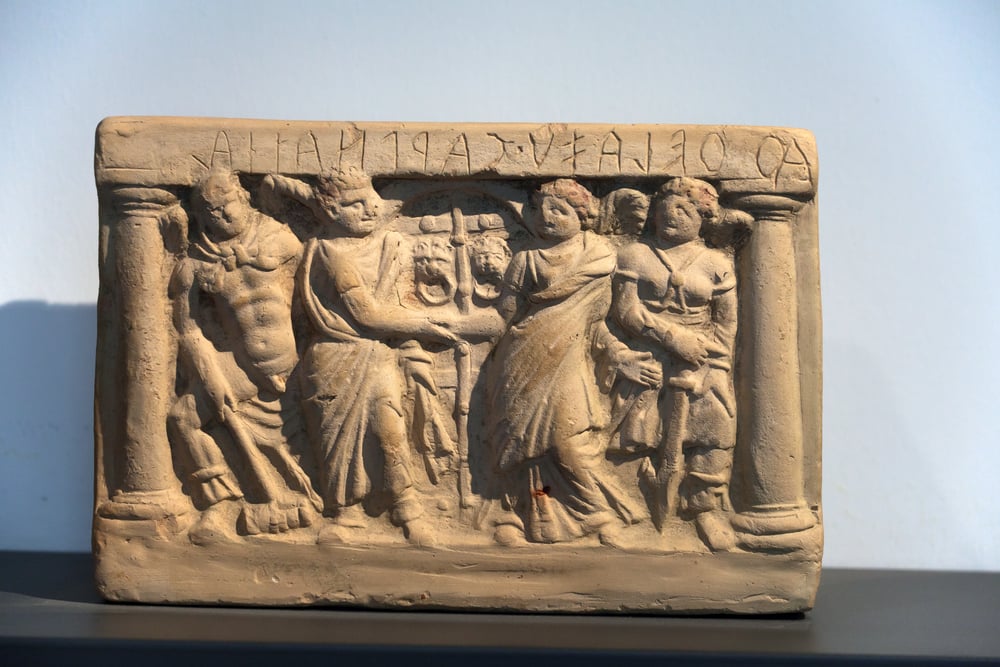
Before Rome ruled Italy, the Etruscans did. From roughly 900 to 100 BCE, their confederation of city-states dominated the Italian peninsula.
They built sophisticated drainage systems, paved roads, and monumental architecture. They developed an alphabet derived from Greek that would become the basis of Latin script.
The Romans learned from the Etruscans how to build temples, how to read omens, how to stage gladiatorial games. The Roman toga, the Roman triumph, and key Roman religious rituals all originated with Etruscan predecessors.
Even the name “Rome” may derive from an Etruscan word.
As Rome expanded, it absorbed Etruscan territories one by one. Within a few centuries, Etruscan language and identity had been swallowed whole.
Their tombs remained hidden beneath Italian soil, and their role in shaping Roman—and therefore Western—civilization went unacknowledged until modern archaeology began revealing the truth.
The Aksumites
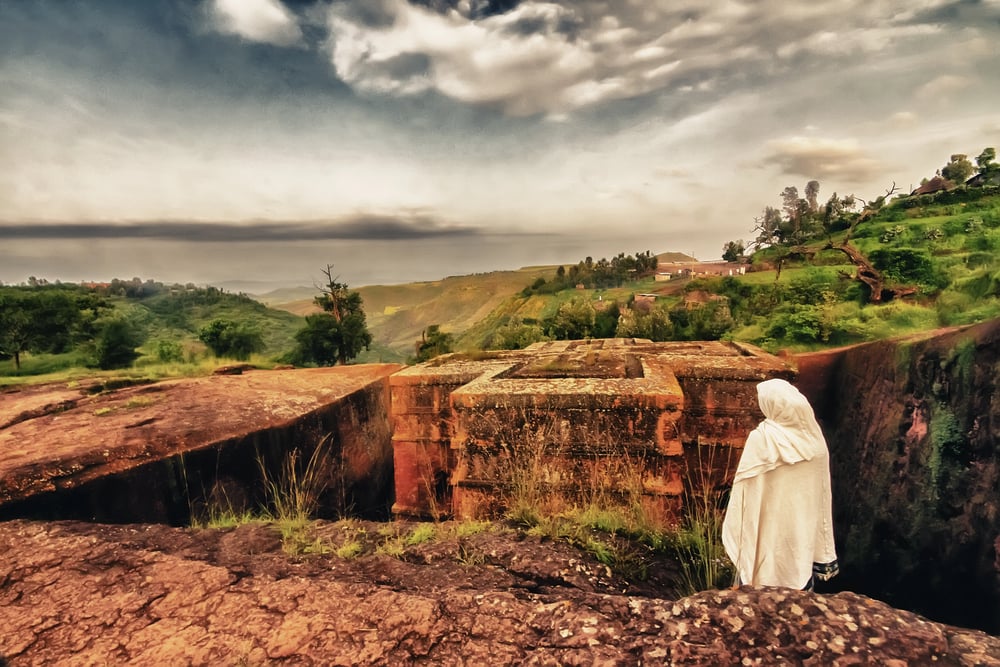
In the highlands of present-day Ethiopia and Eritrea, the Kingdom of Aksum flourished from roughly 100 to 940 CE as one of the great powers of the ancient world. Greek writers named it among the four greatest empires of their age, alongside Rome, Persia, and China.
Aksum controlled trade routes connecting Rome to India and Arabia, growing rich from the exchange of ivory, gold, and exotic goods.
The Aksumites minted their own gold coins—the first sub-Saharan African civilization to do so. They developed their own alphabet, Ge’ez, which evolved into the scripts still used in Ethiopia and Eritrea today.
Around 330 CE, King Ezana converted to Christianity, making Aksum one of the first states anywhere to adopt the religion officially.
Their towering obelisks, some over 70 feet tall and carved from single pieces of stone, remain among the most impressive monuments in Africa.
When Aksum declined in the 7th century amid shifting trade routes and Islamic expansion, it left behind a Christian kingdom that would endure for over a thousand years and a cultural heritage that shapes Ethiopia to this day.
The Nabataeans

In the deserts of present-day Jordan, a nomadic Arab tribe built one of the ancient world’s most remarkable trading empires. Between roughly 400 BCE and 106 CE, the Nabataeans controlled the lucrative incense routes connecting Arabia to the Mediterranean, growing wealthy beyond imagination from trade in frankincense, myrrh, and spices.
Their capital at Petra—carved directly into sandstone cliffs and featuring elaborate facades that blend Greek, Egyptian, and native Arabian styles—became one of the wonders of the ancient world.
But the Nabataeans’ most lasting innovation was their mastery of water management. In one of Earth’s driest regions, they developed cisterns, channels, and dams that captured every drop of scarce rainfall and supported a thriving agricultural economy.
When Rome annexed their territory in 106 CE, the Nabataeans were gradually absorbed into the empire. Petra fell into disuse, its location forgotten by the Western world until Swiss explorer Johann Ludwig Burckhardt rediscovered it in 1812.
But the water management techniques the Nabataeans pioneered continue to inform desert agriculture and conservation efforts today.
Echoes in the Present

Modern life rests on foundations laid by people whose names we’ve forgotten. Every time you write a word, you’re using a system refined from Phoenician letters.
Every time you check the hour, you’re reading Sumerian mathematics. The grid of your city streets echoes Harappan planning.
The postal service that delivers your packages follows a model the Persians invented 2,500 years ago.
These civilizations didn’t fail. They succeeded so completely that their innovations became invisible—woven into the fabric of daily existence, passed along by successor cultures who often didn’t remember where the ideas came from.
The Mesopotamians gave us law and literature. The Minoans gave Europe its artistic soul. The Olmec gave Mesoamerica its gods and calendars.
What we call “the modern world” is really a palimpsest—layer upon layer of borrowed innovation, absorbed and reabsorbed until the original sources become untraceable.
The civilizations may be lost to popular memory, but their work endures in every alphabet, every city plan, every metalworker’s forge. They built the world, and then they disappeared into it.
More from Go2Tutors!

- The Romanov Crown Jewels and Their Tragic Fate
- 13 Historical Mysteries That Science Still Can’t Solve
- Famous Hoaxes That Fooled the World for Years
- 15 Child Stars with Tragic Adult Lives
- 16 Famous Jewelry Pieces in History
Like Go2Tutors’s content? Follow us on MSN.